Suggested Song: New Year’s Day, U2
Suggested Drink: Veuve Clicquot champagne (to ring out the old, in the new!)
At the Interprize® Group we are thrilled with big changes for 2015, including the launch of a new website (click here to see) and set of accelerator workshops (dates to be announced soon). Come see what the buzz is all about!
I am finishing 2014 on an emotional high after leading another Interprize Workshop here in Aix, my third at the local IAE Graduate School of Management. The scope of interprize projects that students brought for development was inspiring, as I’ve come to expect from this school, and participation in the program continues to grow. We had wine bars and cafes and even a food-truck plan, nonprofits focused on baseball and football (soccer) sports camps for kids, schools for the underserved in Africa and Asia, career ambitions in acting, fashion and graphic design, various mobile apps, a variety of clean energy solutions, and too many other fascinating ideas to list.
The Interprize Workshop, IAE 2014
Over the 3-day workshop each of the aspiring interpreneurs considered their interlectual property and natural strengths, styles and passions, framed their interprize ambitions in terms of value and offering and market and customer, defined their personal stage of launch, worked through an execution plan of key milestones until their interprize was fully implemented, and announced steps they could take in the following day, month and year to move forward.
No entrepreneurial activity remains viable long-term without respect for balance and interpreneurial pursuits are no exception. Interspersed with our sessions on project planning were happy hours, with a focus on the power of positive emotions and practices to stimulate them. I think the chocolates test for vision expansion was a favorite (who knew those cherry-filled candies were spiked with liqueur!). We also built a paper chain of our change bracelets and burned them in the campus courtyard at noon, picture at right. On Friday afternoon my Interprize Group partner Jaki Weller led the class through 2 hours of yoga, meditation, and an insightful nutrition primer. All very unconventional for an IAE business seminar and thought provoking for the participants.
2015 will bring a few changes for my faithful readers to note. As mentioned above we’re launching an Interprize Group website (click here to view) full of resources on interpreneurship, life balance, and the pursuit of one’s grand ambitions, and I encourage you all to join … and please bring friends! With today’s internet inundation of spammers and bots I have to ask you to register, … my apologies. The Group is being launched with my partners Jaki Weller and Mary Carey and we’ll be listing workshop events for 2015 soon plus AMAZING daily references to the latest thinking on all things interpreneurial.
This Postcards blog will remain live and my outlet for monthly essays and new music releases. New music releases you ask? Yes, a collection of tunes is in development for the new year. She’s My Babe was the first of what I plan to be a dozen new recordings. It’s been an interesting 2014 full of rich and deliciously provocative inspiration and that would be a shame to waste!
I wish you all the very best with your year-end plans and a 2015 full of good health, grand ambitions, and deep reward.
Suggested Song: Penny Lane, The Beatles
Suggested Drink: Early Grey, or any proper British tea
Just a short note. Readers of this blog know that I am fascinated with the mysteries of creativity and passionate about rock & roll. I’ve written on both topics – The Creative Flame; Break on Through; Of Twerks, Kinks, and the Death of Pop Music– and believe that the musical partnership of Lennon and McCartney offered us the very finest examples of both. Because of that I thoroughly enjoyed reading this recent article (click here to read) in The Atlantic by Joshua Wolf Shenk, who contends that their creative collaboration remained vibrant throughout the history of the band in ways both obvious and less evident.
Suggested Song: San Francisco Days, Chris Isaak Suggested Drink: Mai Tai; dark rum, lime juice, Orange Curacao, syrup, French Orgeat (the original recipe first mixed by Victor Bergeron at Trader Vics, 1944)
I am in San Francisco for a dozen days, the first time in almost 2 years back to the city I called home for much of my adult life. Anyone intrigued with San Francisco knows that rapid changes are afoot, fueled by the latest gold rush in digital media startups; those brash parvenus like Google and Facebook, Twitter and Tumbler, Instagram and Pinterest, and on and on.
The nouveau rich and ambitious hope-to-bes are spreading across the city’s 49 square miles like kudzu, reclaiming pockets of urban wildlife and subduing the savages, their trailing circus of urban chic boutiques – the juice bars and gelato shops, yoga centers and organic groceries – driving prices up and diversity out, and replacing the riff raff of liquor stores, dive bars, and second hand bookstores in some neighbourhoods with more socially inspiring alternatives.
It’s not all good and it’s not all bad, but it is creating tension amongst the masses and keeping the city abuzz. Never a dull moment in Bagdad by the Bay (a loving reference to the City by the late great columnist Herb Caen).
As part of my trip I thought a series of mini dispatches on observations might keep me busy and out of trouble. Onward.
Dispatch #1 – I Only Have Eyes for You
Is there a more beautiful American city than San Francisco? Are there more beautiful Americans than the San Francisco variety? It is a city made for 360° viewing – the homes, the hills, the uber-fit in their Lululemons – and every venture out is visual banquet.
Why then does the 4 inch cell phone screen command the attention of everyone all the time and everywhere? To walk through historic Russian Hill is to see a stream of pedestrians on autopilot, eyes down and tapping out text, wholly clueless to the beauty around and obstacles ahead. Couples and friends sit at the trendy wine bars along Polk Street avoiding actual conversation – that audible thing we do with our tongue and lips – at all expense; sorry, but too busy snap-chatting to be distracted with real chatting.
Last night I was enjoying a glass or 3 of delicious zinfandel at Amélie, a comfortable and friendly wine bar in the neighborhood. A young woman at the bar expresses interest in a certain menu offering and asks the sommelier to see the bottle, takes a photo of the label with her cell phone, reads an online review, and then orders a glass. I’m stunned. It would have been a bit easier and vastly more interesting for her to ask the young handsome sommelier for advice or even a taste, no?
On Wednesday evening my Paris flight arrived just in time to catch the first pitch of World Series Game 7 with my twins. Excellent timing! We settled into a table at the Bell Tower, a bar/restaurant on Jackson Street, for what became a tense, exhilarating game, and everyone was on their feet for the final 3 outs. Pure delirium and fans-amongst-fans camaraderie; in San Francisco to watch the Giants about to win it all! I was dumfounded to see many in the crowd pulling out cell phones to record the game’s end. Let me get this straight: we are watching the game on a TV screen, which is already 1 digital step removed from the live experience. Now you are going to watch the game’s dramatic conclusion through your shaky 4 inch cell phone screen, which is recording a TV screen, putting you 2 degrees from live play, and this is enhancing the experience? Can someone please explain?
November 1, 2014
Dispatch #2 – How May I Help You?
One thing of which I never tire is American-style customer service. I love so many things about France, but great service – particularly for out-of-town visitors – is largely absent from there or anywhere in Europe. I can confirm that it remains alive and thriving in San Francisco.
When you’ve been living overseas for an extended period it feels almost unnatural for a waiter, bartender, or store clerk to be so familiar and accommodating. It comes as a shock – a truly positive one – when back at first and being asked about your meal, seat, wait, or whatever. A few examples from these first few days:
The waitress at the Bell Tower, our new nightly spot for drinks and one of the few in the in the neighbourhood where the twins and I can relax together – me with a beer, them with sodas – has memorised our usuals after just 3 visits and greets us with a “howdy, how are you all?” when entering. If we linger at a prize window table meant for diners, never a problem. If I order another round and we linger even longer, never a problem. And now we’re getting the “see you tomorrow?” on the way out. I’m trying to imagine that in France.
Restorante Milano, San Francisco
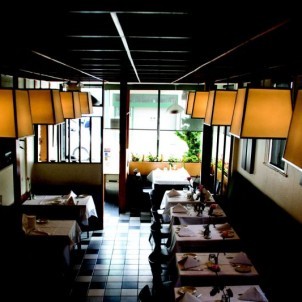
The Restorante Milano is one of the best Italian restaurants in a city full of great Italian restaurants. It’s a warm, intimate neighborhood spot in Russian Hill that fills quickly, lines at the door. I made reservations for 5 people on a busy Saturday night, then showed up with 7. Not a problem at all Mr. Magill, we can manage that. Let’s just move a few things around. Really? I’m trying to imagine that in France.
I was meandering through the aisles of an expansive Walgreens today in search of milk and Q-tips, looking every bit like the lost tourist. I was asked twice by the staff if I was finding everything okay, if any help was needed.
Now, I really cannot imagine that in France.
November 3, 2014
Dispatch #3 – For a Few Dollars More
I love San Francisco’s diversity of options and prices when it comes to eating, drinking, and having fun. Twenty years ago Alexandra (girlfriend, wife, ex-wife, still great friend) and I used to love Bob’s on Mission Street and 20th (or there-about). A half chicken roasted, sides, and a drink was priced under $4, which was an amazing deal.
When did San Francisco get so expensive? The recent inflation in rents and home prices in this high-demand city has been no secret, but the general increase in most everything I’m buying on this trip – the daily staples in particular – catches me off guard. A few cases in point:
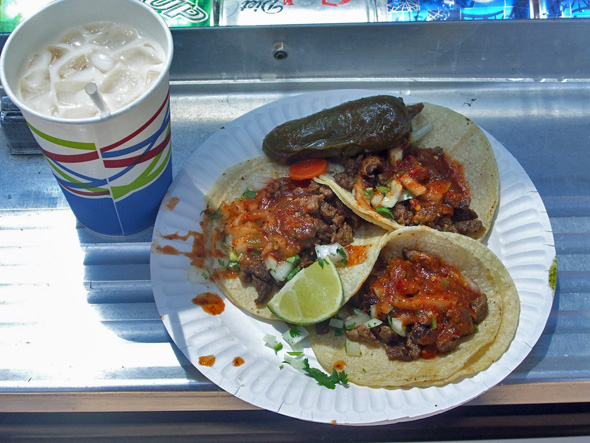
Tacos and an horchata from El Tonayense taco truck in San Francisco.
Two burritos and horchatas last weekend at Nick’s Crispy Tacos: over $26. Ouch. Burritos used to be a real deal in this town and ran $5-$7 each at our old haunt on Ocean Avenue, depending on toppings. For a glass of horchata you would have tacked on another $1.50.
Two croissants, 1 pain chocolate, 1 coffee, at La Boulange: over $9.00. I love this chain actually, but that’s pricey sustenance for a morning stroll around the neighborhood. No boulangerie in France will charge over 1 euro ($1.25) for croissants or pain chocolate, and 1.60 euros (about $1.90) gets you a small coffee. I admit that Paris can be the exception. The last time the French got upset about bread prices heads began to roll, literally. Maybe San Francisco needs a revolution??
A decent bottle of California red wine at the Jug Shop: over $20, much of it well over. Yes, a few things cost $10-$15, but those few things are not very interesting. That’s hard on the wallet, especially for nightly tipplers like me. And yes, wine IS a staple of a well-balanced daily diet!
MUNI fares for the city buses and underground: $2.25. Less than 10 years ago it was $1.25. Not a huge deal per trip you might say, but when using the system daily, round-trip for school or work, that starts to add up.
I expect to pay up for exceptional quality but where does one go any more in this fabulous city for a great bargain? Gourmet options are great, but sometimes we just want an honest meal. In France I’ve always bragged about San Francisco’s choice of prices and value to friends, insisting that amazing food was available for all budgets. Is that still true? This is one time that I truly hope to be proven wrong!
November 6, 2014
Dispatch #4 – Au Revoir et à Bientôt
I rarely seek out Asian restaurants in France. Twenty-five years of San Francisco dining has spoiled me in that food group; the quality bar is simply too high. France is truly a foodie’s dream – the daily open-air markets, the incredible tarts and breads and cheeses and wine, the exceptional small bistros tucked here and there – but it tends to disappoint in the ways of the wok or steamed dumplings.
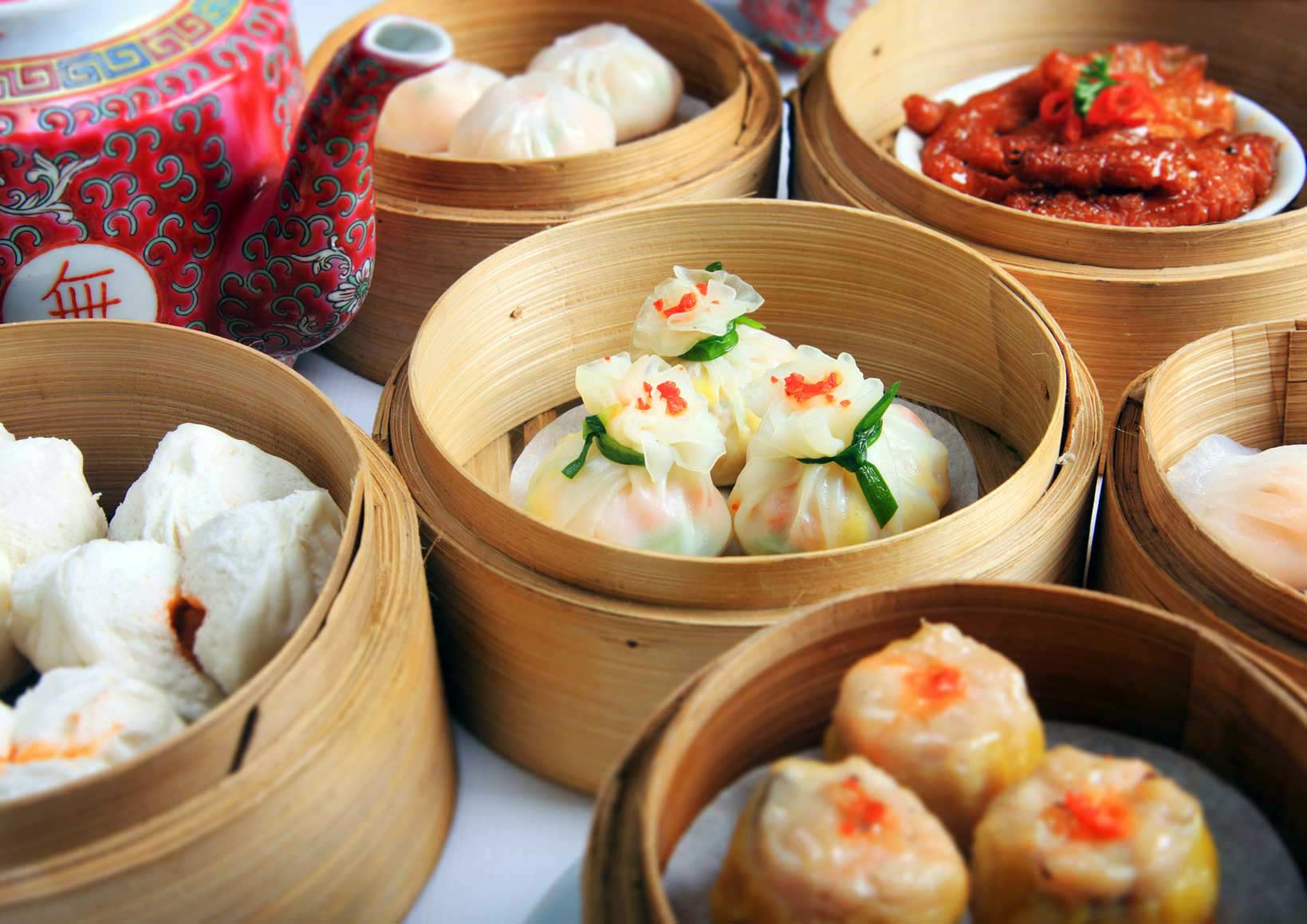
Yesterday we decided to load up before I shipped out and chose dim sum for lunch, sushi for dinner. Ton Kiang is an excellent San Francisco destination for dim sum, the tapas of Hong Kong. Located in the fogbelt of the Outer Richmond district, the line at Ton Kiang starts by late morning. The variety of small plate bites that pass in a steady stream by your table is astounding: shrimp and spinach dumplings, salt and pepper shrimp (I swear they were still wiggling!), deep fried crab claws, bbq pork buns, pork stuffed mushroom caps, vegetarian egg rolls, and on and on and on. With the lengthy menu of options there is something for everyone, so great family dining. We finished with our customary mango pudding covered in cream. Amazing.
If a vote was held on which food best represented San Francisco I would cast my ballot for dim sum. It is a city full of immense variety, beautifully staged, best appreciated in small bites consumed slowly, plate by plate, neighborhood by neighborhood. It is a city of distinct villages – Chinatown, North Beach, the Castro, Bernal Heights, Russian Hill, the Marina – some draped over rolling hills, others tucked into cozy valleys, and all distinguished by their own tribes and micro climates (and debating their claims to the city’s best weather).
It is a city of extremes. The privileged old money on pristine Nob Hill perched high above and just blocks away from the destitute in the grimy Tenderloin. The eskimos of the foggy Outer Sunset cover in fleece while the sun worshipers in Dolores Park tan au natural. It has always been a city of old and young, rich and poor, immigrant and local, the prowler and the prey, a colorful mosaic of ethnic, sexual and spiritual diversity.
It is here that I worry. Every city needs an influx of new money and fresh ideas, but not at the expense of its character and magic. San Francisco has a good problem right now: a lot of newly affluent young people are arriving, expanding the tax base but pushing up prices for most everything; hence putting the squeeze on many of the less prosperous residents and businesses. (A bad problem, on the other hand, is capital flight; just ask cities like Detroit or Harrisburg). How this plays out is will be fascinating to follow. I’ll be back to this town I love more regularly for the next few years and writing postcards of my impressions, as always. Stay tuned and until then,
Ten inventors and 40 students passed through another long and exhausting Sci-Tech Entrepreneurship Bootcamp at INSEAD last weekend. We start with a speed dating session on Friday afternoon between the student teams and external innovation projects and once paired up – typically 3-4 MBAs and 1 mad scientist per love-match – the newly formed teams start pounding out the core elements of workable business models.
Friday and Saturday evenings run to midnight or later, as each of the mock startups work through an endless series of assignments around value proposition, product design and evolution, IP and patent considerations, and customer discovery and market strategy, … and realizing that in this iterative process each business model decision impacts earlier assumptions, they return to the white board to reassess and redesign where necessary. Sunday is reserved for estimating cash needs to get their dreams across the finish line and how these will be funded, then on to presentations to investor judges. We finish by early evening, awards announced, photos taken, a big group hug, and everyone leaves exhilarated, tired, and ready for a serious cocktail.
The innovations under development through the weekend camp varied widely, from programmable antibiotics to hybrid tractors, autonomous robots to fiber composite wheels for aircraft. Through the course of a weekend my students – who lead the charge on the business model creation – tend to pass through Magill’s 5 stages of bootcamp emotion:
Absorption, of what is often a complex and confusing underlying science.
Exasperation, at first attempts at developing a sound and workable business model around it.
Traction, when their growing understanding of the innovation’s capabilities and limitations coalesces with their knowledge of basic business planning.
Exhilaration (or deflation), when the true market potential of their project starts to emerge.
Realization, that the real work of validating all of the weekend assumptions and correcting course is just beginning.
I’m never disappointed by the flexibility, efficiency, and level of accomplishment on display by the business students and visiting scientists during these entrepreneurship bootcamps. Their ability to work together through the science, the business, and deciding what’s next, and often in some unpredictable mix of primary languages, is incredibly impressive and inspiring.
On Intérpreneurship
In early December I’ll give another 3 day workshop, what I call the Intérprize Accelerator, at the University of Aix-Marseille. While the entrepreneurship weekends center on the creation of compelling businesses that flourish and sustain, with an outward focus on external markets, my intérpreneurship sessions emphasize exciting life ambitions that inspire and endure, with an inward focus on personal achievement and self-realization.
The fundamental principals of both camps are largely similar: what is your project’s true value, what assets do you bring to its realization and where are the holes to be filled, who are your customers and in what format do they consume your project (some participants may want to become best-selling authors or artistic performers, others may want to start cafes or operate wineries, so the variance is as wide as in the recent entrepreneurship camp), is extra financing needed and where do you find it?
What is vastly different, however, is the added emphasis on wellness and balance. Without these things we quickly lose our bearings and the ability to execute effectively. The Intérprize Accelerator involves daily happy hours around concepts of positive psychology, and participants also get a 2-hour experiential session on the merits of meditation and yoga (or whatever your favorite physical outlet tends to be).
Mark Stock, Ponder
Like entrepreneurs, intérpreneurs most often start out passionate about their projects (more passionate possibly, given the deeply personal meaning of these aspirations), which yields to a more enlightened acceptance of the sober challenges involved. They pass through the same 5 stages highlighted above, then launch and optimize their models, or in some cases realize that not all dreams are attainable, at least in the form envisioned. This can be a painful discovery but one better arrived at early than late, after precious time and resources have been committed.
… a note on passion
We tumble hard sometimes, foolishly and obsessively. You meet someone and the world is suddenly brighter and more animated, colors are richer and more expressive, your heart beats faster. Irrational exuberance takes root and you know it, you feel it, but you can’t resist it, talking about her or him, repeating yourself, thinking of them, aching to see them again soon.
When you feel this way about your intérprize project something powerful is happening and you have tapped into something deeply meaningful that demands to be explored and exhausted. There is no option. As with our love lives, it all may come to nothing, but oh what sweet emotion while it lasts, while we still believe.
Suggested Song: Mad World, written by Roland Orzabel and covered by Gary Jules Suggested Drink: Gates of Hell cocktail; tequila, lemon juice, lime juice, cherry brandy
Villages were burned, men were beheaded, women were sold as slaves, their daughters raped and passed to the marauding troops as plunder, entire families were slaughtered, sprayed with bullets and buried alive. The world watched it all online, spellbound with the terror unfolding, and did nothing until our own innocents met the butcher’s knife. After the Nazi death camps, the savagery in Rwanda and Bosnia, how could moral and enlightened societies have stayed so detached so long in the face of genocide? It was a world gone mad.
Emilie Parker, Sandy Hook victim
Dozens and dozens of school children – glowing with promise and unknowable potential – were massacred methodically, senselessly, in cold blood, year after year, at Columbine, at Sandy Hook, at Red Lake and others. Warped and bitter psychopaths were left unrestrained, unchecked to arm themselves from head to toe and wage suicide missions against our most blameless and pure. Encouraged, then enabled by the profiteers of violence to buy guns whose sole design was to kill a lot of people quickly, efficiently, effortlessly. The men and women elected to protect a nation looked on, delivered empty speeches to each other, wet themselves in the face of powerful lobbies, and did nothing. Could campaign funding and gun money really have mattered more than the lives of children? It was a world gone mad.
The science was indisputable, the evidence undeniable, the credible consensus absolute, and the dire direction of things predictable. The world was warming, the climate changing, sea ice melting, islands flooding, hurricanes strengthening, our fertile fields and orchards turning to dust, 100+ species dying off daily, CO2 levels rising, heat records breaking each year and then the next. Implications for the earth that future generations would enjoy were daunting, yet we only strengthened the poison dosage in the name of growth, focused on discovering more oil deep in the seas, extracting more gas trapped in shale, burning more carbon. World leaders pointed fingers, talked over elaborate dinners, made half hearted promises that they knew were empty, and all the while unleashed the glory of our industries to amplify the cause and intensify the effect, moving us slowly and most surely beyond the point of real options. We were Thelma and Louise, defiant to the consequences and united in that drive off the cliff, holding hands and singing American Pie and dragging future generations along for the ride. It was a world gone mad.
I am normally neither a fatalist nor a pessimist but can’t stop wondering when things will really change, if ever, in light of some of the less encouraging news items recently. Facebook awarded Snapchat with a $16B check earlier this year for 32 engineers and an app that lets people chat worldwide without fees. Alibaba – a Chinese e-commerce company – was valued at over $200B this week by investors gobbling up its IPO shares. All good, but when a pesky but ballooning ebola crisis that is ravaging West Africa can’t be stamped out because the $1B needed is difficult to source, one has to wonder about our priorities.
Suggested song: There is a Sucker Born Ev’ry Minute, from the musical Barnum
Suggested drink: Apple martini; vodka, apple schnapps, lemon juice
This just in!
After months of manic anticipation, the new iApple is out and it is AMAZING! True to recent leaks, it weighs in at a mere 155.0 grams (typical for a compact standard Washington 148) but approaches the circumference of a US Extra Fancy; imagine how light but large a dozen of these bad boys will look in your basket (who’s the queen of the marché now?). And the aroma – a novel amalgam of ethyl butyrate and D-limonene – will leave your olfactory senses swooning. Could this possibly spell the end for Granny Smith? What we love most is the disruptive new iApple color scheme, arching from a wildly vibrant 630 nanometer red to a sexy tinge of 510 nanometer yellow depending on maturity at harvest. That’s a 5% spectrum sweep enhancement over last year’s model and we think validates the considerable price premium. Note that an iApple Minus version is available in seedless.
I clung to the dwindling days of summer with particular tenacity this year, resisting most work-related activities despite the growing backlog through August, … including this blog. A languorous sideways drift is an easy bearing in the south of France through the hot summer months; the day’s prime ambition driven by produce discoveries at the morning markets, a banquet of local fruits and vegetables at their peak and the subsequent meal plans they inspire. Breakfast is the day’s only spread of predictable temperance, afternoon siestas de rigueur, and evening aperitifs with family and friends a given, often as not blurring into improvised dinners from the morning market haul.
My teaching at INSEAD started again this week, forcing a full stop to the August torpor. There are classes to prepare, students to manage, partners to organize, and the weekly commute between Aix and Paris to enjoy. All of this activity obliges a certain sense of drive and urgency that have largely been on holiday since June.
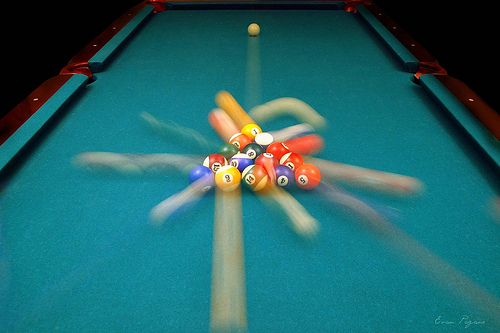
Photo by Evan Pagano
There is a multiplier affect from this vim of vigor that motivates a rekindling of fire under other activities from the backburner as well; a well placed cue ball into the rack. This is an odd but welcome phenomenon: the less spare time we suddenly find available, the more ambitious we are to fill it.
In my 2012 essay The Creative Flame (and How to Stoke It) I considered the creative spillover from artistic endeavors onto other activities benefitting from imaginative thinking. In both cases, one action can stimulate several unrelated and inspired actions. Writer’s block on a new blog draft can be dislodged by an hour at the piano. Resistance to the resumption of several ambitious to-dos this fall can be dissolved by a hard deadline in any single one. So for those readers returning to the routine with a bad case of sunshine melancholy, fret not. Voila, the multiplier effect that saves us from our summer months on slow idle, just being lazy.
On a completely different tangent
Some of us are born with a clear sense of ambition and direction, of obvious talents and seemingly predetermined destinies. The rest of us – the most of us – ramble down blind alleys and pinball from one promising endeavor to the next, drawn to the light of the latest epiphany.
What struck me most about the suicide of Robin Williams was his reported despair over the downward spiral of career options. The singular Giant in his field (with a capital G), the Michael Jordan of comedy and Academy Award winner, the transformative genius of so many creative characters; was he besieged by a success most deserved and predestined, and mortally despondent over an inability to continue its achievement at that level or find new avenues of expression?
Could it be that those of us with less obvious talents – at least revealing themselves at an early age – benefit from the late bloom? We work through careers of convenience, driven more by opportunity and less by passion, but gain exposure to a wide range of possibilities; likely wider than those of laser-focused prodigies like Williams. The limits of core career achievement may be gated by our distractions and fumbling, but at the midlife frontier, when the bias of priorities tilts toward pursuits of real meaning, our encore careers benefit from this broader exposure.
I offer this up less as a conviction than a question. What do you think?
Suggested Song: Get Ready, Rare Earth
Suggested Drink: Summer night cocktail, pineapple juice, cucumber juice, mint, white rum.
We invest in our homes, in cars and boats, in shares of big
companies, in exotic holidays and vintage wines.
Do we invest in ourselves? Are we investment grade?
Summertime and the livin’ is, … well you know the song. The warm days of late July have descended on Provence, which means short runs at sunrise, light simple lunches like local tomatoes with mozzarella and pesto, shutters pulled to the afternoon sun, evening garden apéros with family and friends, and lots of diversions (especially when the kids are bored). Honoring the routines and our healthy habits can be a challenge from June through August. But there is merit to staying in fighting form through the lazy lull of summer months, even if not stepping back into the ring until September.
In the world of startup investing, team quality is paramount. Give me a great team with a good idea; spare me the great idea with mediocre team. This venture capital mantra is drilled into business students and VC interns from Silicon Valley to Tel Aviv. In the end entrepreneurial success is driven by vision, commitment, network, knowledge, adaptability, and the resilience to execute through all of the challenges, and these are personal qualities not product descriptions.
Intérprize ambitions are even more reliant on the quality of execution given the personal nature of these projects. An intérpreneur’s foremost motivation is not financial return but personal fulfillment: the publishing of a best-selling novel; opening of a popular café; completion of an Ironman triathlon, as examples. The deepest form of reward is acknowledgement (although that need not be exclusive to a tidy profit for a job well done).
And most all intéprize endeavors require investment:
The aspiring author may need to firm up with a few college courses in creative writing, travel for research, and pay for the services of cover artists and agents.
A café space will need to be purchased, licenses obtained or transferred, renovations undertaken and appliances serviced or acquired.
The Ironman within will need a race-quality bike and running shoes, workout kit for swimming, running, and biking (these people are not normal), paid memberships to local sports clubs, and travel to competitions.
A key question then is, are you worth the investment? Can you define a compelling vision, are you truly committed to its execution, who’s in your network that can help, what is your relevant knowledge and skills, can you identify risks and adapt, and the most critical element: are you sufficiently robust and resilient to negotiate the inevitable trail of challenges ahead; are you in shape for the ring? The answers to these questions will help you understand at what stage of project launch you are now – contemplation, planning, execution, correction, (summer pause) – and the level of investment, if any, that can be justified.
Is there any investment offering a greater return
than an investment in self?
These questions apply to any startup endeavor and are no less relevant to an intérprize project. Before setting pen to check, set pen to pad like any good investor. Sketch out an honest assessment of your current status, your stage of launch, the quality of your effort, and your investment grade. Shouldn’t the best investment start with you? Are you a worthy bet in the ring? Might I suggest a glass of cool rosé to aid in the analysis? It is the summer after all.
Suggested Song: Iron Man, Black Sabbath
Suggested Drink: A rich chocolate milkshake (full of carbs and protein for post-race recovery)
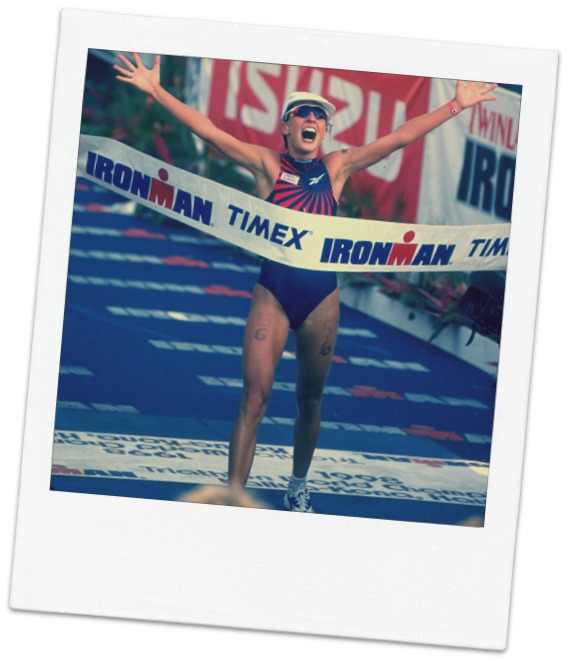
The 4th annual Ironman 70.3 of Aix-en-Provence brought 1,676 athletes and their supporters into town in early May. Uberjocks and jockettes filled the juice joints on Saturday, topping off their pregame power reserves, and then the many bars and pubs on Sunday for a well-earned post race reward and system flush. The commercial caravan in tow rivaled the Tour de France invasion from last summer. Open tents aligned along Cours Mirabeau were filled with top brands of racing bikes, running shoes, shorts and tee shirts, insulated swim wear, sun glasses, water bottles, coffee mugs, energy drinks and inspired consumers. Now if I just had that cool hat I could clip 2 minutes off my time!
Spotting Ironpeople around town is relatively straightforward: look for expensive competition gear clinging to lean, muscular frames and registration numbers tattooed in Sharpie black along buff upper arms. The lack of body fat is another dead giveaway. Swimming 2 kilometers in open water, running a half marathon, or biking 90 kilometers over hilly Provence terrain; each alone would test the mettle of we mere mortals. Completing them in sequence over a warm Sunday morning defies belief. It’s not a pursuit forgiving of the few extra pounds acquired for winter insulation. It amazed me that the rigorous Aix 70.3 is just a half-competition. A full Ironman doubles the 3 distances covered.
Preparing for a triathlon demands real commitment. The training schedule offered in the Ironman website (click here to access) covers 6 months of preparation, ramping up to at least 2.5 hours per day of swimming, biking and/or running by month 5. And more than physical endurance training is needed to compete effectively. A balanced, healthy diet is key to building and replenishing energy stores, and mental conditioning is vital to overcome the many walls encountered through the long weeks of training and final race.
Anyone taking on a grand ambition – writing the next great American novel, opening a restaurant, buying a surf shop on some distant exotic island – can learn much about effective prep from the triathlon regime. We go through stages of contemplation, planning and action when considering major life projects or the immense challenge of an Ironman competition. In cases of profound aspiration I can think of 5 common elements that directly impact the chances of success when transitioning from plan to action:
Commitment – to the months of hard work that follow your initial flash of inspiration.
Pacing – to avoid overreach and burnout after that initial charge of adrenalin-fueled enthusiasm.
Balance – among the holy trinity of mind (knowing your heading), body (having a sound ship) and spirit (building the passion to overcome the challenges).
Partners – for mutual support and encouragement through the many miles of training, breakdown, rebound and achievement.
Objective – to define the end goal and know when we’ve reached it.
What am I missing?
A final thought on the properties of iron. It’s incredibly strong when well maintained but susceptible to rust and decay when neglected. Many of us entertain grand ambitions – what I call Intérprize® plans – at mid life, as the distractions of kids and career recede and our priorities turn to self realization; to the this is my time now time. If there is nothing pushing us to excel at this age the rust creeps in, and that fear motivated the few older Ironman competitors with whom I chatted to take on this challenge post 50. What is your challenge and is there an Ironman within ready to pursue?
Suggested Song: L’Excessive, Carla Bruni
Suggested Drink: a chilled carafe of Provence rosé (in the late afternoon sun)
Nice, France is a city study of contrasts and contradictions. Easy to love and easy to dismiss, Nice requires patience, curiosity, and willing leg stamina for the payoff. If you visit, and it is a city worthy of diversion, make an effort to dive below the gauzy surface and the soulful side of this French-Italian port town will start to emerge.
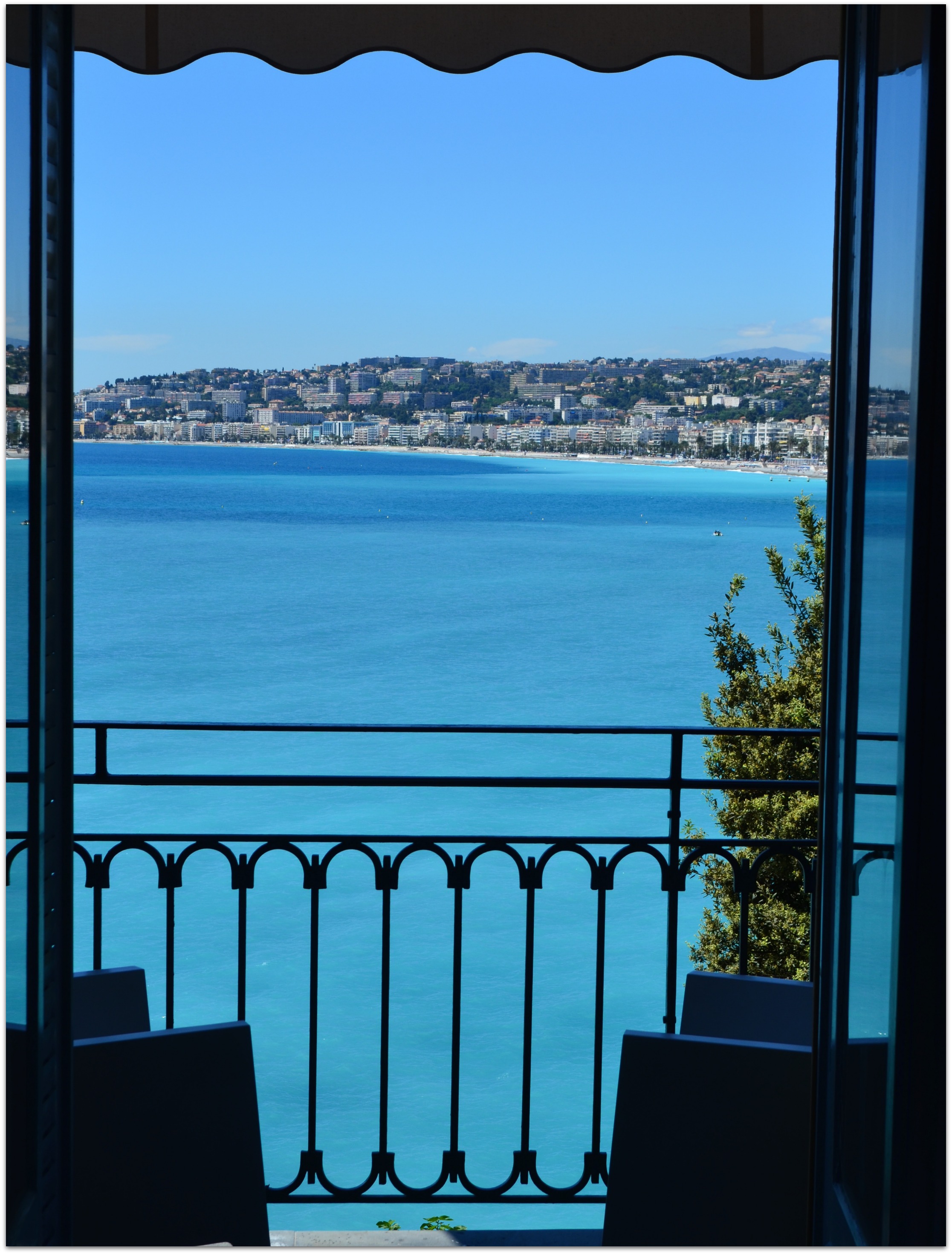
We’ve been spending a few days here, my 3 kids and I, as a local escape to the sea from our landlocked base in Aix-en-Provence. The journey by slow train was breathtaking, winding through seaside towns like Antibes and Cannes, the warm Mediterranean just meters to the right, the snow-capped Alps standing majestically to the left. We’ve opted for an AirBnB apartment facing the sea, which is a worthy consideration. For less than half the price of a small room at the opulent Hotel Suisse next door we have beds for 4, a workable kitchen, and sweeping views of the azure Mediterranean. And why go to Nice if not first for the sea?
The market square in the city’s Old Town can be a deflating experience in the spirit of Fisherman’s Wharf in San Francisco; a tourist mass tripping over itself with cameras and fanny packs, eager to lap up overpriced gelatos and the mediocre seafood being hyped by street side barkers. But a diversion up one of the many tight and confusing alleys in the neighborhood reveals authentic shops servicing the local residents. I am struck in particular by the abundance of small butcher shops, fish stalls and tiny cafes tucked here and there. Take an espresso at Cafes Indien (seeking it out will be half the fun) and watch the mix of local Niçeois and visiting sightseers meander through the passage. Alleys like this are where the native colors of this historic neighborhood start to emerge.
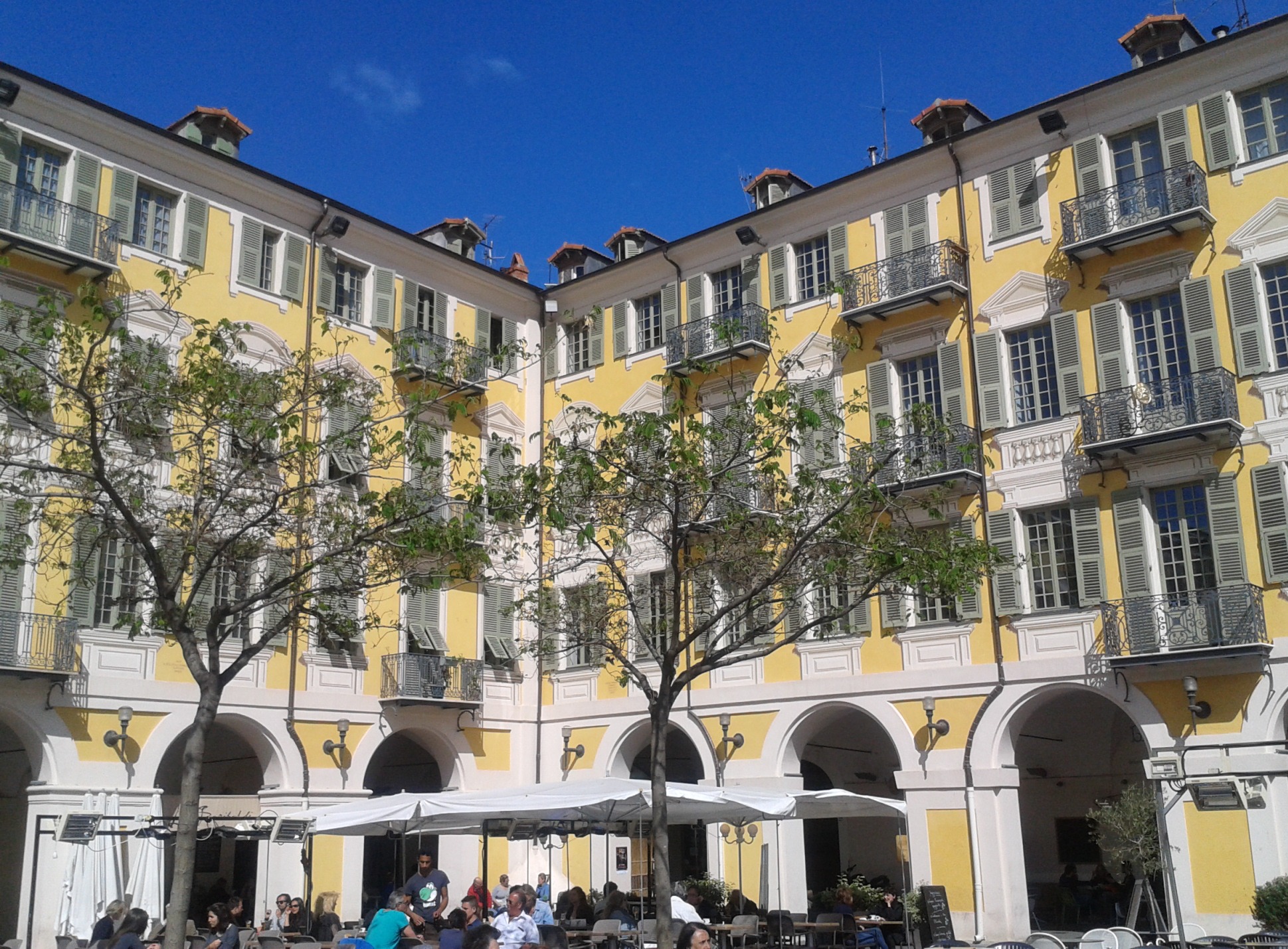
Hikes beyond Old Town are required to get a more honest impression of this city and these reveal a greater diversity of style, color, and community than our hometown of Aix-en-Provence. Nice was part of Italy until 1860 and this influence is evident in the architecture and varying pastel tints that are so soothing in the Mediterranean sun. Aix is an elegant town of 17th and 18th century baroque townhomes rendered in shades of local sandstone; bourgeois and exquisite. Nice offers the old and the new, the grand and the humble, with modern apartment buildings of glass and steel scattered amongst historic structures. With its palm tree-lined boulevards Nice gives off a relaxed vibe of Southern California cool; chic and dynamic.
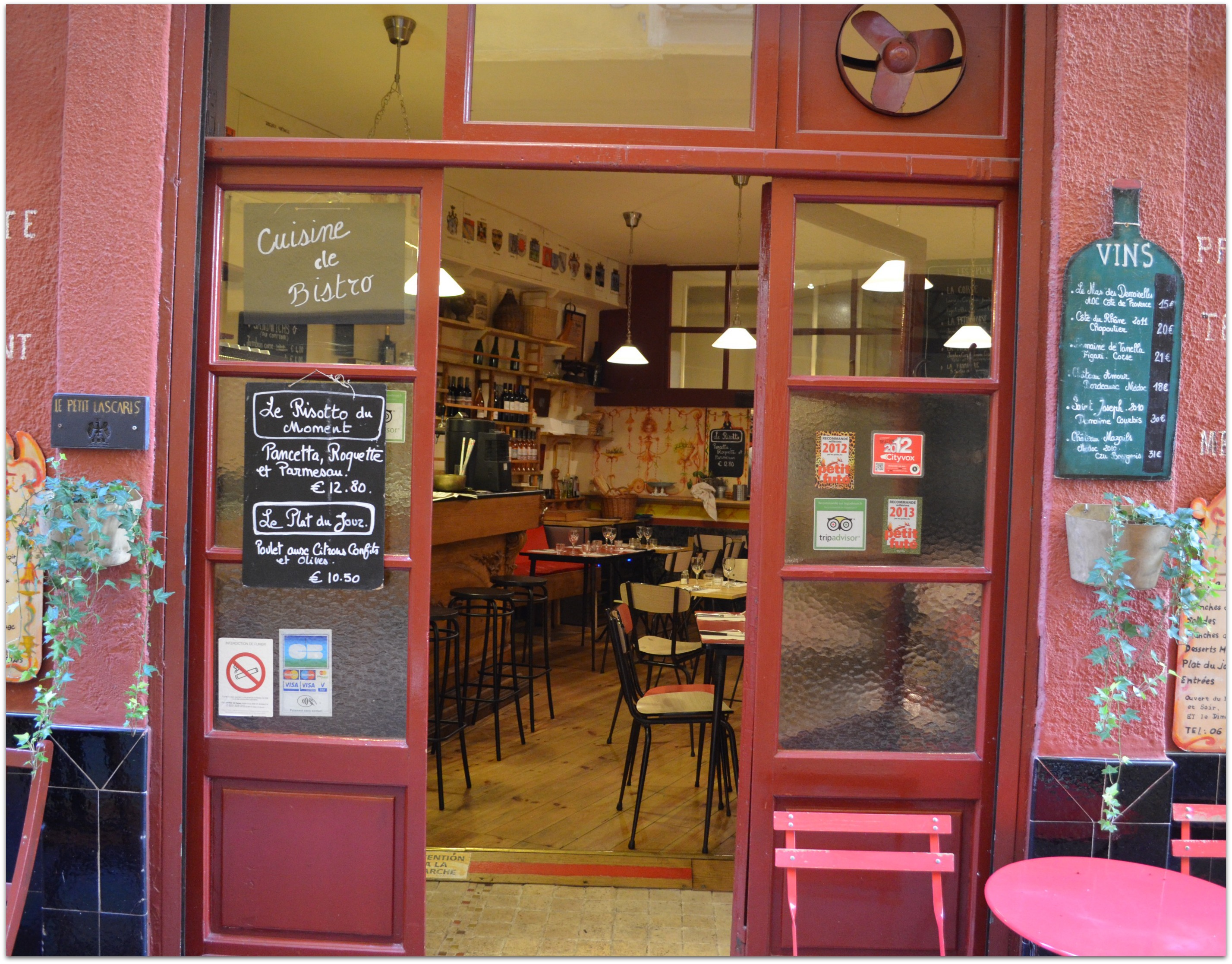
We’ve had no problem uncovering charming, distinctive restaurants during our stay here. After taking early evening drinks in the Old Town plaza – predictable dining but excellent people watching – we’ve ventured beyond for dinner options less touristic. La Luna Rossa and La Merenda have been outstanding, but my personal favorite has been Luc Salsedo, both for its inventive culinary approach and incredibly friendly service. All 3 are well worth seeking out; reservations suggested.
Nice has much more to offer than mentioned here – it’s museums, for example, are world class – but traveling with kids dictates a different itinerary, one of skateboarding (excellent along the seaside Quai des États-Unis), beach sitting and smoothy seeking. To those pursuits my 3 junior critics give it thumbs way up. If fortunate enough to find yourself along the Cote d’Azure this summer give Nice a try.

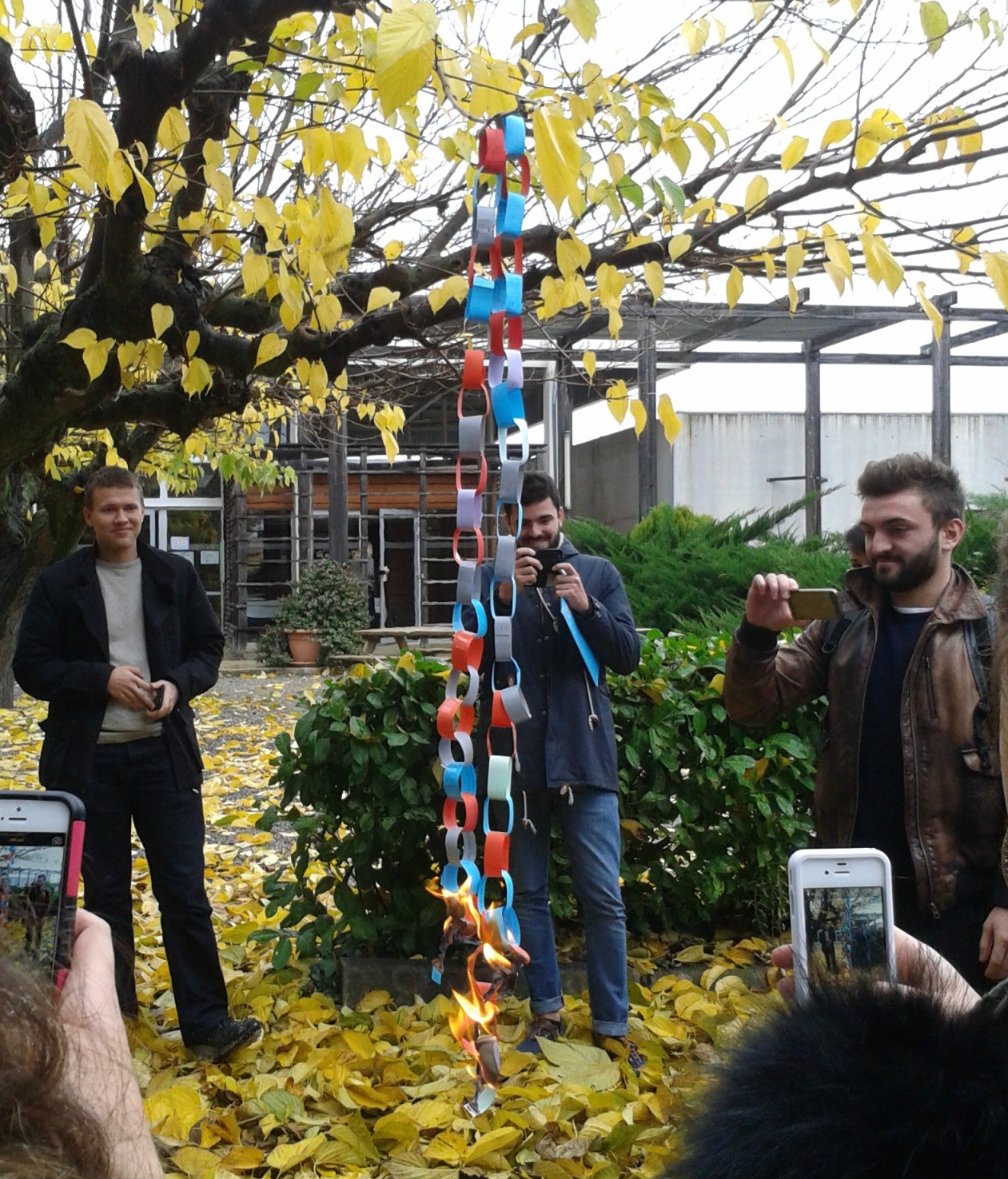 No entrepreneurial activity remains viable long-term without respect for balance and interpreneurial pursuits are no exception. Interspersed with our sessions on project planning were happy hours, with a focus on the power of positive emotions and practices to stimulate them. I think the chocolates test for vision expansion was a favorite (who knew those cherry-filled candies were spiked with liqueur!). We also built a paper chain of our change bracelets and burned them in the campus courtyard at noon, picture at right. On Friday afternoon my Interprize Group partner Jaki Weller led the class through 2 hours of yoga, meditation, and an insightful nutrition primer. All very unconventional for an IAE business seminar and thought provoking for the participants.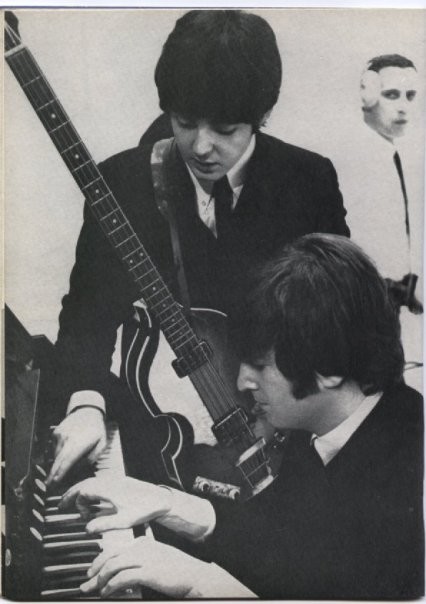








 BILL MAGILL