Suggested Song: La Serenissima, Daft Punk
Suggested Drink: Bellini: peach puree, prosecco.
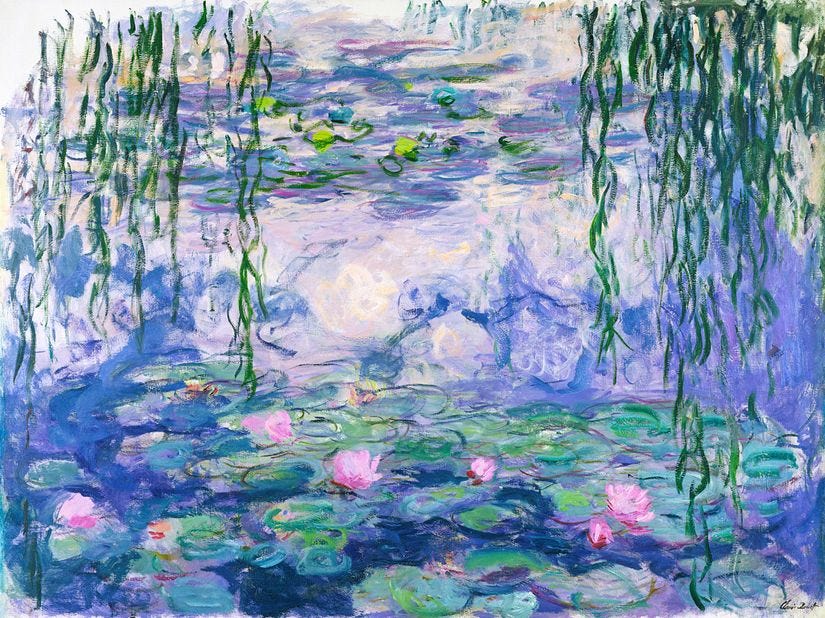
Monet was in a funk. He had cut his teeth on the beach scenes and seascapes of Le Havre in the early years, and then turned his brush on Paris and the conical haystacks dotting its countryside. His hazy impressions of industrial London captured the fog and soot and sun like no artist before. (No top hat dandies in white tie tuxes for our man Claude.) Then Giverny, where for the past 25 years he’d been setting up the easel around his placid little pond. Lots of water lilies. Now Claude was lilied out.
By 1908 Monet was famous, rich, and creatively inert. With fellow rebels like Renoir, Pissarro, Degas, and Cézanne (my man from Aix), he had reimagined what was possible with paint and ushered in a new era of art. Fortune and acclaim followed, but fresh inspiration was proving illusive. No more f*cking water lilies (he may have said to his life-long art dealer Paul Durand-Ruel). I am 68 Paul, fini!
Venice
By the break of the 20th century Venice had become a bucket-list destination for the well-heeled glitterati of Europe and America. Its charming canals and terraced cafes also pulled in the artist hordes, the easel-toting beret crowd looking for the next it spot to sketch and paint and carouse.
Monet and Alice (wife #2) decided on a short sojourn to Venice in our aforementioned year – 1908 – mostly from a romantic bucket-list angle. Preferring to be at the front of a new wave, not the tail, Claude felt little pull to paint much of anything, most of all an overdone city. Still, he decided to pack the brushes. What the hell, at least there won’t be water lilies (he may have been thinking).
The artist tumbled for the town quickly. It wasn’t as much the striking Renaissance architecture or romantic canals or bustling alleys, but more the soft Italian light enveloping these things that seduced and vexed him. That is the word he used – enveloppe – when describing what he sought to master in paint. This shroud of particulate air and the light refracting through it changing with the hour and circulation and atmospheric mood of the day, and each day unique. How could he capture that ephemeral ambience with simple strokes of oil pigments on canvas? Well Claude, this is what you do, so get to it! And he did.
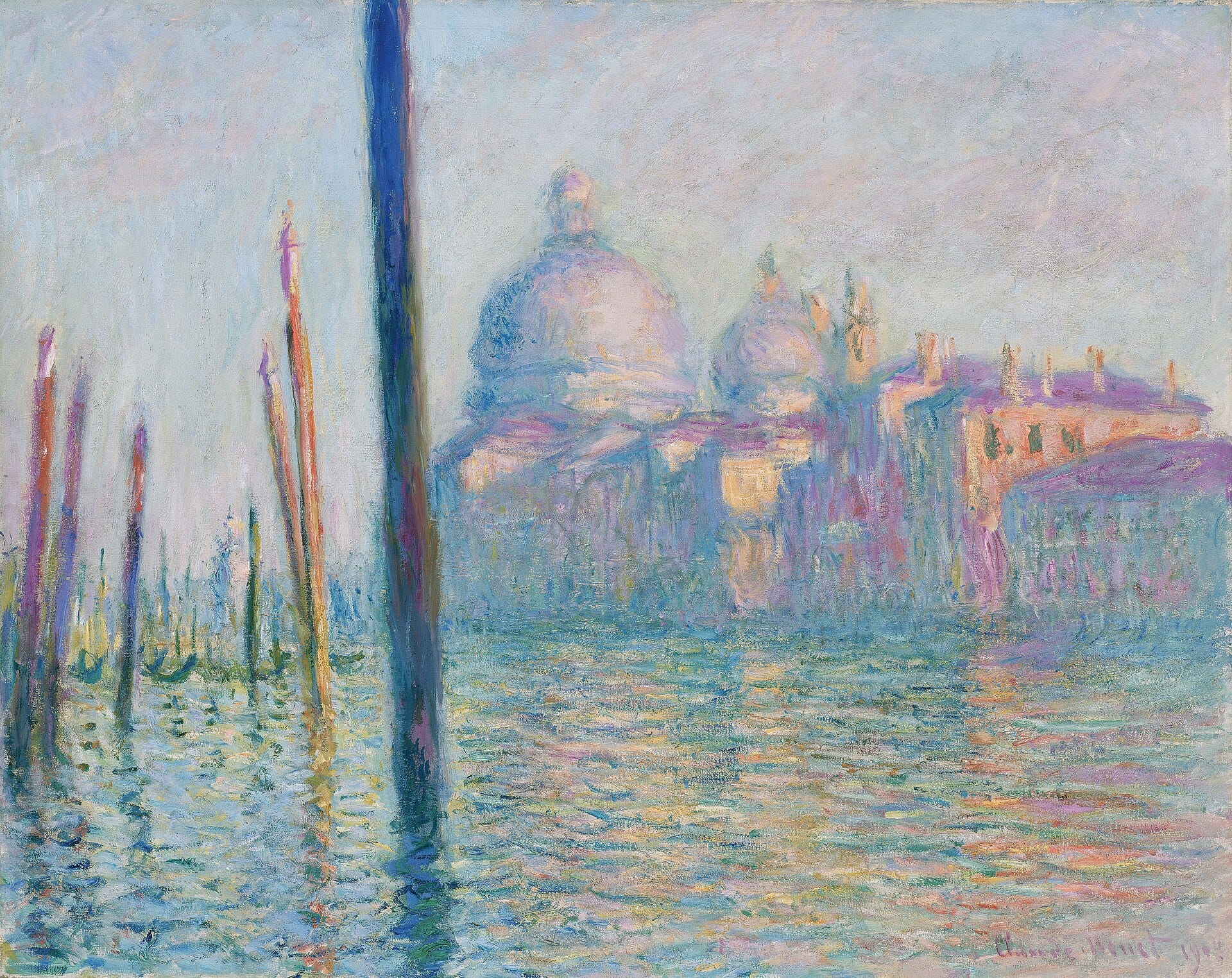
Monet’s late creative resurgence provoked by Venice has been well documented. He and Alice spent 6 weeks in the city while he painted its landmarks like the Church of San Giorgio Maggiore and Santa Maria della Salute on different days and times of the day. He painted from bobbing gondolas and set up along the canal banks, conquering the challenges of color and mood, or tormented by them. It all drove him a bit manic, at times exhilarated or disheartened, but creatively charged. He returned to Giverny with 37 canvases of genius in various states completion.
Alice died of leukemia in 1911, not 3 years after their blissful Italian getaway. He was crushed and upon her passing returned to the Venice collection, finishing 29 pieces. Perhaps he hoped this project would invoke memories of happier times. It did seem to stir in him an enthusiasm of the younger artist, as he finished a number water lilies canvases as well that had been collecting dust in the atelier.
Paul must have been thrilled (and nicely rewarded), as the Venice collection is considered some the most interesting works of Monet’s venerated career. I’m hoping Claude was happier man for it. The world is certainly a richer, more beautiful place for it. And we all get to enjoy it.
Bill Magill
San Francisco


love them and your description of his artistic tribulations