Suggested Song: Le Sud, Nino Ferrer
Suggested Drink: Upside Down Martini: Vermouth, gin/vodka, olive.

I’m back in Aix and working from a new squat; a temporary flat rented from my former landlord, Emmanuel. The small unit is in a grand old building in the historic Mazarin quarter, kitted out in flea-market rococo, with creaky porte-fênetre French windows that open to a calm garden courtyard, fountain a’girgle. Provence charm.
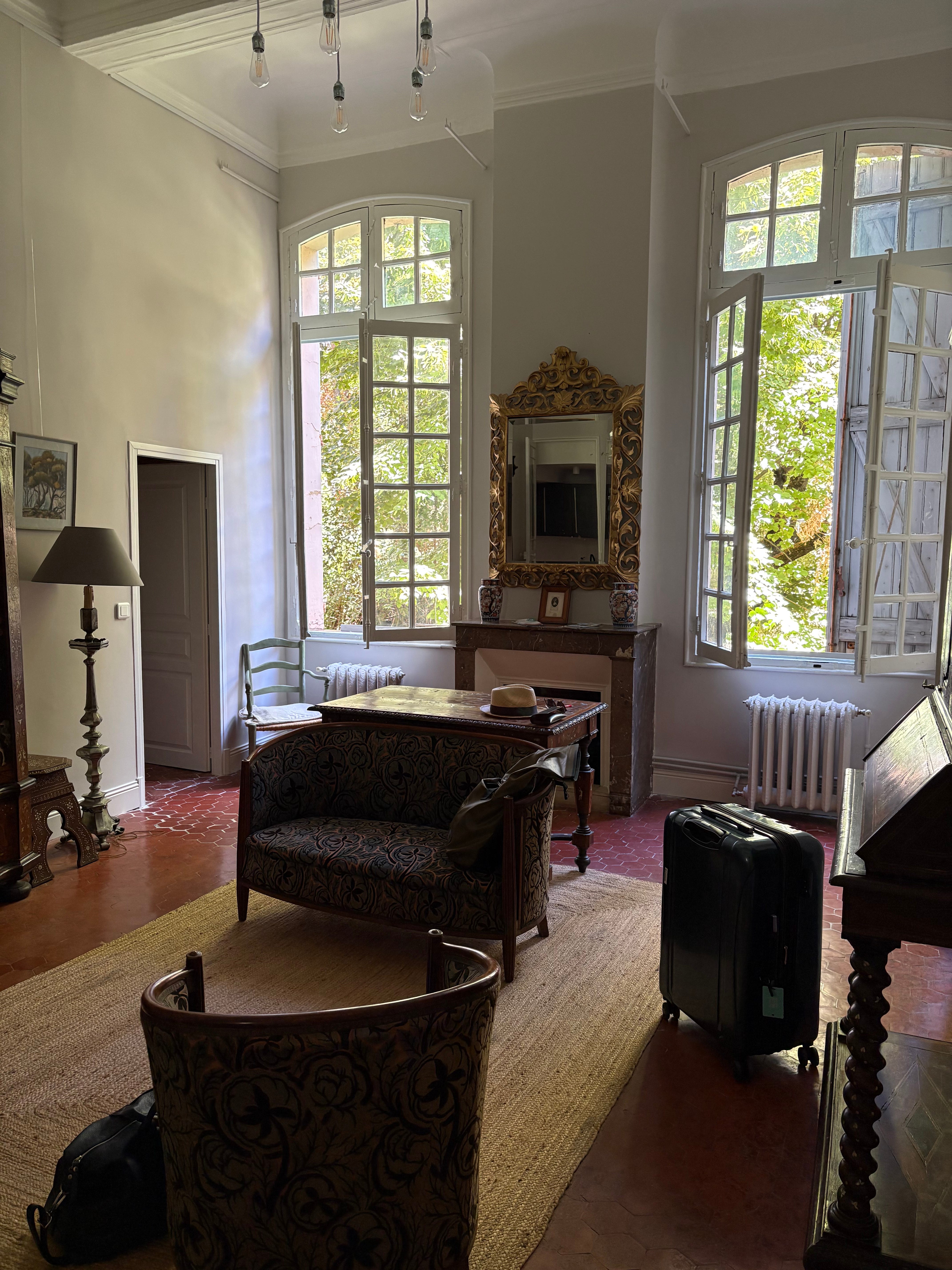
Slumming it in Aix-en-Provence.

When typing away on a laptop here I imagine myself as the young Hemingway pecking furiously at his Underwood in Paris. Pretentious in the extreme, but it’s an image that pushes me to respect the process, to sit my ass in the chair and write, damn it. Delusions have their value.

I’m trying to have a creative few weeks during this stay – despite my holiday mindset – and so my thoughts are on process.

Top or bottom. How do you lean?

Some artists tackle the work-to-be-done in a bottom-up process, as if assembling a LEGO kit. A painter might experiment with a series of thumbnails, then commit to a drawing. Blocking in the major shapes and color values could follow, then mid-tones and background, followed by finer details and textures. A few more dabs here and scrapes there will finish the masterpiece, and then a sheen of varnish will lock it in.
https://images.squarespace-cdn.com/content/v1/50305c7684ae7fae2e65756a/1479475412720-8XNW75H2PWXGINTGPAEP/FL9-Acca.jpeg
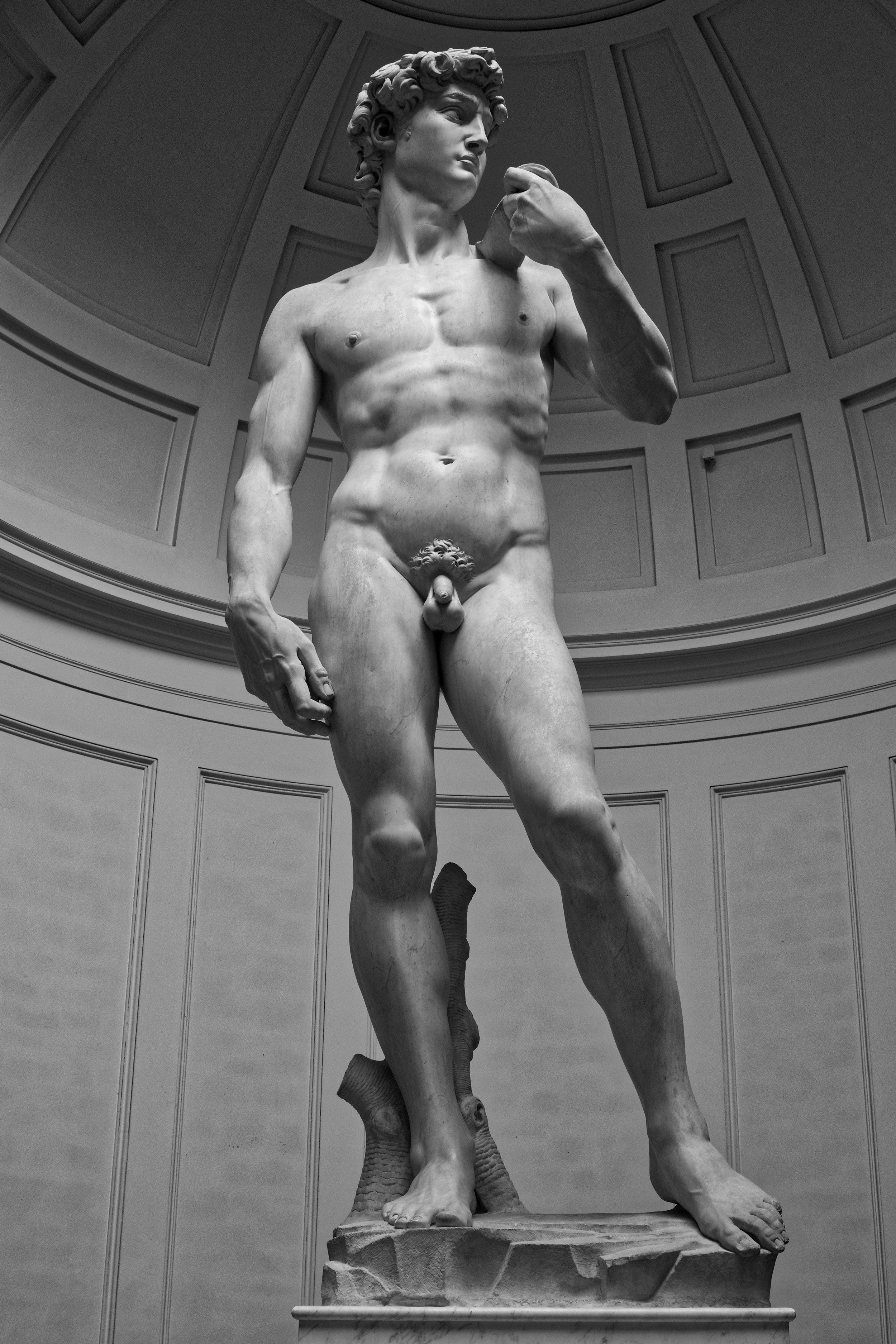
Michelangelo’s David. Photo by Jim Nix.

Others follow a top-down practice. Think Michelangelo and his David sculpture. Aside from a few crude drawings, he spent no effort on mock-ups, no plaster casts (an approach that Rodin favored). In 1501 Michelangelo stared up at single massive slab of Carrara marble almost 4 times his height, and with tools in hand got to work.

A good friend writes true crime novels. After reading everything he can find about the caper itself, he’ll assemble a mountain of background information on all things even remotely related to the incident: backgrounds on the crime-committing characters (and the crime stoppers pursuing them), a historic chronicle of similar incidences, psychological analyses of motivations underpinning said crime (why the heck do people do this?), the geography of the region(s), the time period, and so forth. Hundreds of books and journals and articles and records will be read, locations visited, and people interviewed. This exploratory period will take years and the repository of data will grow by month to Everest proportions. And then, with a tentative story arc in mind, the whittling-down begins. A first draft will be revised and tightened, revised and tightened ad nauseam, until his editor gives the final thumbs up.

Yeah, my pal is a total top. The final word count in his published book will be an order of magnitude less than the unwieldy starting point. Similarly, the floor of Michelangelo’s atelier in Florence was surely littered with more spent marble over 3 years of toil than twice the volume of the emergent David. (Pity his poor nightly cleaner. Oy vey!)

Get creative

There is compelling evidence that regular creative activities can strengthen a brain’s connections, enhance flexible thinking, and even produce biological brains that look years younger. (Click here to read more.) Creativity is as essential to the aging brain as play, as community, as sleep, as exercise, and as eating well.

https://media.springernature.com/full/springer-static/image/art%3A10.1038%2Fs41467-025-64173-9/MediaObjects/41467_2025_64173_Fig1_HTML.png?as=webp
From Creative Experiences and Brain Clocks, Nature Communications, 2025.

You may not consider yourself creative. I’m calling bullshit on that. Everyone can be creative, even if not an artist. My brother is no artist (sorry Joe), but he looks at a massive block of dilapidated home and imagines a palace (where the rest of us just see a dilapidated home). Once acquired, he enters with sledge-hammer and drill and saw and takes it down to the foundational studs (great for anger management), then rebuilds it plank by board by crown molding in his own vision. Incredibly creative.

My own process varies. I’m working on a new song at the moment, and during these past weeks in Aix I’ve spewed out dozens of stanzas of mostly lame drivel. But through endless revisions I’m ferreting out a few tasty pearls, combining disparate lines and grabbing words from here to insert there. This top-down process of throwing everything up against the wall and then slowly rearranging is providing greater clarity on the arc of the song, its most powerful narrative, and the driving theme (which will be the futility of ambition; a theme that is so not me, and thus a delightfully wicked challenge).

Other times I work bottom up. I have a new musical script in development and I know exactly how the story will block out, the major and minor characters, the various plot twists and its dramatic ending. Now comes the finer details, the minor shades, the bit of texture that will take it from mildly amusing to the next Hamilton on Broadway. As stated above: delusions have their value.

If you struggle for inspiration or hit a wall, try switching up the process. Go bottom up if you’re a top-down type, or vice versa. (My gay friends in San Francisco will find that suggestion mischievously titillating.) Actually, most of us probably exist somewhere along that spectrum, not at the extreme ends.

A big thanks to Leia Immanuel, who helped guide my thinking on this piece. She’s bouncing around Europe this summer after just completing a BA in Art at Swarthmore, and was in Aix for a bit of Cezanne inspiration. We shared coffees. More on Leia and her art can be enjoyed here.

Bill Magill
Aix-en-Provence
Suggested Song: La Serenissima, Daft Punk
Suggested Drink: Bellini: peach puree, prosecco.

Monet was in a funk. He had cut his teeth on the beach scenes and seascapes of Le Havre in the early years, and then turned his brush on Paris and the conical haystacks dotting its countryside. His hazy impressions of industrial London captured the fog and soot and sun like no artist before. (No top hat dandies in white tie tuxes for our man Claude.) Then Giverny, where for the past 25 years he’d been setting up the easel around his placid little pond. Lots of water lilies. Now Claude was lilied out.

By 1908 Monet was famous, rich, and creatively inert. With fellow rebels like Renoir, Pissarro, Degas, and Cézanne (my man from Aix), he had reimagined what was possible with paint and ushered in a new era of art. Fortune and acclaim followed, but fresh inspiration was proving illusive. No more f*cking water lilies (he may have said to his life-long art dealer Paul Durand-Ruel). I am 68 Paul, fini!

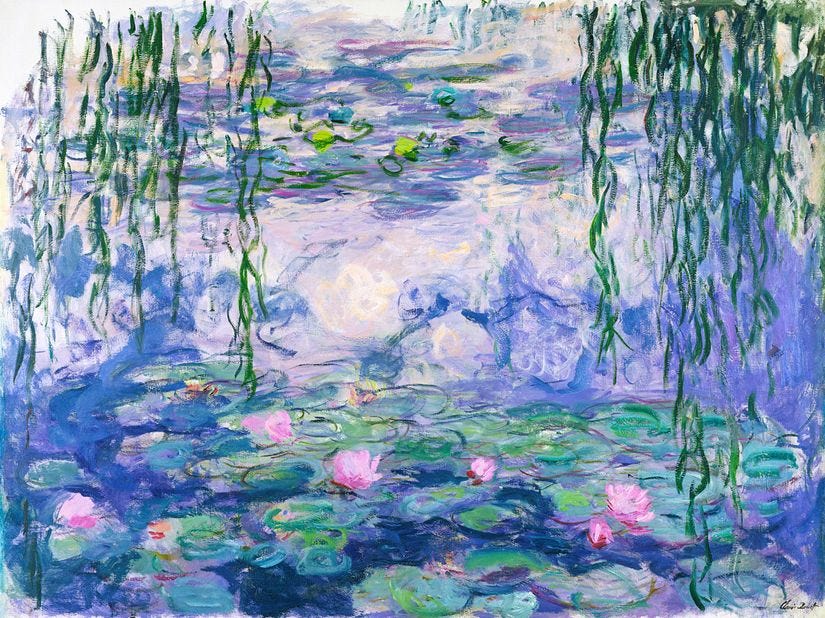
Just another water lilies impression by Claude Monet.

Venice

By the break of the 20th century Venice had become a bucket-list destination for the well-heeled glitterati of Europe and America. Its charming canals and terraced cafes also pulled in the artist hordes, the easel-toting beret crowd looking for the next it spot to sketch and paint and carouse.

Monet and Alice (wife #2) decided on a short sojourn to Venice in our aforementioned year – 1908 – mostly from a romantic bucket-list angle. Preferring to be at the front of a new wave, not the tail, Claude felt little pull to paint much of anything, most of all an overdone city. Still, he decided to pack the brushes. What the hell, at least there won’t be water lilies (he may have been thinking).

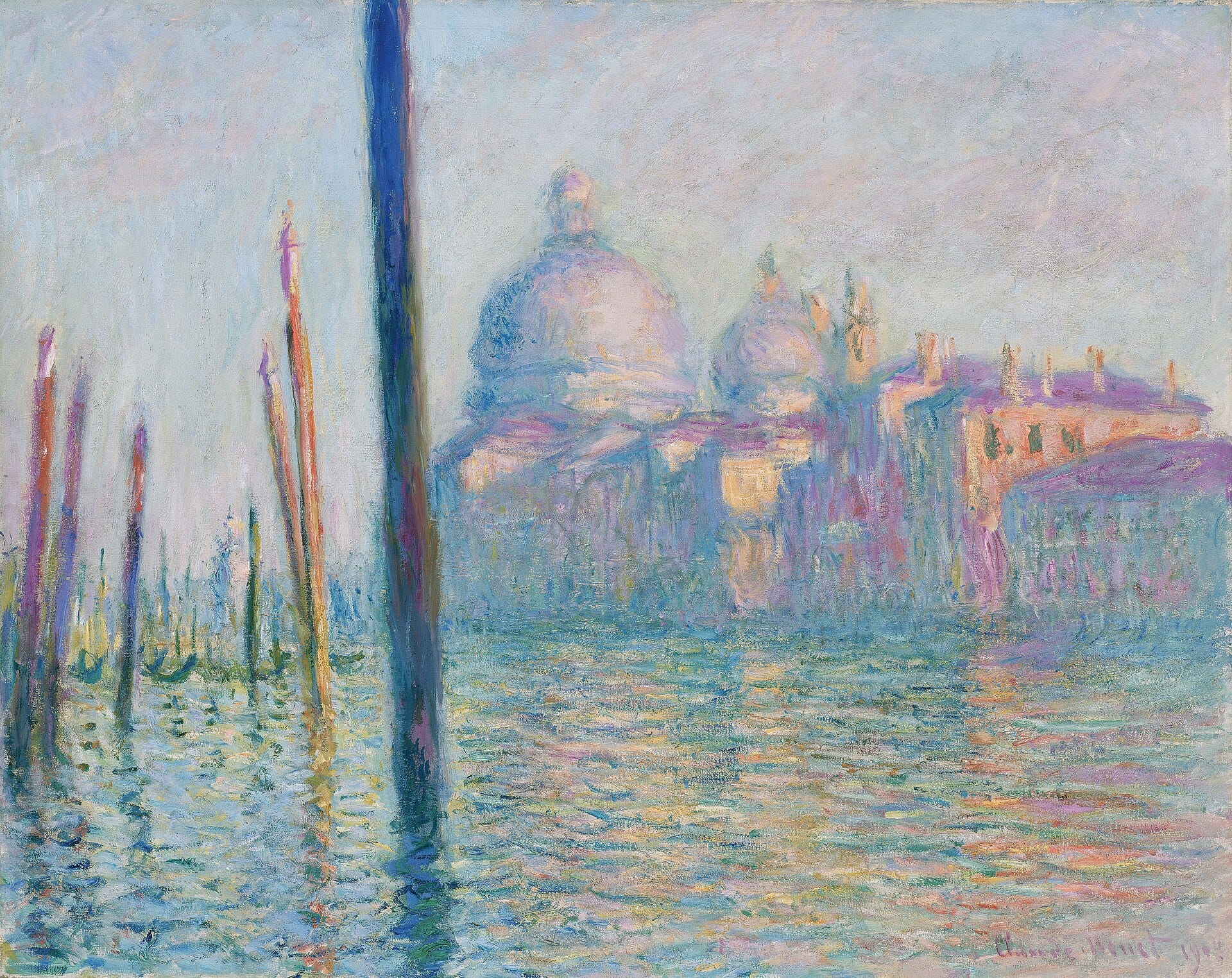
The artist tumbled for the town quickly. It wasn’t as much the striking Renaissance architecture or romantic canals or bustling alleys, but more the soft Italian light enveloping these things that seduced and vexed him. That is the word he used – enveloppe – when describing what he sought to master in paint. This shroud of particulate air and the light refracting through it changing with the hour and circulation and atmospheric mood of the day, and each day unique. How could he capture that ephemeral ambience with simple strokes of oil pigments on canvas? Well Claude, this is what you do, so get to it! And he did.

Le Grand Canal, facing the Salute Church in Venice, Claude Monet, 1908.

Monet’s late creative resurgence provoked by Venice has been well documented. He and Alice spent 6 weeks in the city while he painted its landmarks like the Church of San Giorgio Maggiore and Santa Maria della Salute on different days and times of the day. He painted from bobbing gondolas and set up along the canal banks, conquering the challenges of color and mood, or tormented by them. It all drove him a bit manic, at times exhilarated or disheartened, but creatively charged. He returned to Giverny with 37 canvases of genius in various states completion.

Alice died of leukemia in 1911, not 3 years after their blissful Italian getaway. He was crushed and upon her passing returned to the Venice collection, finishing 29 pieces. Perhaps he hoped this project would invoke memories of happier times. It did seem to stir in him an enthusiasm of the younger artist, as he finished a number water lilies canvases as well that had been collecting dust in the atelier.

Paul must have been thrilled (and nicely rewarded), as the Venice collection is considered some the most interesting works of Monet’s venerated career. I’m hoping Claude was happier man for it. The world is certainly a richer, more beautiful place for it. And we all get to enjoy it.

Bill Magill
San Francisco

Suggested Song: Come Out and Play, Billie Eilish
Suggested Drink: Starbucks Pink Drink: strawberry, açai, coconut milk. (A Barbie favorite.)

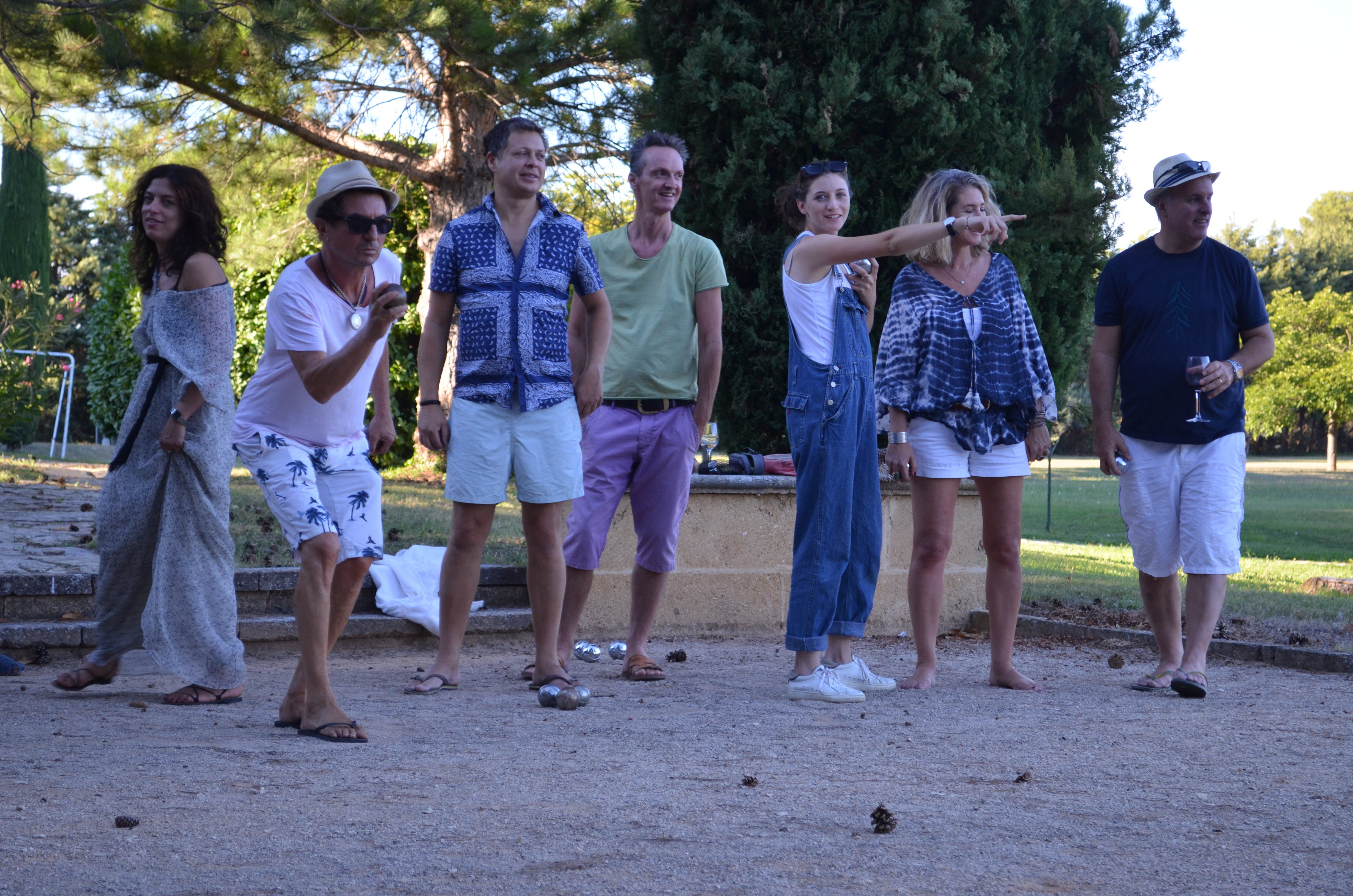
Ian Taylor is a good friend, and he likes his games. Maybe it’s a British thing or maybe Ian is just the competitive sort, I’m not sure. He was my first good friend in Aix-en-Provence, some 16 years ago, crossing paths at Collège Mignet as our kids prepared for junior-high. Many a rosé-splashed afternoon followed, time well wasted in his cottage garden playing pétanque, darts, ping-pong, or something pulled from a deep box of board and card games.

Ian, I just want to sit in the Provence sun and get a slow, easy buzz on.
What are talking about old bean, let’s get a game going!
Sigh.

Ian is on to something: playing games offers deep benefits beyond just good fun, especially when enjoyed with friends. Forming teams and facing off builds the bonds and plants the memories that linger long after an evening ends, or a life in Provence fades. Some impromptu pétanque matches chez Ian were legendary, his French neighbors dangerously skilled at this Mediterranean obsession. (The Italians play bocci. Same game, different drinks.) No one takes the affable pick-up game seriously au debut; everyone is boisterously invested with taunts and praise à la fin. The rosé helps.

A summer afternoon pétanque match in Provence. The sporty Ian Taylor 3rd from left.

We allow ourselves to outgrow game playing, and this is our loss. It’s known to spur creativity, strengthen social connections, stimulate cognitive functions, and produce joy; all positive elements of longer, healthier lifespans.

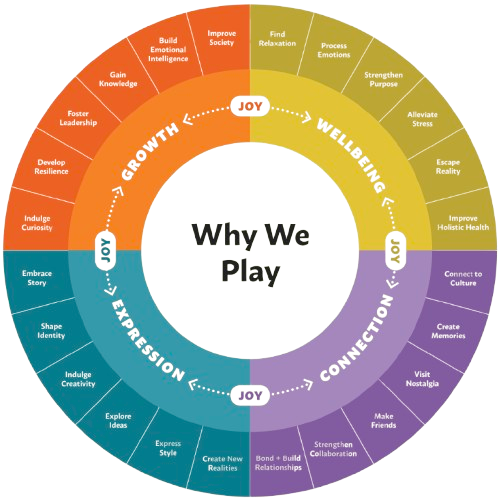
How can I be sure? Mattel Corporation (of Barbie and Hot Wheels fame) has studied the health benefits of play and produced a fascinating report on its merits. They interviewed over 33 thousand people of all ages and confirmed, statistically, what we’ve always suspected: games and play feel good to us because they are good for us.

A circular chart with different colored circles

AI-generated content may be incorrect.
Findings from the Mattel study on the merits of play. (Go to the study for a more readable image.)

This is all particularly relevant now, at this moment of phone screen social detachment and analog estrangement. For boomers, playtime provides a grounding rod to our earlier, earthier selves. We slow down and touch real objects, we share physical space, we josh and encourage, we get gloriously excited and giddy; just like our old kid selves. For everyone regardless of age, playtime provides a relaxation ritual in an accelerating world (quoting from the Mattel study). So very true.

It is encouraging to see young people embracing the joy of play as well. Board game cafes are booming across the US and abroad (more about that here) as people chose to turn off their phones and engage with friends across a table. The Game Parlour in San Francisco’s Inner Sunset offers over 100 tabletop options, plus drinks and food. It can pack out on many evenings, with reservations required. You might even spot my son Jess there, who loves board games and lives in the neighborhood.

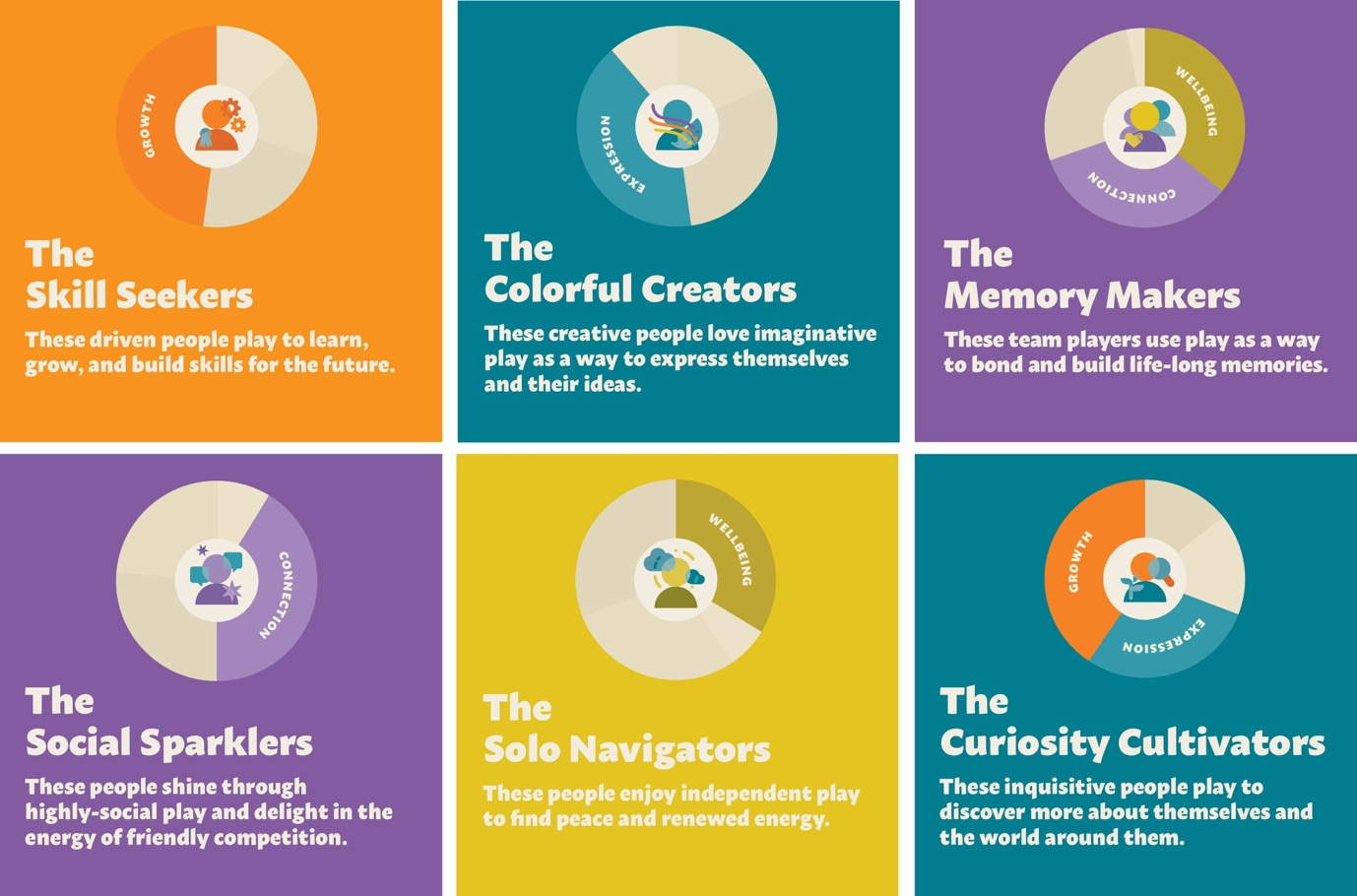
We don’t all play in the same way or seek the same reward. Mattel submits that there are 6 play personalities, as outlined below. The labels alone may reveal your type. Refer to the report linked above to learn more about each. Regardless of our individual motivations, the benefits are mutual as the dices roll and the cards are flipped.

A group of colorful posters

AI-generated content may be incorrect.
Mattel’s 6 play personalities.

“Games create a field of trust, safety, love, and empathy.” Couldn’t we use a bit more of that at this moment in time? Maybe a global summit held in Ian’s Provence garden? Okay boys (and the warmongers are ALWAYS boys), choose your teams and grab your boules, …. pétanque boules that is. Now, where’s that corkscrew?

Bill Magill
San Francisco

Suggested Song: New Dawn, Gaby Moreno
Suggested Drink: Sidewinder IPA, Snake Lake Brewing Company

“To change one’s life: (1) start immediately; (2) do it flamboyantly; and (3) no exceptions.”
– William James

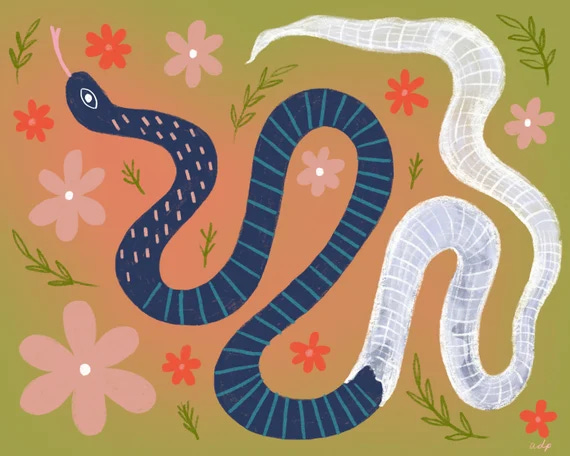
Snakes molt a few times per year. Their bodies outgrow the old skin, and shedding it helps remove pesky annoyances like parasites and debris.

I’m attempting a molt as the year closes out. I’ve outgrown this skin, and there is always debris to cast. As to parasites, I work hard to stay surrounded with allies and advocates, even of the corrupting kind. Still, there is value in refreshing the circle, for that’s not a zero sum game.

Snake Shedding Skin, by Alysha Dawn

I admit to a few moral failings, from the Calvinist perspective. It can be challenging to refuse a petit verre when offered, and then another. I can tumble for someone impulsively and irrationally, taking the scars and leaving the tears. (The chances of this happening increase proportionally with the number of petits verres.) I am a master procrastinator. Nothing motivates me to dust or do laundry more impulsively than a creative deadline. What else? Plenty.

Can we too slither free from our vexing debris? Unlikely completely. But starting the new year with a fresh unsullied skin, even if not surviving first contact, can be instructive. Some blemished bits and unhealthy pieces merit leaving on the trail. A new set of faults and flaws surely await our serpentine glide. Onward.

So, just how do we slip the skin? These 3 pillars provide the core foundation of authenticity and personal stability (or so I will argue over un petit verre): what you do; where you live; and whom you love. Dislodging just one can provide ample imbalance to loosen the membrane. (I upended all 3 with my move to Provence in 2010. Effective, but not sure I’d recommend it.)

Where I live

It’s normal to experience the occasional stall. The wind dies, the sails flutter, the sea calms, and there you sit. I have learned to accept these pauses as an excuse to do nothing productive until the wind picks back up (see moral failings above). It always has and I have had fun waiting. Recently it hasn’t, and so I’ve decided to row to a new lagoon across the sea. Maybe there’s a fresh breeze over there. Maybe I’ll grow a brilliant new skin over there.

Here I float in my new lagoon, typing a few words and playing some music when not dusting or doing laundry. C’mon you beautiful breeze.

Bill Magill
San Francisco

Suggested Song: Starry Starry Night, Don McLean
Suggested Drink: Pastis: … just add water (the official drink of Provence)


“When you’re born there, it’s hopeless, nothing else is good enough.”
– Paul Cézanne (referring to Aix-en-Provence.)

Cézanne is THE son of this city. Other great artists have called it home (Émile Zola and Bill Magill, as fine examples), but none attained the level of acclaim and continued adoration of our good friend Paul. And for that he’s being celebrated this summer with exhibits and events in Aix.

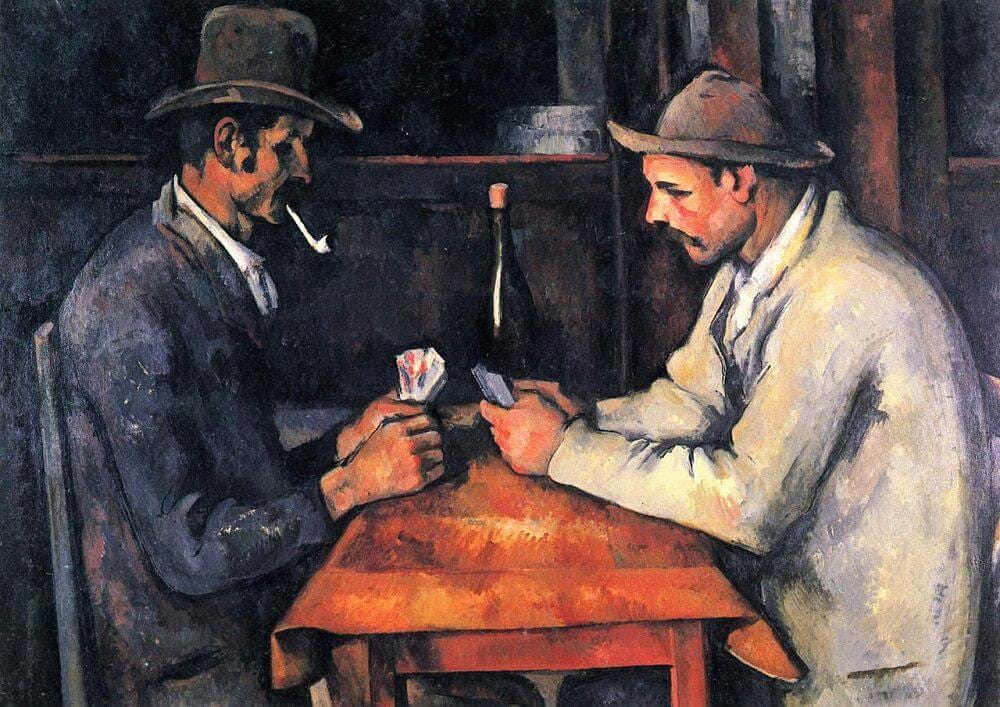
I’ve often considered Cézanne’s peerless renown over my years in Aix, tracing his steps through town (the favorite haunts are marked with sidewalk-embedded badges) and lingering over his works in the modest, local Musée Granet. In 2012, the royals from Qatar paid north of $250 million for his The Card Players, making it the world’s most valuable painting at the time. (Did they realise he painted 3 versions? Suckers!)

The Card Players, Paul Cézanne (version #3)

My appreciation of art is recreational at best. I do like Cézanne, but love Van Gogh. Vincent, too, tumbled hard for the soft yet vivid hues of Provence, doing his most celebrated works in Arles (the ear cutting) and Saint-Rémy (the asylum sleeping). Maybe it’s the drama queen in me that is roused so deeply by the hallucinatory Starry Night, painted before a summer sunrise in 1889 from his asylum window.

A tortured artist Cézanne was not, but radically trailblazing, and considered the creative leap through which impressionist water lilies met cubist taureaux. Picasso and Matisse are both said to have called him “the father of us all,” and the English curator Lawrence Gowing submits that Cézanne’s daring work with the knife pallet introduced “the idea of art as emotional ejaculation.” (I’m committing that phrase to memory.)

But this isn’t an essay about one man’s genius.

What I find most fascinating about Cézanne’s story is not his meteoric impact on 19th century art, but the spooky threads of style and concept that connect this artistic evolution to his trailblazing contemporaries in other disciplines of the same period, such as literature, music, science, mathematics, and dance.

An argument can be made – and ChatGPT makes it here more succinctly than me – that the creative pioneers of this period shared Cézanne’s obsession with:

  • Subjectivity and perception. Cézanne wasn’t just painting what he saw, but how he perceived the subject of his gaze.
  • Fragmentation and reconstruction. He broke forms first into geometric shapes, and then reconstructed them wholly reimagined on canvas.
  • The essence of things. Cézanne placed a higher emphasis on the underlying essence of objects than the mere surface appearances.
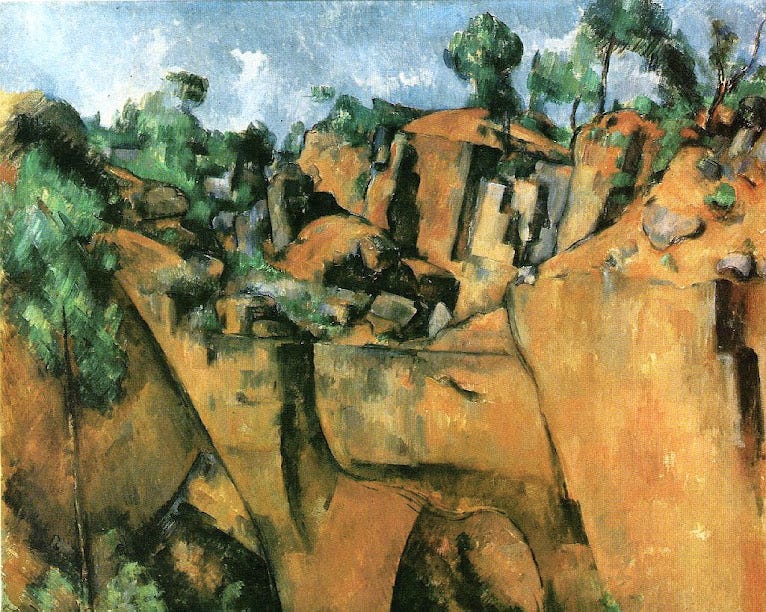
Bibemus Quarry, Paul Cézanne

And so I prompted my trusted assistant further to offer examples that amplify my Wednesday afternoon art-of-distraction epiphany of inspired interdisciplinary connections. And this they/them told me:

On literature, “Marcel Proust’s ‘In Search of Lost Time’ is almost exactly the literary equivalent of Cézanne. He broke from traditional narrative structures and focused on subjective experience, memory, and the reconstruction of reality through fragments of sensory detail.”

On music, “Claude Debussy moved away from traditional harmonic structures in music. Like Cézanne, Debussy was creating atmosphere and evoking emotions through suggestion rather than direct statement.”

Listen to Rêverie, by Debussy:

On philosophy, “Henri Bergson’s philosophy of duration aligns with Cézanne’s attempt to capture the essence of objects over time and through multiple perspectives. He emphasized intuition and subjective experience as ways of knowing the world.”

On dance, “Isadora Duncan rejected the rigid formality of classical ballet, seeking a more natural and expressive form of movement. She was after something real and less contrived, as was Cézanne.” Watch Duncan dance here.

Additionally, math and science became increasingly abstract through the 19th century, with the introduction of complex numbers and the theory of entropy, holding that every system in the universe inevitably trends toward disorganized states. (One look at my son Shane’s bedroom, during his teenage bedlam years, was convincing proof that the theory of entropy was holding up well.)

But this isn’t even an essay about spooky threads in a temporal creative plane. This is a meandering stream-of-consciousness lazy summer arc about the much-debated merits of higher education in 2025. Stay with me, we’re almost done.

At the University of California, Davis I studied physics (major #1) and economics (major #2), to which I pivoted after making first contact with the mental horsepower required to complete major #1. (Also, the hottest girls on campus were on the liberal arts side of the Quad.) Davis was a fantastic school with an amazing faculty, and I learned a lot in both departments. But it wasn’t the core courses that marked me most deeply, nor made me a more interesting Bill. It was in the wildly obtuse electives in which I chose to enroll: Altered States of Consciousness; Mexican History; Film Appreciation, Wine Tasting, and (most relevant to this essay) a course that extended the oft-discussed creative parallels between Picasso and Stravinsky to the works of Max Plank, Sigmund Freud, Samuel Beckett, Alberto Giacometti, and John Cage. This course blew . my . fucking . mind. As my expressive friend and author Mike Finkel is known to exclaim: BOOM!

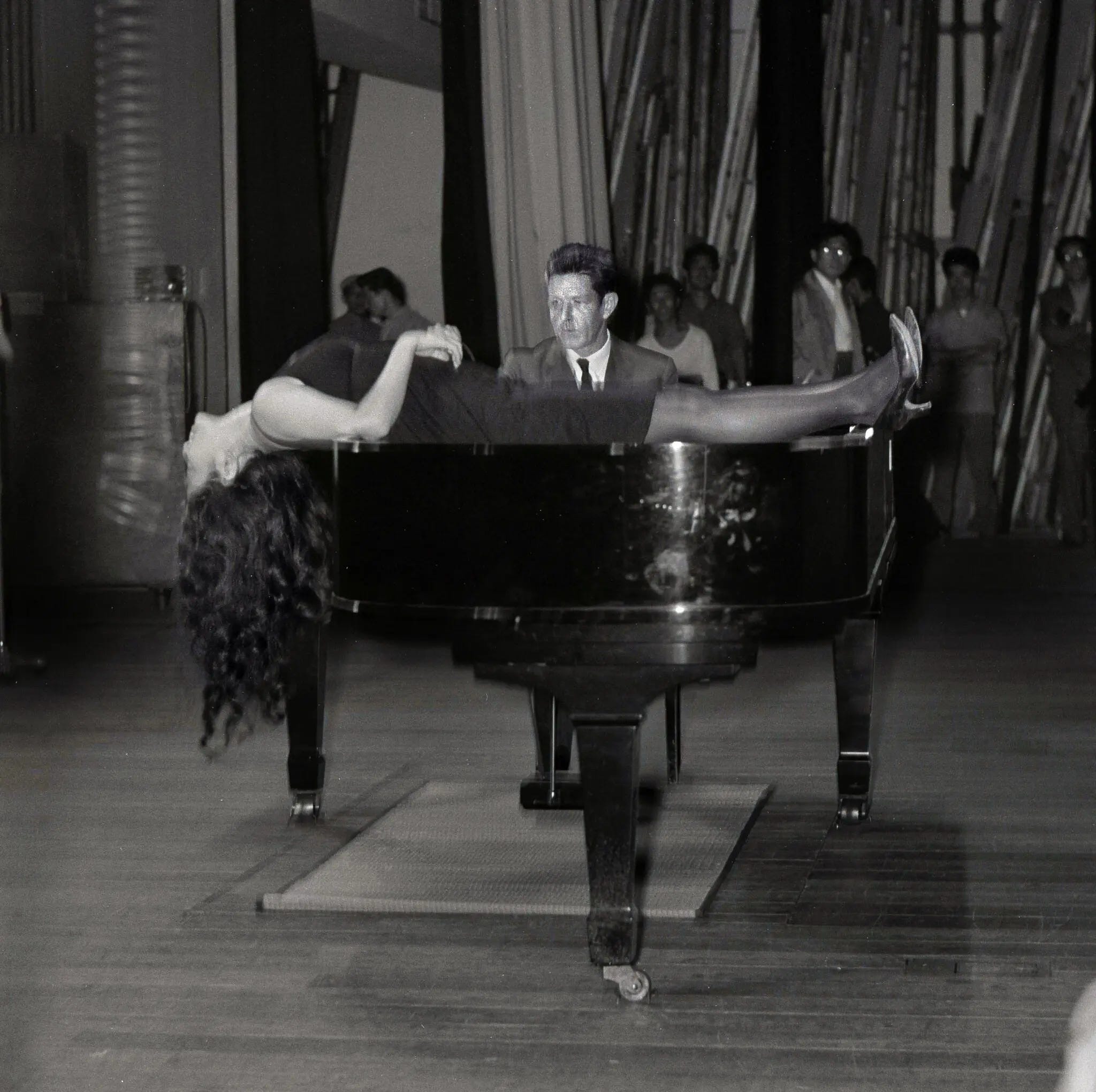
John Cage and Yoko Ono performing Music Walk in Tokyo, 1962.

You may see where I’m going here. Without this Davis course my recent Wednesday afternoon – pre-apéro – would not have been wasted noodling on Cézanne’s threading connections. For that matter, without my university immersion I’d be ill suited to pontificate on the significance of Casablanca in the larger pantheon of Hollywood films, or explain the improbable success of Cortez and his band of 500 conquistadors in wrestling control of Tenochtitlan from Montezuma and his immense Aztec army, or (and this is my favorite) introducing my son Jess to the concept of lucid dreaming as a child. Fascinated with the concept of controlling his own dreams, Jess threw his teenage self into mastering the skill (should it truly exist).

Not everyone needs a 4-year university education. Shane is finishing up his second trade school degree now, happy as a clam, and fully employed. But the admonition of higher education, mostly by bloviating billionaires like Musk, Thiel, and Altman, completely misses the mark. Yes, ALL institutions should be in constant states of evaluation and reform, but a university’s greatest value is not in preparing you to maximize income, it’s about seeding your curiosity in unexplored areas that will render you a more interesting and engaging person, and through that elevation, a more creative contributor to society writ large (or writ small, with your apéro friends on any given August afternoon).

It’s rosé hour. Talk soon.

Bill Magill
Aix-en-Provence

Suggested Song: Let’s Do It (Let’s Fall in Love), Billie Holiday
Suggested Drink: Spring Fever cocktail: rosé, strawberries, elderflower syrup, lemon juice, bitters.

Listen to this essay:

Spring is the season of rebirth. Green shoots. New leaves. Fertilization and pollination and Mother Nature in all her horny glory. The sterile winter of grey torpor (can I just go to bed yet?) surrenders to a pregnancy of vibrant possibilities. Ready to kick the winter blues? Follow her lead and get knocked up.

The pregnancy bug can manifest in ways beyond just with child: a future pregnant with possibilities; a community pregnant with friendships; a film or novel or other art piece pregnant with meaning, and so on. Regardless of one’s fertility objective, all productive intercourse requires the Rule of 4 and in this order:

  1. Engagement
  2. Penetration
  3. Endurance
  4. Climax

Let’s take a closer look.

Engagement

It takes two to tango, as the saying goes. Eager to get gestating? Then shake off the winter hibernation, mix with masses, and connect.

Your dance partner may indeed be a co-parenting prospect and the nature of engagement carnal by design. But that object of desire could equally be an exciting new project of deep meaning, or a newly discovered film director from the French New Wave school, or group of friends hosting Friday night wine tastings. In all cases, the experiences are deeper and more satisfying when shared with others (just like sex!). Who can support your project, join for some popcorn, or share some tasting notes? The zygotes of possibility won’t get planted with you shrouded in a prophylactic bubble.

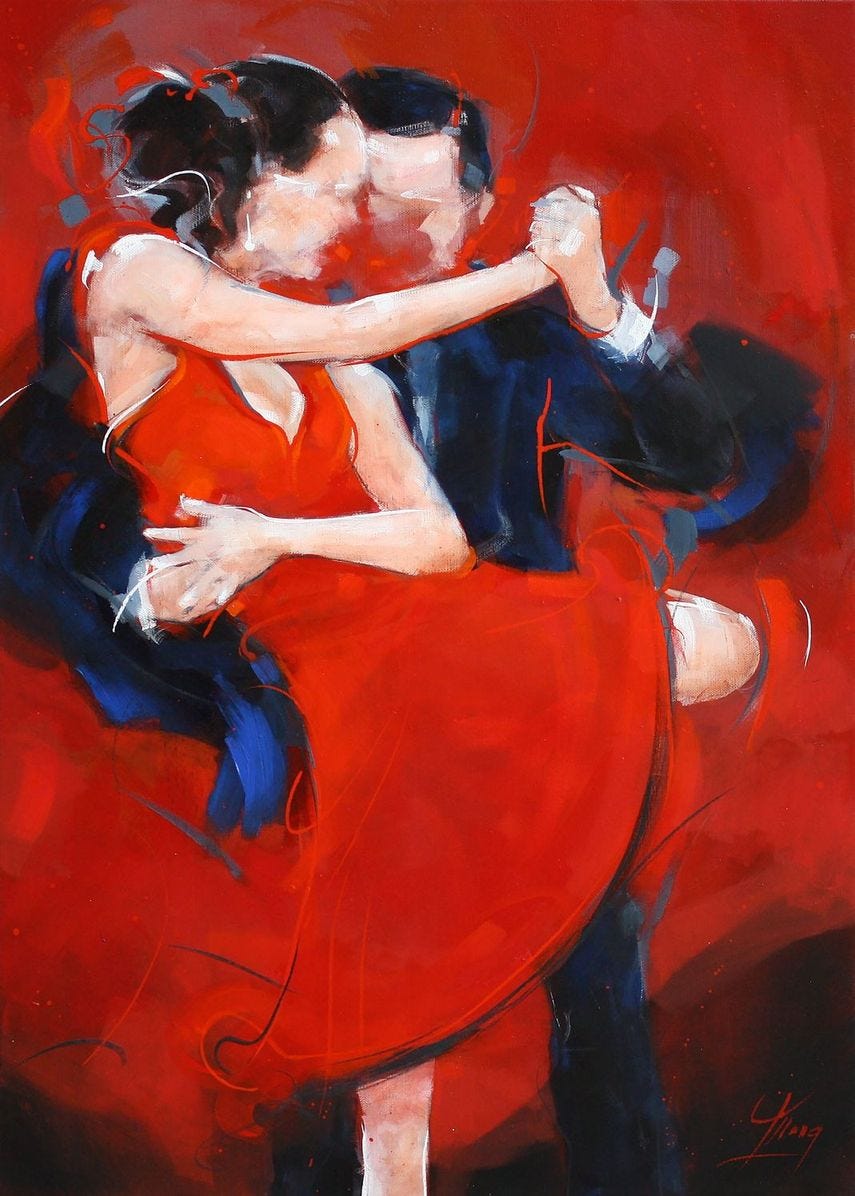
Tango, by Lucie Llong

And the most effective prophylactic? Our phones. Nothing insulates us better from the ambiance of life and sends that I’m not interested signal to others than public phone scrolling, headphones on, and eye contact avoided. Little surprise that the percentage of 18-30 year olds going sexless for more than a year has doubled since 2011 (to now about 40%), with 1 in 4 Gen Z adults saying they’ve NEVER HAD SEX. For the love of god, put that thing away, smile at a stranger, and engage. Nature will take care of the rest.

Penetration

The tip of the iceberg reveals little about the depths below. One night stands can be a fun distraction, but unsatisfying in the vein of deeper relationships. Fascination with that avant-garde school of cinema will be richer once a dive into its various directors, their films and go-to actors, and philosophies about movies, is made. Getting knocked up by Godard will require more than just seeing Breathless at your local arthouse and thinking, well that was weird. That new life project of deep personal meaning? It is all just barstool talk until research is done, plans are set, deadlines made, and an official launch announced, and then launched.

Penetration requires a plunge in all manner of things. So line to the target, then make your push.

Endurance

Endurance is a particularly vexing challenge for men through our sexually active years. When young we can’t hold off and when old struggle to hang in. Bless our empathetic partners. Wait, what, again?

Fortunately, our non-carnal ventures are less susceptible to the whims of age and nature. Those weekend wine club gatherings will get even more enjoyable in time, and when shared with the same crew. Remembering favorite regional theme nights and laughing together about the blind tasting fails. Pinot noir, no way! Every Friday evening a group of expat men meet for drinks in my hometown of Aix-en-Provence. It’s become a popular event for ending the week, mingling with friends, and sharing the joys of being strangers in a strange land. For the regular members, these Directors Meetings have become an indispensable part of their lives in Provence, and equally appreciated by the wives. Off you go.

With our life legacy projects there are mistakes made and blind alleys chased. A strategy for dealing with disappointment is key. We need to endure through these setbacks as much as celebrate the achievements. But in the end, accomplishment is that much sweeter when the outcomes are much less certain and require that extra push.

Climax

We all know what this is (those of us not in the sex-denied Gen Z cohort). It is what one works toward and can reach delirium in achieving. But in truth, the greatest reward is enjoyed during the journey, not its completion. Meeting someone magical and starting down that wondrous path of romance together. Pursuing an ambitious dream and coming to appreciate more deeply our own strengths and limitations. Sitting (suffering?) through a dozen films of Godard and Truffaut, with someone who now has become a close friend (a Siskel to your Ebert), and remembering all the mystery and vexation and boxes of Jujubes and popcorn. Okay, next up Louis B Mayer epics!


Nature fixes age limits on getting pregnant with a child, but not for other endeavors of great fun and reward. Just remember the Rule of 4 and you’ll be knocked up in no time. It’s the spring of new possibilities; get out there!

Bill Magill
Aix-en-Provence

Suggested Song: Time, Pink Floyd
Suggested Drink: French 75 cocktail (lots of bubbles): gin, lemon juice, champagne, simple syrup

Listen to this essay:

“Do not go gentle into that good night.”
– Dylan Thomas

Uncle John died on Monday. He was the final ascendant of my generation of siblings and his passing left a sobering reminder that we are now on top of the bubble; the next Pez to pop. No one left above appraising us with eyebrow raised, only those below to bless with our unassailable wisdom. Ahem.

I last saw John in September, when my brother Joe and I travelled to Montreal for a quick hello. We sensed that time was dwindling. John was in failing health, but still living independently in a facility for elders and engaged with the world. He never warmed to the internet, but followed the news through a heavy dose of journals and CNN, and was impressively current on everything obscure to global. He held no shortage of opinions, just ask.

John had more charm and cheek than a boatful of pirates, chatting with everyone, flirting with some, and repeating stories of his colorful youth in Montreal. The sleek cars and mafia dolls, hanging with his pal Billy at this hot spot or that, and 50 years of memories with Eileen, the love of his life. I can visualize a massive burst of life energy exploding into a kaleidoscope of cosmic dust the moment Uncle John finally let go.

Runways

I’m in pretty good shape, aka nick (the Brits), aka forme (the French). I follow the Mediterranean Diet, exercise, get in my 8 hours at night, stay social, make attempts at moderation, and juggle a collection of projects that fill me with purpose. In the past, when suffering a wobble I could survey the condition of older generations and feel, by contrast, blessed. Now I’ve lost that comparative advantage. The one-eyed cat with the ratty fur? Now that’s me.

This bubble slot prompts me to gauge the runway. I’m counting on 20 more good years, with 10 to 15 at full gallop and the rest at an inspired trot. I may do better on both counts, and then again maybe not. All one can do is try to stay in good shape, nick, forme (see above).

The capricious runway of one’s final act provokes an option to go bold (not gentle, to quote our Welsh poet) while able. What can I create and what can I consume that are most profound (and for whom) in the time remaining? I don’t value consumption as bold by the price tags of bumptious possessions gathering dust in idle sitting rooms. I similarly don’t measure creation as bold through numbers of followers, likes, or purchases it engenders. Can you imagine social media reactions in the early careers of Kafka, Cage, or Pollock? 🤷‍♂️😝👎

Being inspired and getting paid for it are conjoined for emerging creatives of any stripe: artists, architects, inventors, startup founders, etc. Not as much for those of us on the bubble. I want to be rewarded for my creative output, but won’t sacrifice my vision to that end. This is a luxury most younger creatives don’t enjoy. I’m looking to be remembered in 100 years, they are looking to pay the rent this month. Between these 2 extremes lies a spectrum of compromise. We all find our spot.

Bold consumption, for me, leans into personal enrichment. What can I absorb that strengthens my outer creativity? What can I absorb that deepens my inner journey? Answers? I’m not sure, but the fun is in figuring that out.

Family will play a larger role through these bubble years. More quality time spent with my siblings and California kids is growing in priority. Investing more in developing my various crafts is also taking on greater urgency. With whom can I collaborate to light the creative flame? What additional knowledge can deepen my appreciation for how this world turns? What experiences will render me a much richer and more interesting Bill to those with whom I commune? These have always been fun barstool considerations. As the runway shortens they take on greater urgency.

My Interprize Workshops have to-date centered on the art of mid-life reinvention. As I see that mid-life point coming into sharper rearview view, I’m reworking the concept and content to include those on-the-bubble considerations above. I plan to revive the workshops in the next year, so all thoughts are invited. ‘Till then, go have fun!

Bill Magill
Aix-en-Provence
Suggested Song: Double Trouble, John Williams (from the Harry Potter film series)
Suggested Drink: Humming on Sunny Days, Bill Magill & featuring David Dower on keys.

Listen to this essay.

Jobs & Wozniak
Lennon & McCartney
Ben & Jerry

Collaborating with the right partner can supercharge your creativity and defeat surrender to the gumption-block-blues. Doubling the skill set is just the low hanging fruit to fruitful partnerships. Deadlines get met, confidence finds conviction, and the experience simply becomes more joyful when in positive collaboration. In the past week I launched a new course for INSEAD and dropped an EP of music. In both cases I teamed up with fantastic partners without whom the struggle to produce, and produce well, could be vexing.

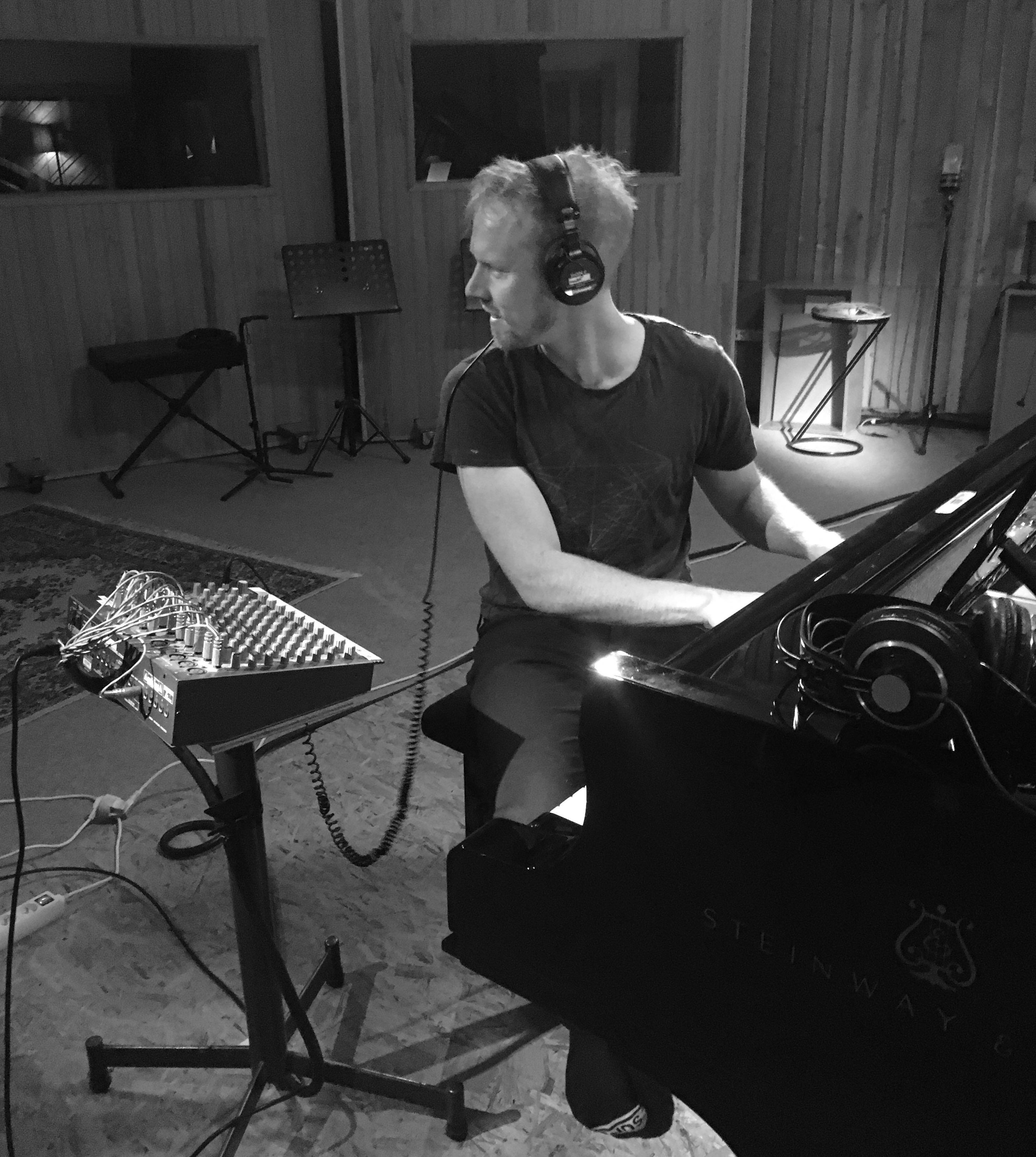
David at the piano during our 2018 recording session for “Last Night at the Ha-Ra”

On the music side, I’ve been working with David Dower, a phenomenal keyboardist from Australia, since 2018. Lights Up on the Vivid Stage is our second release together and more are planned. What’s our system? I write the songs and record initial demos of most of the instruments at my flat in Provence. Off these tracks go to David in Melbourne, who reimagines the arrangements, rerecords the keyboards, brings in other musicians to redo the other instruments if needed (I can play just about anything, but not always memorably!). He then sends the work-in-progress back to me for a listen. I have carte blanche to disregard all the great work he’s done – an effective partnership requires an agreement to disagree when needed – as I continue to strengthen the production. And then it might go back to him. Through this ping pong process we start to whittle down (or build up) to the most pure and powerful essence of the song in question. When happy that we’re 90% there, it’s off to a studio for final tracks and tweaks. Done.

Adrian Johnson is my teaching partner at INSEAD, where we offer a course on deep tech venture creation. I’ve written a book on the topic, and we use that as the starting point of our content. Adrian brings years of experience founding startups, and that knowledge strengthens my content immeasurably. With his computer science background, he’s also much better than me at setting up a well-designed online platform for student access and support, including an AI platform that is at the core of his latest startup. Adrian and I are both science geeks, but my professional background is in startup finance while his is in startup creation. Intimate knowledge of both is essential to design and run a top tier program such as this. By working in tandem we share the load and enjoy the camaraderie.

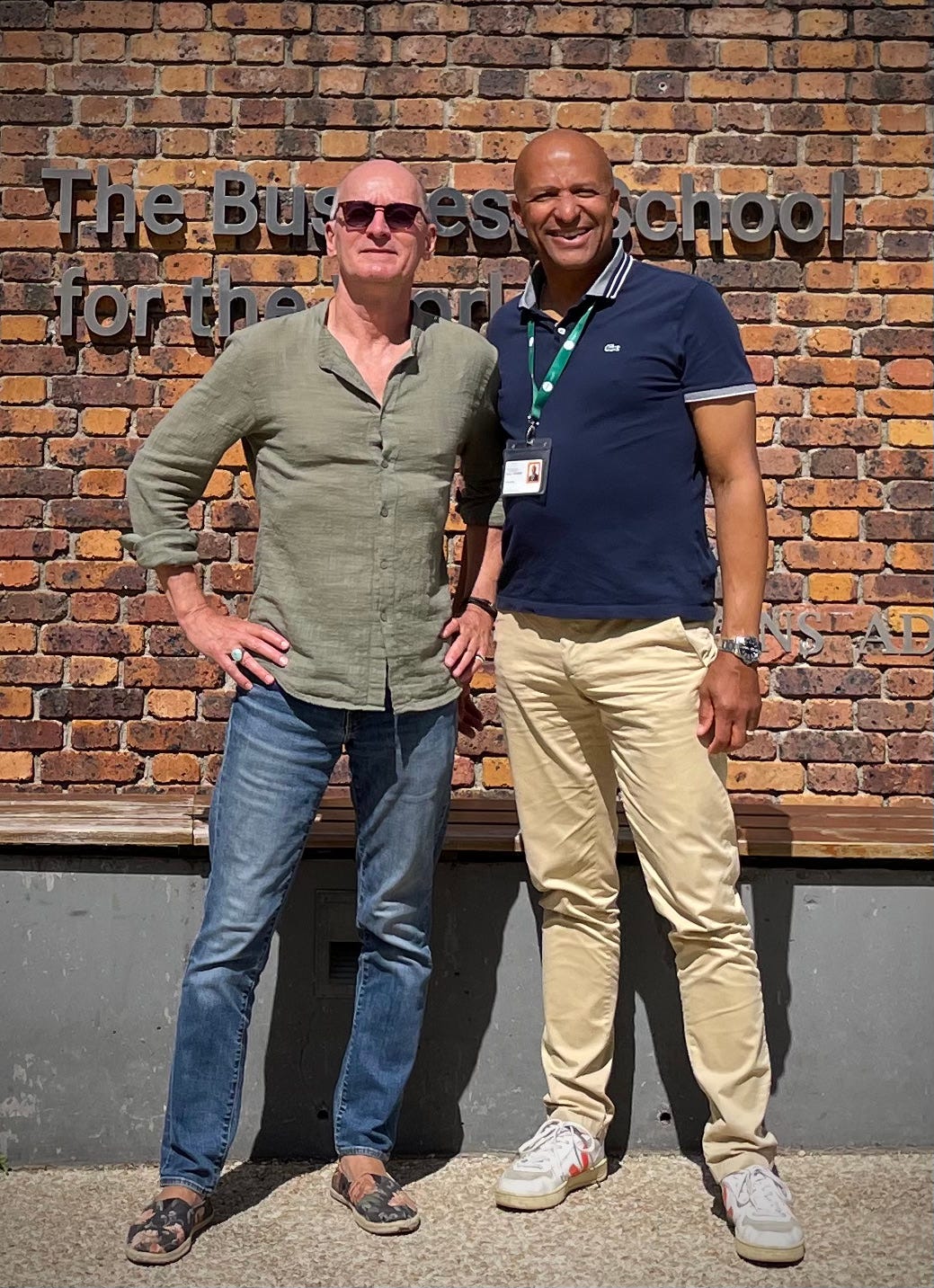
On the INSEAD campus with Adrian at right

With both my music and teaching, the final product is stronger because of this blending of talents. There is also a multiplier effect from their personal networks. Through David I tap into a much wider web of top musicians than my own. Similarly, many of the speakers and external contributors to our INSEAD program come through Adrian’s deep rolodex of friends and former colleagues. My penchant to procrastinate is easier to curb when others are depending on shared deadlines being met; just another upside of partnering. But perhaps the greatest benefit is the joy of working alongside fun people with whom you enjoy spending time. At this point in life I avoid the complicated and seek out the easy, in both situations and people.

Apology

Yes, this essay is a month late. Okay, 6 weeks. I’ve been busy and the rosé hour starts early during these hot summer months in Provence. Maybe a writing partner could keep me on track? Hmmmm.

Bill Magill
Aix-en-Provence
Suggested Song: Two of Us, The Beatles
Suggested Drink: Baltic Pilsner, from Liverpool’s Black Lodge Brewery

Listen to this essay.

I was in Liverpool last week, where I spent a few days at Soundhouse studio recording final tracks for my latest masterpiece. Staying at the prestigious Ibis downtown (ahem), I traced the footsteps of the young Fab Four, down Dale Street to the docks, up serpentine alleys to timeless pubs, past the Cavern Club and over to Penny Lane, always in a grey drizzle. Two of us wearing raincoats. I prayed for divine intervention and welcomed all inspiration from the same streets that surely lit the creative flame of my favorite band and its artistic genius.

Recording an album is expensive. There are musicians, recording engineers, and a producer to pay; studio time to rent; guitars, keyboards, and software to buy; and travel to book. Some in my creative circle play for free or at a discount, and I so deeply appreciate that. But most are professionals and business is business, … despite their great love for Bill Magill and his music. Loved working with you again my friend, here’s my invoice.

Creating great art can be an exhausting series of frustrations and exhilarations. Writing, painting, composing, or whatever the oeuvre; one’s obsession with getting it right is both time consuming and draining. And for it to be great, you must be obsessed. With music there are melodies to compose, lyrics to write, an orchestra of instruments to arrange and their scores to draft, tempos and time signatures and dynamics to consider, and negotiations on all of it with those supporting the project. I’m blessed to have a key collaborator in David Dower, a brilliant keyboardist and classically trained musician who challenges my choices and keeps me on track. He also transforms my journeyman piano parts into sublime works of virtuosity.

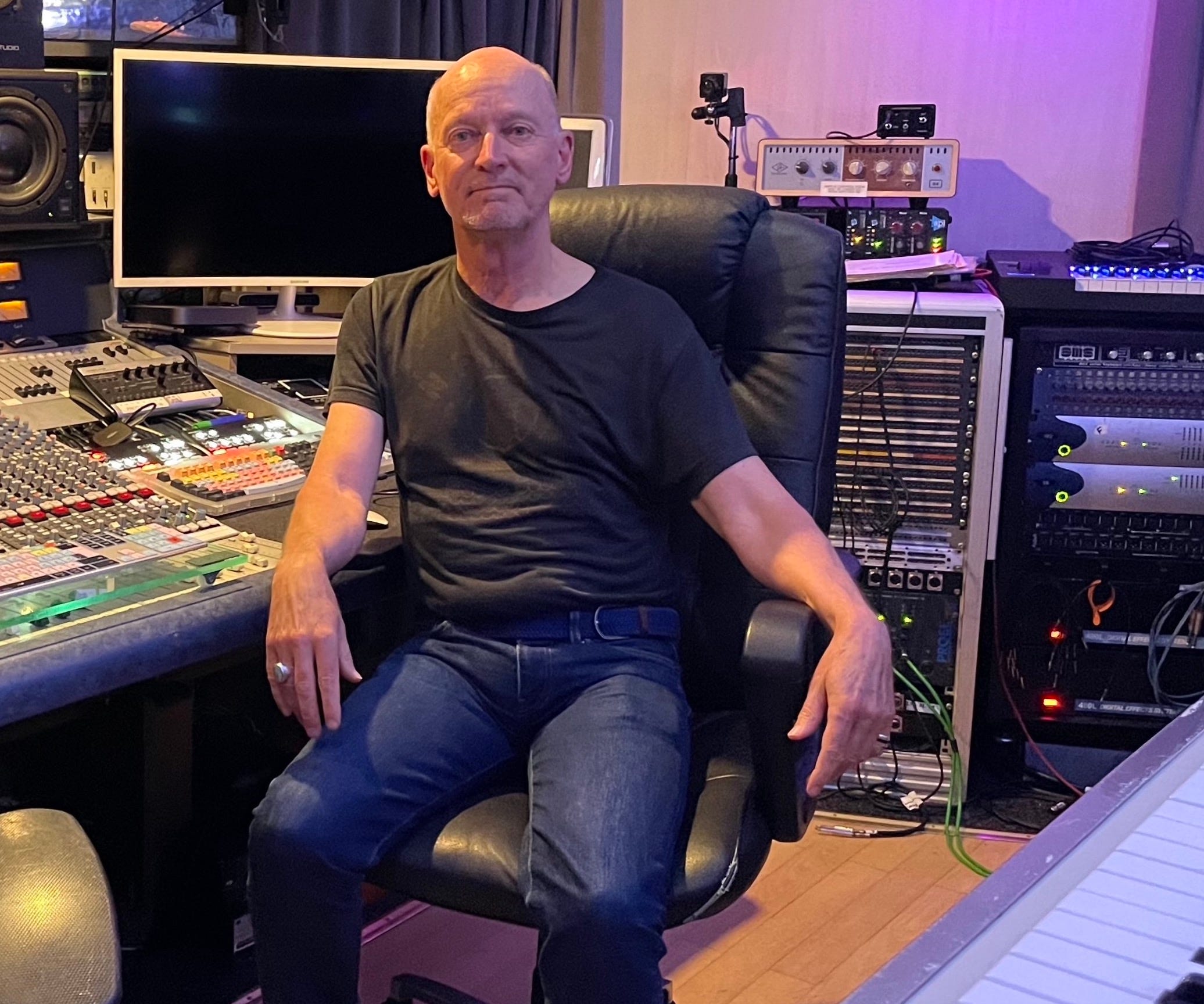
In the control room at Soundhouse.

So this project was an ambitious endeavor. It took 2 years to complete, … and that’s just the first 5 songs. (The B side is scheduled for later this year.) I may work slowly and get distracted, but I never stop working. To reach this point sacrifices were required, travel delayed, invitations declined, pennies pinched. If you commit to unreasonably audacious ambitions (and you should) this may sound familiar. I sold my much-loved 2007 Land Rover to support the budget, particularly for the final push in Liverpool. Damn, I loved that car.

Is all this the price of fame? Probably fewer than 1,000 people will give this release a listen, for now, and perhaps just a tenth of that. So why do it? This is the question.

Why do it?

Writing music is something I cannot not do. When my antennas are up the melodies invade, usually when I’m unusually happy or sad, hurt or in love. Some are banal bits of flotsam that get quickly discarded. Others are curious flirtations that get hummed into Music Memos for a relisten down the road. And a few are real gems. At least I think there’s enough diamond in that rough to sit at the piano or with my guitar and start tinkering in the moment.

I feel an obligation to get the gems heard. It’s as if the gods of song have selected me to be their channel of diffusion. That these creations didn’t come as much from me as through me. I’ve heard other songwriters express the same sentiment, talents far beyond my own including McCartney, Dylan, and Cohen. My bet is that artists of all types experience this creative possession. An inspired flourish of paint and the canvas comes alive; the mad push through a new chapter and an unexpected story angle suddenly emerges. It can be spooky, as in where the hell did that come from? It is also quite wondrous, this sense of helpless possession powered by things curiously mystical and otherworldly.

And now you

The obsessed are not all artists (thank god). Noah built a boat. Jobs reimagined personal electronics. I suspect that both experienced many a moment of doubt and pain (more lyrics from a little-known British band). I suspect as well that Jobs’ obsessive pursuit of the elegant-form-meets-function vanishing point was something he could not not do, profitability be damned. Noah, on the other hand, had little choice (or so I’ve read).

Is there a mad quest or grand ambition that you feel compelled to pursue, that you cannot not do? In younger years we have endless excuses to defer: other financial priorities like kids and home; other time commitments like family and work. One beauty of aging is the gradual easing of obligations to other priorities and clearance to focus on our own. I’ve talked about the merits of legacy-defining ambitions often in earlier postcards. Perhaps now is the time to write your own legacy. Not one that will be audited for profitability or even popularity, but simply the purest expression of beautiful you. 


PS: Lights Up on The Vivid Stage is in post production now and scheduled for a July release, initially through this website. Stay tuned for more information. It’s sounding great!

Bill Magill
Aix-en-Provence
I finished 2023 in a harried frenzy to get 3 new books into the world. I am as committed to deadlines as I am distracted at meeting them. But met them I did (with help and prodding from family and friends) and here are the results, with a short promo blurb on each. All of these books are available on the Books page of my Interprize Group website.

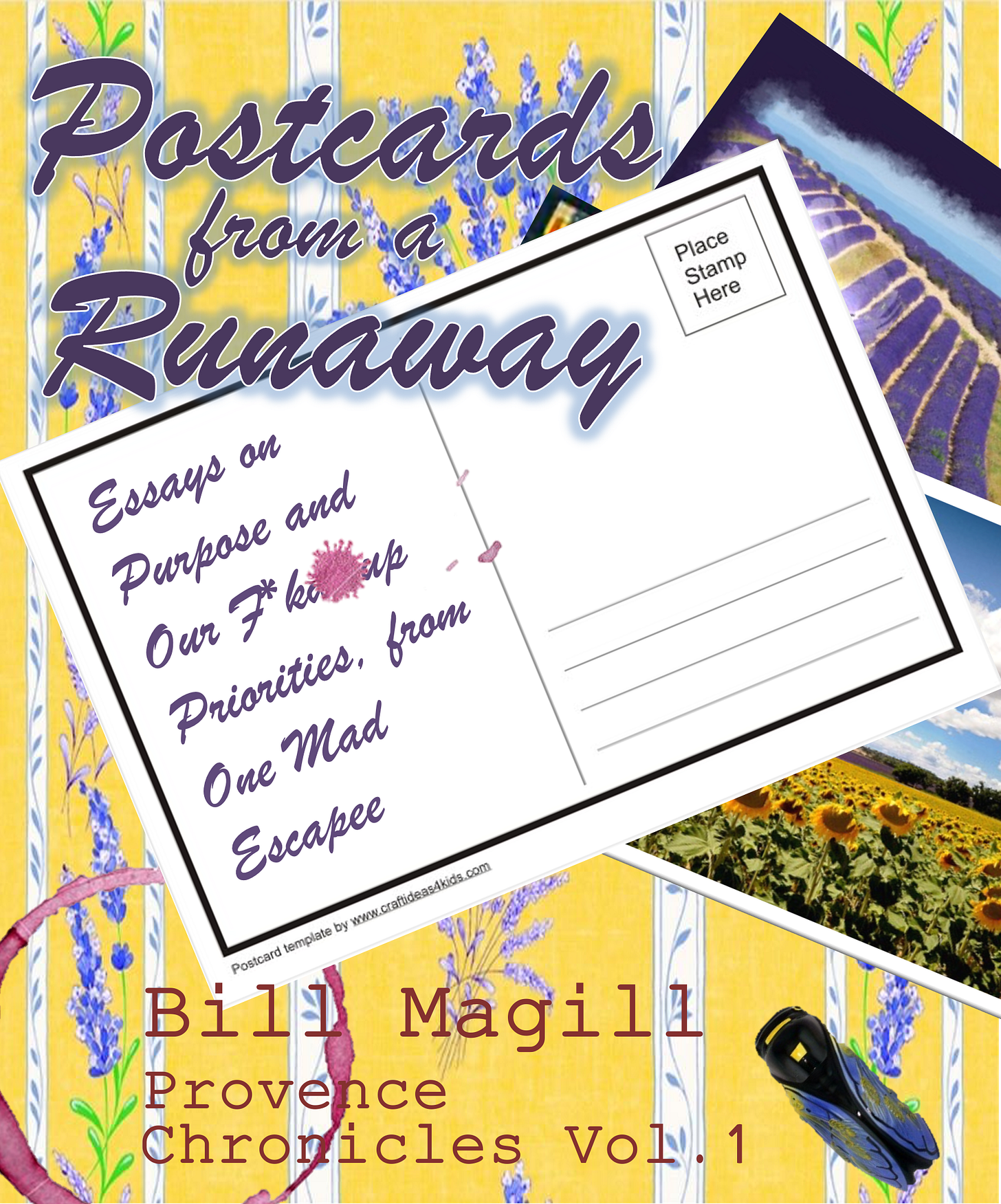
Postcards from a Runaway, Provence Chronicles Vol. 1. (2011-2013)

At age 50, I walked away from a high-profile investment career and a lifetime of accumulated stuff and relocated to Provence, France. I was in search of a simpler, deeper, more authentic life, … one full of passion and a richer sense of purpose. Writing became part daily structure, part self-therapy, and laid the foundation for a collection of essays – postcards – on bewilderment at midlife and the search for what truly matters.

This compilation of the first 30 postcards chronicles the early experiences of my new life in the land of rosé and lavender fields. Compilations of subsequent essays will be released through 2024.

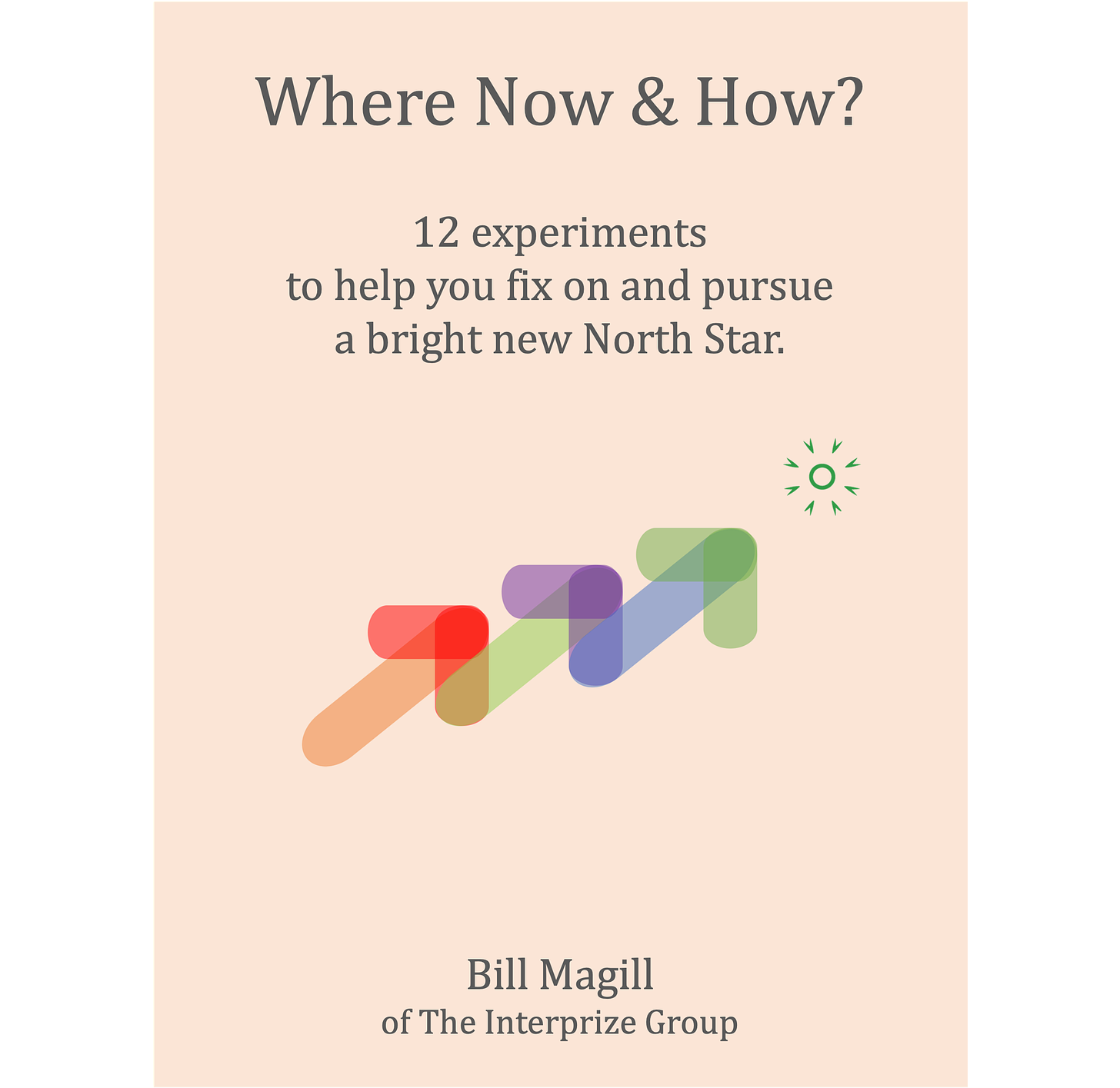
Where Now & How?

Through 2023 I wrote a series of 12 experiments for those at a life inflection point and imagining a pivot toward grand, unexplored ambitions of deep personal meaning. These 12 experiments, published monthly here on my Substack, were intended to help you draw maps, uncover truths, build plans, fuel motivation, strengthen resilience, and have a lot of fun.

The posts have been compiled into a book – “Where Now & How?” – for easier reading. Note that audio versions of these experiments are only available in the original Substack posts.

The Deep Tech Playbook, First Edition

One hat on my rack is that of university professor. More specifically, I teach courses and lead workshops on the topic of technology commercialisation; how to create a startup around a deep science innovation. The “Deep Tech Playbook” is an action-oriented manual that provides a step-by-step guide to the market and product essentials for the commercial launch of science-based innovations.  It will help aspiring entrepreneurs build go-to-market strategies for their deep tech disruptions. The Playbook is based on my 25-plus years in the industry, mentoring founders, investing in startups, and co-leading programs on the art of deep tech venturing at INSEAD, one of the world’s leading business schools. 


Many new projects beckon for 2024, including continuing my regular Substack posts and a new album drop (Side 1 soon!). I should have a new essay published by mid-month, keeping in mind my comment above about commitments and distractions. I’m wishing all my readers a 2024 marked by outlandish plans, good health, and much happiness.

Bill Magill
Aix-en-Provence