Song Suggestion: Hallelujah, Leonard Cohen (I prefer this Jeff Buckley version)
Drink Suggestion: warm Christmas mulled wine

Hallelujah, my computer has died. I got the dreaded blue screen of death yesterday and after spending too many precious holiday hours since then seeking out a simple fix, have surrendered and called a tech.

Meanwhile, I am typing this postcard on my ancient Dell, weighing in at two tons and sporting a busted screen hinge, lazy processor, and without a wifi adapter. It hasn’t seen the light of day for at least 2 years and perhaps thrilled to feel the electrons surge through the gates once again, but showing its considerable age. I have now joined the ranks of the unconnected.

I am grateful that my laptop died frankly, grateful to lose the distraction while my kids are here for the holiday break. The pull of the internet is addictive, even (or especially) during our supposed down time. Patterns set in that any smoker would recognize, the just out of bed fix, then just after breakfast, right before preparing lunch, and on and on through the day. And each dose can linger indefinitely, depending on the fascinating news items to be found. What, Snooki lost 10 pounds on the cookie diet? The cigarette habit is hard to break because the association of a lit smoke with those recurring moments of our daily routines is a constant reminder of the craving. I find the call of the internet equally difficult to refuse.

The internet has changed Christmas forever, particularly the shopping part. Who wants to stand in line with the masses? It is infinitely easier to browse the web looking for just the right gift, and now even possible from the mobile phone. Add credit card number and shipping address, and in a relaxing hour or two on a slow night (and with a glass or 3 of warm mulled wine for inspiration), voila, Santa’s bag is full.
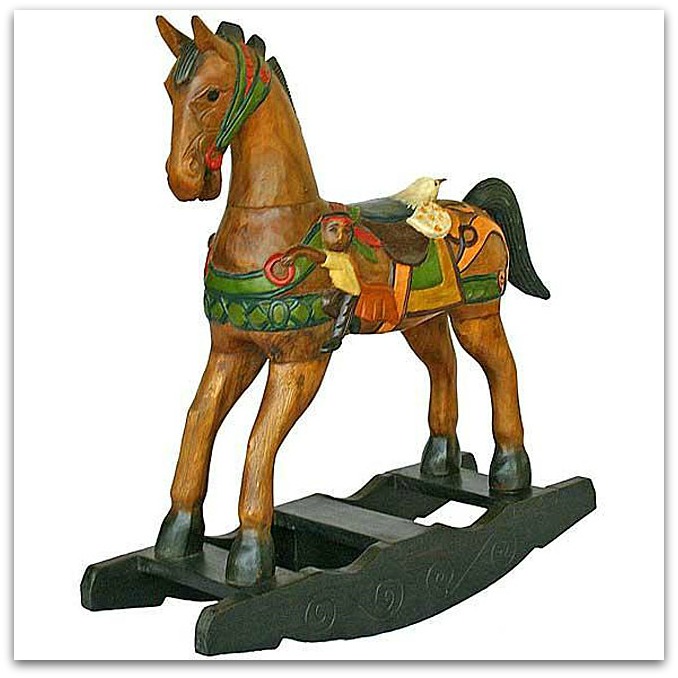
Yes, it is certainly easier to make our gift selections through Amazon, iTunes and other digital storefronts, but it also makes gift buying less genuine, more perfunctory. I wonder if our great grandparents made similar remarks in years past, when handmade gifts yielded to department store buying. Papa spends 2 months in the shed cutting, shaping, sanding, gluing, nailing, painting, and accessorizing junior’s hobby horse, only to see his kid pine for the more polished factory-assembled horse in Macy’s Christmas display window. Dammit!

New Years is just at the corner so it’s time to consider resolutions. Mine come in the perennial and annual varieties. A recurring pledge involves running (doing more of it) and drinking (doing less of it). Success varies. Last year I also resolved to start a blog where I could publish essays on the art of thriving post-50, personal happiness, and life in my much-loved Aix-en-Provence. This last entry for 2011 marks my 16th postcard for the year. I hope that you have enjoyed them, perhaps even found some nuggets of value in them.

For 2012 I am targeting music, of getting back to songwriting and recording. The postcards will continue but alternate with a new posted recording monthly; at least this is the resolution. I also want to be more diligent with my gratitude journal this year and ask my kids for the same. It is an effective daily ritual for celebrating our good fortunes, not commiserating our misfortunes. If you have rituals for addressing the promise of a new year I would love to hear about them. The possibility of transformation is a key element of happiness and I am interested in different approaches to personal reinvention. The good lord knows well the work remaining at my end. Perhaps I will be her personal project for the year!

Postscript:

Some of you may know that music has played a major role throughout my life, involving bands and songwriting, and culminating in a CD in the mid-90s called Eskimo in the Sun. As mentioned in the blog, I am working on a new collection of demos – working title: Balm of Gilead – that will be rolled out through 2012 (better late than never, right?). These are being recorded at Mirabeau Studios, also known as my living room in Aix, and can be accessed at cool site called SoundCloud. What they may lack in professional studio sound quality will hopefully be compensated for in grit, heart and soul. Should you like what you hear, please feel free to share them with friends. If a tree falls in the forest and no one is there to hear it, …. well you know the phrase.

A first song has been uploaded. It is called How Hard and is meant to be played in sequence as a pair of 2 very different arrangements, the second called B Side.

Bill Magill
Aix-en-Provence
Music suggestion: Hey Hey, My My (Out of the Blue), Neil Young
Drink suggestion: Beaujolais Nouveau

Get your glass, play the song, now read.

The Beaujolais Nouveau is in and being enjoyed across France. This seriously unserious red wine is bottled just 2 months after harvest, often with whimsical labels, and is fun, light and fruity. It’s not meant to be stored away in the cave or over discussed; should always be cheap. Serve Beaujolais Nouveau slightly chilled with a selection of cheeses, like the gloriously ripe Camembert that is currently making my kitchen in Aix smell like a wet hay bale.

Onto a slightly less cheerful topic, I am making 2 reflections on death in this postcard, and the first involves rock & roll. Stick the nails in the coffin, because we are done here. Some great music is still being made, but the fact is it doesn’t matter. The young, and it is through them solely that the brand is defined, no longer live through their favorite bands. This I know to be true, as I have 3 specimens of the teen variety.

They cannot be blamed. Key elements necessary for rock’s great seduction have disappeared: the learned radio DJs, guiding us like enthusiastic museum curators; the brilliant and committed artists, evolving with each new album; the album itself, providing the artist space to expand on a theme beyond the 3 minute single; and rock & roll magazines covering just that: rock & roll.

Who is to blame? There are plenty of culprits, but in the end the art form simply played itself out, losing its sense of freshness and rebellion, and unable to withstand the internet assault. Great rock could both impress with its creativity and worry our parents sick (think Exile on Main Street or Never Mind the Bollocks). Which album of the past 10 years has done either? I love Green Day and consider American Idiot a solid record, but having grown up with the blurred androgyny of David Bowie and the self-destructive mayhem of Iggy Pop there is little in Billy Joe’s antics, eye liner, or music that frighten me as a parent. I complain more about my kids’ time with the PS3 than their music selections, …and this is their great loss. As a pent-up and desperate 15 year-old, the fact that my folks just didn’t get it – even better HATED IT – was manna for my unruly soul.

The interest is still there, but the distractions offered to today’s youth simply cannot be countered by the current crop of predictably derivative artists. There is enough dazzle to get kids’ attention, but insufficient gravity to hold them in orbit. My 12-year olds (ah, what a great age) have just entered that rock star fascination stage; un-jaded and ripe for the musical taking. Their bedroom walls are covered with cut-out photos, their favorite songs on endless loop in the earbuds. But the infatuation will dilute by 14, pulled by the allure of Facebook banter and Call of Duty bombast.

Conversely, our bored-out-of-our-skulls teen years were spent debating the meaning of Pet Sounds or Dark Side of the Moon, of Elvis versus Jerry Lee, the Beatles versus the Stones versus the Doors, of Clapton versus Hendrix, of New York versus London punk, of how Woodie Guthrie begat Dylan begat Springsteen.

Born to Run was released in August, 1975, 2 months after my high-school graduation. In 8 brilliant songs it captured the pure essence of my teen confusion, righteous convictions and roaming imagination. And with subsequent albums we grew together, Bruce the developing artist and me the maturing adult.

Who has the genius to keep kids close for more than a moment today? Female entertainers (I wouldn’t consider them all musicians) are getting the most attention. Lady Gaga makes a lot of noise. I admire the energy, but she is a hyper-brand, not an artist (essentially Madonna 2.0, and Madonna wasn’t an artist). Amy Winehouse was the real deal – an incredible talent replete in her Ronnettes beehive and suicide girls tattoos (mom definitely wouldn’t want you bringing Amy home) – but needed mentoring from the likes of a Keith Richards on how survive the excess. The terminally cute Taylor Swift? My daughter adores her now, but unless Swift graduates from the adolescent Romeo and Juliette phase, in the way the Beatles moved from I Want to Hold Your Hand to Help!, she’s going to lose Stella in the next 12 months. Adele is the last great hope, but one bright star does not a galaxy make any more than a sole painter in Giverny prolongs the Impressionists era. At some point the masses move on.

Why do I bring this up? Because, the thought of someone else selecting the soundtrack of my life, the set list for my wake, is as troubling as a stranger writing my epitaph. This gets to my second point about death. An ongoing theme in my essays (see The Upside of Hard Times) is the right to draft one’s own life story, to decide on what bearing is true north and not deviate for others’ expectations. Our stories may be shorter than anticipated, will certainly be for some, for we all are dying, we of the mid-life crowd. All the more important, then, to realize the highlights or our lives, particularly our second lives, post-50, now. Don’t fear the reaper, just get on with it.

Day by day, year by year, we wane bit by bit. We are not supernovas, peaking to a spectacular, blinding flash. Our own sun is a better analogy, losing its mighty glow slowly but measurably, in gradual decay. We are like spinning tops, in full motion and balanced elegantly, and then the little wobbles begin.

My children grow taller, smarter, more agile and capable. They crawl, walk, run, effortlessly master challenges that require coordination and new skills. Each day they are more adept and able than the day before, …living. Our skin sags, hair falls, knees ache, shoulders slump, and certain delicate parts begin to operate erratically. Entropy takes root, rust sets in and the top starts to wobble, …dying.

The average life expectancy for the western world is 80, give or take a 12 months or so depending on one’s gender and geography. The last 5 may not be pretty, which whittles us down to 75 years of true flourish. We would all like to think differently. I’ll be in full bloom well into my 90s. Don’t count on it.

Okay enough, so where am I going with this glum theme? One, this is the time to pursue your personal passions, to put a spectacular stamp on your life story (and that is the point, right?). It will be harder tomorrow and even harder the day after that, and at some point it won’t be possible. Someone who loved you will read your eulogy and they’ll want it to be great. Make their job easy.

Two, don’t let someone else decide how to color your life musically, especially if music has played an elemental role in your life. Select those songs that you love, have always loved, and want playing in the background when the toasts are raised and stories shared.

To that end, here are my top 10:

1. Love Reign O’er Me – The Who
2. White Sandy Beach Of Hawai’i – IZ
3. Racing in the Street – Bruce Springsteen
4. One – U2
5. Tonight – Bernstein, West Side Story
6. Don’t Worry Baby – Beach Boys
7. Help! – Beatles
8. Downtown Train – Tom Waits
9. San Francisco – Scott McKensie
10. Can’t Help Falling in Love – Elvis

My post-party top 10 list is decidedly rowdier, and I am happy to share them as well if interested. I would truly love to see others’ selections. It is excruciatingly painful to cull my favorites to 10 and allow that some choices will swap in and out with time.

Bill Magill
Aix-en-Provence

Music Suggestion: Start Me Up, Rolling Stones
Drink Suggestion: Van Gogh Dutch Caramel Vodka

INSEAD is a fun, rewarding place to work. After many exhilarating years hustling alongside hard-charging super achievers in venture capital and investment banking, it is a joy to again work with incredibly smart, accomplished and driven people, minus the god complex (sorry, that is harsh). At the Maag Centre for Entrepreneurship we give courses and workshops, guide and mentor, make introductions and advise on careers; in essence do everything possible to instill the fundamentals of entrepreneurship in our gifted students, then unleash them onto the world.

I have been teaching an 8-week workshop on technology commercialization this Fall, and in the course of developing its modules I had a pair of realizations (considered truly staggering insights in my former professional personas). One, I myself am a startup. As I pass through this mid-life phase of re-invention I weigh certain considerations that any emerging company must resolve: defining purpose and worth and how to make it happen. Two, outlining my personal plan through the lens of a business plan – the likes of which my students are expected to create – is incredibly beneficial. There is a process to developing great ideas that matter, then making the leap from concept to market. Working through that process and setting the emergent strategy is equally beneficial for applied personal development, or what I labeled Spiritual Entrepreneurship in a previous blog (Of Anchovies and Olives and Spiritual Entrepreneurship).

I also realize that the word “entrepreneurship” in the context of Spiritual Entrepreneurship is improper.  Despite our former US president’s jab that the French have no word for entrepreneurship, it is of course a French word, the first syllable “entre” meaning “between,” as in the development of value between a creator and her market. In the realm of applied personal development, conversely, value creation is firstly internal; hence, a more appropriate French syllable would be “intér”. Personally, I like sticking with French syllables because they involve accents, which look so sexy and urbane (and I am so not a sexy urbanite). So henceforth we go with Spiritual Intérpreneurship.

If you also feel the start-up within, or in your author’s case the restart within, then a framework is needed for constructing your applied personal plan. A tour of the self-help aisle at your local bookstore will reveal dozens of options. But, why not exploit a system that is logical, proven, and applied daily by aspiring entrepreneurs in the course of building the next Google or Apple? A robust intérpreneurial effort needs answers to these fundamental entrepreneurial start-up questions:

  • What is my intellectual property (IP)? Start-ups are built on invention and imagination, on a base of core intelligence that defines their promise and bounds the possibilities until additional intelligence is developed or acquired. What is your personal IP? It is your base of core strengths and assimilated talents and knowledge.  On this foundation you imagine what is possible. And, just as shrewd start-ups continue to build on their IP to sustain competitive position, you too should build on your base of intellect and skills to expand the possibilities. What are you good at; what do you want to be good at?
  • What is my product definition? A start-up’s IP foundation enables many possible directions in product form and features, but the finished offering must align tightly with unmet market needs to be successful. Not so for you. Your personal product, that life passion you are committed to realizing, need only satisfy your unmet needs for the principal litmus test of suitability. And this realization is liberating. Write a book on multi-generational farm families of central Pennsylvania; renovate and run a historic B&B in Savannah; study the art of luthierie and open a guitar design and repair shop? What if the market is small? Who cares? When explaining your mission to a friend do you feel an electric surge of purpose? Okay, now you know you’re on to something. The success of intérpreneurial endeavors is measured firstly by the satisfaction they induce inside. How will you define success: personal gratification and respect, absolutely; profit and fame, maybe. The collage of success is unique to each of us. The time to question and explore your personal passions, ambitions, and objectives is now, during this product definition stage. These taken together will help define your mission and formulate an execution plan. Onward.
  • What is my go-to-market strategy? A start-up is wind-down quickly if its product cannot be realized and grab the customer’s attention. The most exciting idea in the world has zero value when it is just that, an idea. How do you become relevant? The same way a start-up becomes relevant; by executing effectively on the dream and exploiting its greatest value for the customer. In the case of intérpreneurship, the passion product may target many, may target a few, or may target one. Regardless, an execution plan is essential. I like the Murphy process, taught by Joe Murphy of San Francisco State University’s Core Strengths Coaching program.  Sketch an arc starting at time zero (today) and ending with your achievement point; 2, 5, perhaps 10 years out. Break the arc into key milestones and those milestones into smaller markers of progress. Getting the arc right takes time, but provides an excellent system for thinking through and setting structure to your strategy. You know your IP and product at this point, the arc will provide the passion plan; your go-to-market strategy.
  • How do I last? Macy’s has been operating for over 150 years and Faber-Castell (which makes exquisite pens, see Back to the Plume) was a start-up 250 years ago.  How do they remain so relevant for so long? Corporate longevity is not by accident, but accomplished through a deliberate sustainability strategy. Intérpreneurship is not about dabbling with hobbies through a tranquil retirement. Intérpreneurs want to achieve something of real passion. This takes real time and real energy. We’re not as robust post-50 as we were pre-30 and attention to diet and fitness is critical. I am neither a dietician nor fitness coach, but can make this testimonial: since crossing the 50 barrier I have pursued the holy health trinity of mind, body, and soul and it helps considerably. Meditation (see Nap King v Meditation Master) and a work-out emphasizing balance and flexibility through yoga (I remain an awkward novice at both) work for me in the mind and body department, and the simple avoidance of processed foods and indulgence in home cheffing is doing wonders for my soul. Flow-inducing rituals (see The Value of our Rituals for a few examples) also help with my mental balance and positive attitude. You can find many YouTube videos and on-line blogs about fitness routines. I cherry pick amongst them to find the optimal regime for my interests and schedule. When one isn’t working, swapping for another has zero marginal cost. The beauty of the internet.
  • How do I give back? Corporate philanthropy / community involvement is not universal and clearly not a requisite for a company’s success and long-term prosperity. Still, the most admired companies develop programs around corporate responsibility, and most of us want to be admired for being a net positive force on the world around us. Whether you choose to include this type of activity in your mission is solely a personal decision, but one worth considering as you piece together the passion plan discussed above.

If you apply the start-up system to your own personal ambitions please let me know. All comments and suggestion are appreciated, as always with my Postcards.

Tip for the day: If called late by good friend seeking bar buddy and enticed to join (let’s imagine that you’re just getting back to Aix from Paris, it’s been a long week, and a couple of drinks sound awfully inviting, …all hypothetical of course), and after bouncing around a couple of pubs find a comfortable spot with good music and great Guinness (still with me?), and the annoying drunk guys next to you who look like frat house rejects (which is unlikely, because France doesn’t do frats) turn out to be newly minted nuclear physicists telling fascinating tales of work and dreams of entrepreneurship, and your remarkable new friends are sharing generous shots of caramel vodka, (now here’s the tip part) channel your inner adult, should it be possible to unearth at this point, and refrain.

Bill Magill
Aix-en-Provence

Music suggestion: Christmas Card from a Hooker in Minneapolis, Tom Waits
Drink suggestion: Fleur de Geisha, Japanese green tea

Last week marked la rentrée in France, when public schools across the country opened their doors anew to their summer-worn charges for the year. The pack of students and moms crowding the entrance to the neighborhood’s middle school could be heard blocks away, the children abuzz on a blend of anxious exuberance, loud with the mission of finding friends and figuring out class lineups; the parents keen for some serenity once again in their daytime hours. Off you go my little darlings.

Collége Mignet is famed for 2 of its former students: Paul Cezanne and Emile Zola. These icons-to-be ran the hallways together in the 1850s and were reportedly inseparable. Today this public school is celebrated as much for its international section, with some classes in English and a language support program for kids not yet fully fluent in French. You can imagine its popularity with the local expat community.

Hopefully the creative spirits of Mignet continue to haunt its corridors and enthuse its occupants, particularly Zola. Casual writing has become a lost art. It is most noticeably absent from the lives of the young, who have devolved from letters to emails to chats to tweets (Darwin, please explain). But, they are not alone in embracing the informality and ease of electronic messaging. Be it through our Gmail or iPhones or Facebook accounts, the keyboard and screen have permanently displaced the pen and paper for most of us.

The composition anarchy of texting and tweeting (no punctuation, conjugation, or tense agreement required, …Strunk & White begone!) doesn’t disturb me as much as the absence of soul and warmth that comes with a pen-scribed card or letter. The digital domain is perfect for reminding the spouse about that bottle of Bordeaux on the shopping list – Dnt 4gt wine, thx! – but is a coolly detached medium for connecting with loved ones.

It is also selectively deceitful. Facebook allows us to create and present a personal image through an electronic collage of profile pictures and likes and posts that reflect our flawless, funny selves , but not our authentic selves. Life would be beautiful if we could airbrush our looks and our lives like the aging celebrities on a Vanity Fair Magazine cover. Oh wait, now we can!

I am a member of Facebook because there is no better way to track my childrens’ activities (and they could give a damn about the evils of social media), it’s a good place to post Postcards (for me, the optimum airbrush), and I too have enjoyed the unexpected reconnections with old friends from time to time. On the surface, there is little harm in a digital community hall. My worry is the insular and simulated life it engenders. It is fun to exchange a few brief lines with a high-school friend one hasn’t seen in 30 years, but the lift is fleeting. Wouldn’t it be infinitely more rewarding to actually meet over coffee or lunch, or to write a letter? Of course this would require time and effort, so why try when the keyboard and screen are right there? Because the time and effort invested are what that makes the connection so gratifying, both to the writer and reader.

I am writing more letters this year and find the practice uplifting and meditative. Letter writing is a rich with flow; for that hour of indulgence I am absorbed solely on the enjoyable task at hand, time stops and all else is forgotten. Zen.

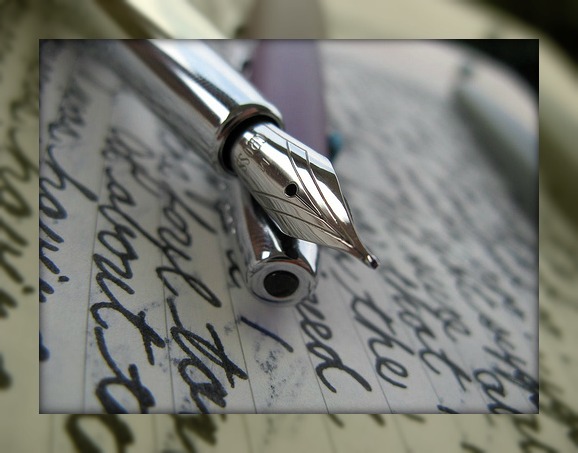
Writing is an art and like all art improves with practice and process. And for motivation you have my permission – my encouragement, actually – to splurge on some good tools. I did and it helped. So let me present you with Bill’s top 5 tips for enjoyable letter writing:

  • Invest in a good fountain pen. A Waterman, Parker other quality pen may cost $50 or more, but if you enjoy writing you won’t regret it, and the investment will help you feel committed. You can’t create inspired food with cheap knives; you can’t write inspired letters with disposable pens.
  • Buy quality stationary. It is not expensive and you will appreciate the look and feel, and good stationary often comes with matching envelopes. I like the 6×8 sheet, which is bigger than a card but no too daunting to fill. Yellow tablet paper doesn’t quite capture the mood we’re going for here.
  • Find a comfortable writing space. I prefer a table by one of the tall windows in my flat, with natural light and enough movement in the street below to stimulate but not distract. Choose your favorite corner of the home, somewhere quiet where you love to sit and relax.
  • Prepare tea. The warmth is relaxing and de-stressing, particularly green tea. I benefit from a wealth of tea shops in Aix with incredibly large assortments from around the world. If you spend an extra dollar on quality tea then your writing hour becomes a luxury, a private pleasure.
  • Make a date. As with all hobbies it helps to have a fixed day and time, otherwise it gets squeezed out by truly critical chores like Costco runs and laundry.

To whom does one write? Well only you know that. But if you are looking for a few practice sessions then my address (the one without an @ sign) is 7 rue Manuel, 13100, Aix-en-Provence, France.  I love getting letters and promise to write back.

For more about the concept of flow, read Flow, The Psychology of Optimal Experience, by Mihaly Csikszentmihalyi, 2008.

On a completely different note:

Remembering that you are going to die is the best way I know to avoid the trap of thinking you have something to lose. You are already naked. There is no reason not to follow your heart. – Steve Jobs, Stanford University Commencement address, 2005

It was widely reported this summer that Steve Jobs was stepping down from his operational role as CEO of Apple. If anyone hoped that his decision was simply a natural step for an aging executive planning to spend the next decades relaxed on a sunny beach, the photos that surfaced on the internet soon after his announcement suggested otherwise. If you knew that there was no afterlife, no reincarnation, no heaven, no continuance of consciousness in any form or manner, would you live differently now?

Bill Magill
Aix-en-Provence

Music suggestion: Lotus, R.E.M.
Drink suggestion: Lemon balm tea (considered good for stress relief)

I’m a napper. I need them and I don’t mean hyperbrief power naps. I love lazy uninterrupted afternoon snoozes, best served immediately post lunch. If an hour is too long, 15 minutes is too short. Your dark bedroom is too insular, the public park too exposed. No place is better than the living room sofa, so soft and familiar, yet lumpy enough to discourage a slumber overdose.  After 30 years of professional life and creative napping “sur place” I have become adept at the Herman Miller Aeron siesta as well, tucked into some discrete corner of my office that offers the fewest views from curious passers-by.  My various great assistants over the years, and I have been blessed with the absolute best, knew not to knock between 1:00 and 2:00. Bill is busy.

Today was a perfect nap day. My liver cried uncle after a weekend of wine infusion and a restorative late Sunday afternoon kip was self-prescribed. Friday night started mid-day with a guided afternoon tour of two premier Provence wineries. Along for the outing was my sister Cathy, our expert guide, and a couple from New York who on this warm day shared our preference for dark, cool wine cellars to the white hot Provence sun. The pours were generous and at some point I felt inspired to prepare dinner for our new friends, just married and honeymooning in Europe. I recall plenty of newlywed toasts, a long meal, great conversation and lots of wine. Today there was a Sunday foire aux vins with dozens of the Provence’s best vignobles pouring their top vintages along Aix’s central promenade, Cours Mirabeau. Three euros bought a commemorative glass and all the grape one can endure on a shimmering summer afternoon, strolling under the esplanade’s leafy sycamore trees, fanned by an easy Mediterranean breeze. I found the shade-tree-and-breeze setting particularly inspiring for an afternoon indulgence, and consequent nap. Now I write.

Thich Nhat Hanh argues that naps aren’t particularly restive; one’s mind isn’t calm and the body is twisting and turning. What does he know? Okay, so he may be considered one of the greatest Buddhist teachers of our time, a Nobel Peace Prize nominee, heralded champion of rights for post-war Vietnamese peasants, best-selling author on engaged Buddhism and meditation (I could go on and on and on), but couch surfer? Unlikely.  Send him to the old Magill family farm for one of our traditional Thanksgiving-feast-then-college-football-afternoons and he’ll be claiming first dibs on one of the precious well-worn sofas for a late day nap; at least that’s my bet.

I have been reading Thich Nhat Hanh’s classic The Miracle of Mindfulness for tips on meditation. I am by nature a low stress person, but even the most zen amongst us thump into the occasional pothole. My much beloved afternoon nap can help recharge the mental battery, but I will concede to Master Hanh on this point: the nap lift decays quickly in the face of a persistent source of tension. Sometimes what we really need is a lower idle rate.

There is no shortage of stresses nipping at the heels for many of us this summer.  Beyond the baseline concerns over parents and children and how the local ball team is playing, the job front is moving from weak to weaker, the outlooks for our retirement accounts are slipping from a concern to anxiety, and our leaders, both political and professional, have become pathetically ineffective and frighteningly disinterested in shielding us from “the worst that can happen.”

If you are unfamiliar with but curious about mediation, like me, here are a few simple steps from The Miracle of Mindfulness:

  • Sit upright, either in the lotus or half-lotus position (feet placed on opposing thighs), or Japanese position (knees bent and resting on their two legs). Use pillows as necessary to be comfortable and stable.
  • Keep your back straight and your head and neck aligned with your spinal column.
  • Focus your eyes one to two yards ahead of you and maintain a half smile, which will allow the facial muscles to relax.
  • Concentrate on your breathing. Take in a slow long breath, then let out all of the breath from your lungs deeply. Repeat and concentrate on the breaths, being quiet with and mindful of each one.
  • Place your left hand palm-side up in your right palm and let all of your muscles relax. “Be like the water-plants which flow with the current, while beneath the surface the riverbed remains motionless.” Another image he mentions as useful is a pebble tossed into a river, falling slowly to the bottom.
  • For beginners, you may want to limit yourself in this position to 20-30 minutes.

Thich Nhat Hanh suggests that within 15 minutes one should be able to attain a deep quiet if focused on watching one’s breath, keeping the posture, and letting everything else go. He adds that relaxation from meditation is simply the point of departure for a deeper tranquility and a clearer mind.

I realize that with age the practices that allow an effective charge and discharge, both physically and mentally, must evolve. Running has been my main workout for the past 30 years and an excellent way to clear the head. But these 53 year-old knees are now imploring me to adopt a lower impact workout like yoga, and my early experiments with meditation have been promising for the stress relief. If any of you have other suggestions to improve mental and physical health please share them. I remain open to all. Just don’t suggest I give up my nap.

On a completely different note, you may find this recent David Brooks column in the NY Times interesting. He writes about the lifestyle and priorities of septuagenarian Philip Leakey (yes, those Leakeys) and his wife Katy, driven by what Brooks calls a “compulsive curiosity.” http://www.nytimes.com/2011/08/19/opinion/brooks-the-question-driven-life.html?_r=1&hp

Bill Magill
Aix-en-Provence

Suggested Song: What do You Want From Life, The Tubes
Suggested Drink: a light and fruity sangria

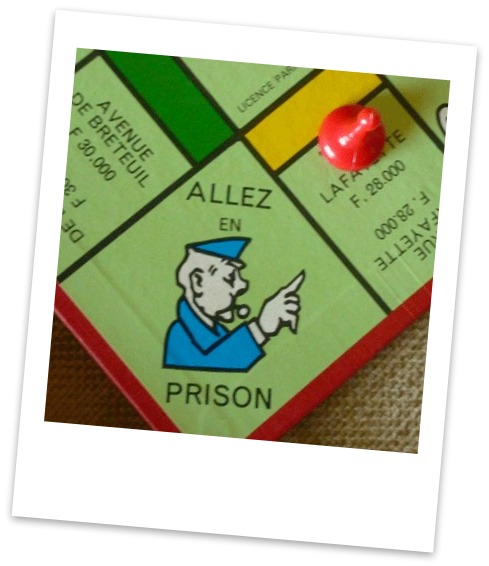
It has been a fun but long few weeks of business travel and tumbles into personal time sinks. A more gifted writer would have managed to keep the pen active, late nights or early mornings. I’ll blame the past month’s inactivity on my twins, who arrived in May and have been soaking up all spare minutes, blissfully. We’ve been dogged in our search for the best café in town serving one round of drinks – defined as a peach syrup (Stella), Coke (Shane), and tap beer (me) – for less than 6 euros. Happy hour at the Café du Palais, conveniently located just a block from our flat, has not yet been bested. There have also been more than a few laps around the Monopoly board since May. We love this French version with Paris properties like Avenue des Champs-Elysees and Boulevard Saint Michel. Fun times.

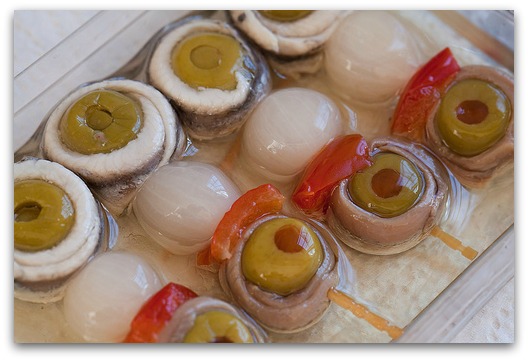
It is summer in Provence and this or that friend has been finding his or her way to Aix for a sun-kissed week or two.  After a full day of local exploring under cloudless skies and the summer heat, returning to my place for cool aperos and a late lingering dinner is the usual plan. And lingering we do. Case in point, this past Thursday we started with appetizers of green olives wrapped in anchovies and marinated in olive oil (spotted at the morning marché, I couldn’t resist) and melon wedges wrapped in prosciutto. Local Cavaillon melons, considered by many to be the best in France, are peaking now, and the fruit stands are abuzz with honeybees, drawn by their sweet perfume. For drinks we had the choice of pastis over ice, a Provence rosé, or a fizzy artisanal lemonade that my kids discovered and love. The apartment has no air-conditioning, so to avoid the kitchen oven I decided on an impromptu salade niçoise for the main course, with a mesclun mix, ripe heirloom tomato wedges, green beans and small potatoes, hard-boiled eggs, onion and pepper slices (both red), local black olives, and seared tuna strips. All were marinated in a vinaigrette of olive oil, white wine vinegar, crushed garlic, mustard and lemon. My neighborhood sommelier Yves of Cave d’Yves had suggested a white wine from Cassis, a small village on the Mediterranean coast, which was the perfect accompaniment. No French dinner is complete without a cheese plate, and we went with wedges of Pyrenees, Tomme de Savoie, and a blue (but not Roquefort, and I wish I had written the name) that was both creamy and intense. But the evening highlight was prepared by my daughter Stella, who filled high-ball glasses with cut ripe strawberries and apricots, bathed them in orange juice and topped the cocktail with whipped cream. Sweet dreams.

My June was a month of events around the theme of entrepreneurship. We had a Global Entrepreneurship Forum at INSEAD where I teach, some colleagues and I met with an EC commissioner in Brussels to discuss entrepreneurship’s role in economic growth, and I spent a week participating in BizBarcelona, an innovation forum that brought together aspiring entrepreneurs and early-stage investors from around the globe. BizBarcelona is a fun annual event that offers more than the usual format of speakers and panel discussions (it has those too).  With a focus on “speed dating” and investor/investee networking, the forum gives me the chance every June to meet dozens of interesting people developing brilliantly creative ideas. And it’s in Barcelona; Gaudi and sangria and in this author’s opinion the yummiest small-plates gastronomy on the planet.

The innovations being promoted at this year’s forum ranged from novel energy storage devices and printable batteries to next-gen women’s shoes (taking the pain out of fashion) and intelligent contact lenses for glaucoma sufferers. A favorite of mine was smart-phone games for children with autism and other developmental challenges. The passion that drives these entrepreneurs to invest long hours and days and months and every family centime to realize their ambitions is in a word inspiring. Was the next Edison, Gates or Zuckerberg at the show this year? Impossible to say, but some of the attending hopefuls will certainly flourish and develop their ideas into impressive start-ups. Also as certainly many will fail.

Readers of this blog know my fixation in the ideals of personal fulfillment, self-realization and self-determination as one passes through the membrane of mid-life. These same ideals induce entrepreneurs to work impossibly long hours for little pay and great risk to the family treasury for the uncertain (many would say unlikely) possibility of creating a successful company. In fact, most start-up companies fail. Still, the possibility of building something truly great and under one’s own design and direction motivates entrepreneurs to disregard the odds and press hard ahead.

Inspiring is the word I chose earlier. Indeed they are, and can inspire us to pursue these ideals of fulfillment and achievement in our post-50 years, similarly excited by the possibilities but exposed to the uncertain outcome of our pursuits. Business entrepreneurs measure success mainly by the market demand for their ideas. With social entrepreneurship, a more recent phenomenon, success is measured as equally by the ability to make a sustainable impact on the customers’ qualities of life, most often in the developing world. In both categories the efforts direct outward, at the end users of these products and services.

We spiritual entrepreneurs face inward, focused on the creation and development of our individual talents and abilities. As with our distant cousins above, we are energized by the possibility to conceive something deeply meaningful and under our own design, but the platform for realization is personal development, not product development. The spiritual entrepreneur’s energies target positive engagement with life, not markets (although the 2 are not mutually exclusive). Perhaps most critically, we share an allergy to the mundane, the routine, and the rust that settles in when we coast and the gears stop spinning.

To be clear, the “spirit” in spiritual entrepreneurship must be self-defined and not affiliated with religion in general or for that matter any specific belief system, other than a deep commitment to and belief in one self.

I am intrigued by this concept of spiritual entrepreneurship and will write more on it in the coming months. I would be interested to know how you define the term, what traits are common across the cohort, …and if you are joining us for the anchovies and olives.

Bill Magill
Aix-en-Provence

Postscript: I first heard the term “spiritual entrepreneur” coined by Dipak Jain, the new dean at INSEAD, during his keynote speech at a forum on entrepreneurship this summer. Dipak is a more elegant speaker than I am writer and I wasn’t taking notes, but his point was essentially this: if the past 50 years were marked by the rise of the business entrepreneur – Bill Gates v1 – and the past 10 by the emergence of social impact entrepreneurship – Bill Gates v2 (with wife Melinda) – then the first ripple of a wave of spiritual entrepreneurship – a focus on individual development to attain more meaningful personal fulfillment, and through this a deeper engagement with the world around us – is appearing now. Amen.

Music Suggestion: Tradition, Fiddler on the Roof
Drink Suggestion: 2009 Côte du Py, Morgon

One of the many things I love about France is the cultural significance of a properly hosted dinner party. There is a protocol to the evening, a proper order to the many servings, both food and drink, and it makes for a thoroughly enjoyable, wine soaked memory. I have a dinner party to plan for this weekend, and the pressure is on. Our invited friends will expect a certain adherence to the dîner rituel français, and while I have enjoyed many an incredible French meal, hosting one is another story. A collective prayer, please.

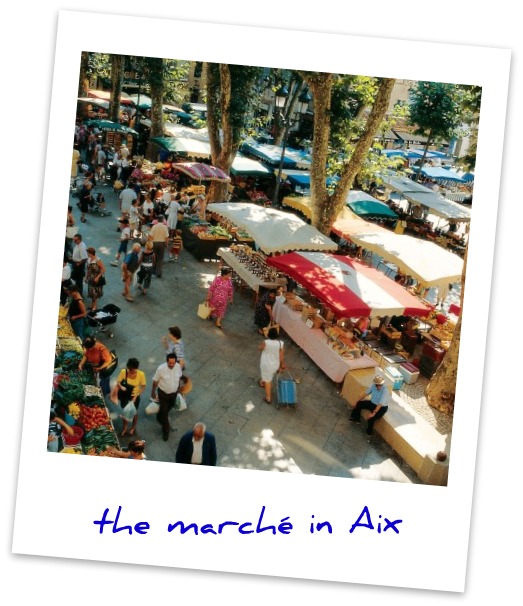
I was at the market this morning to generate ideas about the Saturday menu and to pick up a few things for today’s lunch and dinner. Aix-en-Provence has a number of daily open air markets, but the largest is behind my flat at the Place des Prêcheurs plaza. Shopping at the local farmers’ market has nothing in common with the typical American grocery run. A local market visit cannot be rushed, nothing is prepackaged into “convenient serving sizes,” the produce reflects the season, and patience is required. I have my “favorites list” with regards to certain vendors, but still prefer to start with a slow tour of the stalls to see what looks good. Provence is famous for its fruits and berries, and this being April local strawberries have begun to appear. I did some berry sampling this morning on my inspection lap (okay, Costco does sampling too: Chef Boyardee, tiny hotdogs wrapped in pastry, …) to see if they were worth buying at this early point in the season. Frankly, tasting wasn’t required; the perfume of the ripe red berries was intoxicating. Resistance was futile.

Céline has the best salads, the bent old man with the LA Dodgers cap (has no idea who they are, I asked) offers the most savory tomatoes, I prefer my chèvre frais from a local goat farmer with the small card table, bread only from Farinomanfou (a couple from Quebec, completely fou [crazy] about their selections of flour), apples and apple juice from the orchard outside Venelles (son and daughter work the stall), and the best butcher – Pagni, the Italian – operates from a white stepvan at the market’s edge. He calls me l’américaine and dreams of visiting New York and watching a baseball “match” in Yankee Stadium. Ahhh, magnifique!

Today I was in Pagni’s line behind 2 ladies of 74 and 82 (we were exchanging ages for reasons I didn’t understand), and during the course of slicing this and grinding that, Pagni (56) was expounding on his 3 marriages. Why 3? Because he loves younger women and his wives keep growing older! He then looked to me for support on the universal truth that younger is always better when it comes to females. I was at a loss for my French vocabulary. There was an R rated discussion of his sexual prowess, which left the women pink cheeked and clucking with laughter, and a 5 minute ramble about a recent trip to the hospital; I followed perhaps half of that. It took me 20 minutes to buy 4 sausages and a slice of ham. The bill for the meat – 7 euros – the price of the wait – well, priceless.

Rituals and traditions are critical in our lives, particularly at the hectic pace we maintain. The world seems to spin faster now than when I was a kid, spending afternoons at the little league field and sketching race cars for hours. My own children suffer (enjoy) a continuous bombardment of new gadgets, video games, and distractions that are form fitted to their 140 characters-or-less attention spans. Forget writing a letter with pen and paper, kids today cannot sit through an email. That would require the crafting of actual sentences (subject, verb, object, …remember?) and the use of capital letters, punctuation, and possibly even (horror of all horrors) paragraphs. They tweet through short bursts of symbols, smiley faces, abbreviations, and puzzling acronyms like IRL, LMK, LMAO, and my son’s favorite, LMFAO. Explain please.

All of us, children and adults alike, have less time to exhale and reflect these days. Rituals provide a moment for reflection and remembrance, and a link to our family, ancestors and traditions. Changes are unsettling and rituals remind us of the familiar; the things that are comforting. Particularly when in transition – professional, geographic, emotional – we need our rituals and traditions for ballast, to keep us stable and connected. Quoting from a 1992 Family Circle article, “Family rituals are an important means of binding the individual to the group; they give us a ‘we.’ Rituals and traditions speak volumes about a family’s inner life. Taken together, they are a family’s thumbprint, its metaphor of intimacy. Even when a ritual passes out of constant usage, its residue remains.” This is beautifully said.

Rituals around food and the meal played important roles in our childhood home. One of my favorite memories was the Sunday lunch, because my grandmother always joined us after church. She loved to decide who amongst the 5 grandkids would say grace, hearing about our activities for the past week, amusing us with tales of my dad’s childhood, and rousing everyone for a relaxing walk around the farm property after the huge meal. Rituals around food and the meal play important roles in my own home as well. We have replaced grace with statements of gratitude and the walk through the fields with a stroll around town, but meal time remains cherished family time, not to be violated.

I took a course on the power and value of rituals and traditions this past year that was fascinating. Rituals are used universally, across all cultures to honor and celebrate, heal, provide transition, and bring order to chaos. We explored various approaches, including the construction of small altars and memorials, the burning or burying of notes (my kids loved doing this at home), jewelry (we made African “wish necklaces,” I think mine worked!), and rites of passage.

I am curious which rituals others enjoy as well, as it is fun to try the new as well as revive the old. Was there a ritual maker in your family, and what roles do you play today in continuing or creating traditions for your own family, or yourself? If interested in experimenting with traditions and rituals, consider the timing (beginning, middle and end) and placement, participants, and purpose.  And above all, note that rituals should benefit everyone involved and harm none. Feel free to post your own thoughts and experiences with rituals and traditions on the blog.

So, a week has passed since I started this entry, and the dinner party was – for the most part – a success. Local black and green olives provided a simple but traditional starter, along with a lively champagne (Louis de Sasy). The main course of seared Mediterranean tuna was laid on a bed of sliced heirloom tomatoes, chopped fresh onions, and basil (all sautéed briefly), which was light and perfect for a warm spring evening in Provence. My wine guy, Yves, who runs Cave d’Yves at the corner, talked me out of a white wine for the tuna, pointing instead to a Beaujolais (2009 Cote du Py from Morgon) that perfectly complemented the fish/tomato combo.  The thick, deep green asparagus spears that I had selected that morning from Céline were roasting in the oven for about 15 minutes (and a glass of champagne) beyond their cook time; an “oh shit” moment. So, ….we also enjoyed a few over-cooked mushy spears with crunchy tips. I was redeemed, possibly, by the fromage tray – a selection of chèvre (goat), reblochon (cow), and brebis (sheep) cheeses – followed by a sweet pear tart, sprinkled with pecans and offered with coffee.

A true French host would have offered a post dessert digestif – an Armagnac or limoncello, perhaps – and opened a box of chocolates to end the evening. Always room for improvement, as my grandmother would say, always room for improvement.

Bill Magill
Aix-en-Provence

Postscript: Catherine Freemire teaches a fascinating course on the topic of rituals at San Francisco State University, as part of its Core Strengths Coaching program (http://www.cel.sfsu.edu/coaching/about.cfm). Much of my discussion on rituals and traditions is thanks to her. A few books worth reading on this topic include (I have a longer list if interested):

Beck & Metrick, The Art of Ritual (1990)

Cohen, The Circle of Life: Rituals from the Human Family Album (1991)

Driver, The Magic of Ritual (1991)

Hammerschlag and Silverman, Healing Ceremonies: Creating Personal Rituals for Spiritual, Emotional, Physical & Mental Health (1998)

Imber-Black & Roberts, Rituals for Our Times (1992)

Lieberman, New Traditions: Redefining Celebrations for Today’s Family (1991)

Muller, Sabbath: Finding Rest, Renewal & Delight in Our Busy Lives (1999)

Ryan, Attitudes of Gratitude (1999)

Seo, Heaven on Earth; 15 Minute Miracles to Change the World (1999)