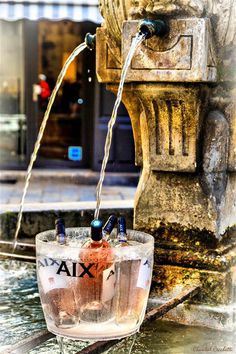
Suggested Song: My My, Hey Hey (Out of the Blue), Neil Young
Suggested Drink: Jackhammer cocktail: Jack Daniels whiskey, Amaretto

“Every act of creation is first an act of destruction.”
– Pablo Picasso

I want to destroy your life. No, actually I want you to destroy your life. I want you to quite your job, leave your spouse, and plan your move, today.

Stick with me for one reckless moment.

We tend to frame major life changes – professional, personal, geographic, and other – from the inertia of our current situation. Like planets in a universe, each of these big things has a distinct and defining rotation, but orbit around a common core called our life. If any one of these big things gets out of orbit our whole universe can wobble out of control. So we focus on keeping things in safe (even if less than stimulating) trajectories. Knocking them out can initiate a chain of unpredictable consequences after all. Reckless.

planets_orbitsConsidering this astro-emotional dynamic, we ponder change through an inventory of impacts to our safe and predictable cosmos. If I left this job/spouse/location how much upheaval would it create in my entire universe of orbiting things? It’s a focus on the negatives and how to manage them. It’s a calculation that most often encourages inaction.

Let’s flip this conversation on its head. Imagine that for some reason – because Bill says so – you are required to leave your job, spouse, or location. Can you defend why you want to stay, why you are ready to defy that expectation? Tell me now, because as I said above, I want to destroy your life. Now the conversation leans toward positives. What do you so love about your job, spouse, location, and other big things? Remind yourself why the compromises are worth it, make a quick list. Is there enough good stuff there to fight for?

Now here’s the reckless part: stop treating this like a silly exercise. Do it, act on it. How’s the list coming along?

“It takes a long time to become young.”
– Pablo Picasso

Picasso was a big fan of child-like liberation, of creating art without the constraints of convention and expectations. Life imitates art with respect to our compliance to an ever-expanding collection of rules and etiquettes as we age. We grow up. We get properly tamed.

Did you ever “run away” when really young? I remember rolling some provisions into a cloth sac tied to the end of a wooden pole, tossing it over my shoulder like Huck Finn and heading out. I was probably 7 or so, and with no hand to hold that small Pennsylvania town felt like a wide-open universe. I didn’t consider my parents’ reaction, didn’t think about how I would buy stuff, wasn’t worried about my safety. I was limitless and unbounded. Untamed.

RunawayThe older we get the more we consider the consequences of our actions. A high priority is paid to risk aversion and fitting in, of not making waves. We gain a sense of responsibility at the surrender of possibilities and our autonomy. It’s also the start of the blame game: jobs, partners, and locations. My job is killing me. My marriage is boring me. This town is stifling me.

I wager that the single deepest source of frustration in our lives is the loss of self-determination; believing that our personal options and identities have become compromised. We sign contracts, make vows, and take on debts (financial and emotional) that we come to regret. But all of these obligations can be cancelled with a little steel in the backbone. Isn’t being honest and authentic more important than some hell-or-high-water cling to desires and ambitions long since faded? Kids are the only obligation that demands honor: you created them, now raise them. But, even kids don’t expect you to honor that until-death-do-we-part stuff if you’re unhappy and being a fraud. Ask them, I did.

We tiptoe around life like cowards. Most all of us. We limp through our second half and ask, why did I spend my best years with someone whom I no longer loved? Why didn’t I leave that crushing, pointless job when I still had the energy and time to pursue something of real interest? Why did I waste my life in city X instead of trying my dream on island Y?

I’ll tell you exactly why: money, security, feelings, and judgment.

Money

A lot of us drive career aspirations off income potential. I know I did. I was a failing physics major who loved the wine industry, and UC Davis had one of the best departments in the world. There was no money in that though, so rather than changing my major to wine and oenology I moved over to economics and had a decent career in finance and business. I was a square peg in a round hole but a couple of the jobs paid well. No regrets.

money worriesMaybe I’d make the same choice again at 25 and would be dishonest to suggest otherwise. I wasn’t living a passionate life, but managed to woo a great wife, buy a comfortable home, raise 3 terrible kids, and establish some savings. At 25 these are strong considerations for most of us, and that’s understandable. Be a good boy now, just a small dose of lithium and off you go to work.

At 50 I become uncooperative. Step 1 was to stop making life choices based on income. You should too. Our fixation on money is the single biggest source of bad decisions we’ll regret at the tail end of life; choices that pad our bank accounts and provide security to the detriment of true happiness and sense of authenticity. It’s a corruptive influence that pushes us to take on certain work, stay with certain people, and live in certain places that leave us feeling drained and compromised.

Doubt me? Just google “top regrets when dying” and compare the many, many various articles. The biggest common laments:

  • not being authentic to oneself (at the top of every list)
  • not pursuing one’s passions and purpose
  • not taking more risks
  • not finding real love and the right partner

Interesting that no one wishes they had worked longer hours and made more money, yet we make most of our big life decisions around their impacts to our finances. How odd.

Want to reclaim yourself? The single toughest but most immediate step is to vow no more decisions based on money, zero. Damn the consequences.

Security

Ever hear this: I’m not really happy with life and would change it tomorrow, but how would I survive, where would I live, what would I do? Maybe it’s a friend confiding over a glass of wine, maybe it’s a pesky voice in your own head.

We get comfortable in our bubbles of habit and security. Maybe life isn’t a soft bed of fragrant roses, but at least it’s not full of anxiety. Change and uncertainty make us anxious.

Consider for one reckless moment that it’s time to be a bit untethered and noncompliant. You can choose to face the unknown as a set of risks or list of possibilities. It can be how would I survive, where would I live, what would I do? Or it can be what new skills can I develop, new people can I meet, new horizons can I discover? Most importantly, you can approach change for what it is: the chance and excuse to reinvent and rediscover.

We are packrats with our bad tendencies; I know that I am. Only a disruptive move or change dislodges them from my routine. There’s no better time than midlife to question what’s important, go grab it, and leave the rest behind, despite the risks. (As for the anxiety that may result from your rash and reckless disregard for security I suggest meditation, sex, and the occasional joint.)

Want to reclaim yourself? A big step #2: no more safe decisions based on security.

Feelings

We stay too long in relationships, personal and professional, out of concerns for peoples’ feelings. It’s honorable to consider others’ happiness but serves no one to dial in a performance that is insincere, apathetic, and prolongs inevitable closure.

I’ve let people down at inopportune times and have been troubled by my betrayal and own egoism. I’ve quite rock bands and startups and corporate positions where my positions were key and the timings of my departures were disruptive. I recently broke up with a woman who loved me deeply. Feelings get hurt, colleagues and lovers feel betrayed, and we feel horrible. But life in all its unpredictable beauty is full of uncertainties and risks. Interests and priorities can change. The greater sin is remaining in expired situations and blaming others for our unhappiness and sense of entrapment. We have to be adults about this.
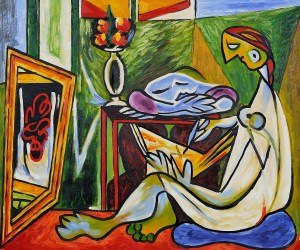
picasso giftWe also have to acknowledge that our gifts are unique and there is an obligation to share them to the best of our abilities. Each of us has a Picasso-sized gift waiting to be uncovered, developed, and shared. This can require life pivots that cause real damage.

Your inception was a miracle and your genetic inheritance was unimaginably unpredictable. Consider that going back just 10 generations all of the sets of parents in your inception line managed to survive wars, famine, plagues, terminal disease, premature birth, and other unpleasant forms of nasty demise before siring. Somehow each survived long enough to forward their genes, some of which are floating around your corporeal vessel at this very moment. The 10 male forbearers each produced about 250-300 million sperm per day if healthy and each and every one had a unique DNA profile, some elegant piece of genetic code that on some enchanted evening made it upstream through the generational spawning ladders to you. There is no one on this planet with your unique profile of education, experience, and talents and you have a responsibility to offer them up. Right? Should you let the fear of hurt feelings get in the way of this obligation?

Indeed everyone deserves kindness and respect in these situations. But that respect extends to you as well. In fact, you are your first priority.

Want to reclaim yourself? A sometimes painful step #3: no hesitations out of a fear of hurt feelings.

Judgment

No one enjoys being judged poorly. If I quite my job, leave my spouse, or move away what will my parents think, my friends think, my boss or colleagues think, my kids think? We waver over our actions and defer to the comfort of group acceptance, suitably tamed and compliant. What a terrible impulse.

judgedIt is patently unfair to blame others for our own unfilled desires and ambitions. Yet we hear it constantly, particularly in the final years. The what could have beens if I didn’t have this or that commitment to meet. As mentioned above, one of the common regrets in later life is not pursuing our real passions and much of that stems from a fear of judgment. But as also mentioned above, there is only one obligation: raising our kids responsibly, and that doesn’t require staying in dead-end jobs, expired marriages, or same cities. Think about the examples those decisions set for your impressionable brood. My mom sacrificed everything for me, and I’ll be a good mother and sacrifice all for my kids because I want them to be the best that they can be. But wait, based on your example they will feel obliged to sacrifice for their kids, who sacrifice it all for their own, and on and on. Who the hell gets to benefit from this solarium system of martyrdom?

If your actions are self-serving you will surely be judged, but who better to serve than yourself at the most fundamental core? If you live through the lens of others’ expectations, how will you align with the most authentic sense of yourself and be truly understood and appreciated? Who knows and appreciates that identity better than you?

Want to reclaim yourself? A courageous step #4: no hesitations from the fear of judgments (which are surely to come).

“Do not go gentle into that good night,
Old age should burn and rave at close of day;
Rage, rage against the dying of the light.”
– Dylan Thomas

Taking a jackhammer to your secure life foundation sounds horrifying, but here’s the good news. If your list in defense of inaction is long and convincing, the hammer can be safely tucked away (for now). If not, there’s no better time for disruption than midlife. You’re maturity, self-awareness, skill set, and helpful connections have never been stronger. You probably have some financial buffer to see you through a gap, at least more now that at 25. And it’s been shown that we start to lose this constant anxiety over money at midlife and focus more on happiness and self realization.

Grow old gracefully, compliantly? To hell with that.

Bill Magill
Aix-en-Provence

Suggested Song: Sunny Afternoon, the Kinks
Suggested Drink: 2015 La Rose Des Ventes rosé, Cotes de Provence

Your author hard at work.

It’s Wednesday afternoon and hopefully someone is working. Are you? Because I’m floating around a placid lake in the south of France with a few friends, enjoying the Mediterranean sun and warm breeze and a bottle or two of Provence rosé. We forgot to bring plastic cups so have dissected small water bottles into goblet pairs. Amazing how creative one can get with a bold thirst and Swiss Army knife.

We’ve rented two small electric powered boats; one for the adults and one for our teen daughters. They’ve set out up the gorge in search of flirtatious mischief and a discreet cove to probably smoke something tucked into a bikini bottom. They would deny all of this of course.

We watch from a receding distance and putter along leisurely, recounting our own tales of youth and sharing details that only great friends care to hear. There is no rush, … to go where? … to power aggressively through one of the most stunning river systems in Europe, the beautiful Gorges du Verdon at the southern base of the French Alps, with its limestone cliffs carving dramatically down into the cool turquois-green water? The good lord was having a inspired day when she cast this spot.

It is a small boat, a lazy pace, and a best-of-friends moment. The sun is bronzing our shoulders from a pastel blue Cezanne sky. Are you working, keeping the wheels of industry turning, the flows of the economy flowing, craving that rush hour drive home in your fabulous gleaming Tesla or BMW or whatever the driven class drive these days? I truly hope so, because the world needs you. We float in our 15-foot rental and praise you, we toast you with another pour of the bottle. God bless you.

First mate with an engineered goblet

We’ll gather with our girls in an hour to share a simple late lunch of smoked salmon and lettuce sandwiches in poppy seed baguettes, and local Provence cherries and strawberries from the market this morning. It’s hot but we have lots of water and plentiful ice for the wine, and now the carved-up plastic cups. All is good. All is really good actually.

This makes me think about the goings on in my old stomping grounds of San Francisco. Tom Perkins died there last week. He was an originator and titan of Silicon Valley’s venture capital industry and amassed a great, great fortune investing in companies like Genentech and Tandem Computers. Perkins was a man of big appetites and had commissioned the 289-foot clipper the Maltese Falcon (at that time the world’s largest private sailing yacht). He must have enjoyed some amazing times on that massive beast, champagning the biggest celebrities, wooing the hottest models (just saying it’s possible), traversing the oceans blue. Well perhaps not too much free time for traversing blue oceans. That high-gain, high-burn vc lifestyle doesn’t tend to pair well with extended, low-stress getaways. Unlikely he’d have been caught dead on our dingy, drinking discount wine out of MacGyvered cups. We would have enjoyed having him aboard I think. What an exchange.

I think about Perkins and his accomplished life while bobbing around on this warm serene day, chilled rosé in hand. I hope he died a happy man, with that keen knack for moneymaking and great talent for toy buying: the boats and Bugatti collection and massive homes. He probably did, what do you think? Maybe he got buried in one of his Bugattis, that would be cool. Who said you can’t take it with you? He did get touchy about his wealth status near the end, writing that the rich in America were being unfairly persecuted in a manner last visited on the Jews in Nazi Germany. It’s a weird paradox: the more we have, the less willing we are to share it. Money is like that, cocaine is like that, rosé with good friends isn’t like that.

How’s that commute going?

Bill Magill
Aix-en-Provence

Suggested Song: The Ties that Bind, Bruce Springsteen
Suggested Drink: Domain Saint Aix rosé (hey, it’s almost summer!)

I’m back in the U.S. for 3 weeks. I always miss home when traveling, but I’m sharing fun times with people I love, mixing in a bit of work that I enjoy, getting my fix of Americana like smoked BBQ and sweet tea and friendly waitresses who say darlin’, and staying in sunny locales with good wine and lively music. No need to reach for the Kleenex just yet.

My final day before departure was a list of last-minute to-dos that mark the approach of an extended trip: the laundry and ironing and packing, and discovery that my favorite shirts weren’t washed; the inventory of passports and boarding passes and U.S. bank cards that I use stateside; and a sit at the laptop to firm up flight times and can’t wait to see you soon emails.

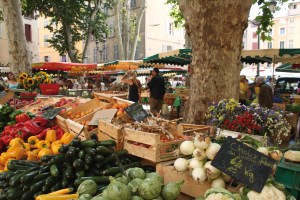
AixStill, there was time to for a dose of my daily routine, first stop the outdoor market for flowers and strawberries, and surprised to find a good friend back from winter travels and manning a fruit stall. After promises of a longer follow up over drinks I popped over to the roasterie for a rich brew with my morning coffee clutch. We spent an hour discussing nothing more pressing than the current glorious weather, last night’s dinner menus, and who had the best produce at the market that day. I made a pitch for Maité’s berries: unbelievable.

I was back home in time to scratch out a short note (writing letters with a quality fountain pen on heavy parchment is pure indulgence) and a meander to the post for stamps. In a moment of clarity I decided that the ripe strawberries, bought for my incoming house/cat-sitters, would pair nicely with a split of French champagne or Italian prosecco . My guests would be arriving from California after all, so midday here would mean late night there and the combination sounded like a perfect antidote to their certain jetlag. Since my go-to wine shop was en route, I stopped for a recommendation from cave manager Carl and picked up a couple of bottles of rosé for the effort. A productive start to the day indeed.

Lunch and the afternoon followed with the requisite nap, two hours at the desk putting final touches on an upcoming Interprize workshop in Charlotte, a self administered (and poorly executed) yoga session, and a half hour or so at the piano to wind things down. I was considering a dinner of leftover pasta when the invite came to an impromptu garden apéro. The evening was spent chatting with friends and enjoying pan-fried veal cutlets, a spicy simmer of spring vegetables, a simple green salad tossed in truffle oil and lemon juice, and more than a few bottles of well-matched Cotes de Rhone.

My life in Provence is deeply rich, but without the wealth. It’s colorful, luscious, intemperate, unhurried and simple, and it thrives on connection and community. I might splurge on a Saturday night feast for a dozen good friends, then go a week without paying for a meal. We share a passion for food and entertain from our kitchens, comparing recipes and debating our favorite market stalls and butcher shops and cheese guys. With local Provence produce so inexpensive eating well doesn’t break the bank, especially with meals focused more on seasonal fruits and vegetables, fresh herbs and zesty Mediterranean spices, less on a dominant meat entree.

Our Aix circle is a varied mix of expats and natives, runaways and homecomers, bar browsers and homebodies, left-leaners and right-wingers, carnivores and vegetarians and pescetarians and flexitarians, hedonists and innocents and the malleable. Professionally we are a handful of struggling entrepreneurs and industry captains, writers and artists, engineers and admins and bartenders and merchants of mysterious unmentionables. In other words, all over the map in both income and accomplishment. Everyone is pursuing something purposeful but greater affluence is not the guiding principal; status not the binding glue. And this is the implicit thread that connects the group, I believe.

San Francisco1I’ll be touching down in San Francisco in the next 30 minutes and I’m excited. It’s a city of remarkable beauty, diversity, energy, and potential. It has also become a city of extremes and divisions, of unhealthy margins at both ends. The hyper-creative and hard-working tech tribe and the financial industry that funds them are driving an impress economic resurgence. They live from bonus check to options grant, dress their kitchens with high-end stoves and cookware, then eat out because, well, who has the time or energy to create in the kitchen? Mingling with the masses means chatting up the tattooed bartender or speaking broken Spanish with the housecleaner, but these folks are not getting put on the dinner invite list (which is a missed opportunity. Imagine the stories). There is a very tangible caste divide between the have-a-lots and the others in this city that cuts mostly across income and wealth.

To find the strongest currents in the deepest streams you have to move beyond surface illusions. I’m not at all adverse to money, just no longer willing to compromise my lifestyle and community for it. New possibilities open up along so many dimensions – where you live, what you do, with whom you love and commune – when you stop obsessing about the bank balance and status trajectory. I could be dead in a week. Fuck that.

Bill Magill
Aix-en-Provence

Suggested Song: Garden Party, Ricky Nelson
Suggested Drink: Strawberry basil margaritas: strawberries, lime, basil, tequila

A new spring edition of Bill’s fabulous adventures in Provence. It is easy to write about this time of the year, with the eager return to longer days, changes in the local farmers markets, and the resumption of warm weather rituals that most often center around drinks and socializing.

connectionI’ll start, though, with an epiphany of sorts: smart phone addiction is little different than other forms of unhealthy dependence, and the loss of its tickle in our pockets leads many of us through the same series of withdrawal emotions.

I suffered through 5 days sans connection recently. My iPhone went missing after a Saturday night of pronounced revelry at the restaurant Les Agapes in Aix. There was eating, there was drinking, there was singing and dancing, and my socket to the wireless ether vanished mysteriously through a wormhole of midnight excess. These things can happen when we’re having serious fun.

As the next day was a Sunday and the day after that had me on an early morning train to Paris, there was no time for quick replacement, so I resigned myself for a few days of unconnected disquietude. This I experienced:

  • Day 1, Sunday: denial, anger, depression, acceptance (that my phone was indeed gone, dammit)
  • Day 2, Monday: comprising, coping (through another day – this one traveling – without constant connectivity)
  • Day 3, Tuesday: observing, realizing (all the ways my smart phone distracts, demands attention, and eats up my precious life minutes)
  • Day 4, Wednesday: embracing, flourishing (the minutes and hours freed from uninterrupted connectivity and distraction)
  • Day 5, Thursday: denial, anger, depression, acceptance (that my new phone had arrived)

For a final word on this topic I defer to Prince Ea’s compelling recent video: Can we auto-correct humanity?

Artist: Jennifer Pochinski

Back to the warming weather, we took advantage of longer daytime hours this past weekend to throw a casual dinner party in a friend’s garden. Spring training for the competitive season that will be in full swing by May. Creating an Aix-Mex menu from the spring vegetables in the local markets was challenging great fun, and with the aid of said friend’s massive grill we offered up fajitas of slow-roasted skirt steak (onglet to my local French butcher) and melt-in-your-mouth beef tongue, peppery gambas marinated in Italian lime and cilantro, papas con chorizo with spicy Spanish sausage, and an amazing Provençal inspired pico de gallo with local tomatoes (just starting to find their flavor now), green onions, and roasted chili peppers. Homemade cornbread and a just-from-the-oven chocolate cake filled out the menu. Yee haw.

All in there were 27 of us – half kids – enjoying this spring fling; no phones sitting on the table or gripped instinctively in needy hands. Just great conversation and catching up after the dark days of winter. Another bottle please. Life is short, the world is beautiful. Unplug, connect.

Bill Magill
Aix-en-Provence

Suggested Song: You Only Live Once, The Strokes
Suggested Drink: Forever Young Cocktail, gin, cranberry juice, club soda

It’s been sobering start to 2016 for the bulletproof believers amongst us. You know, we flag bearers of the centennial club, confident that at 100 we’ll still be kicking on most cylinders and fully engaged, and then softly, painlessly fail to wake up one sunny morning.

David_Bowie-06It’s a comforting fable for Big Idea procrastinators like me. Why do today what we have 40 more years to achieve? Zen, relax. And then we hear that certain ageless celebrities of our youth – David Bowie, Glenn Frey, Dale Griffin, and Alan Rickman, just this month alone – are dying from the frightening unmentionables like cancer, Alzheimer’s, and colitis before the age of 70. It’s a deflating jab to our comfort bubble.

The centennial club thrives on 2 fundamental deceits: when and how we’ll die. In reality we shouldn’t expect to tick past 83, which remains the average lifespan for the much of the western world. And we won’t likely expire peacefully in our sleep. We’ll probably succumb to the kinds of disorders and diseases that snatched the headline names mentioned above. It won’t be pretty and it will rob us of a few final years of fun and frolic. We won’t be supernovas, expanding in unbound potential until a final blinding flash leaves us scattered to the ashes. Damn.

So let’s get real. Let’s assume that our productive years wind down at 80, after which we’ll drool over endless rounds of bridge, shuffleboard, and acceptable wine on decks of the Carnival Cruise Lines. How many months are left then to do something grand, to pursue a legacy ambition that leaves us feeling accomplished and complete, that our unique purpose for being on this beautiful planet at this amazing time has been served? At 50 we can expect 360 more months and at 60 just 240 months. Sounds like a lot, sounds like so little.

Anxiety over our lack of effective runway can also be debilitating. Why try to take on something ambitious if there is insufficient time to implement it? Bowie and Frey were wasting time in rock bands in their teens, a time when we were planning responsible careers. They had decades to experiment, fail, perfect, and establish their genius. What hope is there to start at midlife, regardless of our ambitions, music or otherwise?

dont just standThe fact is we’re never better positioned to pursue quixotic adventures than at midlife. You probably have more disposable income at 50 then 20, are less impulsive and smarter about the world, have established a helpful network of support (even if 1-2 degrees removed), are no longer distracted by childrearing (although child-funding never ends!), and are driven less by considerations that are purely financial (that corrupt your vision), more by self realization (which distills your vision).

For a lot of reasons we can’t expect to launch a stellar career at 50 like Bowie’s, but we can still find success, recognition and respect, and establish a more authentic self, whether it’s as a musician, writer, artist, restaurateur, winemaker, nonprofit director, extreme athlete, teacher, yoga instructor, life coach, or whatever represents that grand ambition of deep personal meaning to you.

The point is this: there is no better time than now to get to it. The real prize is the journey and self-discovery as much as the final creation of our endeavors. In a few years someone will be writing your obit; perhaps the same person who summarized the lives of those above. Give her something to smile about.

Bill Magill
Aix-en-Provence

Suggest Song: San Francisco, Scott McKenzie (written by John Phillips)
Suggested Drink: Irish Coffee; coffee, sugar, Irish Whiskey, whipped cream (the recipe created by Jack Koeppler and Stanton Delaplane at the Buena Vista, 1952)

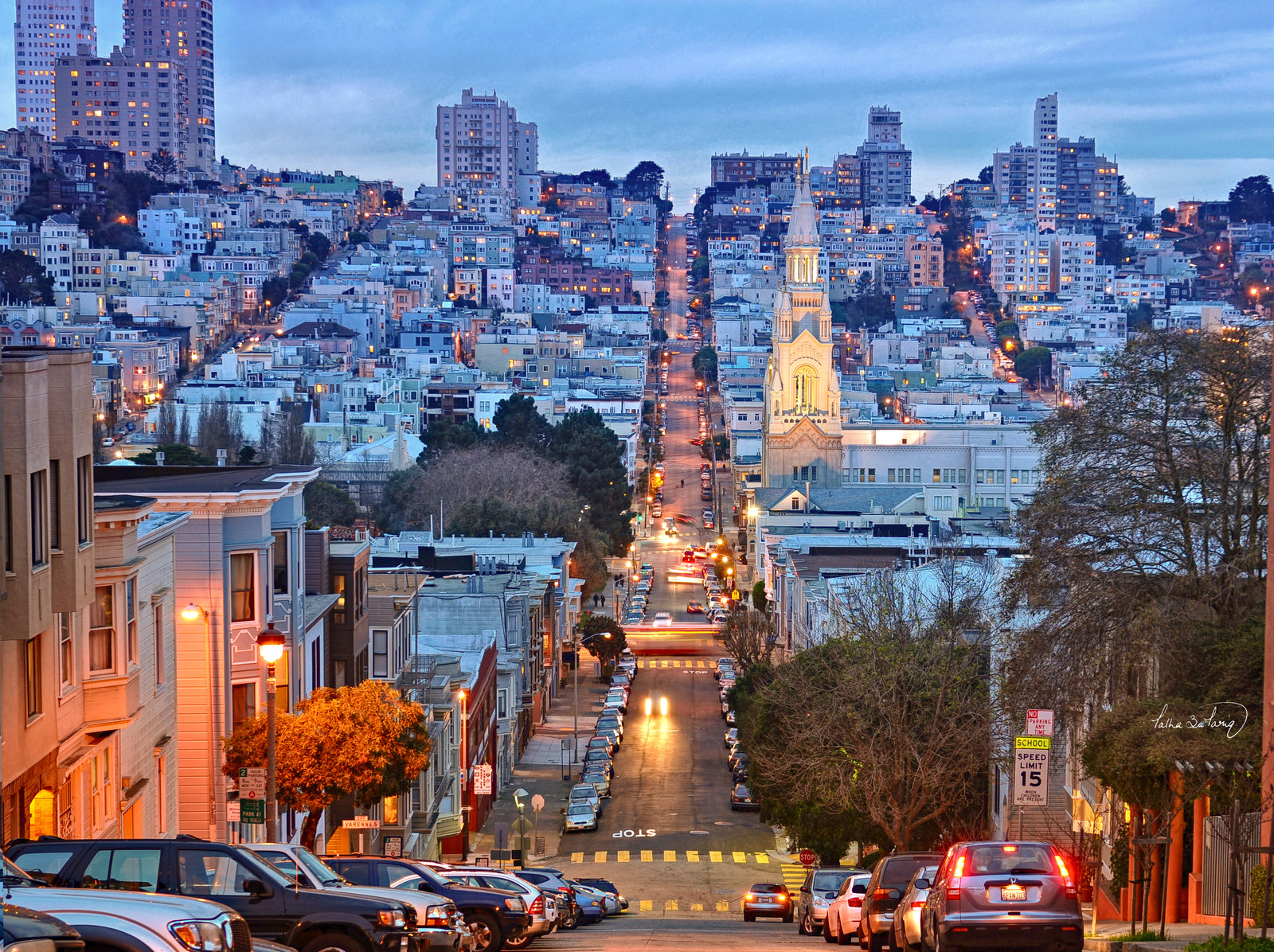
San Francisco1San Francisco is a gorgeous city full of mystery, magic, and infinite wackiness. It’s a writer’s paradise, a Mecca for those seeking out the unexpected in full spectrum technicolor. And for that reason I love to scratch out a few dispatches when here for a couple of weeks each fall.

First things first: when did my kids grow up between this past summer and today? When did that wild and irascible bunch that needed cajoling for everything from dinner vegetables to the morning routine turn the tables on dad? It’s hard to play drill sergeant when the recruits are first to rise, preparing their own breakfasts, getting their backpacks together, and gently closing my bedroom door so the noise doesn’t disturb sergeant dad’s jet-lagged slumber. Damn.

Dispatch #1 – A love letter

Be sure to wear some flowers in your hair.

I need to start these posts with a paean to this city I so love. It remains the magic kingdom; an engaging city of elegance, eccentricity, animation, and tolerance. San Francisco is Venus to New York City’s Mars; it’s the Haight’s Grateful Dead to the Lower East Side’s Velvet Underground. It’s a mischievous city, relaxed and sensual, with a wardrobe of faded denim, delicate chemise, and a tasteful leather corset. The classic John Phillips hymn to the summer of love – sung by Scott McKenzie – captured a gentle rebellious spirit that remains 5 decades on. The flower children tuned out and drifted off; the techies have turned on and plugged in. Tying together these tribes and all between is a desire to create something sublime and inviting, … something magical.

San_Francisco flowersOctober is the best month for San Francisco visits. It’s warm and sunny and that cool blanket of Pacific fog tends to burn off by mid morning. Locals call it earthquake weather and indeed the last big one buckled freeways and fell buildings on a warm October evening in 1989, … and revealed the best of the city. With power out, homes dark, and nerves rattled San Francisco’s residents looked for comfort in the masses. Most of the local businesses locked up but the many bars along Noe Valley’s main thoroughfare were candlelit and abuzz. We joined neighbors at The Dubliner pub to share our “holy shit!” moments and a few pints to calm the jitters. Thanks be to god that beer kegs run off pressurized gas. The cash registers weren’t working of course so our barman approximated change with a shoebox full of bills and coins. A lot of free and sympathetic Guinness got poured that evening until the fire company arrived around midnight to shut us down. (Apparently lit candles aren’t ideal in a city full of leaking gas mains.) Through it all the neighborhoods pulled together, the crime rate fell, and the Giants were swept in the World Series. Well two out of three ain’t bad.

I had an early breakfast yesterday at 2nd and Mission with an old friend. I Ubered down there from our home base in NOPA but decided to walk back. A 45 minute hike in San Francisco promises a colorful journey from most any point and in any direction. From SOMA up Market Street through Hayes Valley and past Alamo Square, it’s a ramble through gleaming high rises and indigent lowlifes, chic coffee bars and tagged-up liquor stores, Victorians and Edwardians and tenement hotels and vibrant mansions. Why rush around in a cramped taxi when you can walk and look and smell and hear every detail of this living museum. My two weeks will pass too quickly. Meanwhile, I’ll keep you posted.

October 24, 2015

Dispatch #2: From the Bean Bag to Blooms (and Across the Universe)

beanbagI’ve been taking my morning coffee this past week at the Bean Bag Cafe on Divisadero Street. It’s a classic neighborhood spot with that rustic look: lots of dinged-up wood, a mishmash of sit down tables and stand up counters, 8 coffees and 6 beers on tap, crepes and bagels and sandwiches and vegie omelets, Bob Marley on the sound system this morning. The Bean Bag has a young casual vibe with a lean towards enlightenment (all smoothies with less than 2% fat), falling somewhere between the preppy Marina and the hipster Mission. It works.

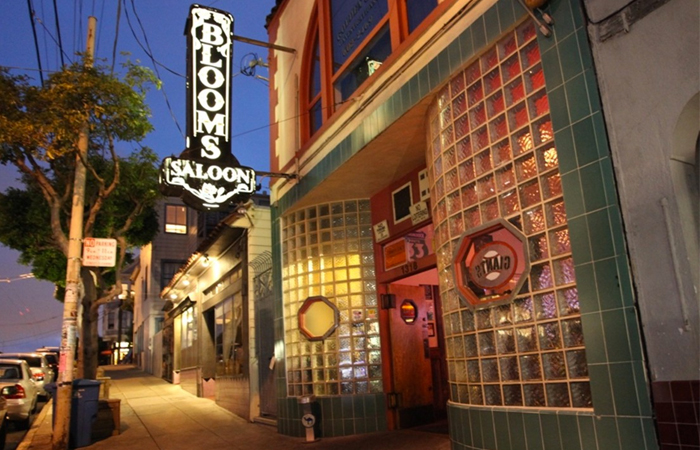
Yesterday I ventured out of this neighborhood to the far side of Potrero Hill: destination Blooms Saloon. It was a classic SF weekend ramble, winding down to the Castro, out through the Mission, up Potrero Hill and across the 101 Freeway by footbridge. Just shy of ten thousand steps according to my iPhone (scary what these phones know about us). Sunny and gloriously warm, a light jacket was too much and ended up over my arm.

A diverse collection of grimy tents have sprouted up like mushrooms along a block of 16th Street just past Folsom. A homeless community is taking root here, a refugee phenomenon spreading across the city as the usual encampments – the out-of-site, under-the-freeway bidonvilles – are being cleared out in a bid at urban beautification. It’s a game of whack-a-moll between city hall and the moll caste that is pushing a long-festering problem to the surface.

San Francisco’s homeless dilemma is shifting from an embarrassing tourist irritation to a vexing dilemma for local residents. The city’s impressive economic upshift is not trickling down, and it appears in fact to be making the gap between the have almost everythings and the have absolutely nothings more glaring and noticeable. It is a topic front and center for the upcoming elections and everyone has an opinion on cause and solutions, from the coffee counters at the Bean Bag to bar stools at Blooms.

blooms saloonThere is a multiverse forming here, numerous layered but opposed realities based on income and employment mobility. At least 3 coexist in varying degrees of tension: universes T (for the Thriving), C (the Coping), and BS (the Barely Surviving). The city is in bloom thanks largely to the residents of universe T and it’s a wondrous thing, making available all that one expects from a world-class town. Their sun shines bright and some passes through to layer C, but that’s about it.

I’m hoping that San Francisco can direct its creative energies toward a multiverse in greater harmony. Economic disparities are a challenge for all big cities and there is no silver bullet solution. Still, this is not just any big city. San Francisco has always been marked by its openness, compassion and creativity. Now is the time to find a bit of that magic again.

October 27, 2015

Dispatch #3: The Counter Culture

A dyslexic walks into a bra.

Thursday night

The Chapel Bar, SF
The Chapel Bar, SF

A lone stranger walks into the Chapel Bar, 19th and Mission, pulls up stool and orders a beer. What’s his name, where’s he from, what brings him to San Francisco and to the Chapel? These questions and others are batted and returned across the bar like a lazy badminton birdie, and within 30 minutes he’s on first names with the tattooed bartenders and chatty neighbors, has offered up a brief of his brief and gained theirs. Within an hour he’s getting a primer on the mix of a new cocktail – and sharing free samples – getting the haunted history of the establishment – a former mortuary – and getting tips for the weekend. Before leaving all are invited to his hometown in Provence, and him to a bartender convention in New Orleans next June (the exact details remain a bit hazy). By the end of the night, and sitting in another fine SF drinking establishment, part of the Chapel staff wanders in and it all starts again. San Francisco is like that.

Friday morning

A slightly hung-over stranger walks into the Bean Bag Cafe, Hayes and Divisadero, orders a black coffee and pulls up to his favorite counter spot. The Bean Bag has its usual weekday mid-morning crowd with Mac screens up, ear buds in. Some are multitasking with plates of huevos rancheros (organic black beans, naturally) or similar breakfast selections and Bob Marley, again, is playing on the sound system.

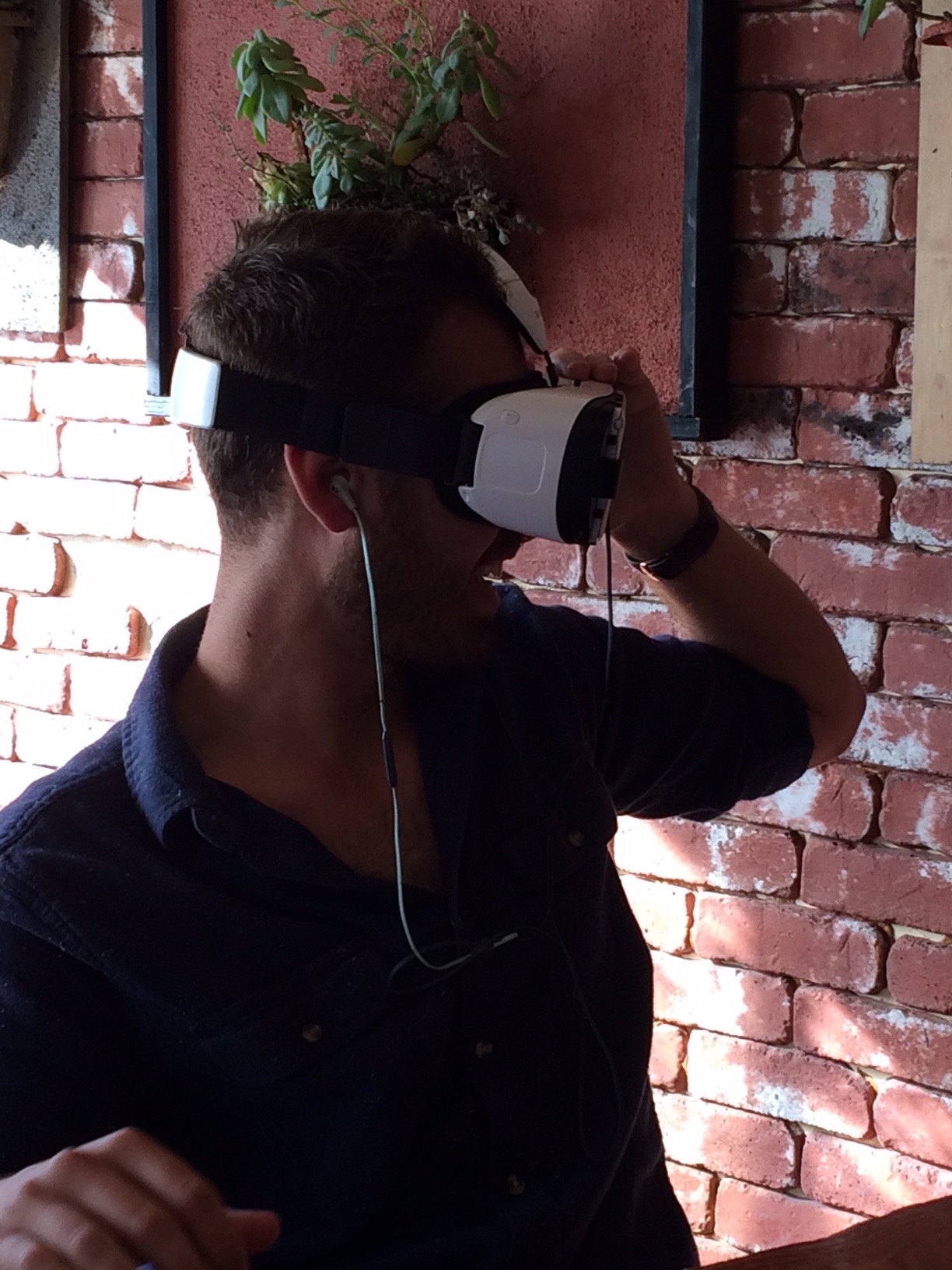
Taylor demonstrating the VR headset
Taylor demonstrating the VR headset.

Across the counter he sees a young, bright looking tech type chatting online. There is a bulky white goggle set next to him, a latest generation Samsung phone attached flush to the front and the Oculus logo on the side. It catches his attention. The techie is a friendly guy named Taylor, the Chief Evangelist, he later comes to learn, for a startup promoting the virtual reality industry. “It’s the Samsung Gear VR system, interested in trying it out?” He can’t resist. It’s beyond cool. The moment he slides the goggles in place the coffee shop is absolutely gone. The first VR app Taylor loads up has him standing in space looking at planets and stars and moons in rotation 360° around him; he turns and there are orbiting bodies behind him, to the right and left; he zooms in and zooms out. Wow! Taylor wants him to try another app. This one places him in a movie theatre. Oddly enough there are others there as well, beside him, behind him, … others on compatible VR systems somewhere in the world, playing the same app and sharing the moment. “Talk to them,” Taylor says, and when he does they talk back and from other distant points on the globe. He’s astounded, he’s sold, he wants one these things. His hangover is gone. San Francisco is like that.

I love France and I blow its beautiful horn regularly in my essays. But there is one glaring hole in its game plan: no counter culture. The French sit at tables, not communal counters and definitely not at bars, and this is a sadly missed opportunity. They are fantastic conversationalists, well read, up on events, love a good debate, curious. To be unexpectedly “adopted” for an evening or exposed to wildly new experiences happens most often when engaging others from a different universe, often when you’re the stranger in a strange land. It’s a beautiful thing. San Francisco is like that.

October 31, 2015

Dispatch #4: An Opportunity Knocks

Golden-Gate-Bridge-BoomVisits-1024x682Now I sit at Charles de Gaulle airport, waiting for my connection to Marseille and missing my kids, San Francisco, and morning coffees at the Bean Bag Cafe in that order. You can only miss something that is not there, can love and appreciate something most deeply when you suffer from its absence. Want to know just how precious someone, some place, or something is in your life? Leave it for a few months.

My two weeks in San Francisco has revealed a city that is hipper, livelier, and more beautiful than the one I quite 5 years ago, even more so it seems than during my visit 12 months back. The waves of money pouring into the city from the latest tech boom are funding amazing restaurants of every stripe, the construction of new campuses and sports arenas and office buildings and museum expansions, and putting a new shine on the historic homes that make San Francisco a living postcard.

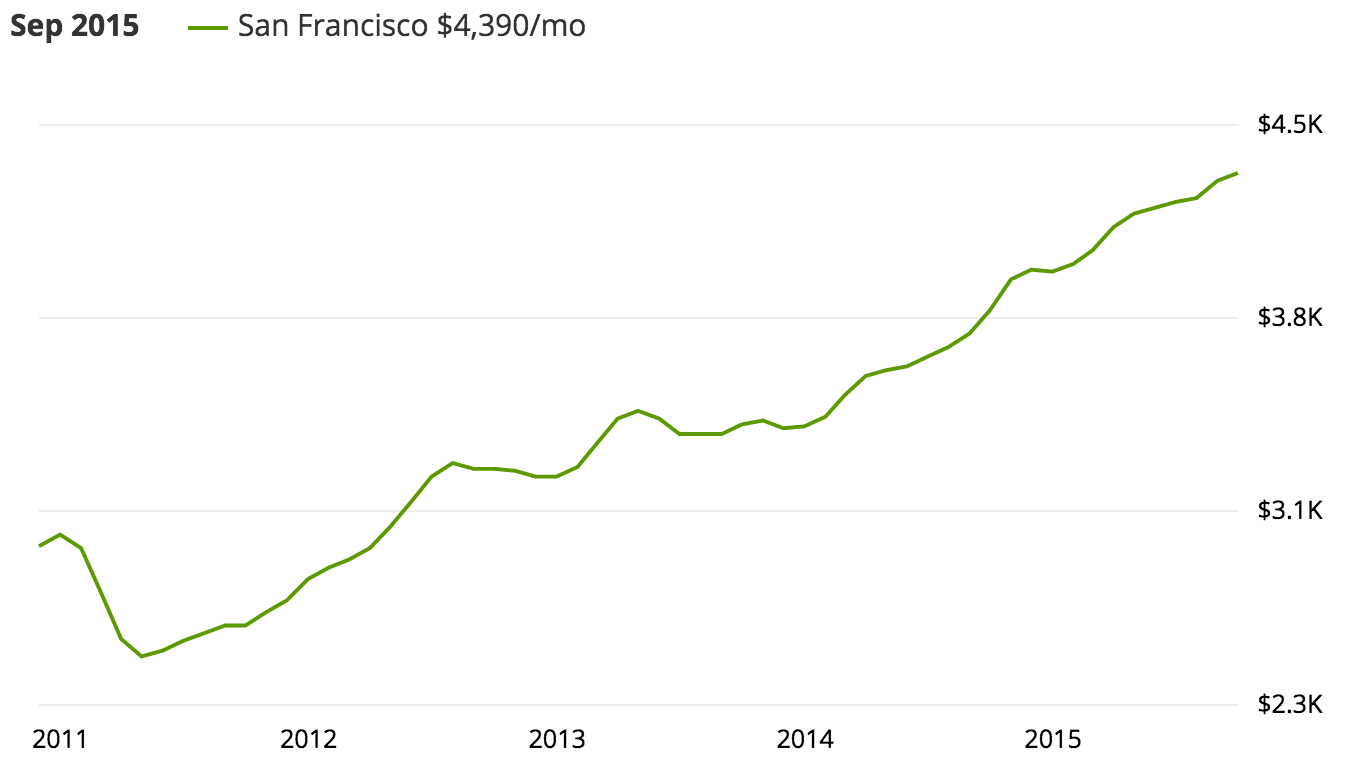
Median rental prices in SF. Source: Zillow
Median home rental prices in SF. Source: Zillow

The tide is not lifting all boats, however, and a wicked undertow is making it difficult for a lot of the city’s less affluent (and not just struggling artists and newly arriving immigrants). With the brisk rise in home values, rents, and menu prices even the fully-employed mid-class are feeling the pinch. Note that the average rent for a 1-bedroom apartment in October was $3,670. A burrito at the Little Chihuahua on Divisadero cost me about $11, a cheesesteak across the street at Jay’s ran $10. Both were beyond delicious, neither place was fancy. For those who can afford it: fantastic! For those who can’t: ouch. And beyond ouch for the emerging tent city caste springing up along 16th Street and elsewhere, as I mentioned in Dispatch #2.

Is there another city in America with the abundance of resources and resourcefulness that San Francisco enjoys at this moment? This blessing offers an exceptional opportunity to demonstrate its claim to distinction, to the title of Magic Kingdom (well to be fair, that’s a claim I grant unconditionally). The city is chock full of curious inventive minds and money. Perhaps the high-flying tech companies – the Googles and Instagrams and Facebooks – that attract this talent and unleash its spending power on the community can consider this as a chance – an obligation? – to direct a slice of their incredible creativity and capital toward urban solutions to the challenges they help provoke. Thoughts?

November 6, 2015

Suggested song: Woodstock, Joni Mitchell (this is the CSN&Y rendition I love)
Suggested drink: Harvest Bell Lemonade, organic vodka, lemonade, basil, lemon slice, simple syrup

We are stardust
We are golden
And we’ve got to get ourselves
Back to the garden

Much is written on the merits of eating locally and seasonally. I’m a fan and advocate, and adopting this practice in Provence is easy and immensely pleasurable. The benefits of adapting to seasonal changes extend well beyond an evolving dinner plate, however. Acknowledging that we’re in the month of October, not May, and cooking and eating accordingly encourages us to consider nature and our environment; it inspires respect and empathy for the earth’s bounty and limits. In the age of hyper connectivity and globalized availability – Blueberries in December? No problem! – we lose this appreciation and are the worse for it.

My adult life has been largely enjoyed in San Francisco, where there are just 2 seasons really in the city proper: chilly, foggy season A (winters and summers) and glorious, less foggy season B (springs and falls). To be fair to the larger Bay Area, 15 minutes sunflowers2outside the city in any direction and the climate dynamics are wildly different.

Getting back to a full climate cycle was one of the many attractions I anticipated when moving to Provence. The changing seasons define life here beyond just weather, but also in ways edible, social, visual, and cultural. Provence is colored by brilliant summer yellows, somber winter greys, by fresh spring greens and fading autumn browns in all shades from blossom to decay. It is a cycle that keeps things in flow and evolving, changing in predictable patterns that echo previous seasons but never truly repeat. This cycle also ties us to our surrounds in ways more natural and organic, less artificial and technologic. And this is a very healthy thing: enriching, humbling, authenticating.

strawberries2Placed between the Alps and Mediterranean, Provence swings from bone chilling Januaries to sweltering Julys. This change stimulates a vast range of local fruits and vegetables, flowers and herbs, wines and oils and nuts. Local Gariguette strawberries and Charantais melons fill the market stalls with shades of orange and red – and pesky honeybees – through the warm summer days. The fields are ablaze with sunflowers and lavender. The aromas are inviting, seductive. During the darker months gourdes of every odd shape and size, and middle earth root vegetables like turnips and rutabagas inspire child-terrorizing recipes. Cool salad plates yield to steaming soup bowls. Sweet red and black raspberries give way to cepe mushrooms and the savage black truffle: formidable king of all French fungi.

roseOther selections on the Provence menu are seasonal as well. The café scene is vibrant year around, but the outdoor terrace reigns supreme for coffee and drinks in summer. Without outdoor seating your restaurant business is somewhere between anemic to 100 percent dead. Socializing with a cool glass of rosé or pastis in the early evenings under a warm Mediterranean sun is pure bliss. A light dinner of shared charcuterie, cheese and bread is plenty when the weather is still balmy at 10 p.m. And with the elegant baroque setting of Aix and beautiful pageantry on display why stay home, and when out why be inside?

The out/in seating bias evolves gradually to a complete 180° flip by year end, with those same terraces now the exclusive domain of a few weather-defiant smokers, bundled up for a shivering fix in heavy winter coats while the rest of us crowd into cozy, packed interiors, warmed by wood fired ovens, calming aperitifs, and simmering plates of delicious this or that. Summer nibbles and pale rosés give way to hearty menus and full-bodied reds. The winter din is unique to the season, the chatter amplified by the tight enclosed quarters, the espresso machines hissing, the waiters barking, the clatter of coffee cups and wine glasses and silverware being served or collected.

As the daylight hours dwindle and temperatures drop we start to entertain more at home and indoors. I struggle to find my Escoffier toque when the thought of sweating before a hot stove top in midsummer is the reward. By October there is no place I’d rather be. The changes in local produce at the outdoor markets give us a chance to mix up the dinner menu, the entrees, the wine selection and cocktail starters. What an opportunity to find harmony with the sun, moon, rain, wind, and dirt; with the terroir as they say in France. Respect for and adaption to our climate cycles is a sign of humility, a deference that is critical in this period of extreme climate events that reveals a nature mother aggravated by our false sense of control and hubris.

earthWe can choose to insulate ourselves from the natural world or embrace its messy chaos and diversity. We’re brimming with modern technologies that enable sterile, inert lives largely impervious to the seasons. Increasingly we encapsulate ourselves in the great digital bubble, plugged in to an endless and fascinating online universe that gives no hints of the natural world, the real world. And that’s our collective loss.

Our climate has become unhinged thanks to a global appetite for better lives, bigger homes, a car or 2 in the garage, and more stuff – in essence the “good life” – with ignorance (initially) and disregard (ultimately) for the ugly environmental impact of this pursuit. Isolating ourselves from the natural elements only widens the disconnect and exacerbates the problem. What’s on your menu tonight?

Bill Magill
Aix-en-Provence

Suggest Song: Distractions, Sia
Suggested Drink: McCallan Cask Strength Single Malt Scotch, served neat

noun dis·til·la·tion \ˌdi-stə-ˈlā-shən\ : to extract the essence of something

We saturate our time and space with unessential distractions. The online world offers an endless spring of mildly interesting, mostly superfluous reading, and our smartphones with their noisy arrays of buzzes, bells, and beeps demand our attention like bratty kids. Not to be outbid, the brick-and-mortar world demands equal time and its pound of flesh, promising eternal consumer happiness. Our time gets diluted, our space gets inundated, and our defining essence becomes a bland blend of muddle.

knife setWe self-define through our stuff. I am a master homechef because I have 12-piece cutlery set and full array of All-Clad pans and pots. I am a talented musician because a Martin D28 or Fender Stratocaster is resting on the guitar stand in my living room. I am an astounding sommelier because my wine cave is brimming with expensive bottles. What a wonderful world it would be if aptitude and skill could be a purchase away.

The best homechefs I know have limited kit: a few essential pots and pans and perhaps 3 solid, razor-sharp knives. They focus on technique, ingredients, and presentation. My ex mother-in-law produced some of the most delicious Spanish dishes I’ve tasted from a tiny kitchen and with unremarkable equipment in her Barcelona flat. I don’t recall ever seeing a cookbook on the counter. She’s never had internet access for recipe look up and only recently got a mobile phone (emergency calls only!). She wouldn’t know Jamie Oliver or Gordon Ramsey if they bit her on the ankle, … but I think they would love her empanadas and paella.

The most entertaining piano player in Aix-en-Provence – David Brulin – can be seen pushing his ragged piano through town to the markets at noon and restaurants at night (La Cita every Thursday!). The faded instrument’s brand is anyone’s guess, the keys have long since lost their ivory sheen, the hammers and strings rattle and jangle as it rolls on a dollie through the bumpy alleys. But when David takes his seat it might as well be a Steinway. It’s his well-honed skill at the keys that gets your feet tapping, not the name on the lid.

distractionUnfortunately, mastery comes through practice only, and these distractions of ours divert energy and attention from that pursuit. I admit to this sin in spades. If there is one thing at which I’m truly a master, it’s finding trivial things to sidetrack my focus. And it’s not my fault! We’re all under constant assault to check out the latest gizmo or app. This arrived from Apple last week in my inbox: 7 Underrated Apps You Didn’t Know You Needed! These included RunPee that “lets you know the best time to pee during movies so you don’t miss any good scenes” and Plant Nanny that “comes with cute little plants (on your phone) that are meant to remind you to drink your water regularly.” Damn right, I didn’t know I needed those.

So how do we cut through the noise? These 5 practices help me so might help you:

  1. List: Make a short list of passions you most enjoy and want to master; those things by which you want to be defined. Cooking, fitness, writing, music, …? Everyone’s list is unique. What is on your list?
  2. Commit: Reserve time on your daily or weekly calendar for each passion and do your best to respect the commitments, and that means saying no to friends and family who call with last minute invitations.
  3. Control: Tame your email and internet beasts by checking emails and the latest news 2-3 times daily and no more. I’m trying to stick to (1) first thing in the morning, (2) at noon, and (3) late afternoon before the apéro hour. When the will is weak I turn the wifi router off during “my hours.”
  4. Master: The better we get at something the more we want to get even better at it. Adopt practices that promote your growth and mastery in the passions you’ve selected and a virtuous upcycle will develop, pulling you to commit even more time. And remember to emphasize the practices, not the accessories.
  5. Meditate: Just 5 minutes per day helps clear my head and calm the noise.

As mentioned earlier, my discovery in mental distillation continues to be a work in process and I’m looking for suggestions and experiences we can share with my community of readers. Anything you care to note?

Bill Magill
Aix-en-Provence

Suggested Song: When I’m 64, Beatles
Suggested Drink: Accelerator cocktail, cherry brandy, peppermint schnapps, vodka

It is not true that people stop pursuing dreams because they grow old, they grow old because they stop pursuing dreams. – Gabriel Garcí­a Márquez

porchswingsWe humans are a curious species. Half of our lives are spent developing into interesting, capable creatures. We get degrees, build careers, save money, acquire knowledge and experience, hone interests, learn from mistakes, gain compassion and learn to love. From molehill to mountain we slowly, steadily grow our possibilities and potential. And at the peak of our prowess we downshift to the “good life” and atrophy into a retiring sunset.

Wasted potential is everyone’s loss. We harangue the young about squandered time when their hourglass is mostly full, and then become the worst violators when ours is half empty. At a time when creativity in all its forms is most needed and appreciated on this planet, the surrender of our talents to the porch swing and wine cave is a communal loss.

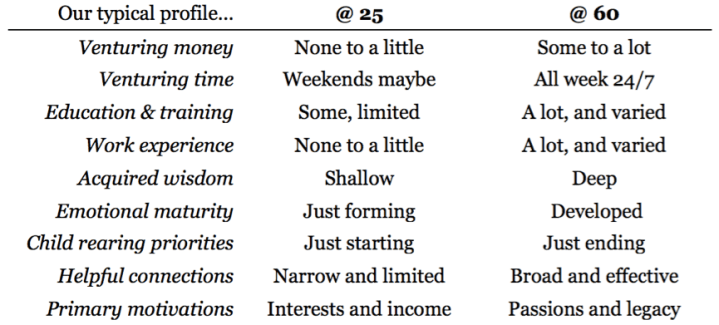
How do we stack up at midlife against our younger selves in the capacity to achieve great things? The following table displays a brief summary.

Screen Shot 2015-08-23 at 11.01.19

Oh to be young again, just starting out and facing adventure, pursuing such promise, the exciting unknown of the roads ahead. Most of us were balancing a host of obligations and still seeking our balance. We were finishing studies and starting careers, probably the first of a series as we pinballed through different ideas and experiences. We were discovering ourselves and uncovering new interests, but generating income was the primary concern and motivator. Time was consumed with work and kids, and the emotional child inside lingered well past the twenties (speaking for myself). Our time and resources for pursuing grand ventures outside conventional careers were limited in all manner of ways: our finances, support networks, bases of knowledge, and emotional maturity.

pool diveThese factors that hobble our passion plans start to dissipate by midlife, leaving us well armed for the pursuit of grand ambitions. Kids graduate from our daily lives at about the time our core careers are winding down, leaving us with more time, fewer distractions, and more disposable income. We have been well educated, trained and retrained through our university and working years, gained knowledge, and as importantly gained perspective and balance. Our rolodexes are full of people who can help, or people who know people who can help. At midlife we have the time and resources, the maturity and experience, and we have interests that are blossoming into real passions. This is when we retire to porch swings and sunsets?

We humans are a curious species, it is true. Our interests shift to the deep end of the pool with age, the lure of the profound not marked firstly by splashy income, but personal achievement, meaning, and the possibility of leaving something big behind. We’re taking better care of physical and emotional selves than did our parents; 60 is the new 40; interpreneurs are the new entrepreneurs. Now is the moment to accelerate into the experience, to dive deep. There will be time for sunsets down the road.

Bill Magill
Aix-en-Provence

Suggested drink: Rum punch recipe, pineapple juice, orange juice, Bambarra rum, grenadine
Suggested song: Kokomo, Beach Boys

We descended on Turks & Caicos last week to celebrate the 50th birthday of a great friend. There were 25 or so in the group, arriving in clumps as summer schedules allowed, couples and singles and kids in tow for the family few.

The Caribbean is wilting in July and between the pool and beach we were growing gills by the end of the week. Constant hydration was le rigueur, with a steady water infusion plus rotating lineup of cold Presidente beer, rosé wine and local rum punch as the sun dipped from noon to night.

conchSea life

Turks & Caicos has the third largest coral reef in the world. Its beaches have been voted the most beautiful, it’s diving the most stunning on this planet by Tripadvisor and others. The water is warm and calm and visibility exceeds 100 feet, sometimes more. Needless to say the boating and snorkelling is unforgettable.

The variety of sea life darting over and through the vibrant coral is a visual feast, from spinning swarms of tiny forage fish to solitary predators gliding majestically over the sandy floor. Blue tangs and bar jack, eagle rays and lemon sharks and barracuda, parrotfish and trumpet fish and damselfish, … and conch. Oh the conch! This large spiral sea snail is the sought-after celebrity of Turks & Caicos and served in most every eatery, as raw ceviche, over tender leaves of salad, deep fried into fritters, however you enjoy it. It’s the royal plate for the well-heeled to the flip-flopped. It’s colorful, delicious, and makes for one hell of a sea horn. Yes, by week’s end we grew gills and had conch coming out of our ears.

IMG_0229Land life

The birthday party group at Turks was as diverse as the fish in the crystalline blue sea. We were old and young, gay and straight, black and white and beige and olive, carnivores and herbivores and pescetarians, liberal and conservative, wealthy and not nearly so, some overworked and a few unemployed, flying in from all points on the globe. Among us were doctors and consultants and professionals of every stripe, restaurateurs and a bartender, jewelry shop owners and a jewelry designer, musicians and writers (who isn’t these days?), a physical therapist and a garbage man, students and grandmothers. Who am I missing?

I’m convinced that this variety was key to the unending smiles, hugs, and the warm and familial vibe of the amazing week. We open ourselves to the diversity of colors around us and our worlds become richer and vastly more fascinating. Among our immediate and extended networks, and networks beyond that, we have the diversity of the boundless sea. Why limit our reach to fish of our own color and stripe?

The merits of openness extend beyond simply more interesting rum cocktail conversation. Many of us have grand ambitions that profit from a wide spectrum of connections, experiences and advice from all walks of life and corners of the sea. Limit your network and you limit your possibilities. Teach, learn, grow, … now where’s that rum punch?

Bill Magill
Aix-en-Provence