Song suggestion: Under My Wheels, Alice Cooper
Drink suggestion: Domain de Saint Hilaire rosé, Coteaux d’Aix

It has been a year now since I published my first postcard.  A year of exploring, testing, learning, of savoring a few small victories and suffering a few (and then some) humbling failures. Did someone say, “if we aren’t failing we aren’t learning,” or did I just imagine that? Either way, I am getting an Ivy League education here in the south of France.

My infatuation with Aix-en-Provence has matured into a deep appreciation over this past year. I continue to marvel at the splendors of this Roman city, with its 101 fountains, its bountiful outdoor markets, its elegant 18th century architecture cast in the soft pastels of the Provence sun, and its easy Mediterranean character. A warm breeze at twilight, café chatter and a chilled glass of rosé with friends, and in a moment of wonder you try to recall the shooting star, rabbit’s foot, 4-leaf clover, or incredibly selfless deed that brought you all of this good fortune. It is like that.

My life is simpler here. This I value and this I have learned: simple is better. It is hard to find simplicity in a life bounded by possessions and fueled with a heavy dose of consumption. We are remembered for what we create, not what we consume; what we share, not what we possess. The centrifuge of stuff spinning around our daily lives is exhausting to maintain and distracting to manage. Do you ever feel like a whirling hammer thrower in the Olympics? Well let that hammer go. It is one hell of a release.

If you share my suspicions of consumerism as a hobby consider pairing back to the essentials. Feed the desires that bring you sustainable joy and personal definition, or perhaps defined you many years ago, and let the rest go. Our apartment in Aix is not monastic but certainly basic. The few furnishings we have are nice, but there aren’t many. I’ve invested happily in those essentials that feed the soul: for me, things like great pots and pans, an antique desk at which to write, a good stereo system, a new guitar and a decent piano. My 16 year old son has a great guitar as well, a gift from his generous uncle, and the usual teenage kit: cell phone, iPod, laptop, PS3 system for gaming. I got my soul, he’s got his soul. We’re all good.

One decision that I don’t regret was to become carless. I’ve had my own wheels since the dented and scraped Opel station-wagon I bought for $50 in 1975, and quite often I have had 2 money sinks sitting in the driveway. An encyclopedia of American muscle cars has pole position on my living room table and I still love checking out beautiful automobiles, almost as much as watching the les belles femmes d’Aix glide along Cours Mirabeau in their light summer dresses (but I digress). Yes, I am a serious car guy, but I don’t miss owning one.

There is a good public transport system in much of France (your eyes are rolling), and the network of busses and trains around Aix is truly impressive. Why drive to Marseille, for example, when a bus leaves every 10 minutes, makes 2 quick stops en route, then takes the same auto route that you would be following in your car? There are no worries about finding parking, getting lost, having an accident, or pairing that lunch with a nice glass of wine.

When public transportation doesn’t work I take a taxi. If I really need a car for a day or a week then there is an Avis center 3 blocks from home. When I get out of the cab or turn in the car, I am done. Imagine not having to deal with registration fees, emissions tests, insurance premiums, gas prices, accidents, recalls, repairs, monthly payments, oil changes, dot dot dot. Is there any single possession – other than a home, perhaps – that consumes more of our energy?

There are 2 tradeoffs to a life without wheels: it’s an urban life and it’s a life amongst the masses (as in mass transportation). If you are a city person like me then #1 won’t be a problem. #2 is a thornier challenge. We are conditioned to avoid exposure to people beyond our safe bubble of friends and family and the automobile is the perfect cocoon; our own little isolation tank on wheels. We get all the creature comforts of home – leather seats, 6 speaker stereo with an iPod port, telephone and even internet hookups – and with the finely filtered climate control systems that keep us at a perfect 72° F (22° C [295° K  {inside joke, see my last blog}]), we don’t even share air with the grubby multitudes around us. Love it!

Actually, I don’t love it. I am bored by it. Try the bus or the train. People are fascinating, people of all color, age and stripe, not just the antiseptic middle and upper classes with whom you and I mostly associate. I am no Mother Theresa. I’ve had to change seats more than once when a soap-challenged bus passenger plants nearby. But we humans are endlessly curious creatures, intriguing to watch and titillating to eavesdrop on.  Why isolate oneself from all of this fascinating diversity? To listen to the mono-dimensions of Rush Limbaugh or Howard Stern? Personally, I love NPR’s Terry Gross, and with my archaic gen 1 iPod in hand (worth about what I paid for that Opel wagon in 1975) there is no need for a $30,000 car radio to get my Fresh Air fix.

The blind ache to see a human face, the deaf ache to hear a human voice, and the dying don’t want to die alone. When faced with the loss of human connection, we value nothing more. Why then do we try so hard and spend so much to avoid it?

Bill Magill
Aix-en-Provence

Song Suggestion: Disco Inferno, Trammps
Drink Suggestion: Greek Revolution (ouzo, grenadine, galliano)

It’s been a cold February in Provence, damn cold. The famous fountains of Aix are dripping in icicles, school bus routes have been suspended, and if the mercury cracks above 273° kelvin it is for just a few blessed hours. What the hell is all this nonsense about a warming globe?

With the weather as inspiration I prepared a tartiflette for friends on Saturday evening. This casserole comes from the French Alps region and is in a word, hearty. Potatoes, onion, bacon and cheese are the foundation of a great winter meal no matter how they are combined or prepared. In a tartiflette recipe they are pure magic. Looking to stick some skin on your bones, you won’t go wrong with a tartiflette.

The marché crowd in Aix on Saturday morning was thin, no doubt intimidated by the weather. The merchants were using long plastic sheets to protect their fruits and vegetables from the chill. Many were in fingerless gloves and rocking on their heels to keep the blood flowing, but in good humor.  “C’est l’hiver, c’est normal!” (Google translator) was the prevailing attitude. I have a favorite fish guy at the market and for the first time this winter he admitted to cold fingers. Gutting, scaling, and rinsing slippery poisson in sub-freezing weather cannot be fun. He was smiling, but it looked like an effort.

It’s been a relief to feel the chill. I was starting to worry that Al Gore was on to something, with his fear-mongering about CO2 levels on the rise and melting ice shelves. But he’s gone underground now, Al and his gaggle of grant-seeking science conspirators. There’s been little noise about climate concerns over the past many months, not in the press (makes for boring copy), not from my brethren in the investment community (makes for poor returns), and not from the megaphone of presidential candidates, be they here in France or there in the US.

White House hopefuls are framing the national issues of relevance at the moment, with their state-to-state Republican pub crawl in full bloom. In the sacred well of righteous intentions – compassion, equality, and the right to self-determination – they have taken a death-defying, gloves-off, teeth-bared slither to the bottom. Truly stirring. I give the democrats fewer points for expressing callousness in prime time, but am impressed with their ability to avoid the gaze of Helios, Greek god of the sun (well technically he was a Titan, but let’s not split hairs here) and solder forward with more pressing concerns than saving the planet for all mankind. Oh, I almost forgot, that stuff about polar bear extinctions and Manhattan under water was all made up.

So what is going on here? Why all the fuss about climate change just a few short years ago (An Inconvenient Truth was released in 2006), and now a sudden black hole in the national dialog? Perhaps we can blame it on the gods (yes, Santorum cowers to an inquisition-inspired deity, but I figure it’s safer to cover one’s bets through the Greek committee system; taking it way back here folks). On modern day Mount Olympus (not up on your Greek mythology? click here) Ares (Mars to the Romans) has controlled the floor since 9/11, sharing more recently with Hermes (god of commerce; love those fantastic winged sandals) and his take on the floundering economy. But Helios (great crown, no wings) and Artemis (goddess of nature with some wicked arrows; no crowns, no wings) have been shut out of the conversation, and why shouldn’t they be, when more urgent fears demand our gods’ attentions.

How urgent you ask? Well, over $3.5 trillion dollars urgent (a Brown University report actually puts the estimate at $3.7 trillion), invested wisely in Iraq and Afghanistan. And look at the hearts and minds we’ve gained in return. This is probably a tough pill for Hermes in particular to swallow. After all, a few trillion could have put a dent in the current housing crisis, which is definitely his domain. According to a recent Bloomberg article 35% of all US homes sold in January were under distressed conditions (at a price below the mortgage balance or in complete foreclosure). Consider that for a moment; over 1/3 of all homes sold. Do you think that a $30,000 check tax free to every American household (115 million at last count) may have saved a few struggling families from distress?  I imagine so, but priorities, priorities.

$3.5 trillion might have also done some good for the planet. But, why solve the riddle to a  cheaper solar panel, develop a killer battery for electric vehicles, or modernize America’s antiquated electric grid (a Sinatra era relic) when 225,000 deaths and 7.8 million refugees are attainable  (Brown University’s estimates of the human impact of the 2 wars). Helios and Atermis would surely pitch the benefits of competing with the Chinese in clean energy markets like solar (that will generate tens of millions of jobs for their citizens over next few decades) while helping the planet, but again, they don’t have the floor right now. The Chinese have missed the boat on this one big time, investing billions upon billions in new university programs (committing at least 1.5% of its GDP by this Yale University estimate) and core R&D to develop long-term domestic growth built on emerging industries, rather than shock-and-awe nation building in desert lands 7 thousand miles away. What in god’s name are they thinking?

Bill Magill
Aix-en-Provence
For more on Al Gore’s recent activities visit:

http://www.climatecrisis.net/
http://www.algore.com/ 

Music Suggestion: My Generation, The Who (enjoy this fun version from The Zimmers)
Drink Suggestion: Four Roses Bourbon

Yet a day comes when a man notices that ….he belongs to time and by the horror that seizes him he recognizes his worst enemy, tomorrow. – Albert Camus.

“Do something to make your parents proud.” Unsaid but implicit in this directive was the coda, “for a change.” My grandmother was a spritely 99 when she wished me good luck upon my first extended move away from home, to begin my young college days in Texas some 35 years ago. Born in 1878 (just imagine), Grammy was a wise and wrinkled sage who had seen much of the world, living in the Sudan, Puerto Rico, and up and down the East Coast, accompanying my grandfather, the stern Scots-Irish minister, as he wandered the globe tending the flock. She suffered fools (like her grandson) with patience but was not shy to offer advice. Unfortunately, I too quickly dismissed advice like this from Grammy, from my parents, from anyone not of My Generation.

It is our loss that the advice of elders is not more regularly sought or highly valued. Only they can speak from experience on things like family, regrets, happiness, career choices, and the value of good health and well-being. Karl Pillemer shares this sentiment and set out to document the opinions and advice of older Americans, seeking common threads in the guidance they proffered. Pillemer is a Professor of Gerontology in Medicine at the Weill Cornell Medical College and directs the Cornell Legacy Project. He also authored 30 Lessons for Living, Tried and True Advice from the Wisest Americans.

To copy/paste Amazon’s introduction of the book:

After a chance encounter with an extraordinary ninety-year-old woman, renowned gerontologist Karl Pillemer began to wonder what older people know about life that the rest of us don’t. His quest led him to interview more than one thousand Americans over the age of sixty-five to seek their counsel on all the big issues- children, marriage, money, career, aging. Their moving stories and uncompromisingly honest answers often surprised him. And he found that he consistently heard advice that pointed to these thirty lessons for living. Here he weaves their personal recollections of difficulties overcome and lives well lived into a timeless book filled with the hard-won advice these older Americans wish someone had given them when they were young.

I enjoyed reading 30 Lessons for Living and was struck by the alignment of lessons therein – common sense opinions from very common people – with principles on happiness routinely proposed by the better-known gurus and academics in the field. Seligman, Csikszentmihalyi, and Chopra, all respected thought leaders in the business of happiness, preach deeper fulfillment through small moments and the savoring of simple pleasures, not extravagance and grandiosity. Gratitude, lifelong personal development, self-determination, respect for one’s health, networking, and the pursuit of one’s passions now are all themes shared amongst these giants in the field (and touched on occasionally in these postcards by your blogger).

Here is Csikszentmihalyi, writing about happiness and its attainment in his seminal piece Flow, through the appreciation of simple things: sight, taste, music, and mastering one’s body (sex and yoga being good avenues). There is Csikszentmihalyi again, introducing his readers to the deeply fulfilled autotelic worker, who is internally driven to succeed, not externally driven to make money. Now some Chopra (with a few annoying background violins) telling us about the power of gratitude and its connection to the soul in this YouTube video. And Chopra’s law of Dharma: “Seek your higher Self. Discover your unique talents”.

Seligman cites that every person (save 1) in the top 10% of happiness in his highly-respected research on the topic was involved in a romantic relationship, that happier people have significantly richer social lives than their glummer counterparts. More Seligman, this time on the deception of the hedonic treadmill; the more we attain, the more our expectations rise. The things we worked so hard to acquire no longer satisfy. In the words of my favorite narcissist of this generation, Homer Simpson, “more please.”

There was general consensus amongst Pillemer’s study participants on a number of themes (which he boiled down to the 30 lessons). For example on happiness: time is short so act on it now; do those things that are important now. Happiness is a choice. Stop wasting time worrying. Don’t stress (“this too will pass” was a favorite saying of my mother’s when I would call to complain about the kids or share other annoyances). Think small and be grateful for the small things you can enjoy. Savor life’s daily moments. Focus on the short term, not long term. Understand how much is enough, and the difference between wants and needs. Walk on your tiptoes and look for the “aha” moments in everyday life, not the big things.

According to Pillemer, “not a single person out of a thousand—said that to be happy you should try to work as hard as you can to make money to buy the things you want. No one—not a single person—said it’s important to be at least as wealthy as the people around you, and if you have more than they do it’s real success. No one—not a single person—said you should choose your work based on your desired future earning power.”

I don’t have your attention long enough to review the full 30 lessons list here, but offer this: if you are overwhelmed by the volume of self-help tomes on the bookstore shelves today – Pillemer claims that over 30,000 have been published – you may want to opt for his beautifully simple addition. Also, the Legacy Project website at Cornell is updated daily with new stories and interviews. There is no agenda amongst his contributors to be edgy or conformist, to grab your attention and sell books and advice. They are simply telling it the way they see it after many moons on this earth, many joys lived and mistakes made.

I will close out with favorite quote from one of Pillemer’s many interviewees:

I came into this world with nothing, my experiences are only mine and I will leave this world with nothing. The only one I can change is myself.

Amen to that.

Oh, a final note on my Grammy. She liked to keep a bottle of Four Roses bourbon in the freezer for her nightly nip. My saintly mother, the small-town doctor’s wife and teetotaling church deacon, would slip discretely down the alleyway behind Grammy’s apartment  to the local liquor store and pick up Grammy’s favored tipple. Yes, and in a heavy paper bag please.

Bill Magill
Aix-en-Provence
Song Suggestion: Hallelujah, Leonard Cohen (I prefer this Jeff Buckley version)
Drink Suggestion: warm Christmas mulled wine

Hallelujah, my computer has died. I got the dreaded blue screen of death yesterday and after spending too many precious holiday hours since then seeking out a simple fix, have surrendered and called a tech.

Meanwhile, I am typing this postcard on my ancient Dell, weighing in at two tons and sporting a busted screen hinge, lazy processor, and without a wifi adapter. It hasn’t seen the light of day for at least 2 years and perhaps thrilled to feel the electrons surge through the gates once again, but showing its considerable age. I have now joined the ranks of the unconnected.

I am grateful that my laptop died frankly, grateful to lose the distraction while my kids are here for the holiday break. The pull of the internet is addictive, even (or especially) during our supposed down time. Patterns set in that any smoker would recognize, the just out of bed fix, then just after breakfast, right before preparing lunch, and on and on through the day. And each dose can linger indefinitely, depending on the fascinating news items to be found. What, Snooki lost 10 pounds on the cookie diet? The cigarette habit is hard to break because the association of a lit smoke with those recurring moments of our daily routines is a constant reminder of the craving. I find the call of the internet equally difficult to refuse.

The internet has changed Christmas forever, particularly the shopping part. Who wants to stand in line with the masses? It is infinitely easier to browse the web looking for just the right gift, and now even possible from the mobile phone. Add credit card number and shipping address, and in a relaxing hour or two on a slow night (and with a glass or 3 of warm mulled wine for inspiration), voila, Santa’s bag is full.

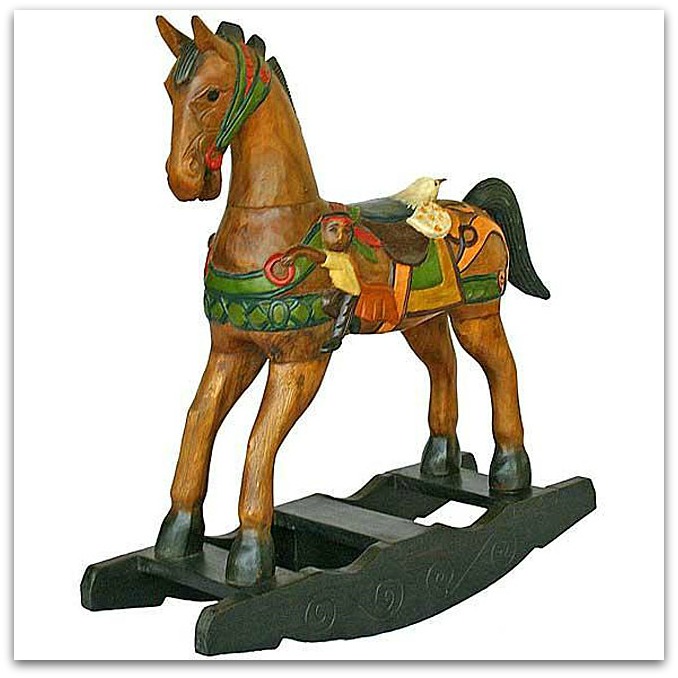
Yes, it is certainly easier to make our gift selections through Amazon, iTunes and other digital storefronts, but it also makes gift buying less genuine, more perfunctory. I wonder if our great grandparents made similar remarks in years past, when handmade gifts yielded to department store buying. Papa spends 2 months in the shed cutting, shaping, sanding, gluing, nailing, painting, and accessorizing junior’s hobby horse, only to see his kid pine for the more polished factory-assembled horse in Macy’s Christmas display window. Dammit!

New Years is just at the corner so it’s time to consider resolutions. Mine come in the perennial and annual varieties. A recurring pledge involves running (doing more of it) and drinking (doing less of it). Success varies. Last year I also resolved to start a blog where I could publish essays on the art of thriving post-50, personal happiness, and life in my much-loved Aix-en-Provence. This last entry for 2011 marks my 16th postcard for the year. I hope that you have enjoyed them, perhaps even found some nuggets of value in them.

For 2012 I am targeting music, of getting back to songwriting and recording. The postcards will continue but alternate with a new posted recording monthly; at least this is the resolution. I also want to be more diligent with my gratitude journal this year and ask my kids for the same. It is an effective daily ritual for celebrating our good fortunes, not commiserating our misfortunes. If you have rituals for addressing the promise of a new year I would love to hear about them. The possibility of transformation is a key element of happiness and I am interested in different approaches to personal reinvention. The good lord knows well the work remaining at my end. Perhaps I will be her personal project for the year!

Postscript:

Some of you may know that music has played a major role throughout my life, involving bands and songwriting, and culminating in a CD in the mid-90s called Eskimo in the Sun. As mentioned in the blog, I am working on a new collection of demos – working title: Balm of Gilead – that will be rolled out through 2012 (better late than never, right?). These are being recorded at Mirabeau Studios, also known as my living room in Aix, and can be accessed at cool site called SoundCloud. What they may lack in professional studio sound quality will hopefully be compensated for in grit, heart and soul. Should you like what you hear, please feel free to share them with friends. If a tree falls in the forest and no one is there to hear it, …. well you know the phrase.

A first song has been uploaded. It is called How Hard and is meant to be played in sequence as a pair of 2 very different arrangements, the second called B Side.

Bill Magill
Aix-en-Provence

Music suggestion: Hey Hey, My My (Out of the Blue), Neil Young
Drink suggestion: Beaujolais Nouveau

Get your glass, play the song, now read.

The Beaujolais Nouveau is in and being enjoyed across France. This seriously unserious red wine is bottled just 2 months after harvest, often with whimsical labels, and is fun, light and fruity. It’s not meant to be stored away in the cave or over discussed; should always be cheap. Serve Beaujolais Nouveau slightly chilled with a selection of cheeses, like the gloriously ripe Camembert that is currently making my kitchen in Aix smell like a wet hay bale.

Onto a slightly less cheerful topic, I am making 2 reflections on death in this postcard, and the first involves rock & roll. Stick the nails in the coffin, because we are done here. Some great music is still being made, but the fact is it doesn’t matter. The young, and it is through them solely that the brand is defined, no longer live through their favorite bands. This I know to be true, as I have 3 specimens of the teen variety.

They cannot be blamed. Key elements necessary for rock’s great seduction have disappeared: the learned radio DJs, guiding us like enthusiastic museum curators; the brilliant and committed artists, evolving with each new album; the album itself, providing the artist space to expand on a theme beyond the 3 minute single; and rock & roll magazines covering just that: rock & roll.

Who is to blame? There are plenty of culprits, but in the end the art form simply played itself out, losing its sense of freshness and rebellion, and unable to withstand the internet assault. Great rock could both impress with its creativity and worry our parents sick (think Exile on Main Street or Never Mind the Bollocks). Which album of the past 10 years has done either? I love Green Day and consider American Idiot a solid record, but having grown up with the blurred androgyny of David Bowie and the self-destructive mayhem of Iggy Pop there is little in Billy Joe’s antics, eye liner, or music that frighten me as a parent. I complain more about my kids’ time with the PS3 than their music selections, …and this is their great loss. As a pent-up and desperate 15 year-old, the fact that my folks just didn’t get it – even better HATED IT – was manna for my unruly soul.

The interest is still there, but the distractions offered to today’s youth simply cannot be countered by the current crop of predictably derivative artists. There is enough dazzle to get kids’ attention, but insufficient gravity to hold them in orbit. My 12-year olds (ah, what a great age) have just entered that rock star fascination stage; un-jaded and ripe for the musical taking. Their bedroom walls are covered with cut-out photos, their favorite songs on endless loop in the earbuds. But the infatuation will dilute by 14, pulled by the allure of Facebook banter and Call of Duty bombast.

Conversely, our bored-out-of-our-skulls teen years were spent debating the meaning of Pet Sounds or Dark Side of the Moon, of Elvis versus Jerry Lee, the Beatles versus the Stones versus the Doors, of Clapton versus Hendrix, of New York versus London punk, of how Woodie Guthrie begat Dylan begat Springsteen.

Born to Run was released in August, 1975, 2 months after my high-school graduation. In 8 brilliant songs it captured the pure essence of my teen confusion, righteous convictions and roaming imagination. And with subsequent albums we grew together, Bruce the developing artist and me the maturing adult.

Who has the genius to keep kids close for more than a moment today? Female entertainers (I wouldn’t consider them all musicians) are getting the most attention. Lady Gaga makes a lot of noise. I admire the energy, but she is a hyper-brand, not an artist (essentially Madonna 2.0, and Madonna wasn’t an artist). Amy Winehouse was the real deal – an incredible talent replete in her Ronnettes beehive and suicide girls tattoos (mom definitely wouldn’t want you bringing Amy home) – but needed mentoring from the likes of a Keith Richards on how survive the excess. The terminally cute Taylor Swift? My daughter adores her now, but unless Swift graduates from the adolescent Romeo and Juliette phase, in the way the Beatles moved from I Want to Hold Your Hand to Help!, she’s going to lose Stella in the next 12 months. Adele is the last great hope, but one bright star does not a galaxy make any more than a sole painter in Giverny prolongs the Impressionists era. At some point the masses move on.

Why do I bring this up? Because, the thought of someone else selecting the soundtrack of my life, the set list for my wake, is as troubling as a stranger writing my epitaph. This gets to my second point about death. An ongoing theme in my essays (see The Upside of Hard Times) is the right to draft one’s own life story, to decide on what bearing is true north and not deviate for others’ expectations. Our stories may be shorter than anticipated, will certainly be for some, for we all are dying, we of the mid-life crowd. All the more important, then, to realize the highlights or our lives, particularly our second lives, post-50, now. Don’t fear the reaper, just get on with it.

Day by day, year by year, we wane bit by bit. We are not supernovas, peaking to a spectacular, blinding flash. Our own sun is a better analogy, losing its mighty glow slowly but measurably, in gradual decay. We are like spinning tops, in full motion and balanced elegantly, and then the little wobbles begin.

My children grow taller, smarter, more agile and capable. They crawl, walk, run, effortlessly master challenges that require coordination and new skills. Each day they are more adept and able than the day before, …living. Our skin sags, hair falls, knees ache, shoulders slump, and certain delicate parts begin to operate erratically. Entropy takes root, rust sets in and the top starts to wobble, …dying.

The average life expectancy for the western world is 80, give or take a 12 months or so depending on one’s gender and geography. The last 5 may not be pretty, which whittles us down to 75 years of true flourish. We would all like to think differently. I’ll be in full bloom well into my 90s. Don’t count on it.

Okay enough, so where am I going with this glum theme? One, this is the time to pursue your personal passions, to put a spectacular stamp on your life story (and that is the point, right?). It will be harder tomorrow and even harder the day after that, and at some point it won’t be possible. Someone who loved you will read your eulogy and they’ll want it to be great. Make their job easy.

Two, don’t let someone else decide how to color your life musically, especially if music has played an elemental role in your life. Select those songs that you love, have always loved, and want playing in the background when the toasts are raised and stories shared.

To that end, here are my top 10:

1. Love Reign O’er Me – The Who
2. White Sandy Beach Of Hawai’i – IZ
3. Racing in the Street – Bruce Springsteen
4. One – U2
5. Tonight – Bernstein, West Side Story
6. Don’t Worry Baby – Beach Boys
7. Help! – Beatles
8. Downtown Train – Tom Waits
9. San Francisco – Scott McKensie
10. Can’t Help Falling in Love – Elvis

My post-party top 10 list is decidedly rowdier, and I am happy to share them as well if interested. I would truly love to see others’ selections. It is excruciatingly painful to cull my favorites to 10 and allow that some choices will swap in and out with time.

Bill Magill
Aix-en-Provence
Music Suggestion: Imagine, John Lennon
Drink Suggestion: Sierra Nevada Celebration Ale

It has been a tough autumn for Kim Kardashian. First she was disparaged in this widely read blog (see Of Wealth and Worth) and now news of her divorce after just 10 weeks of marriage.  My heart goes to out to Kim. I cannot imagine suffering through this type of personal anguish in the public glare, and after a high-profile wedding that was rivaled in glamour and celebrity only by the royal to-do in April. How embarrassing.

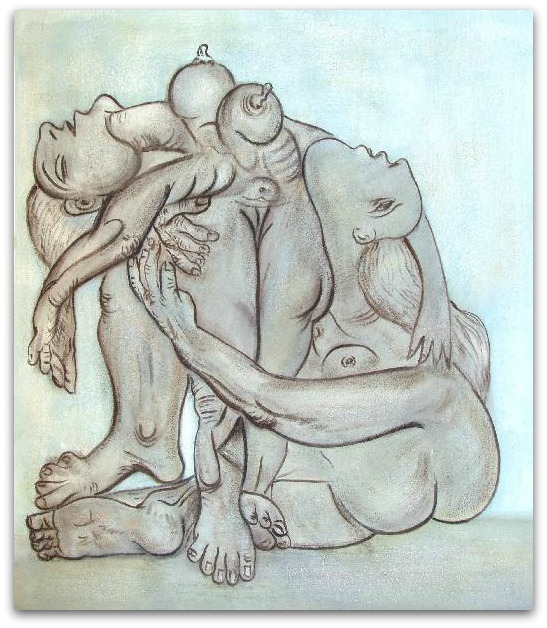
The price tag of her big day again (divorce #1 in 2004) was estimated at $10 million. Even for a Kardashian – safely in the 1% club – that must illicit a wince. To be fair she did get some bang for her buck, including 3 Vera Wang wedding dresses (yes, she needed 3) that are now safely boxed away for eternity and Wolfgang Puck manning the kitchen for her 440 guests. But $10 million? With that check she could have bought this large renovated manor and its 54 hectares (133 acres) of prime land in the Cote d’Azur or Picasso’s “The Rescue.” Heck, for the $2 million Kris Humphries dropped on her engagement ring he could at this moment be tinkling the ivories of John Lennon’s piano; the one on which he composed “Imagine.” I wonder how Mr. Humphries feels about that trade-off. 72 days? I hope it was good.

The timing of the Kim’s grandiose display of wealth and entitlement in light of current world turmoil is awkward. It’s her money of course, but with rubber bullets flying in Oakland and street fires in Rome it doesn’t take an oracle to sense a dark shift in the public mood. The 99% crowd seems to be losing its awe of the affluent. And being an entertainer (let’s agree to be generous) she must pander to this public to stay relevant and loved. It is a lesson Marie Antoinette came late to appreciate. At 31 Kim is Marie’s junior by 7 years and has time to mature. I for one am rooting for her.

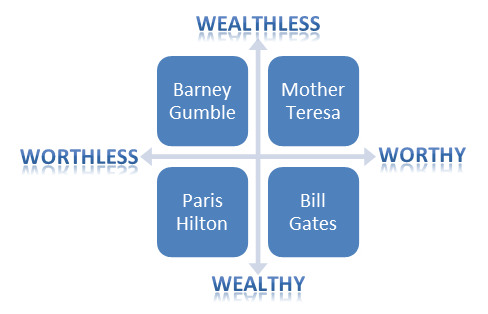
As you can likely tell, Kim and this wedding fiasco has been on my mind lately. It’s dinged her repute with accusations of profiteering from the gift pile and worse, orchestrating the whole thing for reality show ratings. Imagine. I see two problems here: (1) her happiness after this heart-wrenching breakup and (2) her reputation, and I may have a single solution that resolves both: a USO tour to Afghanistan. If she can afford Vera Wang gowns for herself (3, remember?) and her bridesmaids, and for her mother, surely a first class ticket to Kabul should be no problem. The family did rake in a reported $65 million last year. Khloé and Kourtney could join as well, perhaps even her gal-pal Paris Hilton. The whole shebang would make for a great episode or two of Keeping Up With The Kardashians. And perhaps most importantly, it could help move Kim to a more favorable quadrant of my Wealth v Worth diagram, shown in the fore-mentioned Postcard blog.

The tour could do wonders to dismiss the taint of narcissism trailing Kim’s over-the-top wedding setting, effectively nipping any suspicions of self-serving nuptial duplicity in the bud. There are few better ways of showing America one’s selfless side than supporting the troops. She would be in great company. Jessica Simpson, Kid Rock, 50 Cent, Robin Williams, and of course the Dallas Cowboy Cheerleaders have made USO treks to the region in the past few years, along with many other entertainers.

Imagine the personal positive uplift that would result from giving the troops some good ol’ American entertainment from home. The happiness gained from a gift is enjoyed most profoundly by the giver, this we know to be true. Kim has just experienced a crushing blow. Surely this would be a great start to again finding joy in her life.

Kim, if you’re reading this blog, Wayne Newton runs the USO’s talent recruiting effort – the long time role of Bob Hope – and can be contacted at http://www.uso.org/how-to-tour.aspx. Our troops need you and you need our troops right about now! Consider it.

Oh, one more thing. Did you know that $10 million can pay for:

  • 1 million insecticide-treated bed nets for Africa, where malaria is killing a child every 45 seconds.
  • “Eco-filter” water systems for 220 thousand homes in Guatemala, where the simple problem of contaminated water is the leading cause of death amongst children.
  • 10 million chlorine tablets for treating drinking water in Haiti, where the world’s largest cholera epidemic is in full bloom and has infected 455 thousand people (5% of the population). It could also build 17 thousand permanent “happy homes” for Haitians remaining without shelter, now 22 months after the 2010 earthquake.
  • School lunches for the entire year for almost all of the orphans in Zambia who have lost parents to HIV. They represent over half of the 1.2 million orphans now in the country, and most are missing an education because of the cost of the lunch program.
  • A year’s supply of medication for 5,000 sufferers of Age-related Macular Degeneration (AMD) in the US. Without treatment, AMD can progress rapidly and cause irreversible loss of vision within weeks. Our own epidemic sadly seems to be Americans without health insurance.

Just imagine.

For more information on the charitable opportunities listed above, see GreaterGood.org, NothingButNets.net, va.gov, and the PanFoundation.org.

Bill Magill
Aix-en-Provence

Music Suggestion: Start Me Up, Rolling Stones
Drink Suggestion: Van Gogh Dutch Caramel Vodka

INSEAD is a fun, rewarding place to work. After many exhilarating years hustling alongside hard-charging super achievers in venture capital and investment banking, it is a joy to again work with incredibly smart, accomplished and driven people, minus the god complex (sorry, that is harsh). At the Maag Centre for Entrepreneurship we give courses and workshops, guide and mentor, make introductions and advise on careers; in essence do everything possible to instill the fundamentals of entrepreneurship in our gifted students, then unleash them onto the world.

I have been teaching an 8-week workshop on technology commercialization this Fall, and in the course of developing its modules I had a pair of realizations (considered truly staggering insights in my former professional personas). One, I myself am a startup. As I pass through this mid-life phase of re-invention I weigh certain considerations that any emerging company must resolve: defining purpose and worth and how to make it happen. Two, outlining my personal plan through the lens of a business plan – the likes of which my students are expected to create – is incredibly beneficial. There is a process to developing great ideas that matter, then making the leap from concept to market. Working through that process and setting the emergent strategy is equally beneficial for applied personal development, or what I labeled Spiritual Entrepreneurship in a previous blog (Of Anchovies and Olives and Spiritual Entrepreneurship).

I also realize that the word “entrepreneurship” in the context of Spiritual Entrepreneurship is improper.  Despite our former US president’s jab that the French have no word for entrepreneurship, it is of course a French word, the first syllable “entre” meaning “between,” as in the development of value between a creator and her market. In the realm of applied personal development, conversely, value creation is firstly internal; hence, a more appropriate French syllable would be “intér”. Personally, I like sticking with French syllables because they involve accents, which look so sexy and urbane (and I am so not a sexy urbanite). So henceforth we go with Spiritual Intérpreneurship.

If you also feel the start-up within, or in your author’s case the restart within, then a framework is needed for constructing your applied personal plan. A tour of the self-help aisle at your local bookstore will reveal dozens of options. But, why not exploit a system that is logical, proven, and applied daily by aspiring entrepreneurs in the course of building the next Google or Apple? A robust intérpreneurial effort needs answers to these fundamental entrepreneurial start-up questions:

  • What is my intellectual property (IP)? Start-ups are built on invention and imagination, on a base of core intelligence that defines their promise and bounds the possibilities until additional intelligence is developed or acquired. What is your personal IP? It is your base of core strengths and assimilated talents and knowledge.  On this foundation you imagine what is possible. And, just as shrewd start-ups continue to build on their IP to sustain competitive position, you too should build on your base of intellect and skills to expand the possibilities. What are you good at; what do you want to be good at?
  • What is my product definition? A start-up’s IP foundation enables many possible directions in product form and features, but the finished offering must align tightly with unmet market needs to be successful. Not so for you. Your personal product, that life passion you are committed to realizing, need only satisfy your unmet needs for the principal litmus test of suitability. And this realization is liberating. Write a book on multi-generational farm families of central Pennsylvania; renovate and run a historic B&B in Savannah; study the art of luthierie and open a guitar design and repair shop? What if the market is small? Who cares? When explaining your mission to a friend do you feel an electric surge of purpose? Okay, now you know you’re on to something. The success of intérpreneurial endeavors is measured firstly by the satisfaction they induce inside. How will you define success: personal gratification and respect, absolutely; profit and fame, maybe. The collage of success is unique to each of us. The time to question and explore your personal passions, ambitions, and objectives is now, during this product definition stage. These taken together will help define your mission and formulate an execution plan. Onward.
  • What is my go-to-market strategy? A start-up is wind-down quickly if its product cannot be realized and grab the customer’s attention. The most exciting idea in the world has zero value when it is just that, an idea. How do you become relevant? The same way a start-up becomes relevant; by executing effectively on the dream and exploiting its greatest value for the customer. In the case of intérpreneurship, the passion product may target many, may target a few, or may target one. Regardless, an execution plan is essential. I like the Murphy process, taught by Joe Murphy of San Francisco State University’s Core Strengths Coaching program.  Sketch an arc starting at time zero (today) and ending with your achievement point; 2, 5, perhaps 10 years out. Break the arc into key milestones and those milestones into smaller markers of progress. Getting the arc right takes time, but provides an excellent system for thinking through and setting structure to your strategy. You know your IP and product at this point, the arc will provide the passion plan; your go-to-market strategy.
  • How do I last? Macy’s has been operating for over 150 years and Faber-Castell (which makes exquisite pens, see Back to the Plume) was a start-up 250 years ago.  How do they remain so relevant for so long? Corporate longevity is not by accident, but accomplished through a deliberate sustainability strategy. Intérpreneurship is not about dabbling with hobbies through a tranquil retirement. Intérpreneurs want to achieve something of real passion. This takes real time and real energy. We’re not as robust post-50 as we were pre-30 and attention to diet and fitness is critical. I am neither a dietician nor fitness coach, but can make this testimonial: since crossing the 50 barrier I have pursued the holy health trinity of mind, body, and soul and it helps considerably. Meditation (see Nap King v Meditation Master) and a work-out emphasizing balance and flexibility through yoga (I remain an awkward novice at both) work for me in the mind and body department, and the simple avoidance of processed foods and indulgence in home cheffing is doing wonders for my soul. Flow-inducing rituals (see The Value of our Rituals for a few examples) also help with my mental balance and positive attitude. You can find many YouTube videos and on-line blogs about fitness routines. I cherry pick amongst them to find the optimal regime for my interests and schedule. When one isn’t working, swapping for another has zero marginal cost. The beauty of the internet.
  • How do I give back? Corporate philanthropy / community involvement is not universal and clearly not a requisite for a company’s success and long-term prosperity. Still, the most admired companies develop programs around corporate responsibility, and most of us want to be admired for being a net positive force on the world around us. Whether you choose to include this type of activity in your mission is solely a personal decision, but one worth considering as you piece together the passion plan discussed above.

If you apply the start-up system to your own personal ambitions please let me know. All comments and suggestion are appreciated, as always with my Postcards.

Tip for the day: If called late by good friend seeking bar buddy and enticed to join (let’s imagine that you’re just getting back to Aix from Paris, it’s been a long week, and a couple of drinks sound awfully inviting, …all hypothetical of course), and after bouncing around a couple of pubs find a comfortable spot with good music and great Guinness (still with me?), and the annoying drunk guys next to you who look like frat house rejects (which is unlikely, because France doesn’t do frats) turn out to be newly minted nuclear physicists telling fascinating tales of work and dreams of entrepreneurship, and your remarkable new friends are sharing generous shots of caramel vodka, (now here’s the tip part) channel your inner adult, should it be possible to unearth at this point, and refrain.

Bill Magill
Aix-en-Provence

Music suggestion: (Out on the road to) Shambala, Three Dog Night
Drink suggestion: Sam Adams Utopias beer

Wealth is what we reserve for ourselves, worth is what we offer to the world.

What are you worth? This question typically evokes a quick back-of-the-envelope calculation involving the sum of our home equity, bank accounts, retirement funds, stock portfolio, a few expensive items that might attract buyers in a pinch, minus our financial obligations. But this is wealth, not worth, which in all other cases is a reflection of value to others.

Why is Apple Inc. worth over $360 billion? Because its unique products (and the hip lifestyle they imply) are desired by millions (billions?) of consumers worldwide. The price of an iPad reflects little on its costs of components and assembly, lots on what the market will bear. Similarly, the price of a renovated apartment in Paris’s 16th arrondissement or a reconditioned 1963 Corvette says little about the materials and hours involved in their construction and restorations, and everything about their perceived value to interested buyers (many) and availability (few).

The San Francisco Chronicle heralded (remember that word) the Bay Area’s 25 richest individuals recently, and the list was heavily populated by founders of technology companies: Larry Ellison, Gordon Moore, and Steve Jobs to highlight a few household names. Most on the list could be labeled fairly as both worthy and wealthy, if just for the numbers their companies’ employ and positive impact to economic growth through the years enabled by their ingenuity and hard work.

But, one doesn’t have to be wealthy to demonstrate incredible worth. First responders on 9/11 come to mind. So does Margaret Finley. She fostered our 3 children and thousands of others as the principal of our neighborhood primary/middle school in San Francisco.

When I first met Margaret on a gottafindmykidsagreatschoolinSF_shitisitpossible expedition in 2005 she of course extoled the virtues of her West Portal Lutheran School – imagine wholesome and freckled, God-fearing University of Wisconsin graduates [just off the boat and wondering what the heck brought them to this Gomorrah-by-they-Bay] teaching over-coddled, wound-up Chinese kids [2nd generation and wondering why the hell mom keeps packing their lunch bags with sautéed bok choy in egg noodles and not PBJ sandwiches]) in San Francisco’s outer fog belt – Margaret spent 30 minutes with me describing other private schools in the area that she admired and went so far as to provide their brochures and school rankings (something she admitted her employer frowned upon) so that I could find truly the best match for my 3. Wow, sold!

Margaret wasn’t just any school administrator. She had an incredible talent for connection – with students and parents alike – and a kind-but-competent leadership style that would have inspired the best business barons of Silicon Valley (including the vaunted names above). Each morning that my kids left for the school campus I felt an invaluable relief that at least this part of my parenting job – getting them a great education – was covered for now. Any parent understands what this is worth. Somewhere in that ethereal space in space where star dust swirls and babies are imagined, Margaret’s god was holding her destiny wand and watching the assembly belt of passing souls-to-be: hmm not sure, nope not clear on that one either, darn it no freaking clue,  …oh my, now for this one I have some very special plans.

Of course for every Margaret Finley there is a Snooky, Kardashian (pick any K) or Hilton: individuals with immense wealth and no discernible worth.  Spend 5 minutes on TMZ to get many more fine examples of this privileged breed. At least Barney Gumble, daily denizen of Moe’s and Homer Simpson’s burping bar buddy, is not confused about his true value to the world.

This topic brings out the old crank in me, I admit it, probably more so since moving to France, where the discussion of one’s wealth or income is considered vulgar to the extreme. Dinner conversations don’t revolve around investments or the price of that BMW in the driveway, but rather the butcher shop that sold you this wonderful lamb, ….and how was it prepared, …and oh that is fascinating, let me tell you MY recipe. You won’t be reading an article in Le Monde heralding (there’s that word again) the 25 richest people in Paris, unless guillotines are being sharpened. Wouldn’t it be interesting to read a list of the 25 worthiest people in the Bay Area? What are the chances?

I’ve distanced myself from the school of happiness-through-wealth since turning 50 and because of this I am more comfortable discussing recipes and butcher shops, not home values or anything preceded by a dollar sign. Perhaps I feel inadequate in this topical area now, I am not sure honestly, but there is less pressure to impress with intangibles such as wealth and more interest in exploring authentic worth. I think this is healthy; I know it is more interesting.

There is nothing wrong with enjoying one’s just rewards, but we have become a nation so obsessed with money – amassing it, displaying it, and defining ourselves through it – that the definitions of worth and wealth have become intractably entangled. If there is reason for hope it is with our young, many of whom are showing a greater interest in altruism and less obsession with affluence than did my generation. (I just read a fascinating article to this effect but cannot find the source. If you happen to come across similar articles, please share.) We are a leaving them a world of rising temperatures and falling employment. Perhaps they realize that the toll road to Shambala is paid not with flaunted wealth but with valued worth. What do you think?

A quick word on a different topic. Maurice Sendak – Where the Wild Things Are – was interview this week by Terry Gross on her NPR program, Fresh Air. Sendak is in his 80s now and not in great health, and he provided a fascinating conversation about his work, the value of relationships, and his thoughts on life. To Terry’s question on what really matters, he responded simply, “be in love with the world.” This reminds me of Thich Nhat Hanh’s observation that miracles are not found in magic men walking on water, but in ourselves walking on earth.

Bill Magill
Aix-en-Provence

Music suggestion: Christmas Card from a Hooker in Minneapolis, Tom Waits
Drink suggestion: Fleur de Geisha, Japanese green tea

Last week marked la rentrée in France, when public schools across the country opened their doors anew to their summer-worn charges for the year. The pack of students and moms crowding the entrance to the neighborhood’s middle school could be heard blocks away, the children abuzz on a blend of anxious exuberance, loud with the mission of finding friends and figuring out class lineups; the parents keen for some serenity once again in their daytime hours. Off you go my little darlings.

Collége Mignet is famed for 2 of its former students: Paul Cezanne and Emile Zola. These icons-to-be ran the hallways together in the 1850s and were reportedly inseparable. Today this public school is celebrated as much for its international section, with some classes in English and a language support program for kids not yet fully fluent in French. You can imagine its popularity with the local expat community.

Hopefully the creative spirits of Mignet continue to haunt its corridors and enthuse its occupants, particularly Zola. Casual writing has become a lost art. It is most noticeably absent from the lives of the young, who have devolved from letters to emails to chats to tweets (Darwin, please explain). But, they are not alone in embracing the informality and ease of electronic messaging. Be it through our Gmail or iPhones or Facebook accounts, the keyboard and screen have permanently displaced the pen and paper for most of us.

The composition anarchy of texting and tweeting (no punctuation, conjugation, or tense agreement required, …Strunk & White begone!) doesn’t disturb me as much as the absence of soul and warmth that comes with a pen-scribed card or letter. The digital domain is perfect for reminding the spouse about that bottle of Bordeaux on the shopping list – Dnt 4gt wine, thx! – but is a coolly detached medium for connecting with loved ones.

It is also selectively deceitful. Facebook allows us to create and present a personal image through an electronic collage of profile pictures and likes and posts that reflect our flawless, funny selves , but not our authentic selves. Life would be beautiful if we could airbrush our looks and our lives like the aging celebrities on a Vanity Fair Magazine cover. Oh wait, now we can!

I am a member of Facebook because there is no better way to track my childrens’ activities (and they could give a damn about the evils of social media), it’s a good place to post Postcards (for me, the optimum airbrush), and I too have enjoyed the unexpected reconnections with old friends from time to time. On the surface, there is little harm in a digital community hall. My worry is the insular and simulated life it engenders. It is fun to exchange a few brief lines with a high-school friend one hasn’t seen in 30 years, but the lift is fleeting. Wouldn’t it be infinitely more rewarding to actually meet over coffee or lunch, or to write a letter? Of course this would require time and effort, so why try when the keyboard and screen are right there? Because the time and effort invested are what that makes the connection so gratifying, both to the writer and reader.

I am writing more letters this year and find the practice uplifting and meditative. Letter writing is a rich with flow; for that hour of indulgence I am absorbed solely on the enjoyable task at hand, time stops and all else is forgotten. Zen.

Writing is an art and like all art improves with practice and process. And for motivation you have my permission – my encouragement, actually – to splurge on some good tools. I did and it helped. So let me present you with Bill’s top 5 tips for enjoyable letter writing:

  • Invest in a good fountain pen. A Waterman, Parker other quality pen may cost $50 or more, but if you enjoy writing you won’t regret it, and the investment will help you feel committed. You can’t create inspired food with cheap knives; you can’t write inspired letters with disposable pens.
  • Buy quality stationary. It is not expensive and you will appreciate the look and feel, and good stationary often comes with matching envelopes. I like the 6×8 sheet, which is bigger than a card but no too daunting to fill. Yellow tablet paper doesn’t quite capture the mood we’re going for here.
  • Find a comfortable writing space. I prefer a table by one of the tall windows in my flat, with natural light and enough movement in the street below to stimulate but not distract. Choose your favorite corner of the home, somewhere quiet where you love to sit and relax.
  • Prepare tea. The warmth is relaxing and de-stressing, particularly green tea. I benefit from a wealth of tea shops in Aix with incredibly large assortments from around the world. If you spend an extra dollar on quality tea then your writing hour becomes a luxury, a private pleasure.
  • Make a date. As with all hobbies it helps to have a fixed day and time, otherwise it gets squeezed out by truly critical chores like Costco runs and laundry.

To whom does one write? Well only you know that. But if you are looking for a few practice sessions then my address (the one without an @ sign) is 7 rue Manuel, 13100, Aix-en-Provence, France.  I love getting letters and promise to write back.

For more about the concept of flow, read Flow, The Psychology of Optimal Experience, by Mihaly Csikszentmihalyi, 2008.

On a completely different note:

Remembering that you are going to die is the best way I know to avoid the trap of thinking you have something to lose. You are already naked. There is no reason not to follow your heart. – Steve Jobs, Stanford University Commencement address, 2005

It was widely reported this summer that Steve Jobs was stepping down from his operational role as CEO of Apple. If anyone hoped that his decision was simply a natural step for an aging executive planning to spend the next decades relaxed on a sunny beach, the photos that surfaced on the internet soon after his announcement suggested otherwise. If you knew that there was no afterlife, no reincarnation, no heaven, no continuance of consciousness in any form or manner, would you live differently now?

Bill Magill
Aix-en-Provence

Music suggestion: Lotus, R.E.M.
Drink suggestion: Lemon balm tea (considered good for stress relief)

I’m a napper. I need them and I don’t mean hyperbrief power naps. I love lazy uninterrupted afternoon snoozes, best served immediately post lunch. If an hour is too long, 15 minutes is too short. Your dark bedroom is too insular, the public park too exposed. No place is better than the living room sofa, so soft and familiar, yet lumpy enough to discourage a slumber overdose.  After 30 years of professional life and creative napping “sur place” I have become adept at the Herman Miller Aeron siesta as well, tucked into some discrete corner of my office that offers the fewest views from curious passers-by.  My various great assistants over the years, and I have been blessed with the absolute best, knew not to knock between 1:00 and 2:00. Bill is busy.

Today was a perfect nap day. My liver cried uncle after a weekend of wine infusion and a restorative late Sunday afternoon kip was self-prescribed. Friday night started mid-day with a guided afternoon tour of two premier Provence wineries. Along for the outing was my sister Cathy, our expert guide, and a couple from New York who on this warm day shared our preference for dark, cool wine cellars to the white hot Provence sun. The pours were generous and at some point I felt inspired to prepare dinner for our new friends, just married and honeymooning in Europe. I recall plenty of newlywed toasts, a long meal, great conversation and lots of wine. Today there was a Sunday foire aux vins with dozens of the Provence’s best vignobles pouring their top vintages along Aix’s central promenade, Cours Mirabeau. Three euros bought a commemorative glass and all the grape one can endure on a shimmering summer afternoon, strolling under the esplanade’s leafy sycamore trees, fanned by an easy Mediterranean breeze. I found the shade-tree-and-breeze setting particularly inspiring for an afternoon indulgence, and consequent nap. Now I write.

Thich Nhat Hanh argues that naps aren’t particularly restive; one’s mind isn’t calm and the body is twisting and turning. What does he know? Okay, so he may be considered one of the greatest Buddhist teachers of our time, a Nobel Peace Prize nominee, heralded champion of rights for post-war Vietnamese peasants, best-selling author on engaged Buddhism and meditation (I could go on and on and on), but couch surfer? Unlikely.  Send him to the old Magill family farm for one of our traditional Thanksgiving-feast-then-college-football-afternoons and he’ll be claiming first dibs on one of the precious well-worn sofas for a late day nap; at least that’s my bet.

I have been reading Thich Nhat Hanh’s classic The Miracle of Mindfulness for tips on meditation. I am by nature a low stress person, but even the most zen amongst us thump into the occasional pothole. My much beloved afternoon nap can help recharge the mental battery, but I will concede to Master Hanh on this point: the nap lift decays quickly in the face of a persistent source of tension. Sometimes what we really need is a lower idle rate.

There is no shortage of stresses nipping at the heels for many of us this summer.  Beyond the baseline concerns over parents and children and how the local ball team is playing, the job front is moving from weak to weaker, the outlooks for our retirement accounts are slipping from a concern to anxiety, and our leaders, both political and professional, have become pathetically ineffective and frighteningly disinterested in shielding us from “the worst that can happen.”

If you are unfamiliar with but curious about mediation, like me, here are a few simple steps from The Miracle of Mindfulness:

  • Sit upright, either in the lotus or half-lotus position (feet placed on opposing thighs), or Japanese position (knees bent and resting on their two legs). Use pillows as necessary to be comfortable and stable.
  • Keep your back straight and your head and neck aligned with your spinal column.
  • Focus your eyes one to two yards ahead of you and maintain a half smile, which will allow the facial muscles to relax.
  • Concentrate on your breathing. Take in a slow long breath, then let out all of the breath from your lungs deeply. Repeat and concentrate on the breaths, being quiet with and mindful of each one.
  • Place your left hand palm-side up in your right palm and let all of your muscles relax. “Be like the water-plants which flow with the current, while beneath the surface the riverbed remains motionless.” Another image he mentions as useful is a pebble tossed into a river, falling slowly to the bottom.
  • For beginners, you may want to limit yourself in this position to 20-30 minutes.

Thich Nhat Hanh suggests that within 15 minutes one should be able to attain a deep quiet if focused on watching one’s breath, keeping the posture, and letting everything else go. He adds that relaxation from meditation is simply the point of departure for a deeper tranquility and a clearer mind.

I realize that with age the practices that allow an effective charge and discharge, both physically and mentally, must evolve. Running has been my main workout for the past 30 years and an excellent way to clear the head. But these 53 year-old knees are now imploring me to adopt a lower impact workout like yoga, and my early experiments with meditation have been promising for the stress relief. If any of you have other suggestions to improve mental and physical health please share them. I remain open to all. Just don’t suggest I give up my nap.

On a completely different note, you may find this recent David Brooks column in the NY Times interesting. He writes about the lifestyle and priorities of septuagenarian Philip Leakey (yes, those Leakeys) and his wife Katy, driven by what Brooks calls a “compulsive curiosity.” http://www.nytimes.com/2011/08/19/opinion/brooks-the-question-driven-life.html?_r=1&hp

Bill Magill
Aix-en-Provence