Suggested song: All I Want is More, Reel Big Fish
Suggested drink: Bigger Better Blue Lagoon: coconut rum, peach schnapps, apple juice, blue curacao, 1 cherry

The happiest people don’t have the best of everything;
they just make the best of everything
. – Unknown

Horror of horrors, Pagni is gone! For the past 3 years I’ve been buying the best beef in the world from this boisterous butcher, operating from his white step van at the edge of the outdoor market in Aix. He has single handedly destroyed all attempts at eliminating red meat from my diet, much as I’ve tried. My kids were equally swayed by his product and charm, prodding me with instructions to visit Pagni on my morning marché rounds to get his ground beef for the occasional lunchtime burgers.

horse photoLast summer I noticed the segmented outline of a horse by his service counter and asked him to translate the word Chevaline, framed in an official-looking certificate by the image. At that instructive moment of clarity all pieces converged, and I realized why his product tasted different, was so much richer in flavor and deeper in color.

Yes, the rewards of ignorance can sometimes be a naive bliss. Some of us cringe at the thought of equine burgers, but the other red meat is making a comeback in France. Compared to cow, it has twice the iron content and about 17 times the level of omega-3 fatty acids in a standard strip steak. It’s also easier on the planet to produce. I’ll miss my chevaline ami but confident that he’s bringing a bit of fun and enrichment to the tables of others.

“I live in a 420-square-foot studio. I sleep in a bed that folds down from the wall.
I have six dress shirts. I have 10 shallow bowls that I use for salads and main dishes.
When people come over for dinner, I pull out my extendable dining room table.
I don’t have a single CD or DVD and I have 10 percent of the books I once did.”

So starts a recent opinion piece by Graham Hill in the New York Times (to read the article, click here). His life journey circles from small by necessity to large by possibility, then back to minimal by choice. He sold an internet start-up in the late 1990s, which blessed him with that hallowed status to which we all aspire: independently wealthy (and then some, in his case). In unsurprising fashion, Hill immersed himself in a frenzy of unbridled consumption: big home, fast car, cool gadgets and expensive apparel. His appetite unabated, he hired a “personal shopper” to shovel more onto his heaping pile of possessions when too distracted with work to spend. Getting tougher to release those euphoric endorphins? Nothing that a bigger straw can’t solve!

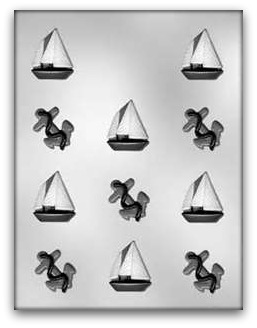
Hill touches on themes in the NYT piece on which our Postcards have reflected before. That affluence enables the accumulation of stuff that can ends up consuming us, not the reverse. I use a sailing analogy in my Intérprize workshops, that everything in the immediate sphere of one’s life is either an anchor or a sail, there is little wiggle room in between. Anchors hold us back, sails propel us forward, and it’s healthy to take an honest inventory of both on a regular basis: home, car, job, hobbies, boss, spouse, lover, kids (wiggle room here), wine collection, gadgets, toys, etc., ….anchor or a sail?

anchors sailsThe dimensions of my habitats have spanned a wide range over the years. I once spent 3 frigid winter months in a 20 foot camper trailer in the hills of Pennsylvania, surviving on teenage love and part-time work at the local ARCO station. Twenty years and a few careers later, my wife and I would stroll the sidewalks of St. Francis Wood in San Francisco and imagine a grand life in one of those immense Mediterranean style mansions. Reality was a more moderate family home in the neighboring Lakeside district. In between were all sizes and flavors of apartments, houses, duplexes, triplexes, wigwams (kidding on that one) and the occasional few days out of my car when between accommodations. (The cramped back seat of a ’67 Firebird is no excuse for a bed.)

This I believe: the size of one’s home correlates poorly to sustained happiness, once Maslow’s basic needs are met and the teens get some privacy. My own contentment is driven more by where I live than under what scale. It’s not the size that matters; it’s how you enjoy it. The flat I share with my son in Aix is a modest two bedroom, one bath. It’s one-third the size of our San Francisco home, but what more is needed? The compromise of dimension to location allows us to live in the center of one of the most beautiful cities in the world, just steps from fabulous outdoor markets, theatres, cafes and restaurants, from dozens of bubbling fountains and mysterious winding alleys laid out by the Romans centuries ago. Trade this for a McMansion in the tumbleweed suburbs?

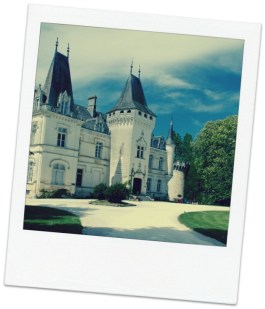
This I will admit: I still secretly admire volume in some homes. My brother owns a french palace – his street address is actually Le Palais – in his village in central France. But he and his wife have reconditioned this home from the bottom up, busting down walls, pulling out windows, plastering and painting and getting enough splinters and pains through the process that Le Palais is now a true extension of themselves. And if I could afford a grand villa in St. Francis Wood I could possibly be swayed. I still meander through that neighborhood with my children when in San Francisco and we each select our personal favorites, our dream homes. Does this make me a hypocrite? Is my rant about the sins of size simply a self-rationalization of my disinterest in generating more income, hence buying a larger home? I don’t know. I hope not. Do you harbor the same ambivalence?

Back to Hill, there are some interesting statistics cited in his piece:

  • The average size of a new American home has ballooned to 2,480 square feet in 2011, a 2.5 fold increase over the average in 1950. And because these larger homes house fewer people on average – 2.6 heads per home in 2011 versus 3.4 in 1950 – Americans are now taking up 3 times the space per head than they did then.
  • We spend $22 billion on personal storage now. Even these massive homes aren’t sufficient for our love affair with buying.

If there is a silver lining in our fascination with size it’s that Americans are at least enjoying more leisure time in their swelling estates. According to a recent article in the International Herald Tribune, the average US worker is laboring 100 few hours, down to just 1,700 per year now, than in 1970. Of course the French, who’s productivity gains have outpaced the Americans during that time, have cut 500 hours from their work year, but preferring more time off (they get 6 weeks by law) to a fatter paycheck that buys more things to stuff in a bigger home. On to something or just lazy? (Despite their continued appetite for tobacco, they rank #14 in the world in life expectancy; the US comes in at #51.)

To finish off on a note of hope, perhaps the younger generations are not sold on that porn film maxim that size equals status. One of the hottest startups of the moment is Airbnb, a website connecting homeowners (with a room or sofa to let) with travelers (looking for a room or sofa to let). The company is carrying a valuation of $2.5 billion but the CEO is still living under the roofs of his clients. In his extreme opinion, homes have “become irrelevant.” How’s that for horse sense?

Bill Magill
Aix-en-Provence

Suggested Song: All In, Better than Ezra
Suggested Drink: Agavé peach wine

The story went like this:

We were all called into the break room at the end of the day on Friday for a special group meeting. I was half way out the door when Ernie (the group manager) asked us all to take a seat. He had no other way to say this then to just say it. Starting next Monday, Mike, who’s been a great part of this lab team for 5 plus years now and you all know very well, will be showing up as Michelle. He, or she as of Monday, will be dressing as a woman and wearing a wig and makeup. Basically, the full-on getup. You ladies should take note that she’ll also be using the women’s restroom. Yep, that’s right. Be respectful and if you have any issues come see me about it. Have a great weekend.

changeMy roommate was not the excitable type, but he and his entire crew were clearly caught by surprise with this news. He ended the recounting with a wide eyed coda of, Holy shit, can you believe it!?

We had both been working at a large government research laboratory outside San Francisco when his colleague – a married father of 2 – made the decision to get gender reassignment. A precondition for the treatment and procedure was to live as a woman 24/7 for at least 12 months first. Some things cannot be done in half measures. Mike was obviously not a weekend explorer. Inside he already was Michelle, and perhaps to feel complete he needed to be Michelle to the world outside as well. He went all in.

The John Tracy story also centers on an abrupt and major revision of oneself. John v1.0 was a science geek (physicist and aspiring entrepreneur) who founded a diode laser company in Tucson in 1992. This was the digital gold rush era when founders of companies that made lasers and other parts for fiber-optic networks were becoming overnight zillionaires. He sold Opto-Power at the market peak a few years later and decided on a complete life change. (No, not gender reassignment!)

John v2.0 and his wife Deborah moved to the San Francisco Bay area in 2000, bought a vineyard in Sonoma County, and took a blind dive into the wine business (think Green Acres, 21st century). When the vagaries of the grapes market become apparent he doubled down, hired a winemaker, and expanded into a winery – Owl Ridge Wines – in 2004. More recently John has diversified into becoming a negociant (bottling grapes from other vineyards) and developing a completely new wine line through his Agavé Garden brand.

John TracyI caught up with John last week over a call from Aix. There are days when he misses the technology world – a lot in fact – and never intended to divorce himself of it completely. But running a winery and vineyard is a full time job times 2. Pursuing one’s passion demands complete and uncompromised commitment. He will tell you that he’s learned on the job, made every mistake possible, and invested himself wholly into this endeavor. He’s gone all in.

Many of us dabble in hobbies that we dream will become lifestyles. But It is difficult to establish a radically new trajectory when there are bills to pay and families to support. Mike had the expectations of family, friends and coworkers to counter. Just imagine the discussions in which he had to engage. Abrupt life changes may be required, however, in the pursuit of our personal visions, those passions that define who we are and why we are on this spinning planet. In fact I believe that abrupt changes are more the rule than exception when going all in on a mission that truly matters. And our missions must be respected, must truly matter. Or aren’t we just dabbling?

The problem with the weekend warrior model to a new you is two-fold: your immersion isn’t long enough to affect real change – you become v1.1 (v1.0 with a feature upgrade) rather than a distinctly new v2.0, and it is difficult to attain escape velocity sufficient to overcome the gravitational drag of your existing reality. This is not to suggest that radical change should be pursued without ample preparation, and that is done before the leap.

Joe Murphy teaches a course at San Francisco State University on life planning, and he outlines 6 stages of change that define a major transition. I’ve modified Joe’s steps slightly to highlight the elements you may want to consider when thinking through the all-in process of real personal change.

  1. Pre-contemplation: do I want to repurpose and redefine myself? Assessing one’s current state, defining new opportunities, understanding the pros and cons of change, getting feedback from others, and identifying sources of resistance.
  2. Contemplation: what would this change look like? Envisioning v2.0, outlining a plan, identifying resources needed and available, understanding one’s fears about change, and establishing the calendar of change (to avoid being either premature or overcautious).
  3. Preparation: getting ready. Laying out the steps to your v2.0 release date, establishing interim milestones, identifying personal behaviors to add or subtract, clarifying the mission and message, rallying support, developing financial estimates, and testing the waters.
  4. Action: time to go all in. Implementing the vision plan, avoiding one’s favorite diversions, being confident and assertive, rewarding progress, attaining new and required knowledge, remaining motivated, and validating and tracking results.
  5. Maintenance: staying there. Sending out announcements, turning new behaviors into habits, reframing your personal pitch (to that familiar question, “and what do you do?”), respecting danger signs, accepting credit for accomplishments, continued learning and pivots, and staying vigorous through diet, exercise and meditation.
  6. Recycling: bouncing back from relapse. Pushing the reset button, preparing for complications, learning from failures, giving oneself a break, continuing to seek the guidance and support of others who care.

Not everyone is driven to redefine themselves dramatically and this is understandable. Real change is unsettling to pursue, requires tremendous energy and significant resources, can be viewed as a threat to others, and opens ourselves to criticism and embarrassment. Still, for many of us it is not an option to remain static. If much that defines us is outdated or simply inaccurate, then we are compelled to unveil a new model. Otherwise we are all Mike – pre-Michelle – presenting ourselves falsely, struggling to dance in a straight jacket, and never realizing our true gifts. How unsettling is that?

Bill Magill
Aix-en-Provence

Suggested Music: What You Do, Imperial Teen
Suggested Drink:  Juice cleanse (apple, grapes, carrot, lemon, …) after the holiday excess

January is a logical month to take stock of how we are doing. A tattered year is behind us and a sparkly clean 12 months ahead. But how does one determine the metrics for “doing well?” Health, of course, is at the top of the list, but we have only partial control over that. Of those elements we control entirely how about the state of our:

  • Affluence
  • Job title
  • Golf handicap
  • Wine cellar
  • Other, what am I missing?

your bliss pie?Are any elements more fundamental to our state of circumstance than what we are doing, where we are living, and whom we are loving? Do any of the ingredients for your bliss pie constitute the recipe base more than these? I would argue that the rest are just whip cream and sprinkles really, but on their own provide little nourishment.

So, as we enter the first week of the first month of the new year, take a moment to ask:

Are you happy with what you do? Does it offer full engagement and moments of flow? Do you lose track of time when deeply immersed in this activity? Does it draw on your natural strengths and leave you with a rich sense of accomplishment and worth? Are you at your best when doing this? Does a voice in your head say “I was born for this role” when up to your elbows in it? Are you working harder at it than anyone you know, happily? Will it be mentioned in your eulogy?

I worked for years doing incredible jobs that were a terrible fit. They were coveted by many and attained by few, offered status and a good income, left me coddled and pampered, and I almost believed that I was what my title implied. Do I regret pursuing these positions? Not at all, because my priorities at the time were different. They revolved around acquiring wealth and establishing security to underpin a marriage and growing family. The objective was firstly a solid career, not personal fulfillment. But priorities change, particular at midlife, when one realizes suddenly that we have only this life and it can be unexpectedly short.  Of the questions in the former paragraph very few would have been answered “yes” with these roles. At some point, certainly on the downward slope of the bell curve of life and perhaps sooner, don’t we want those answers to be “hell yes”? Are you happy with what you do?

Are you happy with where you live? If you could stick a pin in the world map (think sixth grade geography class), would you target a city centre, outer burb, small town, or country home? Do you prefer the arctic snow to the Polynesian sun? Is it a temperate breeze or the arid heat that makes you feel at home? Do you need to live at the centre of the family hive, or is an outpost far from the nest more suitable? Some of us prefer modern settings with high rises of steel and glass towering over wide avenues while others revel in the narrow alleys of old historic villages. Which do you prefer? Are you a renter, owner, squatter in a house, flat, cabin, trailer?

mapThe reality is, everything but our personal interests plays a major role in where we live; work and family in that order. We go where there is work. It does not come to us, unfortunately. We also respect the needs of our families, both the birth and acquired varieties. Our parents need support as they get older, and we dearly need their help with the kids. But at some point around midlife the parents pass on and the children move on. We start to reconsider our pursuits of interest. At this time we are less tethered to a geographic pin point on that map.

Many of us will decide that there is no place better than the home we know, comfortable and close to those we love. This is understandable given the upheaval that accompanies a major move. Still, immersion into new environs can be incredibly liberating and necessary for reinvention. Why be the same person at 60 that you were at 30; it is not an obligation. Try stepping into a new skin for just 1 weekend and you may be hooked. Is it worth asking, then, are you happy with where you live?

Are you happy with whom you love? I am exceptionally unqualified to counsel on the world of amour (my ex would happily back me up on that claim), but love is a most enjoyable pursuit at which to work harder. It lies at the heart of our hearts and true happiness, and certainly worthy of assessment. When you see your partner’s name on the incoming call screen, does it make you smile? When he is home sick, do you want to inquire, to prepare that homemade chicken soup, or do you mostly feel obligated? Is your intimacy still rich and imaginative, or are you telling yourselves that sex no longer matters. While the cause/effect of the connection between touch and health remains a mystery, it is well documented that babies and animals deprived of physical touch are comparatively unhealthy and develop poorly. (By the way, frequent orgasms can increase life expectancy by 3-8 years, according to the RealAge book!)

The median age for marriage in the US is 26 for women, 28 for men (add 2-3 years for most western European countries). Many of us are now twice that age and have tripled the years since beginning to mature emotionally. That we would change, in ways both dramatic and unexpected, is normal and healthy. Otherwise, there has been no growth, no beautiful journey in this one life to live. Our partners are shifting course too, on independent tangents of their own design. It is beautiful to grow together, to complement and support the other while exploring ourselves. But it is tragic to force the match, to tag along begrudgingly, or worse repress our partner’s curiosity and potential.

We need to accept change and even insolvency in our partnerships, as long as the union is respected and all avenues exhausted for finding solutions. Children complicate things, but the lessons taught by example are the most immediate and effective. Is this a good lesson: mom and dad fight like crazy and never get along, but at least our miserable family life with its many sparks and firestorms is preserved. Is this a better lesson: mom and dad couldn’t get along, did everything possible to work it out (yep, they acted like real grownups for a change), admitted they had both changed, and now there is peace in the valley. So, are you happy with whom you love?

The whats, wheres, and whoms of our lives are interconnected, and changes to one has impact on the others. The fun is in finding the optimum balance, the compromise among them that maximizes happiness and charges our optimism. If we do what we love, live where we belong, and have a partner deserved of our best chicken soup, then anything seems possible, any challenge feels manageable. Bliss!

Bill Magill
Aix-en-Provence

Song suggestion: Auld Lang Syne
Drink suggestion: your favorite bubbly

Eiffel-Tower-on-New-Years-EveDear friends and readers of my Postcards from a Runaway blog, I wish you the best of successes and good health in 2013. In addition to my INSEAD activities, writing and music, I’ll be busy with life coaching workshops and a retreat this coming year. I am working with partners – an unconventional mix of coaches and art historians – to offer a unique 1 week Prospectiva Retreat in beautiful Umbria, Italy from June 19 – 26 that offers individualized life coaching and exploration of the local culture and history. If an opportunity to rethink and redirect your life in one of the globe’s most beautiful settings sounds interesting, please contact me for more information. For a link to the Prospectiva brochure click here .

All the best in the new year,

– Bill

Song Suggestion: Sweet Dreams (are Made of This), Eurythmics
Drink Suggestion: Cognac spritzer (cognac, crème de raspberry, sparkling grape juice)

I am back from a 1 hour siesta and ready to finish my last blog entry for 2012. A thirty minute refresher usually does the trick, but a bit of extra time on the pillow was helpful after today’s lunch, a 4 hour affair at Restaurant La Grange aux Oies near my brother’s home in the Charente region of central France. I’ll spare you the full inventory of our fixed menu, but after kicking things of with cognac cocktails (this being the heart of Cognac country), we nibbled our ways through mousses of this and purees of that, poached eggs balanced on crab meat, escargots and chanterelles, calf’s head with vegetables in a delicious ravigote sauce, beautifully presented variations on rabbit and pig, a wonderfully odorous tray of varied cow, goat, and sheep cheeses, rich desserts of chocolate this and ice cream bowls of that, and a closing round of rich espressos. Our plates were paired with selections of local white wine and a red from the Rhone valley. A long stroll around the beautiful Chateau de Nieul grounds afterward on this unseasonably warm and sunny December day was much needed, … and then of course the pillow.

I’ve been developing a workshop around intérpreneurship this year and beta version 0.1 was offered earlier this month at a university in Aix-en-Provence. I first wrote about the concept of intérpreneurship here, in a 2011 postcard titled Start You Up, and the seminar presented a great opportunity to test drive the model. Entrepreneurship is the art of building compelling businesses that flourish and sustain, with an outward focus on external markets. The enterprise is your business. Intérpreneurship, conversely, is the art of creating exciting life ambitions that inspire and endure, with an inward focus on personal achievement and self-realization. The intérprize is your life’s Grand Vision.

For 2 ½ days we explored the students’ natural strengths and acquired talents (their intérlectual property); talked about passion plans and additional skills for development; shared the what, where and with whom of an engaged and “perfect” life; and laid out vision maps and key milestones for execution on their plans.

Life/work/health balance was also a key element of the workshop, with various sessions on developing manna for the soul and body. The importance of optimism was key, and I held twice daily Happy Hours to introduce techniques for instilling more happiness and contentment, including the power of rituals, gratitude, flow and mindfulness, and taking longcuts in our daily routines.

My friend Jaci Girardin gives a lively class at the Aix Yoga Centre and directs retreats on meditation in the local area. I invited her to lead a workshop session on sustainability and she quickly had us in warrior poses and deep lunges, then meditation with breathing exercises over lit candles (I was waiting for fire alarms to blow). The students kept an open mind, even if some questioned the value of these activities in the greater goal of pursuing one’s grand ambition.

The fact is, these activities are critically important when investing our all in a project. The pursuit of our passion plans – our intérprize – demands most of our time and all of our energy. Without respect for the complete trinity of mind, body, and soul, we quickly lose our balance and bearings. Imagine that your intérprize is a grand sailing journey. The ship is your body, the map is your mind, and the wind is your soul (or spirit if you prefer). If any of these are missing, the journey will fail. Consider that:

  • You have a sturdy ship and good map, but no wind: you’re pointed in the right direction and fit for travel, but with little enthusiasm.
  • You have a good map and strong wind, but leaky ship: you’re going someplace fast, but not for long before breakdown.
  • You have a strong wind and sturdy ship, but no map: you’re full of zeal and fit for the voyage, but to where?

The Intérprize(TM) Workshop weaves all 3 elements into a balanced model for a sustainable adventure, that pursuit of your life vision.

We launched 28 remarkable life visions at the workshop this month and I am excited for all of the students and their grand ambitions. Next year I’ll be offering more Intérprize Workshops as well as a week-long retreat in Italy with colleagues in June. Don’t hesitate to contact me if curious to know more.

I wish you all a wonderful holiday break and the best of luck with your plans for 2013 and beyond.

Bill Magill
Aix-en-Provence

Song Suggestion: The Road to Hell, Chris Rea
Drink Suggestion: Sea Breeze (vodka, cranberry juice, grapefruit juice)

I don’t know what is more depressing: the destruction left in Sandy’s wake or the teachable moment lost through the storm grates. The “C-word” (Climate) has replaced the “N-word” during this presidential run as the nastiest of national slurs, and pox on the lips from whom it spews. It’s as if we have entered the world of Hogwarts and things that must not be named. Neither candidate has used this opportunity to show real leadership on the very real problem of climate weirdness. It was no different in France, by the way, during the presidential elections there earlier this year. Crise climatique, c’est quoi ça?

Romney deserves credit for ducking the issue with the greatest temerity. When a heckler at his Virginia rally this week shouted “climate change caused Sandy!” and flashed a sign reading “End Climate Silence,” Romney responded with 2 minutes of clueless silence and blank (but brilliant) smile that seemed to say, “can anyone help me out here?” The crowd’s reaction was predictable: a loud chorus of boos for the heckler and stirring group chant of “USA! USA! USA!” while the inconvenient truther was escorted roughly from the event. Romney supporters are evidently in Camp America is Awesome!, with the unifying conviction that by sheer will we – God’s favored nation – can dictate terms on the weather like just another Olympic basketball opponent. But challenging climate science is not a sporting competition, right? We do all get that? Evidently not.

Romney’s take on the climate (what problem?) may be alarming for a Harvard man who may be king, but certainly not surprising. This is the guy who defended the coal industry with a cheery campaign commercial titled “War on Coal,” in which he glibly asks, “We have 250 years of coal. Why wouldn’t we use it?” Well, for starters it is the most carbon intense – i.e., dirtiest, nastiest – fossil fuel on this planet earth, accounting for over 40% of the US’s CO2 emissions and about 65% of China’s. Of course if one chooses to deny that CO2 emissions and global warming are linked, then voila, pas de problème. After all, the Church managed to deny that whole sun-at-the-center-of-the-universe baloney for 200 years after Galileo proved otherwise in 1610. These things do take time.

What is more discouraging, however, is Obama’s silence on climate change and its probable role this week in producing the highest Manhattan storm tide on record, or since 2000 producing 9 of the globe’s 10 hottest years on record, or in 2008 clearing both the Northeast and Northwest arctic passages of ice for the first time in recorded history, or…, and… ,in addition to ….  ad nauseum.  To be fair, the president has made an effort to at least acknowledge global warming and endorse the consensus of 99% of the world’s climate scientists that we are indeed on the road to a very toasty hell. He’s passed auto emissions standards and pushed investment in alternative energy, but his leadership on climate change as an issue of critical importance both nationally and globally has been in a word, tepid.

The 2 candidates and most all of our national leaders have adopted the it may go away if I stop thinking about it approach to problem solving. That F in math, well if I stop looking at the report card it may just go away before I have tell mom and dad. That mole on my neck, well if I stop looking in the mirror then it’s not really there. Think about global warming like an angry wart on your genitals. Yes, you can choose to ignore it for a while, but that may severely diminish your most divine, meaningful experiences of life permanently in just a few short years. Actually it’s worse. In this case your kids (and their kids and grand-kids) get the wart too, because you declined to get treatment.

If there was an opportunity for the candidates to establish a bit of “climate cred” this was the moment. Imagine either of them declaring after the storm, “Okay enough, now we get it and MUST act decisively.” I might have even considered taking a closer look at Romney if he had taken that kind of maverick position. It was a missed opportunity to draw in enlightened centrists and he blew it.

It was New York’s Mayer Bloomberg who took value from Sandy’s harsh lesson by breaking his pledge not to endorse either candidate and tip his hat to Obama (more precisely away from Romney) specifically for their respective positions on the changing climate. In his published endorsement, Bloomberg wrote that “Our climate is changing, and while the increase in extreme weather we have experienced in New York City and around the world may or may not be the result of it, the risk that it may be — given the devastation it is wreaking — should be enough to compel all elected leaders to take immediate action.” His beef with Romney is his position shift on global warm, criticizing him for “abandoning the very cap-and-trade program he once supported. This issue is too important. We need determined leadership at the national level to move the nation and the world forward.” Bravo (and please consider a run in 2016).

So where does this leave us? In case there was any doubt, this is the new and nasty normal we can all expect moving forward: hotter summers, bigger storms, higher tides, more severe weather. I would not be recommending ground floor properties in Lower Manhattan, whose residents may be joining the islanders of Vanuatu on the list of the permanently evacuated . The question is no longer how do we fix this problem, it is now how do we live with this permanent change, and how do we limit even greater damage?

For some truly frightening reading on the damage done and what to expect next, read Eaarth by Bill McKibben. And you thought Halloween was scary!! Buckle up.

Bill Magill
Aix-en-Provence

Song suggestion: She Works Hard For The Money, Donna Summers
Drink suggestion: Lazy Daze cocktail (vodka, kahlua, melon liquer, green creme de menthe, lemonade)

Good news on the state of our health and contentment. Americans are working harder and wearing out sooner than any time in the past 50 years. Why good news? I’ll get to that in a moment, first consider this:

  • Just prior to the “big recession” of 2007/08 the average US worker put in more than three full-time weeks per year than the average Brit, six weeks more than the average French worker and nine weeks more than the industrious German. In fact, more hours – at 1,804 for 2006 – than the average worker anywhere else in the world, …anywhere. This according to The Big Squeeze, a recent book by New York Times reporter Steven Greenhouse on US work conditions. (On an aside, the US is the only country in the industrialized world without a mandatory vacation law and the only holdout without mandatory paid maternity/paternity leave. See chart below.)

He adds that productivity has surged in the recent employment downturn – GDP continues to grow, albeit with fewer workers – but income and wages are not keeping up. “If the median household income had kept pace with the economy since 1970, it would now be nearly $92,000, not $50,000.” Corporate executives (whose incomes have managed to keep pace and then some) and their shareholders much appreciate the effort. Chapeau!

  • A 2011 report from the University of Washington and Imperial College London revealed that while the world’s leading industrialized countries (including those lazy Brits, French and Germans mentioned above) continue to trend up in life expectancy, 80% of the counties in the US have slipped further behind the average of the globe’s top performers. The CIA now places the US at #51 globally in life expectancy, behind Puerto Rico, Jordan and Guam (in case you are curious). According to the UofW report, life expectancy in many US counties is now about where the leading western world stood in 1957.

So what is up with the US health challenge? Most researchers point to higher obesity rates and diabetes as a key concern, but stress has long been known as a leading cause of health problems, both mental and physical, and Americans are under a lot of stress, working harder and earning less in real dollars. This is particularly harmful to whichever parent is considered the home and family manager: typically mom. In the majority of married households, she is the partner who pays the bills and takes on the family planning. This on top of her salaried work, as few households get by on a single pay check any more .  Not surprising then, that according to the UofW report cited earlier, life expectancies for women declined alarmingly between 1997 and 2007 in almost a quarter of US counties. The researchers added that “setbacks on this scale have not been seen in the US since the Spanish influenza epidemic of 1918.”

Consider that there will be about 3 billion more Chinese entering the middle class by 2040; 3 billion more consumers of iPads, automobiles, family homes, and La-Z-Boy recliners. At the current pace of population growth and global consumption we’ll need a second earth of resources in the just 30 years. This unsettling claim I overheard in a meeting at the European Commission in Brussels last week. Okay, so where is the good news? Getting to it.

Given that a new planet is unlikely, the existing middle class needs to downshift on our side of the ledger because the new arrivals are definitely upshifting on theirs. Fewer people will help of course, hence the silver lining in the American life expectancy numbers. Someone has to step up and lay down (6 feet down) in a world of dwindling resources, rising temperatures, and ballooning consumption, and once again the US seems to be heeding the call.

I am of course being morbid and flippant. The key to accommodating the growing class of global consumers is to curtail our existing consumption compulsion. Couldn’t we all survive with fewer iSomethings, smaller cars (or better yet, go carless), more modest homes, and a pivot to simpler, more meaningful experiences that require quality time, not money and stuff? Can we expect the newly minted middle class in China and elsewhere to live frugally in light of growing concerns over climate and resources, when we ourselves are unwilling to cut back?

We’ve mastered the art of working hard, the art of generating wealth, and the art of spending our fortunes big and small on gifts grand and modest to  ourselves (our increasingly big selves) and loved ones. Perhaps instead it’s time to learn the art of doing nothing?

Funny that you mention  it. I recently bought The Art of Doing Nothing by Véronique Vienne, first published in 1998. As she writes in the liner notes, this is “a practical guide to rest and relaxation, ….where ‘being’ is more compelling than ‘doing’.” Rather than gives us 7 steps to creating a new business or achieving financial freedom, Vienne gives us the art of procrastinating, lounging, napping (my favorite), listening, and more. None require a penny of investment, none consume an ounce of the earth. Feeling a bit overwhelmed at the moment? I highly recommend it.

Bill Magill
Aix-en-Provence

Suggested Song: Pastures of Plenty (click here to listen), Woody Guthrie
Suggested Drink: Peach Diabolo (peach syrup and San Pellegrino; a kid favorite)

En route to Paris the countryside zips past at 200 mph. It is a summer trip to my brother’s farmhouse in the French heartland that has us gliding north from Provence on a lightning fast bullet train. Through fields of lavender and sun flowers, over broad rivers and lazy canals, past charming villages and large farms, cows and hay bales and hillsides of grape vines in their trellised rows. It is no surprise that Impressionism originated in France, for the countryside is in a word captivating; perfect for Monet’s dreamy lilie ponds or Pissarro’s rich landscapes of rural life.

A holiday trip is perfect for detachment from the routine, from work and other daily distractions. And I am on Unplugged Day #5, liberated and leaning towards permanent uncoupling from the mobile realm. Family holidays are sacrosanct, they are the really good stuff that lingers in our minds long after the summer heat has faded and the flip flops are boxed away. No distractions beyond a great summer book. Definitely no mobile phone.

Does the phone-only wireless phone still exist? The newer models are truly computers for your pocket. With my antiquated Samsung (going on 2 years now and oh so “yesterday”) I can browse the web, check my email, take photos and videos, look at maps and get my coordinates, order train tickets, listen to the radio, correct my bad French translations, get a beep and description each time I pass by a historic monument in Aix-en-Provence, and those are just the few things I actually use. The new iPhone 4S has over 500,000 apps that Apple offers for your amusement (and holiday intrusion).

What can be wrong with so much great innovation? Where is the downside of this communal dive into the world of super smart and oh-so-cool mobile devices? For those of you whose principle source of joy is solitary digital absorption, there are no worries. Life is getting more beautiful with each new generation of phones and waves of apps. For those of us seeking deeper fulfillment and engagement with family, friends, and the occasional fascinating stranger there is cause for concern.

  • Distraction: With so many cool gizmos at our bored little fingertips, why engage with the rest of the world? Engagement requires eye contact and active listening, an exhaustive venture outside our bubble of 1. Navigating a city sidewalk these days requires constant vigilance, with so many pedestrians walking on auto pilot while squinting at emails or typing an SMS. How many times have you watched a couple noncommunicating over coffees or dinner, him or her or both with phones securely planted in hand and tapping away? Did you say something dear? Or we see dad responding self-importantly to that urgent Saturday text (btw, whole milk or 2%? lv u 🙂) while his son Jimmy kicks the winning goal at his weekend soccer match.

    Many thanks to Apple/Google/AT&T and their industry cabal for making this lost family moment possible.Ah, but a bit of self-discipline is all that one needs, right? Right, but the truth is I am weak, most of us are weak. Each new app adds a voice to the chorus of calls singing, Get me out, play with me! Do you disagree?

  • Expense:“Hey, my cell phone is cheap and my apps are free,” you say. Ah, but two cans do not a phone connection make. You gotta have the string (in this case microwaves)! Let’s do a little math. Per the AT&T website, the cheapest iPhone 4S (16 Gb) runs $200 (I’m rounding up by 1 penny for easier cypherin’); amortizing over 24 months (2 year service plan) gets us to $8/month (the 64 Gb iPhone we really want is twice that price, but let’s be thrifty with the numbers). Now, add another $60/month for the calling plan (nationwide unlimited) plus $30 for the data plan (the minimum plan they recommended for video and audio apps). All in we are sending AT&T $98 per month for the pleasure of unlimited distraction (see bullet #1).

    Is it worth it? What is the opportunity cost of $98/month? That depends entirely on your priorities. For parents like me, one could consider applying the savings to more rewarding moments with the kids (than twiddling away on your 4S while Jimmy celebrates with his teammates). As an example, $98/month would pay for a family membership ($10/month) to both of San Francisco’s finest museums– the de Young and Legion of Honor – that have numerous events and exhibitions for kids, PLUS a monthly movie outing to the West Portal Theater ($26 for 4 with the early bird special), PLUS treats for all after the show at Shaw’s ice cream parlor across the street (another $16), PLUS a Sony SLR camera to capture these family moments (the SLT-A37 lists for $598 [$50/month if amortized over 1 year, which is wildly conservative]). Despite all pronouncements by Apple acolytes to the contrary, the 4S’s camera features and flexibility, while impressive for a phone, do not come close to a decent mid-priced SLR.

  • Compromise:I appreciate that smart phone devices are truly impressive in terms of big utility in a small package in the way I appreciate that the Swiss make one hell of an army knife. For backpacking into the wilds it’s great. But I rarely (never actually) backpack into the wilds, and when I need scissors, tweezers, pliers, a fingernail file, corkscrew, screwdriver, saw blade, can opener, or knife for that matter I reach for one of the single function gadgets in my drawer at home. Similarly, I don’t want to watch videos on a 3.5 inch screen or capture my precious family moments with cell phone-grade optics. Convenience factor: HIGH; quality factor: LOW.

    Apple isn’t losing sleep over my concerns. It knows well and accepts that I am old school and just don’t get it. Its target customers are my kids, the younger generation. Are they happy to watch videos on a 3.5 inch screen: YES; do they believe that the iPhone camera quality is as good as any decent SLR: YES; do they consider song quality off a microchip perfectly fine: YES (because they grew up with tinny iPods); do they agree with Apple that Dad just doesn’t get it: YES. And this leads me to the final bullet.

  • Control: Everyone I know wants an iPhone, iMac, or iPad including me. We KNOW they are the most aesthetically beautiful, functionally elegant, pure extensions of our own uncorrupted souls and that Steve Jobs was a profound genius, now in some distant mystic dimension and debating with his creative equals, the likes of Da Vinci and Disney. I need more Apple in my life according to my 12 year-old daughter, specifically an iPhone (and she’d like one as well while I am at it). Why? Well, the backing argument isn’t yet firmed up, but just believer her on this. If I go to the Apple store then I will see. If I buy one then I will understand. Everyone has become an Apple disciple it seems, and it pushes me to resist even more my own digital desires. I would like to have an iPad, but one thing that really gets my antennas twisting is blind allegiance. Can we agree that Apple and their wireless device brethren makes some pretty cool stuff that can be useful for work and fun for play? Can we also agree that who we are, what we stand for, and where we derive happiness and fulfillment should not be defined by the brands we consume? It is unfair to single out Apple on this peeve, but it is the poster child of the moment. What, you’re not an Apple guy? Are you not experienced?

    “We have created, for the first time in all history, a garden of pure ideology, where each worker may bloom secure from the pests of contradictory and confusing truths.” This seems ironic now, Apple’s 1984 MacIntosh commercial (click here to watch) exhorting the masses to break their chains and question group think.

“Il faut profiter de la vie” was how my table neighbor phrased it, and I understood well his meaning: “We must enjoy moments like this, cannot take them for granted.” We were sitting with my kids and a dozen or so friends and family at a long wooden table in the French countryside. The sun was warm but there was a helpful breeze and the shade tree overhead was broad. It was a late Saturday lunch of salmon tartare, diced beets in garlic and cumin, soft boiled egg whites with homemade mayonnaise, a garden tomato and cucumber salad in vinaigrette, tuna rillettes (or was that crab?) spread on thin baguette slices, a delicious selection of goat, sheep and cow cheeses, and frozen sorbets as the cool finale on a gorgeous August day. Of course there was plenty of champagne to serve it all up and wines to wash it all down, followed by small tumblers of local cognac to aid the digestion (just before hammock time).

No smart phones sat on the table, no one was tapping on a keypad, everyone was enjoying the moment and any disruption would have seemed irreverent and cheap. It is the kind of moment that lingers for weeks in our memories. It is an afternoon that deserves our full investment. It is what truly matters, right?

Bill Magill
Aix-en-Provence

Postscript: The centennial celebration of Woody Guthrie’s birth was held on July 14 with the release of a box set of his many, many (and then some) songs, mostly released from the archives of the Smithsonian Museum. It’s a scratchy set of original recordings from numerous radio shows, live performances, album releases, and other venues, and an interview with the Smithsonian archivist Jeff Place and Guthrie historian Ed Cray can be heard on the July 12 edition of Fresh Air (click here to listen). Guthrie is one of my favorite American songwriters and then so much more. He is a true American folk hero, both sharply critical of inequity and deeply passionate about the country’s unlimited bounty and promise. Enjoy.

Song Suggestion: Teach Your Children, Crosby Stills Nash & Young
Drink Suggestion: Italian Soda with caramel syrup (my daughter’s favorite)

I am in San Francisco for two weeks, picking up my twins who will spend the summer in Aix-en-Provence. It is wonderful to be back in Bagdad by the Bay, as coined by the late, great SF Chronicle columnist Herb Caen. The impossibly steep hills and colorfully painted Victorian homes, the vintage street cars rumbling down Market Street and Rice-a-Roni cable cars (“a San Francisco treat!”) being pulled up Powell, all cloaked in the mystery of a cool Pacific fog. Sitting at the Lone Palm in the Mission last Saturday night, I crossed paths with a reformed venture capitalist now placing social investments in Ghana. His girlfriend showed us her magnificent new dragon tattoo that stretched from hip to knee cap with great pride. Another round please. San Francisco is like that.

My kids will have great memories of their San Francisco youth. They take the underground metro each morning to the Powell Street station, lug their backpacks past the Union Square shops and through the heart of Chinatown before arriving at their campus on Pine. Some days they jump on a cable car leaving the turnaround on Market, gliding up Nob Hill to the clang of the conductor’s bell. All just a bit more exciting than the rural school bus rides I endured as a boy in Pennsylvania.

Like all parents I often question if I am a good parent. What matters most? Who is the gold standard? How do I make an impression? What is the level of personal investment, support and sacrifice truly required? Do I have boundaries? Am I a bad parent for asking these questions?

Of this I am certain: there is no proven recipe for successful parenting; it cannot be reduced to 7 sacred steps (but wouldn’t that be wonderful?). Each child comes with a unique basket of gifts and challenges, as do we, the parents. Each challenge and every gift must be attended and nurtured in a manner that resonates most effectively, and finding that host of frequencies (which are unique to each kid and change with age) is an exercise in trial and error. Overcoming our own deficiencies is equally exciting.

Of this I suspect: to lead by example is the low hanging fruit. We are all born naked and wrap ourselves in the fashion of conduct and beliefs that mimics our most inspiring idols. These would be our parents, …until the teen-age years of course. And at this phase, when the great distinction between passive hearing and active listening is most truly crystalized, the examples we set become perhaps the sharpest tools in our parenting kit.

Of this I believe: we do a great disservice to our kids by emphasizing the limitless sacrifices we are prepared to make on their behalf. Their own futures are without bound, the possibilities without limit, gated only by individual levels of ambition. All parents must surely feel this way. I want each of my 3 kids to fully explore and realize their personal genius – to “put a dent in the universe,” to quote Steve Jobs – and will be frustrated in the extreme to see their dreams surrendered to self-imposed constraints, for there will be plenty enough outside the voluntary sphere.

Women face the most challenge, equally from external gender bias and their own skew to self-sacrifice. For those of you with a determined young daughter, would you be happy to hear that all has been shelved to support her husband’s journey or raise kids? Being a spouse and mom is rewarding and demands compromise. But, to what level, this is the issue. This will be her personal decision; one influenced heavily by the examples you as mom are setting now. So, is this a good lesson: my talented mother sacrificed all for me so that I could flourish in the world; I sacrificed that for you, my child, so you could flourish in the world; you should be prepared to sacrifice that for your children so they can flourish in the world, ad infinitum? Who the hell gets to actually flourish in the world under this model? Is this a better lesson: my mother was a remarkable success (or at least gave it a damn good try) who inspired me every day to reach for the stars without limit; I am working hard to be a remarkable success and role model who inspires you to reach for the stars without limit (and yes some nights we eat Rice-a-Roni because I just don’t have time to do better, deal with it), and you can hand this lesson down to your own children, ad infinitum. By the way, did I tell you today that I love you?

For parents (moms or dads) whose principal sense of worth and pleasure is based on their children’s fulfillment, god bless. You are a good worker bee, teaching your kids who can teach their kids to also become good worker bees, focused on the spawn and filling a virtuous role. But amongst you and your daughters there may well be a Marie Curie or Joni Mitchell, Amelia Earhart or Julia Child toiling indistinguishable from the rest in the hive. And at this challenged moment in time – environmentally, artistically, economically, politically – do we need more convention or inspired disruption? Is it better to be less the dutiful parent or spouse, more the accomplished individual? Would we prefer that Marie or Joni, both moms of questionable parenting repute, had just stayed the hell home?

There is a wide blur between selfish and selfless, particularly in the parenting domain, and both are unhealthy at the extremes. I struggle to find the optimum balance point, and for many other parents committed to self-discovery and fulfillment this is an ongoing struggle. Of this I know: I am a more complete man for having had children, and for this I am grateful, as self-discovery has become a central preoccupation to my middle age. But I think it is too easy to temper our ambitions, to bound what is possible with kids as the pretext. Frankly, we get tired (dare I say lazy?) and they become an easy out. Our society is biased towards family obligation over individual rebellion, which makes it all the more easy. All for the hive! Shall we leave that to the bees?

Bill Magill
Aix-en-Provence

Song suggestion: Like a Rolling Stone, Bob Dylan
Drink suggestion: Creative Cocktails, from Kathy Casey Liquid Kitchen

Creativity is the residue of time wasted. – Albert Einstein

He was sick of writing music, sick of playing music, sick of the whole music scene with the worshiping fans and hangers-on, sick of being the wise oracle and rambling troubadour of a generation, sick of everything and everyone associated with Bob Dylan, most of all sick of himself. After a grueling tour that ended in total burnout, he walked away from it all to become an author. He would be the secluded Emerson and Woodstock would be his Walden; a hermitage away from the chaotic and demanding world.

The irony behind Dylan’s nomadic escape in 1965 to his idyllic hide-away has been well documented: in this period of extreme fatigue and retreat from his craft the star composes his all-time biggest hit almost against his will. Dylan claimed to have vomited it out, that in his solitude at Woodstock he simply picked up the pen and wrote page after page for hours straight. It was if a ghost was guiding his hand. He didn’t care what it said and he didn’t care what it meant, he just wrote. Like a Rolling Stone was recorded a few weeks later and quickly broke the charts worldwide.

How does this happen? Why does this artist’s greatest inspiration erupt at the moment he’s trying hardest to avoid it? There are many similar cases explained in a new book titled “Imagine: How Creativity Works,” by Jonah Lehrer. According to Lehrer, there is indeed a biochemical explanation for Dylan’s creative outburst. I will spare us both the deep dive, but it involves alpha waves swarming the right hemisphere of the brain. When these waves flow more actively we tend to be more creative.  This has been observed and documented exhaustively through brain scans and creativity tests of all sorts, and the book lays them out in detail. It is a great read for those of you wanting a more thorough explanation.

So how do we stimulate our alpha waves? Surprisingly enough, it comes most organically by not trying hard, by removing ourselves from the stresses and excesses of deadlines and obligations. And this helps explain Dylan’s flash of inspiration. Out of the public lens and away from the demands of his agent and record company, he felt free for the first time in years to do absolutely nothing. In his calm the lyrics just burst out. This is not to diminish the role of deadlines, just don’t expect a flash of genius when laboring under them. When we are relaxed and our minds are free to wander we tend to have our most profound breakthroughs. Is this not true? Do your eureka moments come at the sterile office desk or under a warm shower head?

Lehrer goes on to explain that as a rule people are twice as creative in blue rooms versus red. Why the color effect? The going theory is that we associate red with danger, which makes us more alert and adept at attention to detail and accuracy, which is useful for solving math problems and finding spelling mistakes. On the other hand, blue recalls the expansive sky and ocean and opens up our imagination. Our minds unwind and we daydream more effortlessly. An increase in alpha wave activity can be observed when we think about calming scenes like passing clouds or a sandy beach, and as mentioned above, alpha waves are manna for our imagination.

Tech giants rely on a constant churn of creative new ideas to remain competitive (scratch that, to remain in business), and the most progressive amongst them architect “fun” campuses surrounded by trees, ponds, gardens; areas to wander and escape if only for an hour.  Ping pong tables and open air cafes abound. Just take a tour of Silicon Valley. When Salesforce.com decided to build a new campus in San Francisco, the CEO announced that it would feature “fountains and pools, and large outdoor art pieces, (which are) intended to give physical evidence of Salesforce.com’s philosophy of innovation.” Notice that he didn’t mention infinite rows of cubicles and free green eyeshades. Google employees have a 20% rule – 20% of one’s work week should be directed towards personal projects – and it’s hard to argue against Google’s creative output.

But greater invention through encouraged diversion was not a Google innovation. 3M has been pushing employees to not only think outside the box but get outside their heads since William McKnight took the helm back in the Depression Era. A company that generates a third of its revenues each year from new products needs A LOT of creative ideas. It was the first to mandate a daily “bootleg hour” for free thinking, and 3Mers are encouraged to remove themselves from their work, take walks on the Minneapolis campus, sit by a sunny window, daydream, play pinball, find escape. A list of their gifts to the world is astounding –scotch tape and post-it notes barely scratch the surface – and a fascinating read on the company and how it fosters creativity can be found here.

Why care about maximizing our creativity? For those of us passing through a re-invention phase at mid-life, creative thinking is required. That was then, what is next? Often, “next” is simply an extension of “then” with a new paint job and speed limiter on the throttle. Not a problem. But if Dylan’s loathing for the acoustic troubadour finds some resonance with your own situation, if you seek a more fundamental redesign and new ambitious tangent, then creative thinking without limitation is Step 1. Lehrer’s book provides a variety of insights on how to spark our creative sides, built on his mountain of research and observations. When aligning these with my own interest in personal development, I boiled the list down to 5 key dynamics:

  1. Setting. To increase alpha wave flow and boost creativity one needs to relax and release the tensions; this is known. Corporations who profit from creative ideas know that inspiration strikes more commonly while employees are on a long walk, relaxing by a pond, or perhaps getting a massage. My home town of Aix-en-Provence is a perfect location for finding zen. When I’m stumped and the gears won’t engage, a stroll down the broad Cours Mirabeau, under the leafy elms and past the cafes, often helps get past the block. I find that an early morning jog, before the city awakes and while the neighborhoods are still quite, is also helpful. I hear little and feel only the rhythm of my breathing, the tempo of my pace. The mind is calm and I can think clearly.
  2. Color. Work in a room with cooler colors, or better yet under the grand expanse of the sky. Blue has a positive correlation with enhanced creativity and helpful for establishing the relaxed setting mentioned in the previous bullet. Again I am lucky. Provence has over 300 days of sunshine per year on average. Lots of blue sky. How about you? Need a change of venue?
  3. Attitude. Fear of failure binds the imagination and limits our creativity. Indifference to criticism permits us to push into new and unknown territory.  To get their creative juices flowing, actors at Second City – the famous American comedy troupe – engage in a pre-performance ritual that involves humiliation in front of the other troupe members (they make loud burp and farting sounds, admit to intimate and embarrassing recent situations) to remove any inhibitions before going on stage. They claim that it removes the limitations that could hamper their ability to improvise and create effectively.
    Lehrer discusses “outsider status” as a particular fear for many of us. But newcomers to a field often bring its most disruptive ideas, whether it is in art, science, food, or other. Why are young people the most prolific inventors and groundbreakers? Because they know the least and tend to be the most fearless. Getting older doesn’t preclude us from imagining quixotic adventures, for pursuing our true passions, but it takes a greater effort to get through our learned limitations.
  4. Escape: We can escape both into ourselves and out to the wider world. And both are effective at stoking the creative flame according to Lehrer. Daydreaming is particularly good at letting our minds drift without bound. Certain parts of the brain interact directly only during daydreams, and in parallel with an increase in alpha wave activity. Disciplined daydreaming (that term almost takes the fun out of it) requires setting aside time for zen-like moments each day. By the way, I was encouraged to read that having a drink at the end of the day is an excellent way to induce mind-wandering!
    Likewise, being thrown into new environments is a challenge that forces us to think resourcefully. People who live abroad are better at solving creative problems (based on 2009 study by INSEAD and Kellogg School of Management). The assumed reason is that living abroad forces one to be flexible and think with an open mind, which transfers to other tasks and challenges as well. Even if a move is not possible, a stay beyond the typical 1-2 week holiday span is suggested.
  5. Emotion: Get happy, because as with the color blue, happiness and creativity are closely linked (interestingly enough, depression is also shown to stimulate the imagination, but I will not condone being miserable). Getting happy is easy to suggest of course, not always easy to realize. The other 4 recommendations on the list help establish positive emotion: finding a relaxing setting with calm colors, agreeing not to be bowed by others’ judgments (or our own), giving ourselves permission to “waste” time with daydreams, and challenging ourselves to thrive in new environments. I find that living in Aix-en-Provence doesn’t hurt.

I am always interested in readers’ comments about the themes explored in these postcards. If you have developed ways of getting the creative juices flowing I would love to hear about them.

Bill Magill
Aix-en-Provence