To all my readers,

postcards book coverA selection of postcards originally published here have been compiled into a multimedia ebook and just published through Amazon, iBooks, Barnes & Noble, and other retailers of ebooks. Keeping things simple,the book is also titled Postcards from a Runaway. If you have been sampling my work through the past 3 years you know the themes: observations and questions about purpose, career, happiness, wealth versus worth, and the sorry state of of rock music. Pulling this together has been more of a timesink than anticipated and my excuse for the lack of original pieces since January.

TechnoserveAll net proceeds from the book are being donated to TechnoServe (http://www.technoserve.org/), a nonprofit operating in 30+ developing countries globally, helping enterprising people to build competitive farms, businesses and industries.

For a link to the book’s Amazon page, click here.

Please enjoy, pass on to your friends, and comment as inspired.

– Bill

Suggested Song: Burning Down the House, Talking Heads
Suggested Drink: a cool glass of water, straight up

If communism failed the people, capitalism has failed the planet.

Privately owned corporations big and small are committed to one simple obsession: maximizing returns to their shareholders. They pursue this by growing revenues, cutting costs, and playing the system. There is no reward or incentive to voluntary raise their cost base – for example, to account for the indirect costs of damage to the environment as a result of their activities – for the sake of the public good (unless customers reward them for it). That is where governments (are supposed to) step in. While businesses play their end of the game commendably well, the public sector has been woefully ineffective in its role as guardian of the environment. And is there a greater public good?

Economic growth raises all boats, is the elixir to all social ills, and must be pursued at all costs. The maxim that economic growth must be the guiding national priority is held by world leaders of every industrialized country and most all learned men of the dismal science, as we roast through Saharan summers and freeze through Arctic winters. Lower the unemployment rate? Grow the economy. Balance the budget? Grow the economy. Get reelected? Grow the economy.

oil-refineryFew will argue against healthy economic growth in principal as a good thing, but what is healthy about an earth rendered barren and unfamiliar in 2-3 generations? Growth is only spurred by consumption. Consumption is enabled by production. Production requires resources and applied power, and these require energy. Over 80% of today’s global energy production comes from the burning of fossil fuels – oil, coal, and natural gas – that poison the globe with CO2 emissions and other discharges. This sullying of our planet blue has been accepted with little complaint through the industrial revolution – out of site, out of mind – but now things are getting weird with the weather. There is a growing tension between our genuflection to economic growth and the need for nature’s ecosystem to remain vibrant. So we have a problem (that growing we who accept that the planet is warming and we-the-people are causing it.) For those of you clinging to flat earth society sensibilities, no need to read further.

Should this tension between growth versus globe be a near-term concern? A December article posted in the Huffington Post by Dahr Jamail (click here to read) offers some disquieting facts about our current situation:

  • We’ve never been on a planet with no arctic ice. Ice-free summers will start this decade.
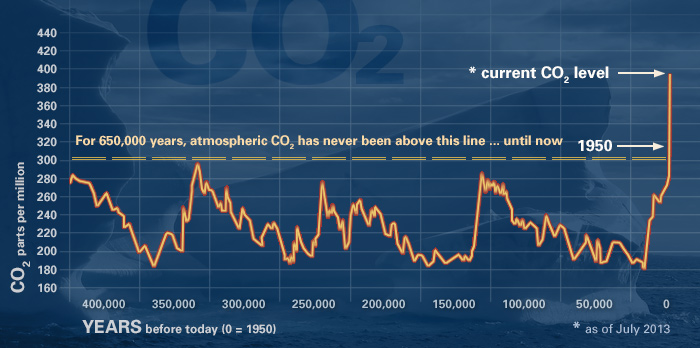
  • We’ve never been on a planet with atmospheric CO2 levels above 400 ppm (considered the tipping point of no return by many climate scientists). That will also happen this decade.
  • A 50-gigaton “burp” of methane from thawing arctic permafrost beneath the East Siberian sea is “highly possible at any time” according to a July 2013 article in Nature. That would be the equivalent of about 4 times the volume of CO2 humanity has emitted into the atmosphere since the birth of the industrial revolution, and methane is 105 times more potent than CO2 when it comes to heating the planet on a 20-year timescale.
    • A fun fact about methane: the Permian mass extinction that occurred 250 million years ago, wiping out an estimated 95% of all species, is believed to be related to rapid methane releases after a 6C increase in earth’s surface temperature.
  • A 3.5C planet temperature increase by 2100 was predicted by the U.N. Environment Program in 2009 that would lead to the destruction of most ocean plankton and many land plants. Humanity has never experienced an earth at 3.5C above the current baseline. In 2010 the U.N. program increased their forecast to a 5C increase by 2050. And a recent International Energy Agency report (November 2013) place the temperature rise at 3.5C by 2035.
  • Between 150 and 200 species are going extinct daily, a pace 1,000 times greater than the “natural” extinction rate.

CO2 levels

Let’s pause here to consider a question: if you were offered a very well-paying job to taste test cigarettes, at a sampling rate considered high risk for lung cancer and other ailments, would you accept it? For readers answering yes, would you still accept it if the damage done was genetic in nature; i.e., your children and their children were almost certain to inherit your disorders and in advanced stages earlier in their lives? Okay, onward.

Back to our tension between growth and globe; two scenarios seem possible.

  • Option A: Stay the course, stump for more economic growth, and continue to develop alternatives to carbon-based fuels at the margin while subsidizing the fossil fuel industry to the sum of $480 billion annually (a 2013 IMF report placed total subsidies to this industry at $1.9 trillion actually when accounting for indirect subsidies; i.e., not requiring the industry to repair environmental damage from global warming due to the burning of their products, or address adverse effects to health from pollution and other costs to society).  Unfortunately, given the minimal impact renewable energy has made to date on the swelling global demand for more energy supply Option A provides no reason to believe that the coming meltdown will be averted.
  • Option B: Revolution. These are rarely pretty, but can be anticipated when food and water run short, lives are disrupted (or lost) and the masses get angry. Ambrose Bierce submitted over 100 years ago that “Revolution is an abrupt change in the form of misgovernment.” Is there something seriously misguided in our governments today.

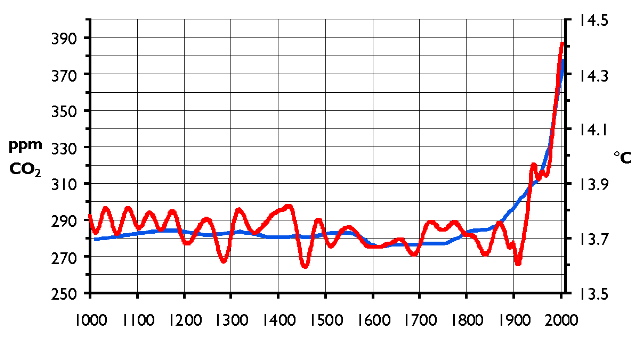
CO2 temp chartThose who manage our options – politicians and the corporate bosses with whom they sip whisky and play golf – are incentivized to Option A. Ribbon cutting ceremonies at new solar farms make for great photo-ops and keep the hounds at bay. And the likes of Exxon Mobile, who’s 2012 profit was the second largest in U.S. history (surpassed only by its own 2008 record) shouldn’t be expected to do anything radical that would threaten returns to its shareholders (see paragraph 1). Politicians’ reelection campaigns depend on the patronage of big business, and anyhow no one gets elected being the bearers of bad news like the sky is falling. I mean it’s sad about those Tuvaluans and their submerged island, but they aren’t part of my electorate, and we can engineer a sea wall around Lower Manhattan, right? All is good, steady as she goes, stay the course.

Those who bear the brunt of option selections – the collection of humanity on all points of the globe (for global warming and its impact is just that) – may at differing time points decide that their politicians promoting Option A must go. Such invitations to leave are best achieved through orderly electoral processes. This takes time however, and some of us (depending on geographic location) are on a tight schedule. When Spain’s productive orchards wilt and fail and aquifers in the North China Plain go dry don’t be surprised when buildings start to burn. Elections be damned. Thank Napoleon Bonaparte for this one: “Revolution is an idea which has found its bayonets.”

From the perspective of a flu-ridden planet swinging from sweats to chills, capitalism and the free market economy is badly in need of overhaul. It is creating immense wealth for a shrinking affluent class, but doing little to address the looming climate disaster. The billions invested into cleantech by the venture capital community has failed to produce a serious and massively scaleable energy alternative to fossil fuels. How do tiny start-ups with novel but expensive innovations compete with an entrenched industry built on mature technologies and subsidized by hundreds of billions of taxpayer dollars? Fracking has lowered Americans anxiety over exposure to Middle East oil. And Obama is likely to approve the Keystone XL pipeline, which he identifies as essential to support our economic growth. It doesn’t sound like anyone is concerned about a falling sky. For every dollar the U.S. government hands to the renewable energy industry in direct subsidies (to great fanfare and flourish), it discretely hands another $5.75 to the oil industry, which as noted above needs little help. Can real change be expected when less than half the members of the Republican party believe that the earth is warming, according to a 2013 Pew Research Poll?

chicken littleOn an optimistic note, more than a few Chicken Littles have started a dialog on economic alternatives, should anyone care. On the academic scene economists are talking about natural capital, which brings the value of natural resources such as topsoil, water, and genetic diversity into the economic equation. And various governments across the globe, including numerous U.S. states, China and the UK, have begun including natural capital into their assessments of progress and policy making.

Herman Daly, a University of Maryland Professor and former World Bank economist proposes a “steady state” economy for countries that have achieved material affluence. “Using tools such as carbon taxes on fossil fuels, the economy’s material production and consumption would be capped at the Earth’s capacity to cleanse and replenish itself. Higher consumption would be replaced by higher quality of life.”

Finally, there is an emerging interest, particularly by the young who stand to lose the most from a warming planet, in a “sharing economy.” This lifestyle lowers the consumption compulsion and is best exemplified in the growing trend of car sharing, which in theory could be extended to many other tools and appliances that sit on our garage shelves unused most of the time. Why does every household need one?

Any other bright ideas? Ready to join the revolution?

Bill Magill
Aix-en-Provence

Suggested song: Happy Talk (from South Pacific), Rogers & Hammerstein
Suggested drink: Holiday eggnog (milk, cream, cloves, cinnamon, nutmeg, vanilla extract, sugar, eggs, rum)

I finished directing another Intérprize® Workshop last weekend at the IAE Graduate School of Management near Aix-en-Provence. Three days were spent with 20 aspiring intérpreneurs outlining grand life ambitions, developing executions plans, and committing to next steps (talk is cheap!). I also offered my students daily happy hours to highlight the role played by happiness in the pursuit of our dreams; these grand ambitions – some practical, some mad, all thrilling – that define us as individuals.

I’ve been reading the research of Seligman, Frederickson and Csíkszentmihályi on the potency of optimism for years. Their findings are highlighted in various previous postcards and publications listed under my Interesting Books panel. More recently I’ve come across Sonja Lyubomirsky, a professor at the University of California at Riverside, whose output in this domain is astounding. Her recent work focuses on 3 fundamental questions:

  1. What makes people happy?
  2. Is happiness a good thing?
  3. How and why can people learn to lead happier and more flourishing lives?

Sonja LyubomirskyIndeed happiness is a good thing if work, friends, family, and health are life priorities (surprised?). Lyubomirsky’s detailed research – and she offers plenty of heavy reading for review should you be so inclined – shows that optimism leads to higher income, greater productivity and higher quality of work. It also reinforces more satisfying and longer marriages, more friends, stronger social support and richer social interactions, more activity, energy, and flow.  Regarding our health, she finds that happiness correlates positively to a bolstered immune system, lowered stress levels, less pain, and even longer life. Lyubomirsky’s work also reveals that we are more creative, helpful, charitable, and self-confident, have better self-control, and show greater self-regulatory and coping abilities when we are happy. (Quoting liberally from her website, which is available by clicking here.)

Of particular interest to me is Lyubomirsky’s research into the connection between the scale of our aspirations and permanence of our sense of wellbeing. The higher we reach the longer lasting is our charge of positive feedback, which stirs us to reach even higher. Equally fascinating is her study of the cause and effect between materialism and sustainable happiness (limited it seems), and steps for getting off what she calls the “hedonistic treadmill.” A girl after my own heart.

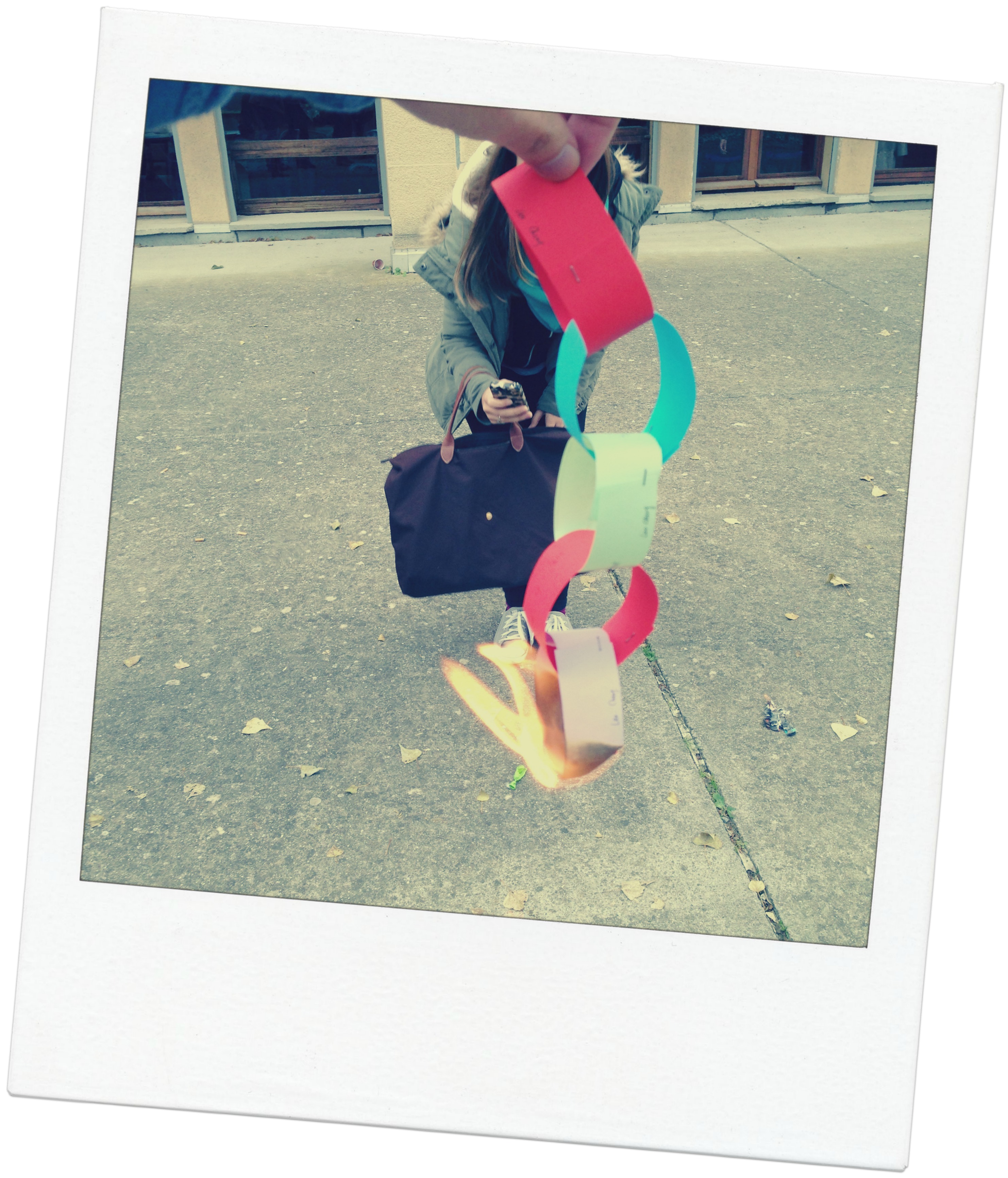
During last weekend’s Intérprize Workshop we talked about role optimism plays in keeping us inspired and positive through the many challenges encountered when taking on a truly grand ambition. Leveraging our core strengths effectively can generate a virtuous upward cycle: achievement makes us happy, which leads to optimism about our goals, which leads to greater effort that results in more accomplishment and happiness. Each happy hour was committed to practices known to engender positive emotions, many of which Ms. Lyubomirsky confirms with her studies: expressing gratitude, practicing kindness, adopting healthy rituals, and savoring simple, rich experiences. As evening assignments my students wrote letters of appreciation to loved ones and sought out opportunities for flow and savoring. And we made paper ring bracelets in class (think preschool art projects) that documented our bad tendencies and then were burned triumphantly outside the school reception area. Yes, the IAE is starting to seriously query the content of my courses.

burning ringsThe core of my workshop, as always, was committed to finding our compass headings and charting a course. Which are our native strengths and styles and how do they support the pursuit of our ambitions, what additional intérlectual property (IP) have we acquired or do we need to acquire, where do we find this IP, what will our intérprize look like when launched, and will it make us happy? And there’s that word again.

Finally, the workshop participants were introduced to yoga and meditation as activities for enhancing sustainability through the mental and physical demands of their ambitious pursuits. Gaëlle Devic of the Layama Association in Aix (click here for more on this centre) had us chanting and stretching and learning how to bring more zen into our harried lives. It is easy to dismiss the need to wind down, but the higher we reach the more energy we expend, and without a balanced regime we quickly exhaust and lose our bearings.

IAE 2013bStudents from China, Taiwan, Korea, Finland, the Ukraine, Brazil, and the U.S. joined locals from France for this class and it was clear that creative ambition has no geographic boundary. I was thrilled with the breadth and vision of their Intérprize plans, which included the launch of international boulangerie and “slow coffee” café chains, a French restaurant in Los Angeles, 2 crowdsourcing platforms for Asia of differing structures, a nonprofit wellness retreat, movie and radio production projects, a microcredit service, clothing design from recyclable materials, and other visions of immense ambition. As the Intérprize community expands with each new workshop the network for sharing ideas and collaborating on our personal missions will grow and become more powerful.

In 2014 we’ll be taking the Intérprize Workshop on the road, with various sessions around the U.S. and Europe. Stay tuned for locations and timing.

For more on Intérprize Workshops click here.

For a video recording of Sonja Lyubomirsky participating in the Stanford 2013 Roundtable: Are You Happy Now? hosted by Katie Kurick click here.

All the best in 2014. Stay happy!

Bill Magill
Aix-en-Provence

Suggested Song: American Pie, Don McClean
Suggested Drink: Coffin nail cocktail (amaretto, Drambuie, scotch)

We owe a great debt to Miley Cyrus and her MTV Video Music Award antics for revealing just how empty and irrelevant the music side of popular rock music has become. Talented artists still record quality songs, but they rarely get mainstream attention and no longer define a generation, at least through the poetry and power of their music.

Miley Cyrus 2In pop music’s creative heyday – the 1960s through 1980s – Cyrus would have been a novelty act struggling a few rungs below Charo, who also found fame with sexy impishness but at least could sing well (without auto-tuning) and played a mean flamenco guitar. Imagine a music awards ceremony today with the strong fem bench of the past: Janis Joplin, Diana Ross, Linda Rondstadt or Tina Turner (add your favorite) still in top creative form. That the 2013 VMA organizers hand the prime time slot to a girl whose greatest talent is butt twerking and tongue hanging cements any suspicions that rock has reached a creative dead end. Any stripper worth her string must have been asking, what the hell was that?

That great journey from Presley through Petty and Prince has been marked by a number of momentous creative pivots starting with rock’s foundations in the mid-1950s (Berry, Richard), bleached clean for popular consumption (Presley, Holly); the infectious pop harmonies of the British Invasion (Beatles, Kinks) and echo answer from the Pacific coast (Beach Boys, Doors); the folk revival plugged in (Dylan, Young); the heavy hand of hard rock in its endless variations (Zeppelin, Cooper, Metallica); the heavily stylized rock operas (Who, Pink Floyd) and immediate fury of punk (Reed, Iggy, Ramones); the floating rhythms and all night party themes of disco (Bee Gees, Summers); and rap and a return of music to the street poets (Tupac, Jay-Z, Eminem).

Before MTV we first heard the music and then saw the band, or if we were lucky watched them on Ed Sullivan or Don Kirchner’s Rock Concert at midnight. Looks and style, while necessary, were always secondary to talent. The Monkees will always be a goofy TV show, not a legitimate rock band. Can you remember the first time you heard list A: Hard Day’s Night, Stairway to Heaven, Hotel California, Bohemian Rhapsody, Highway to Hell (for you metal heads), or Staying Alive? You didn’t dwell on what the musicians looked like, you were simply absorbed in the sound. Am I right? Now consider some of the biggest hits since 2000, list B: Hips Don’t Lie, My Humps, Toxic, Baby, or Born This Way. Which list is still relevant in 20 years? Can you even name the B list artists now?

Jeff KoonsMusical shifts over the past 20 years have been less momentous, more incremental. Most of been mélanges of pre-existing forms, 3 parts this with 2 parts that, creative possibly but not disruptive. Rap samples rock, electro infuses disco. If we compare the arc of first-half 20th century art with second-half 20th century music, we’ve become bogged down with Jeff Koons and his Hoover vacuums after an extraordinary sweep from the Impressionists through Cubism, Expressionism, and Surrealism. Sigh.

In the glory years each teen regiment, perhaps two to a decade, had their defining sound and iconic musical deities. My brother had Neil Young and Led Zeppelin, and 5 years later I had Bruce Springsteen and Alice Cooper. There are no analogs today, no artists releasing a series of albums and singles over multiple years on which to discuss and debate for hours on end and build loyalty. Great talent still surfaces from time to time, but the iPod has single-handedly destroyed the album and the internet has democratized the music scene. Now anyone, even your blogger, can record an album on their laptop and self-release on iTunes. It expands the playing field but makes it impossible for even the best to build a critical mass of rabid followers. My guess? Over the next 20 years concerts headlined by single mega-acts will be mostly displaced by multi-stage festivals featuring 20-30 independent artists. This is okay, but the throne of rock royalty has been splintered in the process. Now everyone is just a court jester.

Miley, come show us that twerking thing.

Bill Magill
Aix-en-Provence
Suggested Song: The Long and Winding Road, The Beatles
Suggested Drink: The Good Life cocktail (aquavit, ginger liqueur, lime juice, demerara syrup, orange bitters)

Life seems all so predictable, until it’s not.

Joy Covey was by all indications smart, ambitious and successful. A graduate of Harvard Law School, she had made Fortune magazine’s list of the 50 Most Powerful Business Women in America while not yet 40, during her tenure as Amazon’s CFO.  She was also a committed environmentalist, serving as treasurer for the Natural Resources Defense Council post Amazon. Her life ended abruptly in a freak accident in early September, struck by a car that had lost control while riding her bicycle on a country road outside San Francisco. She was just 50 years old.

5 pm and I’m on the Thursday train home from Paris, also in September. It has been a few days on campus tipping back into the rhythm of work, the first key to the office lock since early August. I’m struggling to bid farewell to the summer laze, the bright afternoons floating around some lake with my kids, the warm Mediterranean evenings shared with friends over dinners and drinks. But back to work we go, …or to school in my kids’ case, to our structured days and weekly commitments.

My work situation has tempered notably over the past 5 years, since turning 50. Gone are the endless early hours and late days, the weekend deliverables, the recurring confrontations and restless nights, the parenting through Skype and the missed birthdays. Gone too are the generous paychecks that bought our home and cars, put our children in private city schools, paid for beachfront holidays in Hawaii with nanny in tow. It’s a trade of fleeting indulgence for deeper significance.

I will go out on limb here and presume that Ms. Covey was in a good place financially. CFOs of multi-billion dollar internet empires tend to be very well compensated. As for me, I am neither semiretired nor financially independent. A son has just started college (who would have imagined that?) with twins in junior high school. Financial obligations continue to multiply, yet I’ve chosen this moment to pull back from the big push and my prime income generating potential. Is this decision foolish, selfish, or the move of a sage and aging idealist? Opinions welcome.

winding_roadWe want to believe that our years ahead will be linear and predictable when in fact they are random, fickle. We want to believe that there will always be time for meaningful engagement and memories with those we love when in fact the only certainty is uncertainty. We can commit our best years to the office and then run out of time. We can cut back early and risk our long term security. Which side of that impossible balance point have you selected?

I am driven now more by my eulogy than résumé (to quote Arianna Huffington, click here to read her recent essay). Taking on the work week of my former career(s) would void any chance of playing hands-on superdad at a time when a lot of hands on is required. Each morning starts at 6 a.m.; breakfast together and a walk with my twins through our beautiful Aix-en-Provence to their bus stop. Lunches are shared regularly with my oldest son and a chance to relive my college youth through his experiences as an incoming freshman. When not teaching, myself, there is time for morning strolls to the farmers market, butcher shop and boulangerie, basket in hand (a supreme joy for any foodie like me). Dinners mainly are prepared at home with healthy stuff from the day’s hunt, and not ordered out or rushed through in a fluorescent-lit fast-food booth (not that my kids would complain about a bit of McD on occasion). Homework is done collectively, play dates arranged, weekends planned, an occasional movie shared, then iGadgets collected (grumpily I may add) before bedtime. We’re scattered about the apartment, the 4 of us sharing 2 bedrooms and single bath, comfortably. It’s a rich life without the riches, and I sleep well hoping (praying) that on some unfortunate day many, many years from now, one of these 3 will stand before the friends and family gathered here today and say “he was a great dad.” That works for me.

And then I fell in love

On a completely different note, I’ve written before about the great pleasure of writing letters with a quality fountain pen (for a link to Back to the Plume, click here). There is deep satisfaction as well in preparing meals with great equipment, and worth every penny if most nights are spent behind the counter (and between 8th grade geometry questions). My trusty French Sabatier chef knife had been the kitchen cornerstone for the past 10 plus years, and at a steal of a price. It wasn’t the easiest blade to keep sharp but I’m a loyalist and considered the extra effort a sign of my commitment to our relationship. After using a sturdy Wusthof while helping prep at a friend’s home this summer, I decided that an upgrade was long overdue. My new MAC Santoku 18 cm is an incredible tool: razor sharp, light and maneuverable, comfortable in the grip. It slices, it dices, it’s a Lamborghini after years behind the wheel of a Nova. Each knife is handcrafted in Japan and guaranteed for longer than I’ll be safe with sharp objects. Not cheap, but when amortized over a few hundred uses a year, tens of years, it’s a worthy investment. Bill’s kitchen tip of the day. Allons-y, à table!

Bill Magill
Aix-en-Provence

Suggested Song: All Summer Long, The Beach Boys
Suggested Drink: Watermelon agua fresca (watermelon, water, lime, mint)

It could be a creative block or simple summer malaise, but I am uninspired to write. Poetic justice indeed, after my last piece on breaking through our mental gridlocks. But it is August, and August means easy days and a much-needed pause for all, especially here in Europe. I will consider that a justification for my barren imagination.

This is my favorite summer month in Aix-en-Provence. The high heat demands a certain measured pace: early morning treks to the market, light lunches of salad and melon, shutters pulled against the afternoon sun, siestas by 3 and revitalizing cocktails at 6. Sobriety can be a challenge in this small dense city, rich with cafes and brasseries and friends who enjoy la bonne vie alfresco.

I’ll cede productivity in August, but not the quest for a perfect summer day. How do others squeeze the most out of these dwindling moments of languid abandon? Here are 4 top-of-mind suggestions from my personal playbook.

Eat


something fresh today, not something simply available at the megamart. What’s the sense in suffering through bland imports from foreign lands when local summer produce is ripe, plentiful and lusciously delicious? In Provence the fruits and melons are amazing at the moment. Honey bees swarm the market stalls of cantaloupe, watermelon and strawberries, drawn by their sinfully sweet and fragrant aromas. I miss the fresh sweet corn and plump blue and black berries from my childhood Pennsylvania in August. Despite their love and respect for all things culinary, the French just don’t get corn-on-the-cob, which is their great loss and mine too at this time of the year.

Drink


a fresh watermelon agua fresca for tonight’s evening cocktail, and repeat after me: life is good, life is good, life is really really good. Here’s the recipe: 4 cups of diced local watermelon with 1/2 cup of water blended until smooth, then add about 1/3 cup of white sugar (more or less per your taste) and swirle. In each glass place a slice of lime and 3-4 mint leaves, fill with ice cubes and then the watermelon blend, stir. For those of you running on high octane a splash of good tequila will give it some zing. Life is good, life is really really good.

Chill


with family and friends, forget work and all other worldly concerns, and find your zen place today. Everyone gets a pass for slacking in August, even those clocking in. Invite your kids (or parents or friends or friendly neighbors) out for a Coke or gelato cone and reconnect, school obligations will make that much more difficult starting in September. It can be impossible to truly chill when work commitments and homework assignments are haunting those dark corners of the mind. Now’s the time, go!

Listen


to your favorite summertime song now, something to put you in that top down and flip flops on mood. Number one on my list would have to be All Summer Long by the Beach Boys, although White Sandy Beach by IZ is a very, very close second. It plants me by that island palm tree place instantly, beautifully, longingly.  Is there a more beautiful love song to the splendor of summer? What is your favorite, I’m always looking for great ideas.

So there you have it; Bill’s 4 tips for the perfect August day, today: eat and drink well from our nature mother’s warm summer bounty, relax with those who matter, and put on some great summer tunes. Now give me your 4 tips, okay? I’ll be waiting, with my watermelon cooler.

Bill Magill
Aix-en-Provence

Suggested Song: Light My Fire, the Doors
Suggested Drink: Imagination cocktail (rye, ginger ale, and lime juice)

I shut my eyes and all the world drops dead;
I lift my lids and all is born again.
(I think I made you up inside my head.)
Sylvia Plath, from A Mad Girl’s Love Song

Feeling uninspired? Has the clutch of your imagination disengaged? Wrestling with a vexing problem/question/issue for which the obvious solution feels two steps beyond the infinity point? My suggestion: clean up those brushes and dust off the easel; warm up the keys/strings/vocal chords, spit valves; lace up your ballet slippers or tapdancing shoes; or ponder the purpose of it all through the rhythm and verse of your inner Plath or Wordsworth.

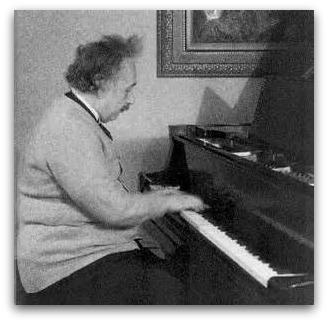
A dive into the arts – practicing, not just appreciating – opens the mind through a curious cocktail of opposing dynamics: it relaxes the mind while demanding concentration. The space junk of stuff that absolutely needs done today floating constantly around our craniums is blown out long enough to permit the ganglia to relax and reassemble, allowing synapses to form and fire in new and auspicious configurations. Okay, so this is pure speculation on my part and most surely BS, but it feels like that after an hour at the piano. Einstein said “At times I feel certain I am right while not knowing the reason.” Good enough for him, good enough for me. einstein_piano

Our man Albert was also a believer in art as a catalyst to broader, deeper thinking. He was an accomplished pianist and violinist and claimed that “The greatest scientists are artists as well;” that creative breakthroughs came more from inspiration than logic.  “The gift of imagination has meant more to me than any talent for absorbing absolute knowledge.” What better way to stimulate our imaginations than through art?

Members of the ‘60s supergroup The Doors were also creative giants of their time; musical polyvants who collectively married extraordinary talent with a fascination in musical genres far afield from 3 chord rock & roll. What inspired this genius? For one thing their interests with art ranged well beyond music. Ray Manzarek and Jim Morrison studied film at UCLA and Manzarek was a writer, publishing 2 novels in the post Doors era. And drummer John Densmore’s career extended into professional dance and acting.

For a remarkable peep into a creative process in-process, I offer an edited audio clip (click Light My Fire to listen) of Ray Manzarek explaining the group’s writing of “Light My Fire” to Terry Gross on a 1998 NPR edition of Fresh Air. Take equal parts great melodic song writing by guitarist Robby Kreiger, the interweaving latin and jazz rhythms adapted by Densmore, Manzarek’s gift for finding the cohesive balance (plus bringing in the Bach-inspired into and outro), and finally Morrison’s aggressive lyrical brilliance (the time to hesitate is through), at once direct and dangerous to the teenage girls hanging on every word.

Why my fascination with open thinking and creativity? I am in the course of creating and executing on a grand vision plan, that blueprint for a deeply meaningful venture, and I’m often stumped on definition and strategy. Beyond the happy stardust of napkin plans and broad ideas, what EXACTLY am I selling and how? This uncertainty is typical of intérpreneurial (and entrepreneurial) planning, something with which my MBA students wrestle constantly. The art-immersion strategy – in my case songwriting and recording – is effective for unclogging my congested imagination, the perfect laxative for a constipated brain.

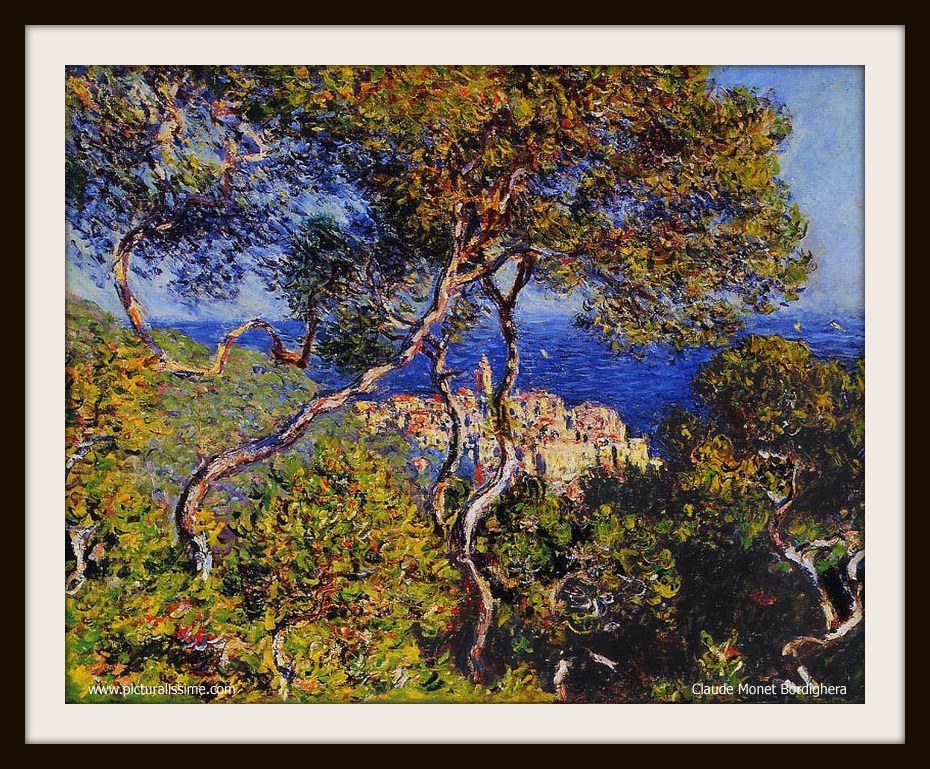
Monet BordigheraMy 2012 Last Night at the Ha-Ra project (click here to listen) provided more than just a musical outlet last year. The songwriting activity, draining as it was, demanded an open, expansive mind that once actuated remained engaged to untangle other mental gridlocks (I have many). If you too hit an inspiration wall from time to time, try on your artist chapeau for an hour or two. It matters less the form of art and your level of mastery, and more the depth of your dive, the sincere commitment for that period of immersion. If you find this exercise helpful, please write, as I am collecting anecdotes of experiences.

Also at fault for my current art obsession is the Musée Granet in Aix-en-Provence. It is hosting Le Grand Atelier du Midi (the great workshop of the south; click here to see more) this summer and fall, and the works on display are wondrous. The exhibit is a celebration of painters who captured the charms of Provence on an impressionistic canvas, from Cezanne through Dali and all stops along that arc: Renoir, Monet, Gauguin, Van Gogh, Matisse, Braque, Picasso and so many more. If you were looking for an excuse to hit me up for a cool glass of rosé, your timing couldn’t be better!

Bill Magill
Aix-en-Provence

Suggested Song: Summertime Blues, Eddie Cochrain
Suggested Drink: Any chilled rosé, such as the 2011 Chateau La Coste cooling nicely in my fridge

I am offering an abridged blog this month. Your reading time is likely limited and I’ve copied links to 2 op-eds published by the New York Times this past week on privacy and connectivity, both digital and personal. You may enjoy, and all in it should be just enough content for that cool glass of wine.

If the French have agreed on anything this year, it’s that the weather has sucked. From all points on the hexagon this universal comment reigned: where the hell is the summer? It had been the coldest, longest spring since 1987, leaving the Frogs (of which I now qualify) with a permanent case of the wet shivers. If there is a bright side, it played in nicely with the sport of competitive complaining, at which I do believe the French compete well.

Poppies in provenceThe Provence temps suddenly turned warmer last week, and in spectacular fashion. It happened overnight, falling asleep to the sound of a cool drizzle and waking to a warm bath of morning sun. Our nature mother has not looked back. Relief is heard in the market chatter, is seen on the faces of all who rely on the outdoor lifestyle: the cafés and ice cream shops and restaurants and bars who double their seating with tables alfresco, …and those of us who use them.

The lavender bloom is still a 2-3 weeks away, but the Aix countryside is full of red poppies now, splashed chaotically across fields of green and yellow mustard like a Jason Pollock canvas. The smells are earthy and colors stunning. Provence in early summer is a preview of heaven.

The tourist season is in full swing, with packs of sightseekers guided in waves down elegant Cours Mirabeau and through the charming alleys of Aix, snapping photos and sampling calissons, then rushed back to their massive busses and off to Nice, Avignon, or other points beyond.

Carnival floatThe annual Carnival celebration held last weekend was beyond description. Three separate evening parades snaked through town and converged at the large central fountain. It included opera singers in hoop dresses two stories high, giant skeletons, surreal floats from the imaginations of Jules Verne and Mad Max, and members of an orchestra suspended 200 feet in air. For a colorful video of the Carnival parade and the hovering Concerto Celeste click here.

For those of you who found my May essay Never Far From Home interesting, two op-eds were published by the NYT this week that warrant your time and a cup of warm tea (or cool rosé). Columnist Ross Douthat writes about the collision of technology innovation, national security and privacy intrusion (click here to read), a topic front and center since the recent disclosures about NSA snooping. And Jonathan Safran Foer offers a touching essay on the loss of personal connection with the gain of digital connectivity (click here to read). Enjoy!

Bill Magill
Aix-en-Provence

Suggested Song: Home, Foo Fighters
Suggested Drink: Tsunami IPA, Hawai’i Nui Brewing Company, Ohana

There is no place like home. The word alone induces feelings most warm and sentimental, particularly of the family homes in which we were raised. If you attended summer camps as a kid then you may remember the rush of seeing your parents’ car glide into the dusty parking lot on the last day of fun. Pure joy; I’m going home! It’s where we feel secure and peaceful; that sheltered haven from life’s little tempests.

Facebook introduced a new mobile app last month called Home. Its core innovation is in flipping Facebook from an outbound, manual experience – you decide when to touch your digital community, to open the app and what to read – to an inbound, automatic one – all posts are forwarded to your mobile device’s new Facebook-engineered home screen without any manual activation on your part. In introducing Home, Mark Zuckerberg stated that “Instead of having to click on the Facebook app, Facebook will be integrated into everything you do.” A company post added that it is “a window into what’s happening with your friends – friends finishing a bike race, your family sharing a meal or an article about your favorite sports team.” Such a joy.

Zuckerberg HomeOn an aside, it seems that all techy CEOs have now taken a page from the Steve Jobs playbook that reads, once per year awe your rapt believers dressed in something “I don’t give a shit” cool and monastically basic (black faux turtlenecks and casual hoodies with jeans works well) like Moses descending from the mount, coming to share the messiah’s holy message of a new feature that will profoundly elevate the quality of their trivial lives to a higher plane of unimaginable digital rapture. “And get this, in addition to the new GPS, accelerometer and 3-axis gyroscope, this iPhone can actually talk to you!“.

So, back to Home. Imagine your friends and their friends (and their friends through association) pinging you 86,400 seconds a day, 365 days a year with burning updates of a family dog’s demise, dinners at the Olive Garden, drinks being shared (thought you’d LOVE to know, burrrrp!), photos of parents from 40 years back, the niece of someone’s second cousin having her broken her finger splinted (isn’t she just a trooper?), articles just read, pop songs just heard, phone pics of Pocatello through the airplane window, and all other sorts of mostly inane experiences and opinions about which you may but most likely will not have the slightest curiosity.

It gets scarier. A recent article by Om Malik (click hear to read) highlights that Home knows what apps you use and how often; where you are right now (thanks to that nifty GPS) and where you live, shop, dine, and drink; if you’re on the move and whether by foot, bike, or driving (thanks to that nifty accelerometer). It’s clear why Facebook wants this information (and will likely be selling it aggressively), as advertising fees fuel the dot com industry. It’s less clear what users gain beyond the constant hassle of a phone that won’t stop chirping.

Google glassSo what is next? How about the cross-pollination of Home with Google Glass, a new glasses technology that extends the computer screen evolution from desktop to laptop to phone and now to your spectacles? Facebook status updates and “chat heads” will flash before your eyes without the need to even dig the mobile out of your purse or pocket. Google Glass is more than just a bit frightening from the privacy perspective as well; they will be equipped with a camera for photos and video. In this era of constant connectivity and immediate image dissemination, imagine the comfort of being seated near a pair of these at your next bachelor(ette) party, beach outing, or dinner date (was that her spouse?). Bans are already popping up in numerous bars and cafes. In addressing complaints about Google’s privacy intrusions in 2009, then CEO Eric Schmidt retorted that “If you have something that you don’t want anyone to know, maybe you shouldn’t be doing it in the first place.” This from the company who’s original motto was “Don’t be evil.”

Crafting CalmFor an antidote to this always-on digital tsunami I can recommend Crafting Calm, Projects and Practices for Creativity and Contemplation by Maggie Oman Shannon and Mary Anne Radmacher. Shannon – a San Francisco–based interfaith minister – introduces the reader to 40 or more unplugged activities designed to bring a sense of calm, quiet, and mindfulness when the digital assault gets overwhelming. I’ve written before of the value of crafts and rituals in their tether to home (the real home) and family, binding us to the core unit and a historical story. Students are assigned crafts to complete in my Intérprize Workshops. Rituals and crafts of the unplugged variety – and these are the most meaningful – offer pause from the tidal surge of the digital wave, that endless inundation of chats, texts, updates, calls, emails, and general web browsing that calls to us when bored. They make our homes more than just a place to plug in and click on.

Bill Magill
Aix-en-Provence

Postscript: The Last Sunrise is a documentary about the Danzantes Concheros of Mexico, an indigenous group whose fascinating traditions around the mysteries of death bring greater meaning to life and an urgency to experience it deeply now. This beautiful project is currently being produced in Mexico by friends and raising money through a crowdfunding approach. More information is available here.

Suggested Song: One and Only, Adele
Suggested Drink: DNA Cocktail (gin, Blue Curacao, lime and pineapple juices, strawberries, sugar) served in a test tube

You are uniquely gifted and capable of doing at least one thing better than any other person on this planet. If this one thing happens to intersect your personal plane of passions, that collection of things that frames your ambitions and stimulates your drive, then all is possible.

We are truly unique creatures, each one of us. Find a mirror and take a close look. Every angle and line, crease and scar and blemish that decorates your face, the blend of colors filling your iris, the line of your hair, height of your ears, and curl of your lip; the composition of your face is exclusive to all others. This singularity of design extends to the rest of the body as well, but we’ll spare the details for those of us hitting midlife entropy. Our abilities and liabilities are equally unique. Start with one’s genetic disposition, a cocktail of DNA inherited in some unpredictable combination from our 2 parents, with strains of unpredictable combinations from their 4 parents, flowing down in some random allocation from their 8 parents, and on and on. This solera system of blended genetics creates one very unique You.

Vitruvian ManMichael Phelps is a case study of genetic disposition mashing with uncompromised passion. His body is remarkably well suited for going fast in water. His extended “wingspan” – fingertip to tip – exceeds his height by 4 inches (80 inches/76 inches); we’re supposed to be proportional (remember da Vinci’s Vitruvian Man?).  His size 14 feet are said to bend 15 percent further at the ankles than most other swimmers (some would say he’s double jointed), blessing him with a flipper-like propulsive advantage. Phelps’s torso is unusually long (typical of a man 6’8”) and legs abnormally short (typical of a man 6’0”) for his height (6’4”), which provides less drag through the water and a faster, tighter turn at the wall. His “freak” anatomy is a gift from his parents, grandparents, great-grandparents, and on; from this trickle-down phenomenon of genetic donation.

Still, Phelps’s supernatural achievements – most decorated Olympic athlete ever, most gold medals over a career, most gold medals for individual events, most gold medals at any single Olympics (we’re just getting started) – would go unrealized without a supernatural passion for the sport; his desire not only to win but dominate competition at the highest level, the willingness to swim 50 miles per week and consume 12,000 calories per day, to stay mentally focused through the grind, lap after lap after lap, day after day after day.

Other factors equally elemental to our individuality are the roads we travel and people we meet. No two journeys are the same, and the singular map of each life history only compounds the unique inventory of our abilities. We learn from our experiences (mostly). We take note of mistakes, enjoy successes, and slip another tool in the box for future reference. Even the identities of identical twins diverge with age, with falls from the swing set, triumphs and tragedies and broken hearts, and other singular experiences. Nothing is more beneficial than personal networks, and while my circle of friends and colleagues may overlap yours at the margin, no two networks are identical, none. A principal element of Phelps’s success was his connection to coach Bob Bowman, whose military style of strict discipline and an exhausting regiment forged Phelps from the young age 11 and through this many successes.

DNAYour inception was truly a miracle and your genetic inheritance was unimaginably unpredictable. Consider that going back just 10 generations (to keep the math digestible) all of the sets of parents in your inception line (your mother and father, your grandparents and great grandparents, and their parents to 10, so about 250 years) managed to survive wars, famines, plagues, terminal disease, premature birth, and other unpleasant forms of nasty demise before siring. Somehow each survived long enough to forward their genes, some of which are floating around your corporeal vessel at this very moment. The 10 male forbearers each produced about 250-300 million sperm per day if healthy, of which 1% were tasked with fertilizing an egg (the rest are hunter/killers). Still, that’s one heck of a lot of sperm and each and every one had a unique DNA profile, some elegant piece of genetic code that on some enchanted evening made it upstream through the generational spawning ladders to you. In the book “Sperm Wars” Robin Barker calculates that the probability of our unique inception over 10 generations is 1.0 divided by 6×10^100 (the hundredth power). Feeling special?

Are we obliged to share our unique gifts and talents? Can we agree that exceptionality resides within each of us, even when not manifest in a form easily harnessed or appreciated? Can we agree that genius in a cave is unrealized and pointless? The greater world, both intimate and anonymous to us, becomes a richer, more fascinating and meaningful place when we offer the best of ourselves. Would the 2008 Olympics have been as intriguing without a Phelps?

You will probably die around the age of 83 (if you are reasonably healthy now). For me that leaves 10,000 days, not all necessarily productive. Seems like a lot, seems like so few. If you choose to discount the possibility of a life hereafter, be it with harp-strumming angels or rebirth as a butterfly, than this is it. Can you imagine your wondrous gift unrealized? What do you have scheduled?

Bill Magill
Aix-en-Provence