Song Suggestion: The Road to Hell, Chris Rea
Drink Suggestion: Sea Breeze (vodka, cranberry juice, grapefruit juice)

I don’t know what is more depressing: the destruction left in Sandy’s wake or the teachable moment lost through the storm grates. The “C-word” (Climate) has replaced the “N-word” during this presidential run as the nastiest of national slurs, and pox on the lips from whom it spews. It’s as if we have entered the world of Hogwarts and things that must not be named. Neither candidate has used this opportunity to show real leadership on the very real problem of climate weirdness. It was no different in France, by the way, during the presidential elections there earlier this year. Crise climatique, c’est quoi ça?

Romney deserves credit for ducking the issue with the greatest temerity. When a heckler at his Virginia rally this week shouted “climate change caused Sandy!” and flashed a sign reading “End Climate Silence,” Romney responded with 2 minutes of clueless silence and blank (but brilliant) smile that seemed to say, “can anyone help me out here?” The crowd’s reaction was predictable: a loud chorus of boos for the heckler and stirring group chant of “USA! USA! USA!” while the inconvenient truther was escorted roughly from the event. Romney supporters are evidently in Camp America is Awesome!, with the unifying conviction that by sheer will we – God’s favored nation – can dictate terms on the weather like just another Olympic basketball opponent. But challenging climate science is not a sporting competition, right? We do all get that? Evidently not.

Romney’s take on the climate (what problem?) may be alarming for a Harvard man who may be king, but certainly not surprising. This is the guy who defended the coal industry with a cheery campaign commercial titled “War on Coal,” in which he glibly asks, “We have 250 years of coal. Why wouldn’t we use it?” Well, for starters it is the most carbon intense – i.e., dirtiest, nastiest – fossil fuel on this planet earth, accounting for over 40% of the US’s CO2 emissions and about 65% of China’s. Of course if one chooses to deny that CO2 emissions and global warming are linked, then voila, pas de problème. After all, the Church managed to deny that whole sun-at-the-center-of-the-universe baloney for 200 years after Galileo proved otherwise in 1610. These things do take time.

What is more discouraging, however, is Obama’s silence on climate change and its probable role this week in producing the highest Manhattan storm tide on record, or since 2000 producing 9 of the globe’s 10 hottest years on record, or in 2008 clearing both the Northeast and Northwest arctic passages of ice for the first time in recorded history, or…, and… ,in addition to ….  ad nauseum.  To be fair, the president has made an effort to at least acknowledge global warming and endorse the consensus of 99% of the world’s climate scientists that we are indeed on the road to a very toasty hell. He’s passed auto emissions standards and pushed investment in alternative energy, but his leadership on climate change as an issue of critical importance both nationally and globally has been in a word, tepid.

The 2 candidates and most all of our national leaders have adopted the it may go away if I stop thinking about it approach to problem solving. That F in math, well if I stop looking at the report card it may just go away before I have tell mom and dad. That mole on my neck, well if I stop looking in the mirror then it’s not really there. Think about global warming like an angry wart on your genitals. Yes, you can choose to ignore it for a while, but that may severely diminish your most divine, meaningful experiences of life permanently in just a few short years. Actually it’s worse. In this case your kids (and their kids and grand-kids) get the wart too, because you declined to get treatment.

If there was an opportunity for the candidates to establish a bit of “climate cred” this was the moment. Imagine either of them declaring after the storm, “Okay enough, now we get it and MUST act decisively.” I might have even considered taking a closer look at Romney if he had taken that kind of maverick position. It was a missed opportunity to draw in enlightened centrists and he blew it.

It was New York’s Mayer Bloomberg who took value from Sandy’s harsh lesson by breaking his pledge not to endorse either candidate and tip his hat to Obama (more precisely away from Romney) specifically for their respective positions on the changing climate. In his published endorsement, Bloomberg wrote that “Our climate is changing, and while the increase in extreme weather we have experienced in New York City and around the world may or may not be the result of it, the risk that it may be — given the devastation it is wreaking — should be enough to compel all elected leaders to take immediate action.” His beef with Romney is his position shift on global warm, criticizing him for “abandoning the very cap-and-trade program he once supported. This issue is too important. We need determined leadership at the national level to move the nation and the world forward.” Bravo (and please consider a run in 2016).

So where does this leave us? In case there was any doubt, this is the new and nasty normal we can all expect moving forward: hotter summers, bigger storms, higher tides, more severe weather. I would not be recommending ground floor properties in Lower Manhattan, whose residents may be joining the islanders of Vanuatu on the list of the permanently evacuated . The question is no longer how do we fix this problem, it is now how do we live with this permanent change, and how do we limit even greater damage?

For some truly frightening reading on the damage done and what to expect next, read Eaarth by Bill McKibben. And you thought Halloween was scary!! Buckle up.

Bill Magill
Aix-en-Provence

Song suggestion: She Works Hard For The Money, Donna Summers
Drink suggestion: Lazy Daze cocktail (vodka, kahlua, melon liquer, green creme de menthe, lemonade)

Good news on the state of our health and contentment. Americans are working harder and wearing out sooner than any time in the past 50 years. Why good news? I’ll get to that in a moment, first consider this:

  • Just prior to the “big recession” of 2007/08 the average US worker put in more than three full-time weeks per year than the average Brit, six weeks more than the average French worker and nine weeks more than the industrious German. In fact, more hours – at 1,804 for 2006 – than the average worker anywhere else in the world, …anywhere. This according to The Big Squeeze, a recent book by New York Times reporter Steven Greenhouse on US work conditions. (On an aside, the US is the only country in the industrialized world without a mandatory vacation law and the only holdout without mandatory paid maternity/paternity leave. See chart below.)

He adds that productivity has surged in the recent employment downturn – GDP continues to grow, albeit with fewer workers – but income and wages are not keeping up. “If the median household income had kept pace with the economy since 1970, it would now be nearly $92,000, not $50,000.” Corporate executives (whose incomes have managed to keep pace and then some) and their shareholders much appreciate the effort. Chapeau!

  • A 2011 report from the University of Washington and Imperial College London revealed that while the world’s leading industrialized countries (including those lazy Brits, French and Germans mentioned above) continue to trend up in life expectancy, 80% of the counties in the US have slipped further behind the average of the globe’s top performers. The CIA now places the US at #51 globally in life expectancy, behind Puerto Rico, Jordan and Guam (in case you are curious). According to the UofW report, life expectancy in many US counties is now about where the leading western world stood in 1957.

So what is up with the US health challenge? Most researchers point to higher obesity rates and diabetes as a key concern, but stress has long been known as a leading cause of health problems, both mental and physical, and Americans are under a lot of stress, working harder and earning less in real dollars. This is particularly harmful to whichever parent is considered the home and family manager: typically mom. In the majority of married households, she is the partner who pays the bills and takes on the family planning. This on top of her salaried work, as few households get by on a single pay check any more .  Not surprising then, that according to the UofW report cited earlier, life expectancies for women declined alarmingly between 1997 and 2007 in almost a quarter of US counties. The researchers added that “setbacks on this scale have not been seen in the US since the Spanish influenza epidemic of 1918.”

Consider that there will be about 3 billion more Chinese entering the middle class by 2040; 3 billion more consumers of iPads, automobiles, family homes, and La-Z-Boy recliners. At the current pace of population growth and global consumption we’ll need a second earth of resources in the just 30 years. This unsettling claim I overheard in a meeting at the European Commission in Brussels last week. Okay, so where is the good news? Getting to it.

Given that a new planet is unlikely, the existing middle class needs to downshift on our side of the ledger because the new arrivals are definitely upshifting on theirs. Fewer people will help of course, hence the silver lining in the American life expectancy numbers. Someone has to step up and lay down (6 feet down) in a world of dwindling resources, rising temperatures, and ballooning consumption, and once again the US seems to be heeding the call.

I am of course being morbid and flippant. The key to accommodating the growing class of global consumers is to curtail our existing consumption compulsion. Couldn’t we all survive with fewer iSomethings, smaller cars (or better yet, go carless), more modest homes, and a pivot to simpler, more meaningful experiences that require quality time, not money and stuff? Can we expect the newly minted middle class in China and elsewhere to live frugally in light of growing concerns over climate and resources, when we ourselves are unwilling to cut back?

We’ve mastered the art of working hard, the art of generating wealth, and the art of spending our fortunes big and small on gifts grand and modest to  ourselves (our increasingly big selves) and loved ones. Perhaps instead it’s time to learn the art of doing nothing?

Funny that you mention  it. I recently bought The Art of Doing Nothing by Véronique Vienne, first published in 1998. As she writes in the liner notes, this is “a practical guide to rest and relaxation, ….where ‘being’ is more compelling than ‘doing’.” Rather than gives us 7 steps to creating a new business or achieving financial freedom, Vienne gives us the art of procrastinating, lounging, napping (my favorite), listening, and more. None require a penny of investment, none consume an ounce of the earth. Feeling a bit overwhelmed at the moment? I highly recommend it.

Bill Magill
Aix-en-Provence

Suggested Song: Pastures of Plenty (click here to listen), Woody Guthrie
Suggested Drink: Peach Diabolo (peach syrup and San Pellegrino; a kid favorite)

En route to Paris the countryside zips past at 200 mph. It is a summer trip to my brother’s farmhouse in the French heartland that has us gliding north from Provence on a lightning fast bullet train. Through fields of lavender and sun flowers, over broad rivers and lazy canals, past charming villages and large farms, cows and hay bales and hillsides of grape vines in their trellised rows. It is no surprise that Impressionism originated in France, for the countryside is in a word captivating; perfect for Monet’s dreamy lilie ponds or Pissarro’s rich landscapes of rural life.

A holiday trip is perfect for detachment from the routine, from work and other daily distractions. And I am on Unplugged Day #5, liberated and leaning towards permanent uncoupling from the mobile realm. Family holidays are sacrosanct, they are the really good stuff that lingers in our minds long after the summer heat has faded and the flip flops are boxed away. No distractions beyond a great summer book. Definitely no mobile phone.

Does the phone-only wireless phone still exist? The newer models are truly computers for your pocket. With my antiquated Samsung (going on 2 years now and oh so “yesterday”) I can browse the web, check my email, take photos and videos, look at maps and get my coordinates, order train tickets, listen to the radio, correct my bad French translations, get a beep and description each time I pass by a historic monument in Aix-en-Provence, and those are just the few things I actually use. The new iPhone 4S has over 500,000 apps that Apple offers for your amusement (and holiday intrusion).

What can be wrong with so much great innovation? Where is the downside of this communal dive into the world of super smart and oh-so-cool mobile devices? For those of you whose principle source of joy is solitary digital absorption, there are no worries. Life is getting more beautiful with each new generation of phones and waves of apps. For those of us seeking deeper fulfillment and engagement with family, friends, and the occasional fascinating stranger there is cause for concern.

  • Distraction: With so many cool gizmos at our bored little fingertips, why engage with the rest of the world? Engagement requires eye contact and active listening, an exhaustive venture outside our bubble of 1. Navigating a city sidewalk these days requires constant vigilance, with so many pedestrians walking on auto pilot while squinting at emails or typing an SMS. How many times have you watched a couple noncommunicating over coffees or dinner, him or her or both with phones securely planted in hand and tapping away? Did you say something dear? Or we see dad responding self-importantly to that urgent Saturday text (btw, whole milk or 2%? lv u 🙂) while his son Jimmy kicks the winning goal at his weekend soccer match.

    Many thanks to Apple/Google/AT&T and their industry cabal for making this lost family moment possible.Ah, but a bit of self-discipline is all that one needs, right? Right, but the truth is I am weak, most of us are weak. Each new app adds a voice to the chorus of calls singing, Get me out, play with me! Do you disagree?

  • Expense:“Hey, my cell phone is cheap and my apps are free,” you say. Ah, but two cans do not a phone connection make. You gotta have the string (in this case microwaves)! Let’s do a little math. Per the AT&T website, the cheapest iPhone 4S (16 Gb) runs $200 (I’m rounding up by 1 penny for easier cypherin’); amortizing over 24 months (2 year service plan) gets us to $8/month (the 64 Gb iPhone we really want is twice that price, but let’s be thrifty with the numbers). Now, add another $60/month for the calling plan (nationwide unlimited) plus $30 for the data plan (the minimum plan they recommended for video and audio apps). All in we are sending AT&T $98 per month for the pleasure of unlimited distraction (see bullet #1).

    Is it worth it? What is the opportunity cost of $98/month? That depends entirely on your priorities. For parents like me, one could consider applying the savings to more rewarding moments with the kids (than twiddling away on your 4S while Jimmy celebrates with his teammates). As an example, $98/month would pay for a family membership ($10/month) to both of San Francisco’s finest museums– the de Young and Legion of Honor – that have numerous events and exhibitions for kids, PLUS a monthly movie outing to the West Portal Theater ($26 for 4 with the early bird special), PLUS treats for all after the show at Shaw’s ice cream parlor across the street (another $16), PLUS a Sony SLR camera to capture these family moments (the SLT-A37 lists for $598 [$50/month if amortized over 1 year, which is wildly conservative]). Despite all pronouncements by Apple acolytes to the contrary, the 4S’s camera features and flexibility, while impressive for a phone, do not come close to a decent mid-priced SLR.

  • Compromise:I appreciate that smart phone devices are truly impressive in terms of big utility in a small package in the way I appreciate that the Swiss make one hell of an army knife. For backpacking into the wilds it’s great. But I rarely (never actually) backpack into the wilds, and when I need scissors, tweezers, pliers, a fingernail file, corkscrew, screwdriver, saw blade, can opener, or knife for that matter I reach for one of the single function gadgets in my drawer at home. Similarly, I don’t want to watch videos on a 3.5 inch screen or capture my precious family moments with cell phone-grade optics. Convenience factor: HIGH; quality factor: LOW.

    Apple isn’t losing sleep over my concerns. It knows well and accepts that I am old school and just don’t get it. Its target customers are my kids, the younger generation. Are they happy to watch videos on a 3.5 inch screen: YES; do they believe that the iPhone camera quality is as good as any decent SLR: YES; do they consider song quality off a microchip perfectly fine: YES (because they grew up with tinny iPods); do they agree with Apple that Dad just doesn’t get it: YES. And this leads me to the final bullet.

  • Control: Everyone I know wants an iPhone, iMac, or iPad including me. We KNOW they are the most aesthetically beautiful, functionally elegant, pure extensions of our own uncorrupted souls and that Steve Jobs was a profound genius, now in some distant mystic dimension and debating with his creative equals, the likes of Da Vinci and Disney. I need more Apple in my life according to my 12 year-old daughter, specifically an iPhone (and she’d like one as well while I am at it). Why? Well, the backing argument isn’t yet firmed up, but just believer her on this. If I go to the Apple store then I will see. If I buy one then I will understand. Everyone has become an Apple disciple it seems, and it pushes me to resist even more my own digital desires. I would like to have an iPad, but one thing that really gets my antennas twisting is blind allegiance. Can we agree that Apple and their wireless device brethren makes some pretty cool stuff that can be useful for work and fun for play? Can we also agree that who we are, what we stand for, and where we derive happiness and fulfillment should not be defined by the brands we consume? It is unfair to single out Apple on this peeve, but it is the poster child of the moment. What, you’re not an Apple guy? Are you not experienced?

    “We have created, for the first time in all history, a garden of pure ideology, where each worker may bloom secure from the pests of contradictory and confusing truths.” This seems ironic now, Apple’s 1984 MacIntosh commercial (click here to watch) exhorting the masses to break their chains and question group think.

“Il faut profiter de la vie” was how my table neighbor phrased it, and I understood well his meaning: “We must enjoy moments like this, cannot take them for granted.” We were sitting with my kids and a dozen or so friends and family at a long wooden table in the French countryside. The sun was warm but there was a helpful breeze and the shade tree overhead was broad. It was a late Saturday lunch of salmon tartare, diced beets in garlic and cumin, soft boiled egg whites with homemade mayonnaise, a garden tomato and cucumber salad in vinaigrette, tuna rillettes (or was that crab?) spread on thin baguette slices, a delicious selection of goat, sheep and cow cheeses, and frozen sorbets as the cool finale on a gorgeous August day. Of course there was plenty of champagne to serve it all up and wines to wash it all down, followed by small tumblers of local cognac to aid the digestion (just before hammock time).

No smart phones sat on the table, no one was tapping on a keypad, everyone was enjoying the moment and any disruption would have seemed irreverent and cheap. It is the kind of moment that lingers for weeks in our memories. It is an afternoon that deserves our full investment. It is what truly matters, right?

Bill Magill
Aix-en-Provence

Postscript: The centennial celebration of Woody Guthrie’s birth was held on July 14 with the release of a box set of his many, many (and then some) songs, mostly released from the archives of the Smithsonian Museum. It’s a scratchy set of original recordings from numerous radio shows, live performances, album releases, and other venues, and an interview with the Smithsonian archivist Jeff Place and Guthrie historian Ed Cray can be heard on the July 12 edition of Fresh Air (click here to listen). Guthrie is one of my favorite American songwriters and then so much more. He is a true American folk hero, both sharply critical of inequity and deeply passionate about the country’s unlimited bounty and promise. Enjoy.

Song Suggestion: Teach Your Children, Crosby Stills Nash & Young
Drink Suggestion: Italian Soda with caramel syrup (my daughter’s favorite)

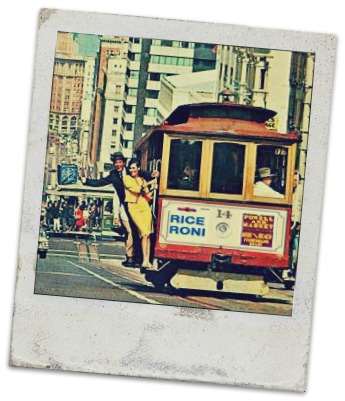
I am in San Francisco for two weeks, picking up my twins who will spend the summer in Aix-en-Provence. It is wonderful to be back in Bagdad by the Bay, as coined by the late, great SF Chronicle columnist Herb Caen. The impossibly steep hills and colorfully painted Victorian homes, the vintage street cars rumbling down Market Street and Rice-a-Roni cable cars (“a San Francisco treat!”) being pulled up Powell, all cloaked in the mystery of a cool Pacific fog. Sitting at the Lone Palm in the Mission last Saturday night, I crossed paths with a reformed venture capitalist now placing social investments in Ghana. His girlfriend showed us her magnificent new dragon tattoo that stretched from hip to knee cap with great pride. Another round please. San Francisco is like that.

My kids will have great memories of their San Francisco youth. They take the underground metro each morning to the Powell Street station, lug their backpacks past the Union Square shops and through the heart of Chinatown before arriving at their campus on Pine. Some days they jump on a cable car leaving the turnaround on Market, gliding up Nob Hill to the clang of the conductor’s bell. All just a bit more exciting than the rural school bus rides I endured as a boy in Pennsylvania.

Like all parents I often question if I am a good parent. What matters most? Who is the gold standard? How do I make an impression? What is the level of personal investment, support and sacrifice truly required? Do I have boundaries? Am I a bad parent for asking these questions?

Of this I am certain: there is no proven recipe for successful parenting; it cannot be reduced to 7 sacred steps (but wouldn’t that be wonderful?). Each child comes with a unique basket of gifts and challenges, as do we, the parents. Each challenge and every gift must be attended and nurtured in a manner that resonates most effectively, and finding that host of frequencies (which are unique to each kid and change with age) is an exercise in trial and error. Overcoming our own deficiencies is equally exciting.

Of this I suspect: to lead by example is the low hanging fruit. We are all born naked and wrap ourselves in the fashion of conduct and beliefs that mimics our most inspiring idols. These would be our parents, …until the teen-age years of course. And at this phase, when the great distinction between passive hearing and active listening is most truly crystalized, the examples we set become perhaps the sharpest tools in our parenting kit.

Of this I believe: we do a great disservice to our kids by emphasizing the limitless sacrifices we are prepared to make on their behalf. Their own futures are without bound, the possibilities without limit, gated only by individual levels of ambition. All parents must surely feel this way. I want each of my 3 kids to fully explore and realize their personal genius – to “put a dent in the universe,” to quote Steve Jobs – and will be frustrated in the extreme to see their dreams surrendered to self-imposed constraints, for there will be plenty enough outside the voluntary sphere.

Women face the most challenge, equally from external gender bias and their own skew to self-sacrifice. For those of you with a determined young daughter, would you be happy to hear that all has been shelved to support her husband’s journey or raise kids? Being a spouse and mom is rewarding and demands compromise. But, to what level, this is the issue. This will be her personal decision; one influenced heavily by the examples you as mom are setting now. So, is this a good lesson: my talented mother sacrificed all for me so that I could flourish in the world; I sacrificed that for you, my child, so you could flourish in the world; you should be prepared to sacrifice that for your children so they can flourish in the world, ad infinitum? Who the hell gets to actually flourish in the world under this model? Is this a better lesson: my mother was a remarkable success (or at least gave it a damn good try) who inspired me every day to reach for the stars without limit; I am working hard to be a remarkable success and role model who inspires you to reach for the stars without limit (and yes some nights we eat Rice-a-Roni because I just don’t have time to do better, deal with it), and you can hand this lesson down to your own children, ad infinitum. By the way, did I tell you today that I love you?

For parents (moms or dads) whose principal sense of worth and pleasure is based on their children’s fulfillment, god bless. You are a good worker bee, teaching your kids who can teach their kids to also become good worker bees, focused on the spawn and filling a virtuous role. But amongst you and your daughters there may well be a Marie Curie or Joni Mitchell, Amelia Earhart or Julia Child toiling indistinguishable from the rest in the hive. And at this challenged moment in time – environmentally, artistically, economically, politically – do we need more convention or inspired disruption? Is it better to be less the dutiful parent or spouse, more the accomplished individual? Would we prefer that Marie or Joni, both moms of questionable parenting repute, had just stayed the hell home?

There is a wide blur between selfish and selfless, particularly in the parenting domain, and both are unhealthy at the extremes. I struggle to find the optimum balance point, and for many other parents committed to self-discovery and fulfillment this is an ongoing struggle. Of this I know: I am a more complete man for having had children, and for this I am grateful, as self-discovery has become a central preoccupation to my middle age. But I think it is too easy to temper our ambitions, to bound what is possible with kids as the pretext. Frankly, we get tired (dare I say lazy?) and they become an easy out. Our society is biased towards family obligation over individual rebellion, which makes it all the more easy. All for the hive! Shall we leave that to the bees?

Bill Magill
Aix-en-Provence

Song suggestion: Like a Rolling Stone, Bob Dylan
Drink suggestion: Creative Cocktails, from Kathy Casey Liquid Kitchen

Creativity is the residue of time wasted. – Albert Einstein

He was sick of writing music, sick of playing music, sick of the whole music scene with the worshiping fans and hangers-on, sick of being the wise oracle and rambling troubadour of a generation, sick of everything and everyone associated with Bob Dylan, most of all sick of himself. After a grueling tour that ended in total burnout, he walked away from it all to become an author. He would be the secluded Emerson and Woodstock would be his Walden; a hermitage away from the chaotic and demanding world.

The irony behind Dylan’s nomadic escape in 1965 to his idyllic hide-away has been well documented: in this period of extreme fatigue and retreat from his craft the star composes his all-time biggest hit almost against his will. Dylan claimed to have vomited it out, that in his solitude at Woodstock he simply picked up the pen and wrote page after page for hours straight. It was if a ghost was guiding his hand. He didn’t care what it said and he didn’t care what it meant, he just wrote. Like a Rolling Stone was recorded a few weeks later and quickly broke the charts worldwide.

How does this happen? Why does this artist’s greatest inspiration erupt at the moment he’s trying hardest to avoid it? There are many similar cases explained in a new book titled “Imagine: How Creativity Works,” by Jonah Lehrer. According to Lehrer, there is indeed a biochemical explanation for Dylan’s creative outburst. I will spare us both the deep dive, but it involves alpha waves swarming the right hemisphere of the brain. When these waves flow more actively we tend to be more creative.  This has been observed and documented exhaustively through brain scans and creativity tests of all sorts, and the book lays them out in detail. It is a great read for those of you wanting a more thorough explanation.

So how do we stimulate our alpha waves? Surprisingly enough, it comes most organically by not trying hard, by removing ourselves from the stresses and excesses of deadlines and obligations. And this helps explain Dylan’s flash of inspiration. Out of the public lens and away from the demands of his agent and record company, he felt free for the first time in years to do absolutely nothing. In his calm the lyrics just burst out. This is not to diminish the role of deadlines, just don’t expect a flash of genius when laboring under them. When we are relaxed and our minds are free to wander we tend to have our most profound breakthroughs. Is this not true? Do your eureka moments come at the sterile office desk or under a warm shower head?

Lehrer goes on to explain that as a rule people are twice as creative in blue rooms versus red. Why the color effect? The going theory is that we associate red with danger, which makes us more alert and adept at attention to detail and accuracy, which is useful for solving math problems and finding spelling mistakes. On the other hand, blue recalls the expansive sky and ocean and opens up our imagination. Our minds unwind and we daydream more effortlessly. An increase in alpha wave activity can be observed when we think about calming scenes like passing clouds or a sandy beach, and as mentioned above, alpha waves are manna for our imagination.

Tech giants rely on a constant churn of creative new ideas to remain competitive (scratch that, to remain in business), and the most progressive amongst them architect “fun” campuses surrounded by trees, ponds, gardens; areas to wander and escape if only for an hour.  Ping pong tables and open air cafes abound. Just take a tour of Silicon Valley. When Salesforce.com decided to build a new campus in San Francisco, the CEO announced that it would feature “fountains and pools, and large outdoor art pieces, (which are) intended to give physical evidence of Salesforce.com’s philosophy of innovation.” Notice that he didn’t mention infinite rows of cubicles and free green eyeshades. Google employees have a 20% rule – 20% of one’s work week should be directed towards personal projects – and it’s hard to argue against Google’s creative output.

But greater invention through encouraged diversion was not a Google innovation. 3M has been pushing employees to not only think outside the box but get outside their heads since William McKnight took the helm back in the Depression Era. A company that generates a third of its revenues each year from new products needs A LOT of creative ideas. It was the first to mandate a daily “bootleg hour” for free thinking, and 3Mers are encouraged to remove themselves from their work, take walks on the Minneapolis campus, sit by a sunny window, daydream, play pinball, find escape. A list of their gifts to the world is astounding –scotch tape and post-it notes barely scratch the surface – and a fascinating read on the company and how it fosters creativity can be found here.

Why care about maximizing our creativity? For those of us passing through a re-invention phase at mid-life, creative thinking is required. That was then, what is next? Often, “next” is simply an extension of “then” with a new paint job and speed limiter on the throttle. Not a problem. But if Dylan’s loathing for the acoustic troubadour finds some resonance with your own situation, if you seek a more fundamental redesign and new ambitious tangent, then creative thinking without limitation is Step 1. Lehrer’s book provides a variety of insights on how to spark our creative sides, built on his mountain of research and observations. When aligning these with my own interest in personal development, I boiled the list down to 5 key dynamics:

  1. Setting. To increase alpha wave flow and boost creativity one needs to relax and release the tensions; this is known. Corporations who profit from creative ideas know that inspiration strikes more commonly while employees are on a long walk, relaxing by a pond, or perhaps getting a massage. My home town of Aix-en-Provence is a perfect location for finding zen. When I’m stumped and the gears won’t engage, a stroll down the broad Cours Mirabeau, under the leafy elms and past the cafes, often helps get past the block. I find that an early morning jog, before the city awakes and while the neighborhoods are still quite, is also helpful. I hear little and feel only the rhythm of my breathing, the tempo of my pace. The mind is calm and I can think clearly.
  2. Color. Work in a room with cooler colors, or better yet under the grand expanse of the sky. Blue has a positive correlation with enhanced creativity and helpful for establishing the relaxed setting mentioned in the previous bullet. Again I am lucky. Provence has over 300 days of sunshine per year on average. Lots of blue sky. How about you? Need a change of venue?
  3. Attitude. Fear of failure binds the imagination and limits our creativity. Indifference to criticism permits us to push into new and unknown territory.  To get their creative juices flowing, actors at Second City – the famous American comedy troupe – engage in a pre-performance ritual that involves humiliation in front of the other troupe members (they make loud burp and farting sounds, admit to intimate and embarrassing recent situations) to remove any inhibitions before going on stage. They claim that it removes the limitations that could hamper their ability to improvise and create effectively.
    Lehrer discusses “outsider status” as a particular fear for many of us. But newcomers to a field often bring its most disruptive ideas, whether it is in art, science, food, or other. Why are young people the most prolific inventors and groundbreakers? Because they know the least and tend to be the most fearless. Getting older doesn’t preclude us from imagining quixotic adventures, for pursuing our true passions, but it takes a greater effort to get through our learned limitations.
  4. Escape: We can escape both into ourselves and out to the wider world. And both are effective at stoking the creative flame according to Lehrer. Daydreaming is particularly good at letting our minds drift without bound. Certain parts of the brain interact directly only during daydreams, and in parallel with an increase in alpha wave activity. Disciplined daydreaming (that term almost takes the fun out of it) requires setting aside time for zen-like moments each day. By the way, I was encouraged to read that having a drink at the end of the day is an excellent way to induce mind-wandering!
    Likewise, being thrown into new environments is a challenge that forces us to think resourcefully. People who live abroad are better at solving creative problems (based on 2009 study by INSEAD and Kellogg School of Management). The assumed reason is that living abroad forces one to be flexible and think with an open mind, which transfers to other tasks and challenges as well. Even if a move is not possible, a stay beyond the typical 1-2 week holiday span is suggested.
  5. Emotion: Get happy, because as with the color blue, happiness and creativity are closely linked (interestingly enough, depression is also shown to stimulate the imagination, but I will not condone being miserable). Getting happy is easy to suggest of course, not always easy to realize. The other 4 recommendations on the list help establish positive emotion: finding a relaxing setting with calm colors, agreeing not to be bowed by others’ judgments (or our own), giving ourselves permission to “waste” time with daydreams, and challenging ourselves to thrive in new environments. I find that living in Aix-en-Provence doesn’t hurt.

I am always interested in readers’ comments about the themes explored in these postcards. If you have developed ways of getting the creative juices flowing I would love to hear about them.

Bill Magill
Aix-en-Provence

Song suggestion: Under My Wheels, Alice Cooper
Drink suggestion: Domain de Saint Hilaire rosé, Coteaux d’Aix

It has been a year now since I published my first postcard.  A year of exploring, testing, learning, of savoring a few small victories and suffering a few (and then some) humbling failures. Did someone say, “if we aren’t failing we aren’t learning,” or did I just imagine that? Either way, I am getting an Ivy League education here in the south of France.

My infatuation with Aix-en-Provence has matured into a deep appreciation over this past year. I continue to marvel at the splendors of this Roman city, with its 101 fountains, its bountiful outdoor markets, its elegant 18th century architecture cast in the soft pastels of the Provence sun, and its easy Mediterranean character. A warm breeze at twilight, café chatter and a chilled glass of rosé with friends, and in a moment of wonder you try to recall the shooting star, rabbit’s foot, 4-leaf clover, or incredibly selfless deed that brought you all of this good fortune. It is like that.

My life is simpler here. This I value and this I have learned: simple is better. It is hard to find simplicity in a life bounded by possessions and fueled with a heavy dose of consumption. We are remembered for what we create, not what we consume; what we share, not what we possess. The centrifuge of stuff spinning around our daily lives is exhausting to maintain and distracting to manage. Do you ever feel like a whirling hammer thrower in the Olympics? Well let that hammer go. It is one hell of a release.

If you share my suspicions of consumerism as a hobby consider pairing back to the essentials. Feed the desires that bring you sustainable joy and personal definition, or perhaps defined you many years ago, and let the rest go. Our apartment in Aix is not monastic but certainly basic. The few furnishings we have are nice, but there aren’t many. I’ve invested happily in those essentials that feed the soul: for me, things like great pots and pans, an antique desk at which to write, a good stereo system, a new guitar and a decent piano. My 16 year old son has a great guitar as well, a gift from his generous uncle, and the usual teenage kit: cell phone, iPod, laptop, PS3 system for gaming. I got my soul, he’s got his soul. We’re all good.

One decision that I don’t regret was to become carless. I’ve had my own wheels since the dented and scraped Opel station-wagon I bought for $50 in 1975, and quite often I have had 2 money sinks sitting in the driveway. An encyclopedia of American muscle cars has pole position on my living room table and I still love checking out beautiful automobiles, almost as much as watching the les belles femmes d’Aix glide along Cours Mirabeau in their light summer dresses (but I digress). Yes, I am a serious car guy, but I don’t miss owning one.

There is a good public transport system in much of France (your eyes are rolling), and the network of busses and trains around Aix is truly impressive. Why drive to Marseille, for example, when a bus leaves every 10 minutes, makes 2 quick stops en route, then takes the same auto route that you would be following in your car? There are no worries about finding parking, getting lost, having an accident, or pairing that lunch with a nice glass of wine.

When public transportation doesn’t work I take a taxi. If I really need a car for a day or a week then there is an Avis center 3 blocks from home. When I get out of the cab or turn in the car, I am done. Imagine not having to deal with registration fees, emissions tests, insurance premiums, gas prices, accidents, recalls, repairs, monthly payments, oil changes, dot dot dot. Is there any single possession – other than a home, perhaps – that consumes more of our energy?

There are 2 tradeoffs to a life without wheels: it’s an urban life and it’s a life amongst the masses (as in mass transportation). If you are a city person like me then #1 won’t be a problem. #2 is a thornier challenge. We are conditioned to avoid exposure to people beyond our safe bubble of friends and family and the automobile is the perfect cocoon; our own little isolation tank on wheels. We get all the creature comforts of home – leather seats, 6 speaker stereo with an iPod port, telephone and even internet hookups – and with the finely filtered climate control systems that keep us at a perfect 72° F (22° C [295° K  {inside joke, see my last blog}]), we don’t even share air with the grubby multitudes around us. Love it!

Actually, I don’t love it. I am bored by it. Try the bus or the train. People are fascinating, people of all color, age and stripe, not just the antiseptic middle and upper classes with whom you and I mostly associate. I am no Mother Theresa. I’ve had to change seats more than once when a soap-challenged bus passenger plants nearby. But we humans are endlessly curious creatures, intriguing to watch and titillating to eavesdrop on.  Why isolate oneself from all of this fascinating diversity? To listen to the mono-dimensions of Rush Limbaugh or Howard Stern? Personally, I love NPR’s Terry Gross, and with my archaic gen 1 iPod in hand (worth about what I paid for that Opel wagon in 1975) there is no need for a $30,000 car radio to get my Fresh Air fix.

The blind ache to see a human face, the deaf ache to hear a human voice, and the dying don’t want to die alone. When faced with the loss of human connection, we value nothing more. Why then do we try so hard and spend so much to avoid it?

Bill Magill
Aix-en-Provence
Song Suggestion: Disco Inferno, Trammps
Drink Suggestion: Greek Revolution (ouzo, grenadine, galliano)

It’s been a cold February in Provence, damn cold. The famous fountains of Aix are dripping in icicles, school bus routes have been suspended, and if the mercury cracks above 273° kelvin it is for just a few blessed hours. What the hell is all this nonsense about a warming globe?

With the weather as inspiration I prepared a tartiflette for friends on Saturday evening. This casserole comes from the French Alps region and is in a word, hearty. Potatoes, onion, bacon and cheese are the foundation of a great winter meal no matter how they are combined or prepared. In a tartiflette recipe they are pure magic. Looking to stick some skin on your bones, you won’t go wrong with a tartiflette.

The marché crowd in Aix on Saturday morning was thin, no doubt intimidated by the weather. The merchants were using long plastic sheets to protect their fruits and vegetables from the chill. Many were in fingerless gloves and rocking on their heels to keep the blood flowing, but in good humor.  “C’est l’hiver, c’est normal!” (Google translator) was the prevailing attitude. I have a favorite fish guy at the market and for the first time this winter he admitted to cold fingers. Gutting, scaling, and rinsing slippery poisson in sub-freezing weather cannot be fun. He was smiling, but it looked like an effort.

It’s been a relief to feel the chill. I was starting to worry that Al Gore was on to something, with his fear-mongering about CO2 levels on the rise and melting ice shelves. But he’s gone underground now, Al and his gaggle of grant-seeking science conspirators. There’s been little noise about climate concerns over the past many months, not in the press (makes for boring copy), not from my brethren in the investment community (makes for poor returns), and not from the megaphone of presidential candidates, be they here in France or there in the US.

White House hopefuls are framing the national issues of relevance at the moment, with their state-to-state Republican pub crawl in full bloom. In the sacred well of righteous intentions – compassion, equality, and the right to self-determination – they have taken a death-defying, gloves-off, teeth-bared slither to the bottom. Truly stirring. I give the democrats fewer points for expressing callousness in prime time, but am impressed with their ability to avoid the gaze of Helios, Greek god of the sun (well technically he was a Titan, but let’s not split hairs here) and solder forward with more pressing concerns than saving the planet for all mankind. Oh, I almost forgot, that stuff about polar bear extinctions and Manhattan under water was all made up.

So what is going on here? Why all the fuss about climate change just a few short years ago (An Inconvenient Truth was released in 2006), and now a sudden black hole in the national dialog? Perhaps we can blame it on the gods (yes, Santorum cowers to an inquisition-inspired deity, but I figure it’s safer to cover one’s bets through the Greek committee system; taking it way back here folks). On modern day Mount Olympus (not up on your Greek mythology? click here) Ares (Mars to the Romans) has controlled the floor since 9/11, sharing more recently with Hermes (god of commerce; love those fantastic winged sandals) and his take on the floundering economy. But Helios (great crown, no wings) and Artemis (goddess of nature with some wicked arrows; no crowns, no wings) have been shut out of the conversation, and why shouldn’t they be, when more urgent fears demand our gods’ attentions.

How urgent you ask? Well, over $3.5 trillion dollars urgent (a Brown University report actually puts the estimate at $3.7 trillion), invested wisely in Iraq and Afghanistan. And look at the hearts and minds we’ve gained in return. This is probably a tough pill for Hermes in particular to swallow. After all, a few trillion could have put a dent in the current housing crisis, which is definitely his domain. According to a recent Bloomberg article 35% of all US homes sold in January were under distressed conditions (at a price below the mortgage balance or in complete foreclosure). Consider that for a moment; over 1/3 of all homes sold. Do you think that a $30,000 check tax free to every American household (115 million at last count) may have saved a few struggling families from distress?  I imagine so, but priorities, priorities.

$3.5 trillion might have also done some good for the planet. But, why solve the riddle to a  cheaper solar panel, develop a killer battery for electric vehicles, or modernize America’s antiquated electric grid (a Sinatra era relic) when 225,000 deaths and 7.8 million refugees are attainable  (Brown University’s estimates of the human impact of the 2 wars). Helios and Atermis would surely pitch the benefits of competing with the Chinese in clean energy markets like solar (that will generate tens of millions of jobs for their citizens over next few decades) while helping the planet, but again, they don’t have the floor right now. The Chinese have missed the boat on this one big time, investing billions upon billions in new university programs (committing at least 1.5% of its GDP by this Yale University estimate) and core R&D to develop long-term domestic growth built on emerging industries, rather than shock-and-awe nation building in desert lands 7 thousand miles away. What in god’s name are they thinking?

Bill Magill
Aix-en-Provence
For more on Al Gore’s recent activities visit:

http://www.climatecrisis.net/
http://www.algore.com/ 

Music Suggestion: My Generation, The Who (enjoy this fun version from The Zimmers)
Drink Suggestion: Four Roses Bourbon

Yet a day comes when a man notices that ….he belongs to time and by the horror that seizes him he recognizes his worst enemy, tomorrow. – Albert Camus.

“Do something to make your parents proud.” Unsaid but implicit in this directive was the coda, “for a change.” My grandmother was a spritely 99 when she wished me good luck upon my first extended move away from home, to begin my young college days in Texas some 35 years ago. Born in 1878 (just imagine), Grammy was a wise and wrinkled sage who had seen much of the world, living in the Sudan, Puerto Rico, and up and down the East Coast, accompanying my grandfather, the stern Scots-Irish minister, as he wandered the globe tending the flock. She suffered fools (like her grandson) with patience but was not shy to offer advice. Unfortunately, I too quickly dismissed advice like this from Grammy, from my parents, from anyone not of My Generation.

It is our loss that the advice of elders is not more regularly sought or highly valued. Only they can speak from experience on things like family, regrets, happiness, career choices, and the value of good health and well-being. Karl Pillemer shares this sentiment and set out to document the opinions and advice of older Americans, seeking common threads in the guidance they proffered. Pillemer is a Professor of Gerontology in Medicine at the Weill Cornell Medical College and directs the Cornell Legacy Project. He also authored 30 Lessons for Living, Tried and True Advice from the Wisest Americans.

To copy/paste Amazon’s introduction of the book:

After a chance encounter with an extraordinary ninety-year-old woman, renowned gerontologist Karl Pillemer began to wonder what older people know about life that the rest of us don’t. His quest led him to interview more than one thousand Americans over the age of sixty-five to seek their counsel on all the big issues- children, marriage, money, career, aging. Their moving stories and uncompromisingly honest answers often surprised him. And he found that he consistently heard advice that pointed to these thirty lessons for living. Here he weaves their personal recollections of difficulties overcome and lives well lived into a timeless book filled with the hard-won advice these older Americans wish someone had given them when they were young.

I enjoyed reading 30 Lessons for Living and was struck by the alignment of lessons therein – common sense opinions from very common people – with principles on happiness routinely proposed by the better-known gurus and academics in the field. Seligman, Csikszentmihalyi, and Chopra, all respected thought leaders in the business of happiness, preach deeper fulfillment through small moments and the savoring of simple pleasures, not extravagance and grandiosity. Gratitude, lifelong personal development, self-determination, respect for one’s health, networking, and the pursuit of one’s passions now are all themes shared amongst these giants in the field (and touched on occasionally in these postcards by your blogger).

Here is Csikszentmihalyi, writing about happiness and its attainment in his seminal piece Flow, through the appreciation of simple things: sight, taste, music, and mastering one’s body (sex and yoga being good avenues). There is Csikszentmihalyi again, introducing his readers to the deeply fulfilled autotelic worker, who is internally driven to succeed, not externally driven to make money. Now some Chopra (with a few annoying background violins) telling us about the power of gratitude and its connection to the soul in this YouTube video. And Chopra’s law of Dharma: “Seek your higher Self. Discover your unique talents”.

Seligman cites that every person (save 1) in the top 10% of happiness in his highly-respected research on the topic was involved in a romantic relationship, that happier people have significantly richer social lives than their glummer counterparts. More Seligman, this time on the deception of the hedonic treadmill; the more we attain, the more our expectations rise. The things we worked so hard to acquire no longer satisfy. In the words of my favorite narcissist of this generation, Homer Simpson, “more please.”

There was general consensus amongst Pillemer’s study participants on a number of themes (which he boiled down to the 30 lessons). For example on happiness: time is short so act on it now; do those things that are important now. Happiness is a choice. Stop wasting time worrying. Don’t stress (“this too will pass” was a favorite saying of my mother’s when I would call to complain about the kids or share other annoyances). Think small and be grateful for the small things you can enjoy. Savor life’s daily moments. Focus on the short term, not long term. Understand how much is enough, and the difference between wants and needs. Walk on your tiptoes and look for the “aha” moments in everyday life, not the big things.

According to Pillemer, “not a single person out of a thousand—said that to be happy you should try to work as hard as you can to make money to buy the things you want. No one—not a single person—said it’s important to be at least as wealthy as the people around you, and if you have more than they do it’s real success. No one—not a single person—said you should choose your work based on your desired future earning power.”

I don’t have your attention long enough to review the full 30 lessons list here, but offer this: if you are overwhelmed by the volume of self-help tomes on the bookstore shelves today – Pillemer claims that over 30,000 have been published – you may want to opt for his beautifully simple addition. Also, the Legacy Project website at Cornell is updated daily with new stories and interviews. There is no agenda amongst his contributors to be edgy or conformist, to grab your attention and sell books and advice. They are simply telling it the way they see it after many moons on this earth, many joys lived and mistakes made.

I will close out with favorite quote from one of Pillemer’s many interviewees:

I came into this world with nothing, my experiences are only mine and I will leave this world with nothing. The only one I can change is myself.

Amen to that.

Oh, a final note on my Grammy. She liked to keep a bottle of Four Roses bourbon in the freezer for her nightly nip. My saintly mother, the small-town doctor’s wife and teetotaling church deacon, would slip discretely down the alleyway behind Grammy’s apartment  to the local liquor store and pick up Grammy’s favored tipple. Yes, and in a heavy paper bag please.

Bill Magill
Aix-en-Provence

Song Suggestion: Hallelujah, Leonard Cohen (I prefer this Jeff Buckley version)
Drink Suggestion: warm Christmas mulled wine

Hallelujah, my computer has died. I got the dreaded blue screen of death yesterday and after spending too many precious holiday hours since then seeking out a simple fix, have surrendered and called a tech.

Meanwhile, I am typing this postcard on my ancient Dell, weighing in at two tons and sporting a busted screen hinge, lazy processor, and without a wifi adapter. It hasn’t seen the light of day for at least 2 years and perhaps thrilled to feel the electrons surge through the gates once again, but showing its considerable age. I have now joined the ranks of the unconnected.

I am grateful that my laptop died frankly, grateful to lose the distraction while my kids are here for the holiday break. The pull of the internet is addictive, even (or especially) during our supposed down time. Patterns set in that any smoker would recognize, the just out of bed fix, then just after breakfast, right before preparing lunch, and on and on through the day. And each dose can linger indefinitely, depending on the fascinating news items to be found. What, Snooki lost 10 pounds on the cookie diet? The cigarette habit is hard to break because the association of a lit smoke with those recurring moments of our daily routines is a constant reminder of the craving. I find the call of the internet equally difficult to refuse.

The internet has changed Christmas forever, particularly the shopping part. Who wants to stand in line with the masses? It is infinitely easier to browse the web looking for just the right gift, and now even possible from the mobile phone. Add credit card number and shipping address, and in a relaxing hour or two on a slow night (and with a glass or 3 of warm mulled wine for inspiration), voila, Santa’s bag is full.

Yes, it is certainly easier to make our gift selections through Amazon, iTunes and other digital storefronts, but it also makes gift buying less genuine, more perfunctory. I wonder if our great grandparents made similar remarks in years past, when handmade gifts yielded to department store buying. Papa spends 2 months in the shed cutting, shaping, sanding, gluing, nailing, painting, and accessorizing junior’s hobby horse, only to see his kid pine for the more polished factory-assembled horse in Macy’s Christmas display window. Dammit!

New Years is just at the corner so it’s time to consider resolutions. Mine come in the perennial and annual varieties. A recurring pledge involves running (doing more of it) and drinking (doing less of it). Success varies. Last year I also resolved to start a blog where I could publish essays on the art of thriving post-50, personal happiness, and life in my much-loved Aix-en-Provence. This last entry for 2011 marks my 16th postcard for the year. I hope that you have enjoyed them, perhaps even found some nuggets of value in them.

For 2012 I am targeting music, of getting back to songwriting and recording. The postcards will continue but alternate with a new posted recording monthly; at least this is the resolution. I also want to be more diligent with my gratitude journal this year and ask my kids for the same. It is an effective daily ritual for celebrating our good fortunes, not commiserating our misfortunes. If you have rituals for addressing the promise of a new year I would love to hear about them. The possibility of transformation is a key element of happiness and I am interested in different approaches to personal reinvention. The good lord knows well the work remaining at my end. Perhaps I will be her personal project for the year!

Postscript:

Some of you may know that music has played a major role throughout my life, involving bands and songwriting, and culminating in a CD in the mid-90s called Eskimo in the Sun. As mentioned in the blog, I am working on a new collection of demos – working title: Balm of Gilead – that will be rolled out through 2012 (better late than never, right?). These are being recorded at Mirabeau Studios, also known as my living room in Aix, and can be accessed at cool site called SoundCloud. What they may lack in professional studio sound quality will hopefully be compensated for in grit, heart and soul. Should you like what you hear, please feel free to share them with friends. If a tree falls in the forest and no one is there to hear it, …. well you know the phrase.

A first song has been uploaded. It is called How Hard and is meant to be played in sequence as a pair of 2 very different arrangements, the second called B Side.

Bill Magill
Aix-en-Provence

Music suggestion: Hey Hey, My My (Out of the Blue), Neil Young
Drink suggestion: Beaujolais Nouveau

Get your glass, play the song, now read.

The Beaujolais Nouveau is in and being enjoyed across France. This seriously unserious red wine is bottled just 2 months after harvest, often with whimsical labels, and is fun, light and fruity. It’s not meant to be stored away in the cave or over discussed; should always be cheap. Serve Beaujolais Nouveau slightly chilled with a selection of cheeses, like the gloriously ripe Camembert that is currently making my kitchen in Aix smell like a wet hay bale.

Onto a slightly less cheerful topic, I am making 2 reflections on death in this postcard, and the first involves rock & roll. Stick the nails in the coffin, because we are done here. Some great music is still being made, but the fact is it doesn’t matter. The young, and it is through them solely that the brand is defined, no longer live through their favorite bands. This I know to be true, as I have 3 specimens of the teen variety.

They cannot be blamed. Key elements necessary for rock’s great seduction have disappeared: the learned radio DJs, guiding us like enthusiastic museum curators; the brilliant and committed artists, evolving with each new album; the album itself, providing the artist space to expand on a theme beyond the 3 minute single; and rock & roll magazines covering just that: rock & roll.

Who is to blame? There are plenty of culprits, but in the end the art form simply played itself out, losing its sense of freshness and rebellion, and unable to withstand the internet assault. Great rock could both impress with its creativity and worry our parents sick (think Exile on Main Street or Never Mind the Bollocks). Which album of the past 10 years has done either? I love Green Day and consider American Idiot a solid record, but having grown up with the blurred androgyny of David Bowie and the self-destructive mayhem of Iggy Pop there is little in Billy Joe’s antics, eye liner, or music that frighten me as a parent. I complain more about my kids’ time with the PS3 than their music selections, …and this is their great loss. As a pent-up and desperate 15 year-old, the fact that my folks just didn’t get it – even better HATED IT – was manna for my unruly soul.

The interest is still there, but the distractions offered to today’s youth simply cannot be countered by the current crop of predictably derivative artists. There is enough dazzle to get kids’ attention, but insufficient gravity to hold them in orbit. My 12-year olds (ah, what a great age) have just entered that rock star fascination stage; un-jaded and ripe for the musical taking. Their bedroom walls are covered with cut-out photos, their favorite songs on endless loop in the earbuds. But the infatuation will dilute by 14, pulled by the allure of Facebook banter and Call of Duty bombast.

Conversely, our bored-out-of-our-skulls teen years were spent debating the meaning of Pet Sounds or Dark Side of the Moon, of Elvis versus Jerry Lee, the Beatles versus the Stones versus the Doors, of Clapton versus Hendrix, of New York versus London punk, of how Woodie Guthrie begat Dylan begat Springsteen.

Born to Run was released in August, 1975, 2 months after my high-school graduation. In 8 brilliant songs it captured the pure essence of my teen confusion, righteous convictions and roaming imagination. And with subsequent albums we grew together, Bruce the developing artist and me the maturing adult.

Who has the genius to keep kids close for more than a moment today? Female entertainers (I wouldn’t consider them all musicians) are getting the most attention. Lady Gaga makes a lot of noise. I admire the energy, but she is a hyper-brand, not an artist (essentially Madonna 2.0, and Madonna wasn’t an artist). Amy Winehouse was the real deal – an incredible talent replete in her Ronnettes beehive and suicide girls tattoos (mom definitely wouldn’t want you bringing Amy home) – but needed mentoring from the likes of a Keith Richards on how survive the excess. The terminally cute Taylor Swift? My daughter adores her now, but unless Swift graduates from the adolescent Romeo and Juliette phase, in the way the Beatles moved from I Want to Hold Your Hand to Help!, she’s going to lose Stella in the next 12 months. Adele is the last great hope, but one bright star does not a galaxy make any more than a sole painter in Giverny prolongs the Impressionists era. At some point the masses move on.

Why do I bring this up? Because, the thought of someone else selecting the soundtrack of my life, the set list for my wake, is as troubling as a stranger writing my epitaph. This gets to my second point about death. An ongoing theme in my essays (see The Upside of Hard Times) is the right to draft one’s own life story, to decide on what bearing is true north and not deviate for others’ expectations. Our stories may be shorter than anticipated, will certainly be for some, for we all are dying, we of the mid-life crowd. All the more important, then, to realize the highlights or our lives, particularly our second lives, post-50, now. Don’t fear the reaper, just get on with it.

Day by day, year by year, we wane bit by bit. We are not supernovas, peaking to a spectacular, blinding flash. Our own sun is a better analogy, losing its mighty glow slowly but measurably, in gradual decay. We are like spinning tops, in full motion and balanced elegantly, and then the little wobbles begin.

My children grow taller, smarter, more agile and capable. They crawl, walk, run, effortlessly master challenges that require coordination and new skills. Each day they are more adept and able than the day before, …living. Our skin sags, hair falls, knees ache, shoulders slump, and certain delicate parts begin to operate erratically. Entropy takes root, rust sets in and the top starts to wobble, …dying.

The average life expectancy for the western world is 80, give or take a 12 months or so depending on one’s gender and geography. The last 5 may not be pretty, which whittles us down to 75 years of true flourish. We would all like to think differently. I’ll be in full bloom well into my 90s. Don’t count on it.

Okay enough, so where am I going with this glum theme? One, this is the time to pursue your personal passions, to put a spectacular stamp on your life story (and that is the point, right?). It will be harder tomorrow and even harder the day after that, and at some point it won’t be possible. Someone who loved you will read your eulogy and they’ll want it to be great. Make their job easy.

Two, don’t let someone else decide how to color your life musically, especially if music has played an elemental role in your life. Select those songs that you love, have always loved, and want playing in the background when the toasts are raised and stories shared.

To that end, here are my top 10:

1. Love Reign O’er Me – The Who
2. White Sandy Beach Of Hawai’i – IZ
3. Racing in the Street – Bruce Springsteen
4. One – U2
5. Tonight – Bernstein, West Side Story
6. Don’t Worry Baby – Beach Boys
7. Help! – Beatles
8. Downtown Train – Tom Waits
9. San Francisco – Scott McKensie
10. Can’t Help Falling in Love – Elvis

My post-party top 10 list is decidedly rowdier, and I am happy to share them as well if interested. I would truly love to see others’ selections. It is excruciatingly painful to cull my favorites to 10 and allow that some choices will swap in and out with time.

Bill Magill
Aix-en-Provence