Suggest Song: Something New, Nikki Yanofsky
Suggested Drink: Bee Tea cocktail, Bärenjäger honey liqueur, tea, lemon wedge

Judy Freedman writes a wildly popular blog called A Baby Boomer Woman’s Life After 50 (click here to go there). She’s a featured blogger in the Huffington Post and has also been published in HealthWomen.org, Midlife Boulevard, VibrantNation.com and others publications. You don’t need to be a woman to enjoy Judy’s wit and wisdom and I have been a fan for a few years now.

Judy lives of what she writes and her past few years have seen significant change and growth, a classic interpreneurial journey from core career to reinvention and new ambitions of deep personal meaning. She had also lost her husband during this time. We reconnected recently and I asked Judy for an interview and a few suggestions for others traveling the same path. I’m confident that you will find her experiences fascinating and lessons being learned inspiring. We cover a lot of territory in the interview, perfect for rosé reading on a summer afternoon. Enjoy!

BM: What did you do professionally for a core career Judy and what precipitated your decision to consider a new direction?

JF: I’ve always been in communications. I started my career on the editorial side as a magazine editor. A few years later, I moved into public relations at General Foods (now Kraft) and then joined Campbell Soup Company, working my way up the corporate ladder over 30 years. I held many jobs including overseeing brand PR campaigns, writing annual and corporate social responsibility reports, executing CEO and executive communications, building employee communications and creative services and multi-media departments, and more.

It was a wonderful career and I really enjoyed my time at Campbell. However, as I approached my 50th birthday, the year became a major turning point. Professionally, I started blogging and really enjoyed writing and hearing feedback from my virtual community of readers. Personally, my husband became ill that year and passed away shortly before my birthday.

Losing my husband at such a critical time in my life and then emptying my nest shortly after when both my children left the house – my daughter graduated from college and left for a job in NYC, and my son graduated high school and left for college – really jumpstarted my transformation.

I spent the next five years strategically preparing to leave my full-time job. I became more introspective as I worked with a personal coach. I studied mindfulness meditation and began a yoga practice. I expanded my blog, which began to be recognized with accolades from publications such as The Huffington Post and a Webby Award Honoree.

When I was given the opportunity to retire early from Campbell, I took the leap and I haven’t looked back.

Judy freedmanBM: You’ve had a truly accomplished and fulfilling career. How do you wind down from that? What are you doing now and what does it provide that your core career did not?

JF: My biggest challenge in the beginning was channeling all my interests – there’s so much I want to do during my second act and I’m immensely curious about many areas. I’ve spent the last two years trying to look at my passions and what brings me joy. Another focus has been bringing greater balance to my life. I take my work very seriously, yet I also take time to play.

I’ve continued to grow my blog at aboomerslifeafter50.com and become a contributor to The Huffington Post, HealthyWomen.org and other midlife publications. Along with blogging, I’ve expanded my reach as a social influencer working on campaigns with brands and causes I believe in and have a desire to support, such as positive aging, caregiving, eldercare, and health and wellness for boomer women.

My mindfulness and yoga practice greatly helped me to process my grief and transition after losing my husband. As I continued to explore my interests I realized that yoga was extremely fulfilling. It provided me with the physical movement I needed (after years of sitting at a desk and even now as a blogger), mental acuity (doing poses really requires you to focus and strengthen your core being), and spiritual understanding (through stillness and the Sanskrit teachings). I wanted to learn more about yoga and began to research teacher training programs in my area and other locations.

This winter I registered with Lourdes Institute for Wholistic Studies not too far from home and started a 200 Hour Yoga Instructor Training program. I love being a student again and look forward to sharing my knowledge with others once I receive my certification in 2016.

BM: So some major changes then. What do you see yourself doing in 5 years, living where, working with whom?

JF: Five years is a long way off. Yogic philosophy reminds us to live in the present moment, so I’ve been trying to enjoy each day and each hour of my day. My hope is that I will be practicing and teaching yoga to other mature adults so they can age gracefully and live a long healthy life.

I’ve had some job opportunities, but I don’t see myself working full-time in a corporate environment again. I enjoy my flexible lifestyle after years of having such structure. I want to continue to give back to my community and more broadly pass down all the knowledge I have learned to help others achieve their dreams.

Traveling is a favorite – so I hope I remain healthy so I can explore all the places on my bucket list.

BM: What were your primary motivations then and how have they changed?

JF: When I was younger, my primary motivation was to provide for my family. I was partially driven by the paycheck because I was the main breadwinner. Once my children were born, my husband and I decided he would be a stay-at-home dad. His health issues made it more conducive to this lifestyle.

I was a highly competitive type A person – went to an Ivy League college, went into a corporate environment afterwards and climbed the ladder. I thrived in large, complex organizations.

However, spending so many years under fast-paced, high-stress conditions takes its toll on the body and the mind. Plus, after experiencing the trauma of my husband’s illness and death, it’s a reminder that we are only on this earth for a short time and life is finite.

present-momentToday, I am more motivated by my passions and all the things that inspire me rather than the paycheck. I don’t need much – the big house, the expensive clothes and accessories – they aren’t necessary. I’ve learned to live on a lot less and with a lot less, but I feel like I have so much more. My relationships are richer and my experiences deeper because I am living in the present.

I’ve become more introspective and in some ways more selfish, but in a good way. I still give to others, but I also take time to stop, breathe and be. As the Taoist Proverb says, “No one can see their reflection in running water. It is only in still water that we can see.”

BM: Did you follow any particular process to structure your thinking and create a plan for change?

JF: I worked with a wonderful coach/therapist after my husband died. She encouraged me to study mindfulness and yoga as a way to live in the present. It helped me get through the grieving process. I also reached out for guidance and love from my friends and family members.

On the professional side, I was getting restless shortly before I turned 50 and my world turned upside down. I knew I wanted to make a change, but wasn’t sure what I wanted to do or how I was going to do it. My husband was older than me and we had always talked about my retiring early.

Sometimes when you put yourself out there, the universe responds. I never dreamed that my little blog would become the center of my life after 50. It was so fulfilling to hear the positive comments each week and to develop my writing skills– skills that I always had, but used in different ways. Going to blogging conferences opened me up to a whole new group of talented midlife women from all parts of the country. Many have become good friends.

After my children left the nest and both finished college, I had more flexibility financially. I sold my house and moved into a smaller townhome. I also bought a small property at the shore – my condo on the corner – was a perfect place to refresh and renew. The ocean waves are very calming to the senses.

I also started budget planning to see how much I needed on a monthly basis. It’s a really good eye-opener. I still keep track of my budget each month to see where I’m spending and if I’m in line with my goals. If I go over one month, I try to conserve the next month.

Through my blogging I connected with AARP (American Association of Retired People) and did some work with their Life Reimagined mapping. It provides six guideposts to make change:

  • Reflect: pausing before you start the journey. Mindfulness and yoga offer very beneficial exercises for reflection.
  • Connect: getting feedback and counsel from friends and guides. After leaving my full-time job, I worked with a career coach (different from my therapist/coach) to look at my strengths and interests.
  • Explore: this is the discovery and testing step – curiosity and courage are essential to finding the way forward. This step was exciting and at the same time challenging for me because I have so many interests.
  • Choose: narrowing of options. As my work/life played out I saw that while I enjoyed my blogging, it wasn’t something I wanted to build a new business around. I don’t want to blog 24/7 or hire people to blog for me. I enjoy my writing and want to spend some of my hours pursuing this work, not every waking hour of every day. Whatever small amount I earn from my blogging I reinvest in my blog and in my knowledge building, such as going to social media conferences or investing in my blog design.

Judy freedman 2At the same time, I realized that yoga was becoming a bigger part of my schedule. I knew that I wanted to spend some part of my day and my work in a more active space of health and wellness. That’s when I decided why not bring it a step further and pursue yoga instructor training.

  • Repack: deciding what to let go of and what to keep. I had to let go of all the baggage that was holding me back from moving forward. Part of that was selling my house – which I loved but was a financial, emotional, and physical drain on me after my husband’s passing.

My heart has mended after such a significant loss. The love never fades for a lost spouse – the hole just gets smaller. About two years after my loss, I decided I wanted more companionship. I tried online dating and was lucky to meet a fellow New Yorker living nearby. We had lots in common and today he is the new love of my life – it’s a different kind of love the second time around.

I’ve changed my diet to better address my health issues. I am on the FODMAP diet, better known as the “tummy diet” and I no longer have heartburn or take any medications for heartburn. I’m eating more mindfully.

  • Act: a first step toward making things real, releasing the energy through the optimism that comes with choice, curiosity, and courage. I did make choices when I sold my home, left my job, and committed to yoga instructor training.

follow dreamsThese six steps are an iterative process and once you finish, you likely will be ready to start all over again. I’ve learned from my yoga training that life is always changing but flowing with the river is a more positive way to move forward.

*Note: More details about these steps can be found in the book Life Reimagined: Discovering Your New Life Possibilities (click here to go there)by Richard J Leider and Alan M Webber.

BM: We’ve talked about different resources you’ve found helpful. Any additional books or articles that you found particularly enlightening or inspirational during this phase of consideration?

JF: As I mentioned earlier, I read the NY Times every day and learn so much from so many articles and stories. Plus, the Life Reimagined book was thought-provoking.

The last leadership meeting I organized at Campbell included one of my all-time favorite speakers and authors, Malcolm Gladwell. Gladwell is a great historian and researcher. He takes simple concepts and turns them into big ideas that can facilitate change within individuals and organizations. The Tipping Point, Blink, Outliers, David and Goliath – all are excellent.

I like to listen to podcasts while I ride on my stationary bicycle each morning. On-Being with Krista Tippet. Tippet has a soothing voice as she interviews fascinating experts on various topics such as mindfulness, psychology, and philosophy.

Plus, I highly recommend subscribing to Dr. Deepak Chopra’s email newsletter. One of my favorite posts was “For the New Year, Do Something Better Than A Resolution.” He describes “The Four Intentions” to follow for the year. As he says, “There are countless things a person can want, but being consistent for a whole year with four basic intentions gives you a greater chance for success, because these intentions don’t run into inner obstacles – – they fit every lifestyle, belief system, personality, and individual situation.

I keep “The Four Intentions” on my bulletin board in my office and re-read them every so often. They are:

  1. I want a joyful, energetic body.
  2. I want a loving, compassionate heart.
  3. I want a restful, alert mind.
  4. I want lightness of being.

These simple intentions are an approach I aim to master during my second act.

BM: What advice would you offer for anyone considering a new and grand ambition, a dramatic shift toward a new direction?

hospiceJF: Let go and take the first step. Sometimes change happens because we make it happen. Sometimes it happens when we least expect it. Flow with the river, not against the current – it’s too hard to paddle backwards.

Do some planning in advance. Look at your values, your goals, your monthly and yearly expenses (if that is something that is going to be impacted by your new direction). What do you have to give up to get what you want? Sometimes you have to make compromises.

Don’t rush. Remember the Taoist Proverb, ““No one can see their reflection in running water. It is only in still water that we can see.”

When I lost my husband and turned 50, I realized that life is short. If I wasn’t going to make changes now, what was I waiting for?

BM: Clearly, plans for your amazing website have changed. What was the original objective and where is it heading? Will it continue?

When I started this blog I had just turned 50, my husband had passed away. My kids were both leaving the nest. My entire world had changed. I wanted to share my reinvention that was unfolding with the virtual community of women who had followed my countdown to 50 (my original blog was ayearto50.blogspot.com). They wanted judy freeman 4to know what was going to happen to me.

I was inspired to capture in writing what I was going through and how I was evolving and transforming in mind, body, and spirit as I entered the second half of my life. My goal was to reach other boomer women who were going through the same or similar experiences and show them that they are not alone (and show myself that I am not alone either.) I also wanted to address aging in a positive and fun way. The second act can be a time of great experimentation, discovery, and joy. We will all face loss in our life – whether it is a parent, a spouse, a job, a pet – it is how we manage after that loss that is our defining moments.

Looking back on the past seven years, I had a great fear of being alone when my husband died and my kids left the nest. Now I’ve conquered that fear as I’ve reinvented myself and I want others to share in the experience in the hope that I can inspire them to not be afraid.

For now, I plan to continue to keep my blog going. I usually write weekly on a wide variety of topics including health and wellness, fashion and beauty, aging and reinvention, and travel and leisure. I am curious about so many things and like to share what I learn.

Bill Magill
Aix-en-Provence
Suggested Song: All Day and All of the Night, The Kinks
Suggested Drink: Insomniac cocktail, espresso, Frangelico liqeur, Tia Maria liquer, cream, milk

insomnia-green-guyI hear voices. I hear music as well for that matter, rich and full spectrum, from the deepest thumpy bass to the tinniest of high hats, all swirling around my skull like a crazy sonic carousel. This frustration begins in the middle of the night, usually around 3 a.m. when all is still and I’ve been listening to music before bed. Last night it was Ray Davies singing the Kinks classic “All the Day and All of the Night.” Damn that Ray Davies.

Do you have the same maddening problem from time to time? I have a remedy to suggest that is unorthodox and counter to standard thinking on insomnia relief, but effective for me. It’s a mix of my mother’s old technique – a notorious 3 a.m. riser herself – and the time-honored approach of sheep counting. The latter one you know. As to my mother, she would write letters for an hour at the kitchen table (which was exasperating in the extreme for a teen trying to sneak back into the house after some Friday night party).

sheepFor the deep-sleep deprived, Bill’s 3-step approach:

  1. Get your mind off whatever music or stress is taking up all that space in your overactive brain. I keep an iPad by the bed and turn on a small light. Every expert in the insomnia field will tell you ABSOLUTELY NO SCREENS, NO ONLINE ACTIVITY, but I find that nothing gets my mind off music or work-related concerns better than answering a few emails or reading some articles from the web. A book in my hands isn’t quite as effective, but might work for you. Try it.
  2. Find your crossover point: that point when you’ve stopped hearing the music or stressing out and are thinking more about what you’re reading or writing. Don’t stay up too much longer or it may be impossible to get drowsy again. Finding that point but not going beyond is tricky. It’s usually about 30 minutes for me.
  3. Turn off the light and count your sheep, … well the sheep are optional. Actually I use a meditation technique that I learned from my Interprize partner Jaki Weller: count slowly from 5 down to 1 and back to 5; repeat. Each number should fall on a breath and concentrate on your breathing. This will keep your mind from wandering back to the music or whatever has you awake. Within 5 minutes I’m sawing logs. God forbid you hear that; you’ll be applying the 3 step approach yourself.

Let me know if this works for you as well as it does me. Have other effective solutions for this maddening condition? Please let us know!

Bill Magill
Aix-en-Provence

Suggested Song: (You Make Me Feel Like) A Natural Woman, Aretha Franklin
Suggested Drink: Olympic cocktail: cognac, orange juice, Clemente Creole Shrubb, orange bitters

bruce jenner1Bruce Jenner disclosed the worst kept secret in America last week. Her great misfortune of being assigned the wrong birth body didn’t hinder extraordinary Olympic achievement and an enviable career and life (the Kardashian taint notwithstanding). Perhaps it was exactly the snare of natural gifts and achievements and the celebrity they engendered that kept her closeted to the world for 65 years. She’s opting for honesty now, to finally live and express her true identity openly. Brave woman. Bravo!

How many of us are that brave? To honestly consider, accept and possibly realign our (dis)orientations, and assume the risk no matter how unsettling? Like Jenner we may have fabulous careers, solid marriages and friendships, enviable lives, but still feel dishonest at the core.

The momentum of life sweeps us in unpredictable directions. It can carry us further and further from our authentic selves: what we do, where we live, whom we love. Correcting course is often uncomfortable, although I would venture cause less disruption than Jenner is undergoing at the moment.

Imagine fighting the powerful sweep of the Jenner riptide, the transition from “Worlds Greatest Athlete,” the Hollywood handsome 1976 Olympic medalist, to estrogen injections and breast enhancements, all under the microscope of the celebrity press.

orienteeringIt’s never too late to assess and realign our bearings. In fact there is no time better than post midlife, when the mighty forces that keep us compliant, channeled and predictable – kids, mortgage, aging parents – start to dissipate. Am I wrong?

We keep a set of helpful tools and tests on the Interprize Group website that are useful in this consideration and are always looking for new ones (to go to our resources page click here). Taken an honest look lately?

Bill Magill
Aix-en-Provence


Suggested Song: Money for Nothing, Dire Straits
Suggested Drink: AIX 2014 rosé, Coteaux d’Aix (comes in magnums for the spirited groups)

Imagine what you could do if financial sense was a secondary consideration of the adventures and ambitions you pursued, if the principal factor was knowledge, growth, creative production, or quality of the experience. Liberated like a child.

Mark Zuckerberg launched Facebook in 2004. It has over 1.4 billion active users and generated $12.5 billion in revenues in 2014. Zuckerberg’s net worth is estimated at $36 billion.

Jimmy Wales led the launch of Wikipedia in 2001. It hosts 35 million articles in 288 languages. It has had over 18 billion page views and receives 500 million unique visitors each month. Wikipedia generated just $40 million in donations (through the Wikimedia Foundation) in 2013 and Wales’s net worth is estimated at $1 million.

knowledgeWhich of these 2 internet services will survive a half century and who, if either, will be a household name 100 years beyond that? One service provides a virtual community hall for photo updates of our cute kids doing silly stuff, snapshots from our travels and misadventures, videos of puppies and kittens doing even sillier stuff, exciting games like Farmville and SongPop, and advertisements. The other provides an encyclopedia of seemingly endless information appended and corrected every second of every day for every imaginable user regardless of age, location, interest, or spoken language. A 12 year old sitting at home in Manila seeking a summary of Napoleon’s exile to Elba written in Tagalog? They have that and without the publicity. They also don’t have videos and games.

Facebook and Wikipedia are successful ventures because they provide value to their users at no direct cost. One of them also provides real value for advertisers by selling data on everything you like, link, and suggest and a map of your network of friends. The other service has no idea whom the vast majority of its users are and that distinction goes a long way in explaining the contrast in revenues.

I am an open user of one, a closeted voyeur of the other. My fickle teens are not loyal to any online service – Facebook, Wikipedia, or otherwise – and I look to them for direction on internet trends. Even email is from the bygone era of typewriters and fax machines for my kids and Facebook has been pushed aside by Instagram and Snapchat. Will they return to Facebook as they get older? I don’t know; what would be the driver? Will they use Wikipedia more often as they get older? Yes they will. It’s utility as a knowledge source for their school essays and work-related research is unmatched, not to mention the rabbit hole of reading it offers for the merely curious like me.

rose-wine-glass1Is a venture’s profitability the primary determinant of its value? Does the Facebook platform provide more utility to its users than Wikipedia? This is an interesting debate perfectly suited for a late afternoon rosé, … I could suggest a few from Provence (says the incorrigible corrupter).

We seem to be guided from a young age to consider all of activities through the lens of financial gain or loss. For our commercial endeavors it’s the measure of demand as reflected in cash paying customers (or advertisers in this new era). Even our personal considerations are run through the mill of financial sensibilities. I could move here or do that, study this or learn that craft, but it’s just crazy to consider it, you know? I mean that just makes no financial sense at all!

This takes primacy over our actions and limits our imagination, our potential. Imagine what you could do if financial sense was a secondary consideration of the adventures and ambitions you pursued, if the principal factor was knowledge, growth, creative production, or quality of the experience. It can be liberating to imagine, dangerous even.

We can be happy that Wales decided from Day 1 his creation would be best managed as a nonprofit. He could have been a billionaire by now, yacht hopping with Jay Z in Cannes or challenging Zuckerberg for the title of biggest charitable donor in Silicon Valley. (It turns out that the Zuckerbergs are giving munificently for this distinction.) But our Wikipedia browsing would be distracted with blinking ads and our surfing stats filling up the servers of the world’s great purveyors of useless stuff. Here’s to you Jimbo, un verre de rosé vous attend!

Bill Magill
Aix-en-Provence


Suggested Song: Ave Maria, Franz Schubert
Suggested Drink: Marillenschnaps shot (a powerful Austrian apricot brandy)

If your primary ambition is a life defined by comfort, security and the relief from uncertainty then read no further.

For those continuing, please start the audio to my Suggested Song above, then read on.

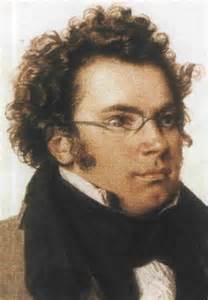
Franz Schubert’s Ave Maria is one of the most recognized songs of the classics period, adapted for films like Disney’s Fantasia and recorded by most every major opera singer through the years. It has become the signature piece for the great Andrea Bocelli, performed with his contemporaries and grand orchestras around the globe. I prefer this simple, haunting version sung by Maria Callas.

schubertDuring his life Schubert was dismissed as a minor league composer, second-tier to the true giants: Bach and Beethoven. His bid to join the Vienna Society of Music was rejected and all of his 20 stage pieces were failures. Most of his career was spent as a nomadic bohemian, supported and lodged by a small circle of friends and fans. Yet in his short 31 years he produced over 1,500 works including 7 symphonies, 600 vocal pieces, and many sonatas and operas.

Schubert could have enjoyed a secure, comfortable life giving piano lessons at his father’s music school. He tried this for one year, at his father’s request, but was too bored and uninspired to continue. Thank god. Beethoven, on his deathbed, was said to have praised Schubert’s music as inspired by divine genius. Brahms, Mendelsohn, Litz, Schumman, Dvorik, and other greats to follow pointed to his work as principal inspiration, and they in turn inspired the next generation of romantics.

Are we thankful for Schubert’s sacrifice, the selfless and selfish dedication to his gift despite the poverty, disrespect, and disappointment to his family? Is our world a richer place with Ave Maria in it (not to mention his other works and those of his disciples)?

I’ve written before about singular promise, most directly in my essay Y U r U (click here to read). We each have a unique gift, at least one thing that we can do better than anyone else on this planet. This one thing is defined by the natural strengths and personality styles gifted from our DNA, plus the unique sets of education, training and life experiences we’ve enjoyed, plus the one-of-its-kind rolodex of friends and contacts we’ve made through the years. If this one thing aligns tightly with our passions then the Schubert inside finds its release and all the world gets a lift, more color, deeper experience.

invest-in-youIs it an option or an obligation to share our gifts, to commit to them? Should Schubert have been permitted to take the predictable path and relax in the stupor of his father’s piano school, his promise evaporated into the ether of countless other “what could have been” possibilities?

In a powerful scene in the film Birdman, Riggan Thomson’s daughter Sam talks about the human life span and our very short and insignificant moment on this planet (83 years on average, perhaps 100 if we are lucky) in the much longer 6 million years that humans have walked the earth. Her takeaway is the futility of ego, of the effort to divine a purpose and attempt to do something impactful. What’s the point Dad, just get over yourself (paraphrasing).

My take on her poignant dialog is the opposite. Yes, we are here for a very short time, a blink of the eye, so forget about failure or making fools of ourselves. If we fail at our grand ambitions, and the chances are in that favor, we’ll be forgotten in a generation (same as if we attempt nothing extraordinary), but if we succeed we may leave our marks on history like Schubert. Do you want to be an ant in an ant farm, undistinguished from the colony, doing your dutiful job, living in relative security and anonymity until that fateful squash under the foot of life? Or do you want to strike out, defy convention, let your flag fly and make a difference? Comments please.

Bill Magill
Aix-en-Provence

Suggested Song: Brand New Day, Ryan Star
Suggested Drink: Samuel Adams Ambition Pale Ale

A few questions for my mid-life readers.

Q1: Approaching the end of your core career and anticipating retirement years filled with golf, travel, grandkids, and wine collecting? That’s tragic!

gearsQ2: Building a unique base of talents, knowledge, experience, and contacts over decades of studies, work, moves, parenting and life lessons, and letting that skill-set decay in pursuit of the good life? That’s tragic!


Q3: Committing that sizeable retirement stipend to a beautiful home remodel, new furnishings, flashy toys in the driveway, and other impress-the-neighbors stuff? That’s tragic!

Q4: Over 50 and still living someone else’s vision of your life? Unwilling to disappointment a parent, partner, boss, friend, or child? Now that is really tragic!

Our greatest potential starts at midlife. By then we have made our share of mistakes; been scarred and tempered by life’s nasty lessons; been educated, coached, and drilled; have a clearer sense of our natural strengths, weaknesses, and motivations; and are driven less by income, more by passion. We may also have more disposable time and income as the core careers wind down and the kids move out. All of this offers tremendous possibilities.

Yet this is the moment when many of us decide to downshift, to redirect our time and savings toward the good life, and let our toolkit slowly rust. The truth is, sadly, that a lot of folks are happy to let entropy do its dirty deed on their brains and bodies while parking their derrieres on the proverbial bar stool of retirement. For the rest of us there is hope in the engaged life. It is one of our own choosing and can generate tremendous meaning and sense of purpose during the most productive years of our lives.

1 personQ1: Approaching the end of you core career and anticipating a new mission; an exciting challenge steeped deeply in your grandest ambitions? That’s mythic!

Q2: Using your singularly unique base of talents, knowledge, experience, and contacts compiled over decades of studies, work, moves, parenting and life lessons toward this mission that defines your powerful sense of purpose? Pursuing the engaged life. That’s mythic!

Q3: Committing the lion’s share of that sizeable retirement stipend toward the planning and implementation of your greatest ambition? Classes and training, tools and gadgets, educational travel, new contacts for new horizons; the things that strengthen your abilities, expand your awareness, and build your legend, …not fill your garage. A pursuit centered on creative production, not competitive consumption. That’s mythic!

Q4: Over 50 and living where you want, with whom you want, and doing what you want? Writing your own life story and pursuing a Grand Ambition that brings the greatest sense of anticipation for every new day. Now that is truly mythic!

 What’s your Grand Ambition? What are you waiting for?

Bill Magill
Aix-en-Provence


Suggested Song: The Lemon Song, Led Zeppelin
Suggested Drink: a rejuvenating lemonade; water, fresh squeezed lemon juice, simple syrup

Lemons are an amazing fruit: affordable, healthy, and hopefully core to your daily diet. They pack a power punch of nutrition, provide a recuperative flush after a night of indulgence, and add another dimension to your kitchen confidence in a many, many ways. The sex and wrinkles claim you ask? Yes, that was shameful.

fresh lemonsI’ve read a number of interesting articles on the merits of lemons over the holidays and during one of the many December dinner parties here in Provence this question was raised: the orange or the lemon, where do your loyalties lie? For me it’s the mighty lemon, that palm-sized grenade of pure zing and zest. They are available fresh throughout the year, so good for you, never break the bank, and simple to work with.

And now to those merits …

To firm you up:

  • Rich in vitamin C, a typical lemon provides 35-40% of the recommended daily allowance. And the peel of the lemon provides almost twice this amount! Vitamin C is a powerful antioxidant and aids the body’s immune system; lemons are invaluable during cold and flu season. And that magic powerpeel is proven to be effective with brain disorders like Parkinson’s disease.
  • Lemons are also rich in calcium and potassium (even more so than grapes or apples), and therefore excellent natural boosters for heart and bone health.
  • Despite being acidic to taste, lemons actually work as an important alkaline in the body, which helps restore our pH balance. Why does that matter? These imbalances tend to bias toward acidic and that can lead to serious problems such as cardiovascular disease, complications from diabetes, and bone fragility.
  • 22 anti-cancer compounds have been identified in lemons.

limoncelloTo clean you out:

  • A glass of lemonade in the morning is an effective detoxifier for the liver, essentially liquefying the bile (sounds lovely). That second shot of limoncello at midnight goes down a bit smoother knowing you’ll be getting an organ flush in the morning!
  • Your morning glass also helps to keep the daily constitution regular in the bowels department. Fewer backups means cleaner plumbing and better health.
  • The citric acid in lemon juice helps to dissolve gallstones, calcium deposits, and kidney stones and is even known to destroy intestinal worms, should you be so unfortunate!
  • And 1 anecdote from my childhood: I remember getting bicarbonate of soda mixed with water and lemon juice from my mother as a kid when feeling nauseous. Worked like a charm!

To zest up your meals:

As a general rule when cooking, us the juice of lemons in recipes that don’t require it to heat for extended periods, as the juice’s flavor and nutritional compounds are suspended in water and evaporate away quickly. The peel, on the other hand, traps these elements in its oil glands and is much better suited for long simmering or baking.

  • Protect poached fish by placing lemons slices underneath during the poaching process.
  • Prevent sticky pasta by adding 2 teaspoons of juice to 4 quarts of boiling water.
  • Dress mild greens with lemon juice (is less overpowering than vinegar).
  • Perk up soups and salads by adding a taste of juice just before serving.
  • Enhance side dishes like rice and vegetables with juice or zest before serving.
  • Keep pesto green by adding 2 teaspoons of lemon juice to each cup of packed basil leaves.
  • Brighten basting oil by adding 1 teaspoon of grated zest, 1 tablespoon of juice, and 1 teaspoon of minced herbs to ½ cup olive oil.
  • Brighten brown butter sauce by adding 1 tablespoon of juice for every 4 tablespoons of butter.
  • Substitute for wine in pan sauces by adding 1 teaspoon of juice and chicken broth for equal parts wine.
  • Grill lemon halves and squeeze over finished poultry or fish.

These meal tips were summarized from a January/February 2015 article in Cooks Illustrated magazine, my favorite resource for all things kitchen and cooking.

You don’t need to live in Provence to enjoy fabulous lemons and they will keep in your refrigerator’s vegetable bin for a month. For the hard-charging interpreneur lemons are an indispensable resource for balance and fitness. Stock up now and share with us all how you put them to work.

Bill Magill
Aix-en-Provence

Suggested Song: New Year’s Day, U2
Suggested Drink: Veuve Clicquot champagne (to ring out the old, in the new!)

At the Interprize® Group we are thrilled with big changes for 2015, including the launch of a new website (click here to see) and set of accelerator workshops (dates to be announced soon). Come see what the buzz is all about!

I am finishing 2014 on an emotional high after leading another Interprize Workshop here in Aix, my third at the local IAE Graduate School of Management. The scope of interprize projects that students brought for development was inspiring, as I’ve come to expect from this school, and participation in the program continues to grow. We had wine bars and cafes and even a food-truck plan, nonprofits focused on baseball and football (soccer) sports camps for kids, schools for the underserved in Africa and Asia, career ambitions in acting, fashion and graphic design, various mobile apps, a variety of clean energy solutions, and too many other fascinating ideas to list.

The Interprize Workshop, IAE 2014


Over the 3-day workshop each of the aspiring interpreneurs considered their interlectual property and natural strengths, styles and passions, framed their interprize ambitions in terms of value and offering and market and customer, defined their personal stage of launch, worked through an execution plan of key milestones until their interprize was fully implemented, and announced steps they could take in the following day, month and year to move forward.

workshop2No entrepreneurial activity remains viable long-term without respect for balance and interpreneurial pursuits are no exception. Interspersed with our sessions on project planning were happy hours, with a focus on the power of positive emotions and practices to stimulate them. I think the chocolates test for vision expansion was a favorite (who knew those cherry-filled candies were spiked with liqueur!). We also built a paper chain of our change bracelets and burned them in the campus courtyard at noon, picture at right. On Friday afternoon my Interprize Group partner Jaki Weller led the class through 2 hours of yoga, meditation, and an insightful nutrition primer. All very unconventional for an IAE business seminar and thought provoking for the participants.

2015 will bring a few changes for my faithful readers to note. As mentioned above we’re launching an Interprize Group website (click here to view) full of resources on interpreneurship, life balance, and the pursuit of one’s grand ambitions, and I encourage you all to join … and please bring friends! With today’s internet inundation of spammers and bots I have to ask you to register, … my apologies. The Group is being launched with my partners Jaki Weller and Mary Carey and we’ll be listing workshop events for 2015 soon plus AMAZING daily references to the latest thinking on all things interpreneurial.

This Postcards blog will remain live and my outlet for monthly essays and new music releases. New music releases you ask? Yes, a collection of tunes is in development for the new year. She’s My Babe was the first of what I plan to be a dozen new recordings. It’s been an interesting 2014 full of rich and deliciously provocative inspiration and that would be a shame to waste!

I wish you all the very best with your year-end plans and a 2015 full of good health, grand ambitions, and deep reward.

Bill Magill
Aix-en-Provence

Suggested Song: Penny Lane, The Beatles
Suggested Drink: Early Grey, or any proper British tea

LM2Just a short note. Readers of this blog know that I am fascinated with the mysteries of creativity and passionate about rock & roll. I’ve written on both topics – The Creative FlameBreak on ThroughOf Twerks, Kinks, and the Death of Pop Music – and believe that the musical partnership of Lennon and McCartney offered us the very finest examples of both. Because of that I thoroughly enjoyed reading this recent article (click here to read) in The Atlantic by Joshua Wolf Shenk, who contends that their creative collaboration remained vibrant throughout the history of the band in ways both obvious and less evident.

Enjoy!

http://www.theatlantic.com/features/archive/2014/06/the-power-of-two/372289/

Bill Magill
Aix-en-Provence

Suggested Song: San Francisco Days, Chris Isaak
Suggested Drink: Mai Tai; dark rum, lime juice, Orange Curacao, syrup, French Orgeat (the original recipe first mixed by Victor Bergeron at Trader Vics, 1944)

san_franciscoI am in San Francisco for a dozen days, the first time in almost 2 years back to the city I called home for much of my adult life. Anyone intrigued with San Francisco knows that rapid changes are afoot, fueled by the latest gold rush in digital media startups; those brash parvenus like Google and Facebook, Twitter and Tumbler, Instagram and Pinterest, and on and on.

The nouveau rich and ambitious hope-to-bes are spreading across the city’s 49 square miles like kudzu, reclaiming pockets of urban wildlife and subduing the savages, their trailing circus of urban chic boutiques – the juice bars and gelato shops, yoga centers and organic groceries – driving prices up and diversity out, and replacing the riff raff of liquor stores, dive bars, and second hand bookstores in some neighbourhoods with more socially inspiring alternatives.

It’s not all good and it’s not all bad, but it is creating tension amongst the masses and keeping the city abuzz. Never a dull moment in Bagdad by the Bay (a loving reference to the City by the late great columnist Herb Caen).

As part of my trip I thought a series of mini dispatches on observations might keep me busy and out of trouble. Onward.

Dispatch #1 – I Only Have Eyes for You

Is there a more beautiful American city than San Francisco? Are there more beautiful Americans than the San Francisco variety? It is a city made for 360° viewing – the homes, the hills, the uber-fit in their Lululemons – and every venture out is visual banquet.

texting 2Why then does the 4 inch cell phone screen command the attention of everyone all the time and everywhere? To walk through historic Russian Hill is to see a stream of pedestrians on autopilot, eyes down and tapping out text, wholly clueless to the beauty around and obstacles ahead. Couples and friends sit at the trendy wine bars along Polk Street avoiding actual conversation – that audible thing we do with our tongue and lips – at all expense; sorry, but too busy snap-chatting to be distracted with real chatting.

Last night I was enjoying a glass or 3 of delicious zinfandel at Amélie, a comfortable and friendly wine bar in the neighborhood. A young woman at the bar expresses interest in a certain menu offering and asks the sommelier to see the bottle, takes a photo of the label with her cell phone, reads an online review, and then orders a glass. I’m stunned. It would have been a bit easier and vastly more interesting for her to ask the young handsome sommelier for advice or even a taste, no?

On Wednesday evening my Paris flight arrived just in time to catch the first pitch of World Series Game 7 with my twins. Excellent timing! We settled into a table at the Bell Tower, a bar/restaurant on Jackson Street, for what became a tense, exhilarating game, and everyone was on their feet for the final 3 outs. Pure delirium and fans-amongst-fans camaraderie; in San Francisco to watch the Giants about to win it all! I was dumfounded to see many in the crowd pulling out cell phones to record the game’s end. Let me get this straight: we are watching the game on a TV screen, which is already 1 digital step removed from the live experience. Now you are going to watch the game’s dramatic conclusion through your shaky 4 inch cell phone screen, which is recording a TV screen, putting you 2 degrees from live play, and this is enhancing the experience? Can someone please explain?

November 1, 2014

Dispatch #2 – How May I Help You?

One thing of which I never tire is American-style customer service. I love so many things about France, but great service – particularly for out-of-town visitors – is largely absent from there or anywhere in Europe. I can confirm that it remains alive and thriving in San Francisco.

When you’ve been living overseas for an extended period it feels almost unnatural for a waiter, bartender, or store clerk to be so familiar and accommodating. It comes as a shock – a truly positive one – when back at first and being asked about your meal, seat, wait, or whatever. A few examples from these first few days:

The waitress at the Bell Tower, our new nightly spot for drinks and one of the few in the in the neighbourhood where the twins and I can relax together – me with a beer, them with sodas – has memorised our usuals after just 3 visits and greets us with a “howdy, how are you all?” when entering. If we linger at a prize window table meant for diners, never a problem. If I order another round and we linger even longer, never a problem. And now we’re getting the “see you tomorrow?” on the way out. I’m trying to imagine that in France.

Restorante Milano, San Francisco

The Restorante Milano is one of the best Italian restaurants in a city full of great Italian restaurants. It’s a warm, intimate neighborhood spot in Russian Hill that fills quickly, lines at the door. I made reservations for 5 people on a busy Saturday night, then showed up with 7. Not a problem at all Mr. Magill, we can manage that. Let’s just move a few things around. Really? I’m trying to imagine that in France.

I was meandering through the aisles of an expansive Walgreens today in search of milk and Q-tips, looking every bit like the lost tourist. I was asked twice by the staff if I was finding everything okay, if any help was needed.

Now, I really cannot imagine that in France.

November 3, 2014

Dispatch #3 – For a Few Dollars More

I love San Francisco’s diversity of options and prices when it comes to eating, drinking, and having fun. Twenty years ago Alexandra (girlfriend, wife, ex-wife, still great friend) and I used to love Bob’s on Mission Street and 20th (or there-about). A half chicken roasted, sides, and a drink was priced under $4, which was an amazing deal.

When did San Francisco get so expensive? The recent inflation in rents and home prices in this high-demand city has been no secret, but the general increase in most everything I’m buying on this trip – the daily staples in particular – catches me off guard. A few cases in point:

  • Tacos and an horchata from El Tonayense taco truck in San Francisco.
    Tacos and an horchata from El Tonayense taco truck in San Francisco.

    Two burritos and horchatas last weekend at Nick’s Crispy Tacos: over $26. Ouch. Burritos used to be a real deal in this town and ran $5-$7 each at our old haunt on Ocean Avenue, depending on toppings. For a glass of horchata you would have tacked on another $1.50.

  • Two croissants, 1 pain chocolate, 1 coffee, at La Boulange: over $9.00. I love this chain actually, but that’s pricey sustenance for a morning stroll around the neighborhood. No boulangerie in France will charge over 1 euro ($1.25) for croissants or pain chocolate, and 1.60 euros (about $1.90) gets you a small coffee. I admit that Paris can be the exception. The last time the French got upset about bread prices heads began to roll, literally. Maybe San Francisco needs a revolution??
  • A decent bottle of California red wine at the Jug Shop: over $20, much of it well over. Yes, a few things cost $10-$15, but those few things are not very interesting. That’s hard on the wallet, especially for nightly tipplers like me. And yes, wine IS a staple of a well-balanced daily diet!
  • MUNI fares for the city buses and underground: $2.25. Less than 10 years ago it was $1.25. Not a huge deal per trip you might say, but when using the system daily, round-trip for school or work, that starts to add up.

I expect to pay up for exceptional quality but where does one go any more in this fabulous city for a great bargain? Gourmet options are great, but sometimes we just want an honest meal. In France I’ve always bragged about San Francisco’s choice of prices and value to friends, insisting that amazing food was available for all budgets. Is that still true? This is one time that I truly hope to be proven wrong!

November 6, 2014

Dispatch #4 – Au Revoir et à Bientôt

I rarely seek out Asian restaurants in France. Twenty-five years of San Francisco dining has spoiled me in that food group; the quality bar is simply too high. France is truly a foodie’s dream – the daily open-air markets, the incredible tarts and breads and cheeses and wine, the exceptional small bistros tucked here and there – but it tends to disappoint in the ways of the wok or steamed dumplings.

Dim-Sum1Yesterday we decided to load up before I shipped out and chose dim sum for lunch, sushi for dinner. Ton Kiang is an excellent San Francisco destination for dim sum, the tapas of Hong Kong. Located in the fogbelt of the Outer Richmond district, the line at Ton Kiang starts by late morning. The variety of small plate bites that pass in a steady stream by your table is astounding: shrimp and spinach dumplings, salt and pepper shrimp (I swear they were still wiggling!), deep fried crab claws, bbq pork buns, pork stuffed mushroom caps, vegetarian egg rolls, and on and on and on. With the lengthy menu of options there is something for everyone, so great family dining. We finished with our customary mango pudding covered in cream. Amazing.

If a vote was held on which food best represented San Francisco I would cast my ballot for dim sum. It is a city full of immense variety, beautifully staged, best appreciated in small bites consumed slowly, plate by plate, neighborhood by neighborhood. It is a city of distinct villages – Chinatown, North Beach, the Castro, Bernal Heights, Russian Hill, the Marina – some draped over rolling hills, others tucked into cozy valleys, and all distinguished by their own tribes and micro climates (and debating their claims to the city’s best weather).

SONY DSCIt is a city of extremes. The privileged old money on pristine Nob Hill perched high above and just blocks away from the destitute in the grimy Tenderloin. The eskimos of the foggy Outer Sunset cover in fleece while the sun worshipers in Dolores Park tan au natural. It has always been a city of old and young, rich and poor, immigrant and local, the prowler and the prey, a colorful mosaic of ethnic, sexual and spiritual diversity.

It is here that I worry. Every city needs an influx of new money and fresh ideas, but not at the expense of its character and magic. San Francisco has a good problem right now: a lot of newly affluent young people are arriving, expanding the tax base but pushing up prices for most everything; hence putting the squeeze on many of the less prosperous residents and businesses. (A bad problem, on the other hand, is capital flight; just ask cities like Detroit or Harrisburg). How this plays out is will be fascinating to follow. I’ll be back to this town I love more regularly for the next few years and writing postcards of my impressions, as always. Stay tuned and until then,

Au revoir et à bientôt San Francisco

Bill Magill
November 10, 2014