Suggested Song: What do You Want From Life, The Tubes
Suggested Drink: a light and fruity sangria

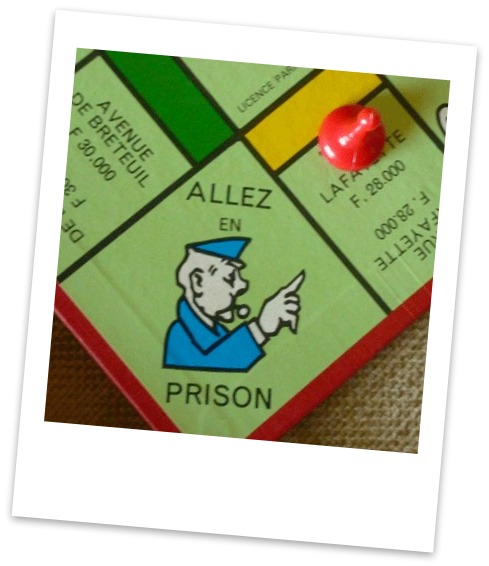
It has been a fun but long few weeks of business travel and tumbles into personal time sinks. A more gifted writer would have managed to keep the pen active, late nights or early mornings. I’ll blame the past month’s inactivity on my twins, who arrived in May and have been soaking up all spare minutes, blissfully. We’ve been dogged in our search for the best café in town serving one round of drinks – defined as a peach syrup (Stella), Coke (Shane), and tap beer (me) – for less than 6 euros. Happy hour at the Café du Palais, conveniently located just a block from our flat, has not yet been bested. There have also been more than a few laps around the Monopoly board since May. We love this French version with Paris properties like Avenue des Champs-Elysees and Boulevard Saint Michel. Fun times.

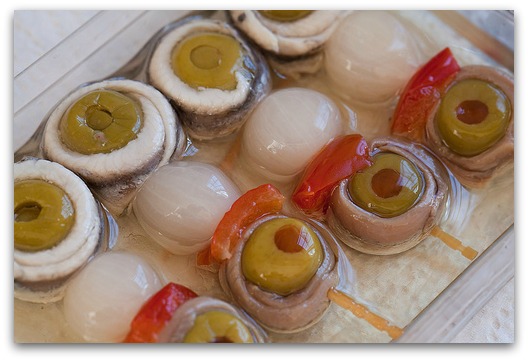
It is summer in Provence and this or that friend has been finding his or her way to Aix for a sun-kissed week or two.  After a full day of local exploring under cloudless skies and the summer heat, returning to my place for cool aperos and a late lingering dinner is the usual plan. And lingering we do. Case in point, this past Thursday we started with appetizers of green olives wrapped in anchovies and marinated in olive oil (spotted at the morning marché, I couldn’t resist) and melon wedges wrapped in prosciutto. Local Cavaillon melons, considered by many to be the best in France, are peaking now, and the fruit stands are abuzz with honeybees, drawn by their sweet perfume. For drinks we had the choice of pastis over ice, a Provence rosé, or a fizzy artisanal lemonade that my kids discovered and love. The apartment has no air-conditioning, so to avoid the kitchen oven I decided on an impromptu salade niçoise for the main course, with a mesclun mix, ripe heirloom tomato wedges, green beans and small potatoes, hard-boiled eggs, onion and pepper slices (both red), local black olives, and seared tuna strips. All were marinated in a vinaigrette of olive oil, white wine vinegar, crushed garlic, mustard and lemon. My neighborhood sommelier Yves of Cave d’Yves had suggested a white wine from Cassis, a small village on the Mediterranean coast, which was the perfect accompaniment. No French dinner is complete without a cheese plate, and we went with wedges of Pyrenees, Tomme de Savoie, and a blue (but not Roquefort, and I wish I had written the name) that was both creamy and intense. But the evening highlight was prepared by my daughter Stella, who filled high-ball glasses with cut ripe strawberries and apricots, bathed them in orange juice and topped the cocktail with whipped cream. Sweet dreams.

My June was a month of events around the theme of entrepreneurship. We had a Global Entrepreneurship Forum at INSEAD where I teach, some colleagues and I met with an EC commissioner in Brussels to discuss entrepreneurship’s role in economic growth, and I spent a week participating in BizBarcelona, an innovation forum that brought together aspiring entrepreneurs and early-stage investors from around the globe. BizBarcelona is a fun annual event that offers more than the usual format of speakers and panel discussions (it has those too).  With a focus on “speed dating” and investor/investee networking, the forum gives me the chance every June to meet dozens of interesting people developing brilliantly creative ideas. And it’s in Barcelona; Gaudi and sangria and in this author’s opinion the yummiest small-plates gastronomy on the planet.

The innovations being promoted at this year’s forum ranged from novel energy storage devices and printable batteries to next-gen women’s shoes (taking the pain out of fashion) and intelligent contact lenses for glaucoma sufferers. A favorite of mine was smart-phone games for children with autism and other developmental challenges. The passion that drives these entrepreneurs to invest long hours and days and months and every family centime to realize their ambitions is in a word inspiring. Was the next Edison, Gates or Zuckerberg at the show this year? Impossible to say, but some of the attending hopefuls will certainly flourish and develop their ideas into impressive start-ups. Also as certainly many will fail.

Readers of this blog know my fixation in the ideals of personal fulfillment, self-realization and self-determination as one passes through the membrane of mid-life. These same ideals induce entrepreneurs to work impossibly long hours for little pay and great risk to the family treasury for the uncertain (many would say unlikely) possibility of creating a successful company. In fact, most start-up companies fail. Still, the possibility of building something truly great and under one’s own design and direction motivates entrepreneurs to disregard the odds and press hard ahead.

Inspiring is the word I chose earlier. Indeed they are, and can inspire us to pursue these ideals of fulfillment and achievement in our post-50 years, similarly excited by the possibilities but exposed to the uncertain outcome of our pursuits. Business entrepreneurs measure success mainly by the market demand for their ideas. With social entrepreneurship, a more recent phenomenon, success is measured as equally by the ability to make a sustainable impact on the customers’ qualities of life, most often in the developing world. In both categories the efforts direct outward, at the end users of these products and services.

We spiritual entrepreneurs face inward, focused on the creation and development of our individual talents and abilities. As with our distant cousins above, we are energized by the possibility to conceive something deeply meaningful and under our own design, but the platform for realization is personal development, not product development. The spiritual entrepreneur’s energies target positive engagement with life, not markets (although the 2 are not mutually exclusive). Perhaps most critically, we share an allergy to the mundane, the routine, and the rust that settles in when we coast and the gears stop spinning.

To be clear, the “spirit” in spiritual entrepreneurship must be self-defined and not affiliated with religion in general or for that matter any specific belief system, other than a deep commitment to and belief in one self.

I am intrigued by this concept of spiritual entrepreneurship and will write more on it in the coming months. I would be interested to know how you define the term, what traits are common across the cohort, …and if you are joining us for the anchovies and olives.

Bill Magill
Aix-en-Provence

Postscript: I first heard the term “spiritual entrepreneur” coined by Dipak Jain, the new dean at INSEAD, during his keynote speech at a forum on entrepreneurship this summer. Dipak is a more elegant speaker than I am writer and I wasn’t taking notes, but his point was essentially this: if the past 50 years were marked by the rise of the business entrepreneur – Bill Gates v1 – and the past 10 by the emergence of social impact entrepreneurship – Bill Gates v2 (with wife Melinda) – then the first ripple of a wave of spiritual entrepreneurship – a focus on individual development to attain more meaningful personal fulfillment, and through this a deeper engagement with the world around us – is appearing now. Amen.

Song suggestion: Grasp and Still Connect, Paul Weller
Drink suggestion: Melopepo (melon and almond infusion for cordials), Liquoristerie de Provence

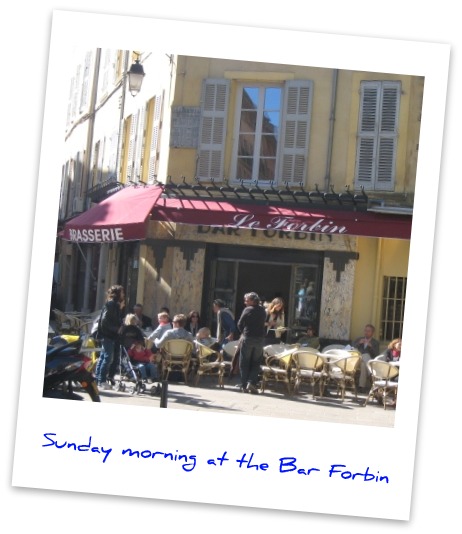
The Bar Forbin reopened this week at the corner of rue Italie and Cours Mirabeau. A lovely renovation has transformed this once faded beauty into favored destination for late afternoon drinks in Aix-en-Provence for my son Jess and me. To see the cafe bar restored, after having sat derelict, graffitied and trash strewn for the past 3 years, was immensely gratifying. It also left me with a tinge of disappointment.

I had taken coffees regularly at the Bar Forbin years ago when it was a dump. I put up with the shady regulars (who probably felt the same way about me), tobacco stained walls and tattered furniture because the drinks were cheap and I liked the feel of the place. “I should buy this cafe and fix it up,” I murmured many times over chipped cups of espresso, with its great location and fine architectural lines.  I mentioned it often to friends when back in the States over late-night beers and discussions about the bosses we endured, the dream careers we imagined, and the desire (no, absolute NEED) to open a bar. “I know the perfect place! It’s squared by two of the busiest streets in Aix, has a great open layout, and is probably available on the cheap.”

Well, someone with more cahones than me saw the same potential and acted on it. The Forbin has been outfitted with a new bar, beautifully retiled floor, freshly painted walls, modern recessed lights, refurbished sliding iron and glass doors, burgundy awnings, and all new outdoor furniture for the deck chairs and tables. Gorgeous, dammit!

I’m a rich talker and a poor doer. My only solace is the company I keep; many of us suffer from the daydreamers’ affliction. I have written in earlier blogs – #5 (The Upside of Hard Times) in particular – about finding one’s Mission and designing a Passion Plan to achieve it. This technique helps me resolve (perhaps a better phrase is “avoid again”) the frustration I feel over too many missed opportunities.

Perhaps my luck with the bar would have turned out better had I sketched out a plan and connected more quickly with the right people in Aix (rather than fantasizing with friends in San Francisco). The greater the things we try to achieve, the more challenging it is to achieve them alone. Tapping into the knowledge, experience and connections of our contacts (and their contacts, and their contacts-of-contacts) expands what is possible and turbocharges the pace at which we move forward.

Meetings, both professional and personal, in the past week have reminded me of the value of networking. On Friday I had 2 appointments in Marseille, the first to introduce myself to a new possible client, the second to follow up on a consulting proposal. The introduction probably won’t turn into a client and the proposal is stalled (what’s new?), but in both cases I came away with unexpected and invaluable connections for my INSEAD classes, where I rely heavily on industry professionals for classroom speaking, student mentoring, and business plan judging. It is so common to go into a meeting seeking “A” and coming out with “B + C.”

Just as unexpected were the outcomes of personal gatherings recently. A fellow student in my weekly French class turns out to be a top selling author and serial entrepreneur; another great speaker for my classes. On the flip side, my friend and a budding entrepreneur Kate turns out to be a certified life coach, with a rolodex of great contacts for me in the coaching world around Europe. This I learn over lunch last Tuesday to discuss her latest start-up idea, neither of us aware of the common interest in positive psychology. Evidence again that the value of our networks is manifested most often in ways we don’t expect or remotely anticipate. We benefit not only from a larger network, but one that cuts across a multiverse of personal interests and professional pursuits.

Too often we stagnate with age, particularly at midlife as we approach the end of Phase 1, our core careers. Why continue to put ourselves into new and often uncomfortable situations, thrown in with strange people, if our small circle of friends will suffice for relaxing afternoons on the links? Well, if afternoons on the links are all you seek, then bore yourself, in both senses of the word, into your tiny 18th hole on earth and atrophy away. If you want Phase 2, your encore career, to reflect more than a lower handicap, then reinvention and the expansion of your social and professional webs into new dimensions is crucial.

A final thought. The word “network” has always sounded impersonal and detached to me, as if its members, the “contacts,” existed solely for harvesting and exploitation.  While I preach the value of working one’s network to death to my students, I’ve always struggled to separate business contacts from friends, and it’s hard to say how this has impacted my career over the many years. I seek out pleasant people and don’t pursue connections with difficult Type As, even when the value in doing so is unquestionable. If you want to work me to your own profitable ends, by all means call. But I’ll likely be as curious about your family and hobbies as your business, and we may indeed end up with cocktails if it’s late afternoon. The Bar Forbin perhaps?

Bill Magill
Aix-en-Provence

Song Suggestion: Happy, Rolling Stones
Drink Suggestion: Rimauresco Rosé 2010, Cotes de Provence

I am publishing a late, short blog this week. A last-minute request by INSEAD has me scrambling to prepare a course for mid-May. My apologies for this blogus interruptus.

Martin E.P. Seligman is the uncontested high priest of the Happiness movement since publishing his seminal work on the science of well-being – Authentic Happiness – in 2002. For Seligman acolytes, which include most leading psychologists, educators, counselors and coaches of positive psychology worldwide (and an equal number of lagging nobodies, such as your blogger), the anticipation preceding Seligman’s new book – Flourish – compares to the fervor around a new Beatles album or J.K. Rowling’s next Harry Potter installment.

Flourish starts with a startling admission: he hates happiness. Well, that is not true exactly (but it’s a gripping leader to keep you reading). He hates the word “happiness”, and that pleases me immensely. I too have struggled with the happiness concept in the context of my search for greater fulfillment and well-being. I can be perfectly happy relaxing on the terrace at Les Deux Garçons, drinking rosé, chatting with friends and watching tourists snap photos along Cours Mirabeau all afternoon long. Is this improving my well-being, giving life more meaning? Offer my kids an Xbox and a dark television room and you’ll not hear a peep (ah, tranquility at last!). Are they happy? Absolutely. Being well? Our opinions would differ on that answer.

That he would start Flourish by dissing his earlier masterpiece, considered by many a bible of the movement, reflects much about what separates Seligman from self-help gurus. Notice that I didn’t say other self-help gurus, because his not a member of that clutch. Seligman doesn’t tap into mystical forces, promise spiritual enlightenment, or proscribe an expedient list of x steps (where 3 < x < 12, depending on your guru du jour) to radically fix your shortcomings.

Seligman is serious academic who founded and runs the Positive Psychology Center at the University of Pennsylvania and has been a professor of the discipline for the past 40 plus  years. He is a former president of the American Psychological Association and in Haggblooms’ “The 100 Most Eminent Psychologists of the 20th Century” from the Review of General Psychology, Seligman is listed at number 31. In Silicon Valley parlance, he is a BSD in his field (Big Swinging Dick, sorry).

His proposals around a life lived more fully are based on years of rigorous, peer reviewed research and statistically-significant findings and analysis. His website (see my blog links) is an extensive resource center for teachers, coaches, students, and the merely curious about positive psychology, containing the latest publications and a battery of self-tests, as well as findings, conferences and links. A word of caution: before entering this site block out the next 4 hours of your day. If you too are fascinated by the science of positive psychology, entering Seligman’s site is a slide down the rabbit hole.

Whereas Seligman’s intention with Authentic Happiness was to increase the reader’s life satisfaction, the goal of Flourish is to provide greater insight into factors affecting positive emotion, engagement, meaning, positive relationships, and accomplishment, or what he calls PERMA. His recounting of experiences with children and adults, enthusiasts and depressives, as well as soldiers returning from the front lines of Iraq and Afghanistan reflects the effectiveness of his toolkit (at loss for a better word) in real-world situations. The book’s greatest gift, however, is the set of practical exercises and practices scattered throughout that are intended to bring more PERMA into the reader’s life. A sample few of these include:

  • The uplift from writing gratitude notes
  • Keeping a 3-things-that-went-well-today journal
  • Taking the VIA signature strengths test and understanding the results
  • The art of active and constructive responding
  • The GRIT test and what is reveals

If you feel a resonance with the concepts of PERMA and a student of best practices in the field of positive psychology, Flourish is necessary reading and deserves a spot on your Kindle list. In lieu of a more thorough and deserved review (I simply don’t have the time this week) I provide a list of the book’s chapters for a better sense of its content:

  1. What is Well-Being?
  2. Creating Your Happiness: Positive Psychology Exercises that Work
  3. The Dirty Little Secret of Drugs and Therapy
  4. Teaching Well-Being: The Magic of MAPP
  5. Positive Education: Teaching Well-Being to Young People
  6. GRIT, Character, and Achievement: A New Theory of Intelligence
  7. Army Strong: Comprehensive Soldier Fitness
  8. Turning Trauma into Growth
  9. Positive Physical Health: The Biology of Optimism
  10. The Politics and Economics of Well-Being

I welcome any and all comments on Flourish or any other pieces you are reading in this topical area. More to that point, my initial intention with Postcards was to serve more as a resource center on midlife fulfillment and continued engagement, less as a platform for ramblings by Bill Magill. I simply love writing and so this it has become. If you are interested in posting your own essays and experiences to Postcards, please let me know.

Bill Magill
Aix-en-Provence
Postscript: My good friend, confidant and former boss Peter Hankin passed away in late April. We had never discussed Martin Seligman, the concepts underlying PERMA, or my more recent exploration into this area, but over our occasional lunches through the many years Peter and I often shared thoughts on what really matters in life. He was like that, always asking first about the family and inquiring as to my personal journey, before moving on to some business issue of mutual exploitation; the rational for one of us expensing the meal. There are far too few people in the world like Peter, and now there is one less. A damn shame.

Music Suggestion: Tradition, Fiddler on the Roof
Drink Suggestion: 2009 Côte du Py, Morgon

One of the many things I love about France is the cultural significance of a properly hosted dinner party. There is a protocol to the evening, a proper order to the many servings, both food and drink, and it makes for a thoroughly enjoyable, wine soaked memory. I have a dinner party to plan for this weekend, and the pressure is on. Our invited friends will expect a certain adherence to the dîner rituel français, and while I have enjoyed many an incredible French meal, hosting one is another story. A collective prayer, please.

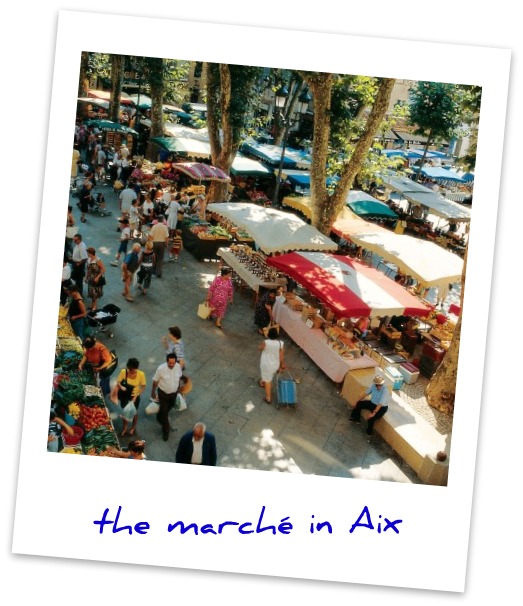
I was at the market this morning to generate ideas about the Saturday menu and to pick up a few things for today’s lunch and dinner. Aix-en-Provence has a number of daily open air markets, but the largest is behind my flat at the Place des Prêcheurs plaza. Shopping at the local farmers’ market has nothing in common with the typical American grocery run. A local market visit cannot be rushed, nothing is prepackaged into “convenient serving sizes,” the produce reflects the season, and patience is required. I have my “favorites list” with regards to certain vendors, but still prefer to start with a slow tour of the stalls to see what looks good. Provence is famous for its fruits and berries, and this being April local strawberries have begun to appear. I did some berry sampling this morning on my inspection lap (okay, Costco does sampling too: Chef Boyardee, tiny hotdogs wrapped in pastry, …) to see if they were worth buying at this early point in the season. Frankly, tasting wasn’t required; the perfume of the ripe red berries was intoxicating. Resistance was futile.

Céline has the best salads, the bent old man with the LA Dodgers cap (has no idea who they are, I asked) offers the most savory tomatoes, I prefer my chèvre frais from a local goat farmer with the small card table, bread only from Farinomanfou (a couple from Quebec, completely fou [crazy] about their selections of flour), apples and apple juice from the orchard outside Venelles (son and daughter work the stall), and the best butcher – Pagni, the Italian – operates from a white stepvan at the market’s edge. He calls me l’américaine and dreams of visiting New York and watching a baseball “match” in Yankee Stadium. Ahhh, magnifique!

Today I was in Pagni’s line behind 2 ladies of 74 and 82 (we were exchanging ages for reasons I didn’t understand), and during the course of slicing this and grinding that, Pagni (56) was expounding on his 3 marriages. Why 3? Because he loves younger women and his wives keep growing older! He then looked to me for support on the universal truth that younger is always better when it comes to females. I was at a loss for my French vocabulary. There was an R rated discussion of his sexual prowess, which left the women pink cheeked and clucking with laughter, and a 5 minute ramble about a recent trip to the hospital; I followed perhaps half of that. It took me 20 minutes to buy 4 sausages and a slice of ham. The bill for the meat – 7 euros – the price of the wait – well, priceless.

Rituals and traditions are critical in our lives, particularly at the hectic pace we maintain. The world seems to spin faster now than when I was a kid, spending afternoons at the little league field and sketching race cars for hours. My own children suffer (enjoy) a continuous bombardment of new gadgets, video games, and distractions that are form fitted to their 140 characters-or-less attention spans. Forget writing a letter with pen and paper, kids today cannot sit through an email. That would require the crafting of actual sentences (subject, verb, object, …remember?) and the use of capital letters, punctuation, and possibly even (horror of all horrors) paragraphs. They tweet through short bursts of symbols, smiley faces, abbreviations, and puzzling acronyms like IRL, LMK, LMAO, and my son’s favorite, LMFAO. Explain please.

All of us, children and adults alike, have less time to exhale and reflect these days. Rituals provide a moment for reflection and remembrance, and a link to our family, ancestors and traditions. Changes are unsettling and rituals remind us of the familiar; the things that are comforting. Particularly when in transition – professional, geographic, emotional – we need our rituals and traditions for ballast, to keep us stable and connected. Quoting from a 1992 Family Circle article, “Family rituals are an important means of binding the individual to the group; they give us a ‘we.’ Rituals and traditions speak volumes about a family’s inner life. Taken together, they are a family’s thumbprint, its metaphor of intimacy. Even when a ritual passes out of constant usage, its residue remains.” This is beautifully said.

Rituals around food and the meal played important roles in our childhood home. One of my favorite memories was the Sunday lunch, because my grandmother always joined us after church. She loved to decide who amongst the 5 grandkids would say grace, hearing about our activities for the past week, amusing us with tales of my dad’s childhood, and rousing everyone for a relaxing walk around the farm property after the huge meal. Rituals around food and the meal play important roles in my own home as well. We have replaced grace with statements of gratitude and the walk through the fields with a stroll around town, but meal time remains cherished family time, not to be violated.

I took a course on the power and value of rituals and traditions this past year that was fascinating. Rituals are used universally, across all cultures to honor and celebrate, heal, provide transition, and bring order to chaos. We explored various approaches, including the construction of small altars and memorials, the burning or burying of notes (my kids loved doing this at home), jewelry (we made African “wish necklaces,” I think mine worked!), and rites of passage.

I am curious which rituals others enjoy as well, as it is fun to try the new as well as revive the old. Was there a ritual maker in your family, and what roles do you play today in continuing or creating traditions for your own family, or yourself? If interested in experimenting with traditions and rituals, consider the timing (beginning, middle and end) and placement, participants, and purpose.  And above all, note that rituals should benefit everyone involved and harm none. Feel free to post your own thoughts and experiences with rituals and traditions on the blog.

So, a week has passed since I started this entry, and the dinner party was – for the most part – a success. Local black and green olives provided a simple but traditional starter, along with a lively champagne (Louis de Sasy). The main course of seared Mediterranean tuna was laid on a bed of sliced heirloom tomatoes, chopped fresh onions, and basil (all sautéed briefly), which was light and perfect for a warm spring evening in Provence. My wine guy, Yves, who runs Cave d’Yves at the corner, talked me out of a white wine for the tuna, pointing instead to a Beaujolais (2009 Cote du Py from Morgon) that perfectly complemented the fish/tomato combo.  The thick, deep green asparagus spears that I had selected that morning from Céline were roasting in the oven for about 15 minutes (and a glass of champagne) beyond their cook time; an “oh shit” moment. So, ….we also enjoyed a few over-cooked mushy spears with crunchy tips. I was redeemed, possibly, by the fromage tray – a selection of chèvre (goat), reblochon (cow), and brebis (sheep) cheeses – followed by a sweet pear tart, sprinkled with pecans and offered with coffee.

A true French host would have offered a post dessert digestif – an Armagnac or limoncello, perhaps – and opened a box of chocolates to end the evening. Always room for improvement, as my grandmother would say, always room for improvement.

Bill Magill
Aix-en-Provence

Postscript: Catherine Freemire teaches a fascinating course on the topic of rituals at San Francisco State University, as part of its Core Strengths Coaching program (http://www.cel.sfsu.edu/coaching/about.cfm). Much of my discussion on rituals and traditions is thanks to her. A few books worth reading on this topic include (I have a longer list if interested):

Beck & Metrick, The Art of Ritual (1990)

Cohen, The Circle of Life: Rituals from the Human Family Album (1991)

Driver, The Magic of Ritual (1991)

Hammerschlag and Silverman, Healing Ceremonies: Creating Personal Rituals for Spiritual, Emotional, Physical & Mental Health (1998)

Imber-Black & Roberts, Rituals for Our Times (1992)

Lieberman, New Traditions: Redefining Celebrations for Today’s Family (1991)

Muller, Sabbath: Finding Rest, Renewal & Delight in Our Busy Lives (1999)

Ryan, Attitudes of Gratitude (1999)

Seo, Heaven on Earth; 15 Minute Miracles to Change the World (1999)

Music suggestion: Hard Times, Woody Guthrie
Drink suggestion: Prohibition Ale, Speakeasy Ales & Lagers

I first published this essay in 2009 through the INSEAD Knowledge series (hence, the references to that year). I thought it was worth a reprint, given the employment challenges with which many of us continue to grapple despite the economic recovery supposedly underway.

This could be the best year of your life; a year of discovery, correction, clearance, and enlightenment. 2009 could be the year that started all wrong and ended so right. Twenty years from now, when sharing life’s lessons over a bottle of wine with friends, you might reflect on 2009 as your year of real change; that barrier year between who you were and who you became.

Yes, we are talking about the same 2009. The year of global recession and record unemployment. The year of depressing retirement account balances and even more distressing home foreclosures. The year your cushy job disappeared, leaving you in dismay and wondering who would cover the mortgage. The one you proudly flaunted like a scar among sailors – “so you think your monthly is big?” – but is now costing you twice the swooning value of the home. It is only March, but the year looks frightening.

With savings melting faster than the Larsen ice shelf, this could be the year your kids learn the name of the neighbourhood public or state school; the year you learn to use a metro pass. With that generous company expense tab gone, you may have to forgo “business” dinners (with your still-employed friends) and the inevitable $100 charges; damn that French wine. 2009 will be a memorable year.

This is a time of upheaval for many of us. But whether it is constructive upheaval or devastating chaos is your choice; fully 100 per cent your choice. Consider a home knocked from its foundation by an earthquake, its frame askew and doors queerly misaligned. Leaving it crippled on the lot is not an option. Do you restore to its former condition, or do you pull it down, given a valid excuse to rebuild to a better blueprint? This year you may indeed have that choice. You may have been avoiding this unwelcome decision. In 2009 the choice may find you.

But all is not lost, nothing is inevitable, and hopelessness need not reign. Consider, if you will, the world of physics. Momentum is a key and indispensible force in the physical world. It carries a five-ounce baseball speeding over the plate and helps a 4,000 tonne train down the tracks. Barry Bonds could reverse that momentum in a single crushing swing, but even Superman struggled to slow the lumbering train. And the man of steel was impotent against the momentum of life, wrestling with the demands of his calling. That was his true kryptonite, the bonds of predestination that would never break.

We, fortunately, have no such binds locking us down. It may feel that way, however. How does one change a career, fix or flee a marriage, chart a new course? With the wind at your back, why ask tough questions? With dead air in your face, the questions may become painfully persistent and unavoidable. There may no longer be a job to lose or a relationship to save.

Money and motion can be numbing and their absence can be sobering. Under the bare light of a quiet day, in the absence of tense adrenalin from work commitments, festering annoyances that have been endured through distraction suddenly become untenable. In your unemployed calm, a greater sense of import and urgency over these irritations may surface. The outcome may be confrontation, but also resolution.

Seek liberation in this upheaval. Before instinctively sending out your resume in a blast mailing and chasing down every lead that looks remotely interesting, take one step back. Get in touch with your true Mission. What were you put on earth to contribute? Each of us can do at least one thing better than anyone else on the planet. The blend of our genetic gifts and formative experiences yield a unique cocktail. For Mozart or Einstein or Michael Jordan the gifts were obvious. For the rest of us it may not be so clear, but is no less true. Deep down we each understand our talents and passions. Marry the two and you will set the world ablaze.

Now is the time to get right with yourself. A transition year is ripe for big questions and interesting answers. But getting right with yourself demands first a simple, but possibly unsettling, realisation: This Is Your Life. Your conception was a miracle. Your Mission is unique and precious. It must be revered and protected. Your Mission is not surrendered to someone else’s journey; not those of your spouse or boss. You have permission to deny the expectations of friends, co-workers, and neighbours. On your deathbed – and there is one on order – you will answer only to yourself. It will be wholly unfair and highly unsatisfying on that day to assign blame to others for your regrets.

If any of this is finding resonance, I offer three simple steps that may help you gain perspective on where you are and where you want to go.

Step 1: Find a quiet place, take a deep breath, relax, and imagine your golden role: the role that best exploits your strengths and passions; your Mission. This can be challenging when stressed by immediate concerns over job loss and bills. But it is exactly at this time that the exercise is most valuable. Take a day or a week if necessary, and contemplate the perfect work/life situation at age 50 or 60. If you are close to 60, then project out 10 more years. In this economy, no one is retiring, right? Imagine what are you doing professionally, where are you living, and who is with you. Stay rooted in reality – you won’t become a professional boxer or world-class soprano – but avoid compromising the options. Think outside the box and let your ambitions stretch.

Step 2: Sketch your career arc from now until that golden role. What two or three interim steps are required to get there from a professional prospective? What additional education, training, and experiences are needed? Again, do not constrain the options, but think credibly. It is critical to draft a plan that is immune to the inertia of your career and personal decisions to date; one that is void of concerns over feelings or unexpected consequences. Dangerous thinking, yes? But with little to lose, don’t be timid, be a pirate.

Step 3: Take an inventory of all major people and objects of gravity in your life. When navigating across your career arc to the golden role, these will be either anchors or sails. Your home, cars, spouse, lover, club memberships, designer wardrobe, wine collection, time share, sailboat, and everything else that orbits your world today as massive planets, consuming your energy to stay in motion. Anchors or sails? Some categorisations are easy; others may be painful and perilous. But it’s a good year for unsettling considerations. If not now, when?

The rest should be obvious. Once you understand your Mission and hold the map for navigation, outfit the vessel with your best sails and jettison the rest. Simple, right? No, for most of us life is more complicated. But I find this exercise highly illuminating, uplifting, and energising. It is a structure for positive reflection and provides a sense of control over an unruly situation. You may be caught up in the perfect storm, but at least you are at the helm. And the possibility of popping out on the other side of this economic vortex with a clearer head, a lighter load, and a better direction is exhilarating. This could be a very good year; the best year of your life. Let’s toast to that.

Bill Magill
Aix-en-Provence


Music suggestion: Changes, David Bowie
Drink suggestion: Sapporo Premium beer

Have you ever dreamed of opening a restaurant? It’s a common fantasy for many of us foodies I believe. For this postcard I interviewed the owner of a new restaurant in Aix with a very uncommon background for a restaurateur. And, because we are discussing the food business, I thought I would share with you the food on my lunch table today, fresh from the open air market behind my flat: a small baked tart of spinach and local goat cheese, sun dried tomato tapenade spread on warm baguette slices, local green olives marinated in garlic, a small side dish of mache (lambs lettuce) mixed with my secret vinaigrette (happy to swap recipes), a sweet clementine from Corsica (the best!), a wedge of creamy Tome de Provence (goats milk cheese), and a glass of white wine from the Burgundy region (chardonnay). Food for thought and inspiration.

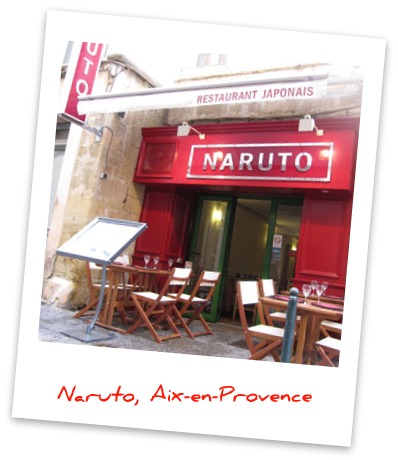
I first noticed the Naruto Japanese Restaurant last Autumn while wandering the narrow back streets near my favorite hotel in Aix-en-Provence. I was making regular weekend excursions here from Fontainebleau at the time to look at apartments, and got a quick chuckle from the restaurant name. For readers without kids, Naruto is a popular Japanese Manga series that approaches cult status amongst adolescent boys, and both of my sons have passed through the obsession. Looking for your 11 year old? Chances are good he is at the Borders with his hoodlum friends, planted on wooden benches with pages pulled open over their knees, plowing through Naruto paperbacks one by one.

I made a mental note at the time to try Naruto when back in Aix more permanently with Jess and so we did. The backstory on the small restaurant is interesting, and I have decided to introduce its owner – Koiche Kunibe – as my first Passion in Action profile. I am curious about the personal missions others pursue, like to hear about their challenges and triumphs, and learn what I can from their experiences. I look forward to sharing more of these profiles with you through the Postcards blog.

Koiche Kunibe was born and raised in Osaka, Japan.  He earned a degree in chemical engineering there and like many ambitious Japanese moved post-graduation to Tokyo where he was hired by Fujitsu, a global conglomerate and leading supplier of semiconductors and electronic systems. Koiche continued his career in semiconductors with Tokyo Electric, which also built the Fukushima Daiichi Nuclear Power Station that has been occupying the news.

Koiche was a successful European business manager for Tokyo Electric and would spend 90 days at a time, as much as his travel visas would permit, on the continent living out of hotels. Under the strain of this transient life, he requested and received a permanent transfer to the south of France, an active centre for the semis industry, in 2000.

We sat down for a chat over espressos last week, just before opening hour at Naruto. I anticipated a tortured story of young ambitions denied and mid-life chances taken, a gutsy tale of sacrifice and perseverance. What I learned was less quixotic, but equally bold and impressive. Koiche did not grow up harboring dreams of being a famous restaurateur. Rather, he was frustrated with lack of promotional head room in his engineering career. He is ambitious and was not finding the space to accomplish, and get rewarded for, his ambitions within the conformist structure of Tokyo Electric. The French countryside is dotted with beautiful old estates and Koiche would love to be a lord of the manor someday in a grand bastide. This was unlikely to happen on his engineer’s salary, but Naruto offered that possibility, …. if successful.

Why a restaurant? Well, why not? Koiche had a close friend with a Chinese restaurant in the area and his business was flourishing. The more they spoke the more Koiche considered the logic of a new Japanese restaurant in Aix, a city with many walk-ups offering mediocre sushi take-out, but few quality Japanese restaurants also offering donburi, yakitori, udon, and other traditional Japanese selections. What did Koiche know about the food business? Absolutely nothing (say it again). But there is little that plenty of careful planning, focused training, and a pair of big cahones cannot accomplish.

In an earlier postcard I wrote about the need for a Passion Plan before embarking on our personal Missions. A well thought-out timeline of milestones that provides a map from now, time 0, to one’s target second-life destination. Koiche had such a plan. He first needed to learn the restaurant business from the bottom up, so took an entry-level job with a Japanese restaurant in Marseille, washing dishes, serving customers, and finally preparing sushi in the kitchen. Hearing about this “career transition,” I imagined his wife’s face when explaining that he was giving up his comfortable, stable engineering position to take a minimum wage job waiting tables.  Come again? He considers the year spent at the Marseille restaurant a painful but necessary internship.

Koiche also needed an understanding of French rules and regulations around restaurant ownership and management, and an idea of the food chain in the food business: where to buy what from whom and under what terms and prices. He got some of this information from his Marseille experience, some from his friend, and much from plain trial and error.

Koiche will tell you that setting up his business was a struggle, he made many mistakes, and was manipulated and taken advantage of more than a few times. He has a good laugh when friends, envious of his success with Naruto, suggest with a certain glib dismissiveness that maybe now they will open their own restaurants as well.

I find Koiche’s story particularly inspiring. He took a daring leap of faith into an unfamiliar sea because he refused to accept a lesser (albeit comfortable) life. I too believe that sometimes we just need to jump. Fear of change and paralysis by analysis often gets in the way of dreams being pursued, much less realized.

This was one hell of a risky move on his part, with a wife and 2 young children under 10 to support.  Koiche insists that his wife was incredibly supportive from day one. The kids? Personally, I think it’s an invaluable life lesson to see one’s parents pursue their dreams, even if they fail, and not just tread water for the comfort of their children. Consider this question: if your own children’s potential and ambitions were compromised by themhaving kids, would you still want them to have kids? Are you paying for their private schools, piano lessons, and college extortion (I mean tuition) so that they can self-limit and underachieve? Do you counsel them to temper expectations about what is possible and prioritize instead around family comfort and well-being? Is this responsible parenting, or bounding their potential? If we don’t want our children to hold back, why do we hold back? This gets to a bigger question that I struggle with: what is our responsibility to our children when it comes to pursuing passions and living to the fullest? I’d love to get comments on this question.

Koiche thought outside the box and made a dogged commitment to his goal. Who amongst us would consider a career move from chemical engineer to restaurant waiter sane? This was the first painful step along his Passion Plan. He realized he needed a better feel for how restaurants operated, and there is no better teacher than experience. Still, the move must have required lots of explaining. We can be swayed by the opinions and advice from friends, family, and coworkers. It’s easy to be worn down by a relentless tide of “what, are you crazy?” and “here’s what you need to do”, particularly when making changes as radical as Koiche’s. In the end, we will be remembered by the actions we took, not by the advice we followed.

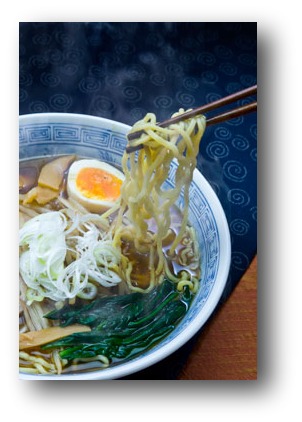
It is 9 pm on a Friday evening at Naruto. The small space is full and customers without reservations are being turned away. And I am not surprised. My udon vegetable soup is savory and hot and the 2 tempura shrimp sitting at the bowl’s edge are light and fresh, perfect with my frosty tall Supporo. Jess has the larger sampler plate – being a growing teen – and says Narotu has just made the “place we bring friends” list. Check it out, we think you’ll love it.

Naruto is located at 19, rue de la Verrerie, 13100 Aix-en-Provence

Bill Magill
Aix-en-Provence
Postscript: If you knew your death date, how would this knowledge affect your ambitions and sense of urgency? Obviously, what is done is done, the past is written. What about the future years, months, days, and moments left? Let me give you a reasonable date if you are an American and 40-50 years old: your 80th birthday plus 6 months (men subtract a year, women add a year; on average people live a half a year beyond their final birthday). Find that date and day of the week, write it on a piece of paper, place it in front of you, and take a look. Now, who is going determine the remaining content of your life story between this moment and that date?


Music suggestion: All This and More, The Dead Boys
Drink suggestion: Louis Roederer Cristal Champagne

Fair warning: my grandfather was an Irish preacher and has been clearly channeled in this postcard. If you don’t want a sermon, skip it.

I am posting a short card this week, as I am on the road and spending time with family in San Francisco. It is eye opening to visit the US after months away. Stepping off a plane, the striking impression is one of dimension. We live at 4/3 scale. Large people driving big cars to huge homes. We shop in warehouses, drink in gallons (the 20 oz. Big Gulp has graduated to the 44 oz. Super Gulp, the 64 oz. Double Gulp, and now the truly staggering 128 oz. Team Gulp), and drive in urban tanks that evoke testosterone-driven power and adventure (Ram, Hummer, Excursion). For foreigners who shop at local farmers markets, sip 1 oz. espressos, and squeeze into tin cans with names reflecting small size and economy (Ecomotive, Smart, Mini) it can be overwhelming. To truly appreciate the heft of our culture, spend a few months elsewhere, anywhere.

I am no social anthropologist, but the desire to define ourselves through the things we acquire seems almost universal. We don’t have a monopoly on materialism in America, we just work harder at it, are prouder of it. In fact, we are the world’s pornographers of consumption, in my opinion, shameless of our accumulation of toys and accessories whose true redeemable value is self-aggrandizement. The grand monuments we build to ourselves, and curious we cram into them, validate the little lies we repeat about our self-importance.

I struggle to exorcise this fetish myself and am a hypocrite to preach otherwise. All things equal, I prefer bigger to smaller, more to less, faster to slower. I lived in a comfortable 2,000 sq. ft. home in San Francisco. Yet, every time I walked through the neighboring upscale community of St. Francis Woods, I imagined the beautiful life in one of those Mediterranean style mansions. I still miss my Mercedes sedan, and now carless look enviously at the new models gliding past. Our modest apartment in France has a compact fridge that holds perhaps a 2 days’ supply of groceries, a small clothes washer tucked under the kitchen counter, and no room for a dryer or dishwasher. Do I do miss my American comforts? Absolutely, but I also appreciate that the low-maintenance, nimble lifestyle for which I’ve traded these accumulations away is permitting a far richer experience. We do become slaves to our possessions, which limits our options and bounds the possibilities for what comes next.

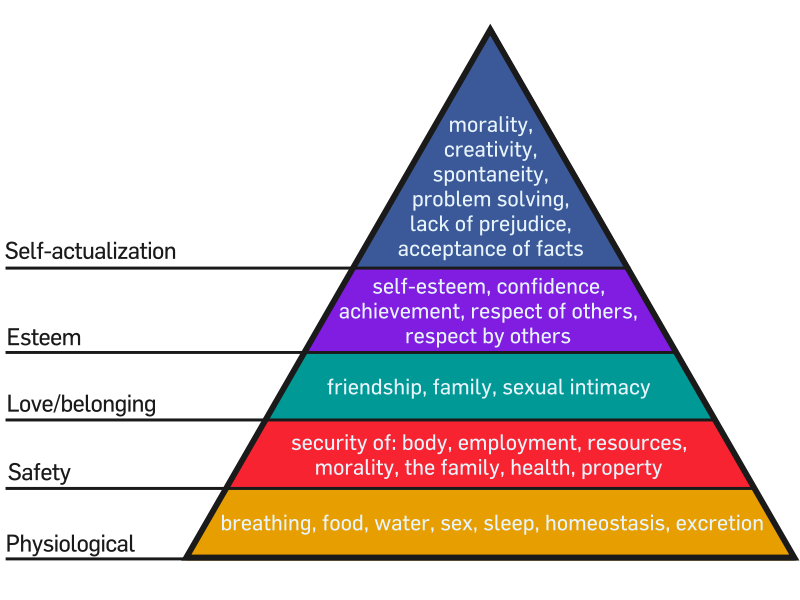
Maslow famously portrayed the hierarchy of human needs in his pyramid, and we can witness its ascent now by the emerging middle classes in China and other high-growth economies.  Regrettably, the attainment of self-actualization – of realizing one’s full potential – is most commonly viewed through the American lens of buying bigger, faster, more lavish stuff; an outward display of prosperity, not personal development. Heft is our most pervasive export, and our newly-prosperous neighbors who covet the American lifestyle are sucking up more oil, eating more beef, driving more cars, building bigger homes, and on and on, to live the image that we have so magnificently framed over the past 50 years. This ballooning demand is sending shivers down the backs of climate scientists and natural resource managers.

To believe that the pursuit of pleasure through materialism will diminish, that the tendency to establish one’s caste through the possession of bigger, faster stuff than can be attained by the lower castes who mow our lawns and wait our tables, is as foolish as imagining an end to pornography. But we don’t flaunt our indulgence in porno (Charlie Sheen excepted). Imagine a world in which giddy, gratuitous purchases of superfluous stuff, mostly done to show friends and neighbors that we are loaded enough (hence, deserving enough) to purchase this stuff, carried the same stigma as a download of Debbie Does Dallas. It might not stop us from doing it, but we certainly wouldn’t boast about it.

What about American exceptionalism? Are we still capable of great things? Could it extend to fresh thinking about global responsibility and how one flourishes in a new sustainable manner? In an era of rising temperatures, falling fish stocks, dwindling water resources, and the spread of the McWestern diet (and corresponding diabetes and heart disease, fat bottoms and big bellies), is it possible that we could once again lead by example? Churchill observed, “you can always count on Americans to do the right thing – after they’ve tried everything else.” What do you think?

Bill Magill
Aix-en-Provence

Music Suggestion: Across the Universe, The Beatles
Drink Suggestion: Anchor Steam Liberty Ale

Every Monday morning I rise at 4 a.m. to catch the first train for Paris and then on to Fontainebleau, where I spend 2 days on campus. On Super Bowl Monday (in France) I was up even earlier. The siren call of the big game dragged me from slumber at 3:15 as the fourth quarter was getting under way, and I enjoyed the final 15 minutes of play over a bowl of Cornflakes and glass of Provence apple juice. My son Jess will tell you “dude, that stuff totally kills,” which is a good thing. To say that the French love American football is grossly untrue, but the game was live on national television, much to my amazement, starting at midnight. It was also playing in a few bars around Aix-en-Provence, which has just enough Americans to warrant the effort.  Given the early hour it may have made more sense to bypass the bed, watch the game over a few pints at the Wohoo Bar, then sleep them off on the train north. Alas my head was clear and sober as I made my way down Cour Mirabeau in the early hours before dawn, unlike a few bleary-eyed revelers stumbling home in the chill air. Getting older can be a mixed blessing: less fun, better feeling.

You may be surprised to learn that France has an American football league, and we are blessed to have a club – the Argonauts – right here in Aix. Jess and I joined the small throng of loyal if not slightly confused fans on opening day at their small home stadium. American football in France is a different experience. No, brats and beers in the parking lot are not replaced with brie and white wine. In fact there was no tailgating at all, which is a great missed opportunity given the French love affair with food and impressive picnics.  Music was blaring constantly during gameplay, including a heavy rotation of AC/DC (always stirring when blasted at max volume through a stadium sound system). The announcer made no pretense of impartiality, leading the crowd through throaty cheers of DEFENSE (clap clap clap), DEFENSE (clap clap clap), and playing the Florida State Seminoles war theme as fans broke out the tomahawk chop. What the hell? This required a timeout and fact check with my history expert – Jess – who is obsessed with all things Greek and Roman at the moment (a little math obsession wouldn’t hurt). Any thread connecting the mythical Greek Argonauts (450 BC) to the Seminole Indians (1800s)? No, none that he was aware of (this after a 5 minute lecture on the golden fleece, Jason, and the historical distortion of his voyage as presented by the Hollywood film). Okay, back to the game.

In French American football running backs are coureurs, a down is a tentative, and referees are arbitres. Many of the terms are similar however: ballon (ball) and receveur (receiver) are logical enough, and quarterback and touchdown are unchanged. Even the linguistically challenged can follow along easily …or so I’ve been told.

Seattle native Adam Kruse is the quarterback of the Argonauts, starting his second season this year. He had a stellar college career at University of Mary (NCAA Division II) before joining the Tacoma Cobras (PDFL) as a stepping stone to the NFL. He’s an impressive athlete, throwing the ball on a wire with laser accuracy or tucking it on for an evasive scramble up the field. Adam was unstoppable that Sunday, as evidenced by the final score: 44 to 0 for an Argonauts win.  I was curious to know more about his motivation to pilot a French football team so offered a beer as trade for an interview at the Wohoo the following week. Fascinated as I am with the whys, whats, and wheres of career fulfillment, I hoped for some pearls of young wisdom about aspirations and limitations.

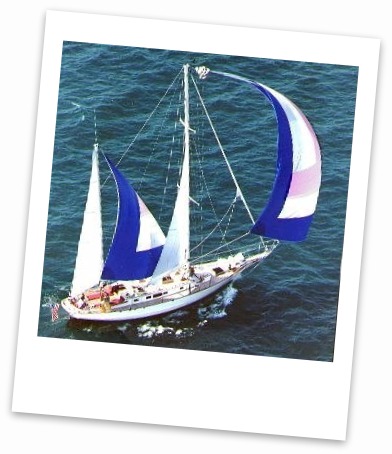
One key to a sense of fulfillment is success and a key to success is the setting in which one thrives. All too often we shoehorn ambitions into a box of convenience bounded by where we live and what we do now, and what we consider possible. Fall into this rigid frame of thinking and you may spend more than a few sleepless nights anxious about the future, unhappy with professional and personal situations, and at a loss for new options. Sound familiar? We get anchored by family, home, job, and the material things that accumulate. Anchors are great for mooring us in place, a heavy drag when under sail. When I felt compelled to sail I didn’t just raise the anchor, I cut the chain.

Refuse to be tied to place or role (personal or professional) and a world of new possibilities open up. You don’t have to cross an ocean, but be open to leaving your haven of safety. There is indeed value in enjoying a comfortable life near family and friends, parents and grandchildren, but there is greater value, I believe, in finding your Mission and making the most of your potential; exhausting your well of resources while still operating at peek. In fact, at ages 50 or 60 you are better set to tackle a Passion Plan than at 25.  Experience and maturity play to your favor, and the engine remains strong with some attention to diet and fitness. The world benefits from each of us excelling, not simply sacrificing our ambitions for others and letting ourselves out to pasture.  J.S. Bach had 20 children and was still breaking new musical ground at 65 when he passed away. What a loss to us all had he decided to live through the many accomplishments of his talented kids. Great people take deep dives into their personal genius to achieve great things and we are all the richer. Isn’t it worth asking the question: what is my personal genius? Isn’t it an obligation?

Picasso’s belief, that every act of creation is first of all an act of destruction, is not required in all situations. When contemplating an encore career, consider porting your skills and experience to an adjacent universe, one defined by laws more amenable to your natural lifestyle (hours, uniform, pressures, possibilities, etc.). You don’t have to become a potter, painter, or poet, unless the Milton or Neruda inside is aching for expression. I know a burnt-out banker who loves the relaxed mentoring of university life, whose reward is no longer the year-end 7 digit bonus but the reverence of students. I met a career mathematics professor who felt stifled, under-challenged, and under-compensated, and who now thrives in the pressure cooker and possibilities of a high-frequency quant trading firm. Neither job is better by definition. Both individuals made late-career transitions to adjacent universes defined by very different laws, but did not involve a complete reinvention of self. The moves were not seamless, but possible without undo upheaval. The individuals have transferred their experiences to a new dimension and as a result are blooming.

Change of location offers a similar opportunity to break from the anchor. A good friend has taken his considerable talents as venture investor from Silicon Valley – where he felt undistinguishable from the hundreds of hypercompetitive and accomplished (or hoping to be) investors – to a city in the Midwest, where his valley experience is greatly appreciated by and singular amongst his peers. He didn’t hate his profession, he hated feeling mediocre. Don’t we all? As mentioned above, I believe that a key to happiness is success, the opportunity to demonstrate excellence. But to realize that success one needs to operate in the right universe.

Physicist Brian Greene – a pioneer in string theory and author of a new book on the multiverse (The Hidden Reality: Parallel Universes and the Deep Laws of the Cosmos) – discussed in an NPR/Fresh Air interview recently that the cosmos can be imagined as an infinitely large loaf of bread, with each slice representing a different universe, similar in many aspects but governed by very different laws of nature. The way I see it, as the years tick by and we pass through that membrane of core careers to what comes next, we may need to operate under a very different set of laws to flourish. A change in universe may be warranted, to a universe who’s laws are more amenable to our maturing ambitions and the challenges of meeting them. When we feel sandwiched between the needs of kids (soccer practice, college tuition), parents (doctor’s visits, grandchildren time), and spouse (his/her career, personal pampering), it is easy to compromise our own goals. As children move on and parents pass on (and you decide on the spouse part), there is a liberation effect. Does your universe and the laws that define it feed that liberation?

The Wohoo is filled to capacity on Wednesday at midnight. Given its tiny size, the Wohoo is probably close to capacity when it’s just the staff setting up. The street level bar entry is smaller than my bedroom, and the downstairs cavern is divided into 2 cramped spaces that appear carved out of the rock. It’s here that I find Adam holding court after an evening Argonauts practice. He is what my mother would have called “a very nice young man:” courteous, well spoken, engaging, and interesting. Why is he playing American football for a small French audience? Simple, he loves to play football and he loves to travel. The Argonauts pay him a modest salary, he gets in 5 months of play during the US offseason, and if the team does well it will look good on his scouting report. As to my 2 burning questions of momentous import: the tomahawk chop??? He has no idea either, but anything that gets the fans involved in the game is a good thing. The multiverse? Well, we didn’t get to the multiverse, but Adam would probably find that all a bunch of high-minded horseshit. He just likes playing football and living in the south of France. I can’t argue with that.

Postscript: perhaps somewhere in another universe, a universe parallel to our own, a slice next to our slice, Seminole Indians watch a Grecian ship break the horizon. Who knows?

Bill Magill
Aix-en-Provence

Music suggestion: It’s My Life, The Animals
Drink suggestion: Pastis Henri Bardouin

Do you ever dream of doing something radically different? Are there nagging suspicions that your life/career trajectory is on a path of its own, with you as a passenger not pilot? Do the words escape and renewal find particular resonance?  If no, then chapeau to your good fortune. If yes, then join the club.

The sense of entrapment took serious root as I approached the age of 50. It was a snare of my own making, and one that I felt empowered to break, albeit not without disruption. I simply wanted to pursue my own passions, and so I have. This blog is created for others who feel that passion pull, too often lost in dreams of adventures not pursued, destinations not explored, and stuck in rut that has been dutifully dug with one’s own shovel.  Whether on a new path of your design or still in the career closet, you are invited to subscribe to this blog and join my Passion Plan Alliance. Through mutual encouragement and support, this alliance can lead to greater confidence in all of us to pursue and realize our personal Missions.

So here I sit, a chilled glass of pastis for inspiration, at the end of another sunny day in the south of France. I feel a lifetime away from my decision point 3 years ago in bustling San Francisco. Little things have changed: just the where, what, and with whoms of everyday life.  I have adjusted relationships, changed my career, moved across an ocean, and dragged my oldest son Jess along for ballast. Before leaving San Francisco I sold my beloved Miata and abandoned all worldly possessions, save my guitar and prized Laguiole cork puller. We’ve settled into a noble 18th century flat in the historic center of Aix-en-Provence, one of the most charming cities in Europe (humble opinions permitted). This venture is incredibly stimulating, incredibly challenging, and conducted often in a second language. Yes, there is also the overhanging threat of total implosion, my pirate ship splintered upon the rocks. But I wake every morning not quite believing that my favorite place in the world is abuzz just outside the window, I have time to plan and organize my encore career, and most importantly I am in control of my heading.

And now you. Is it time to join the club, to journey forth upon your Mission? Even if obligations – real or perceived – prevent the launch today, begin to consider your Passion Plan; the map that will guide you across the sea of change. To be clear, I am not talking about conventional career motivations. Salary and title should play no part in your personal Mission. I’ve promoted myself from overcompensated venture capitalist to underpaid academic and aspiring life coach, and am ecstatic. Restaurateur, writer, winemaker, woodsmith, bed and breakfast owner; none of these will likely bring you prestige and fortune. But they, or whatever occupation or craft you crave to pursue, can bring deep and profound fulfillment.

If you die tomorrow, will your purpose have been realized? Will your funeral remembrance capture the life you were meant to live, reflect your true gifts, your personal genius? Okay, that is depressing; let’s say you don’t die tomorrow. Instead you wake up and have to pinch yourself from the joy of what you are doing, where you are living, and whom you are with. What does that life look like? Paint that vision in your mind’s eye. Nothing stops you from putting the first step in place now, today, towards enabling that dream.

Through this blog I will be recording experiences and observations from the field, from my new center of operations – the local cafe – in Provence. It will also provide the anchor for the Passion Plan Alliance, a platform for readers to solicit help and share ideas, ambitions, contacts, and advice about the pursuits of their personal Missions. We’ll need a better exchange for that as readership grows. Any suggestions would be appreciated. Finally, this blog will serve as resource center, with links and references to the latest thinking on happiness and fulfillment by Seligman, Csikszentmihalyi, and other thought leaders in this emerging area of study. Please feel free to contribute when ready and inspired. Not inspired yet? Well, try the pastis.

– Bill Magill
Aix-en-Provence