Suggested Song: Find Yourself, Brad Paisley
Suggested Drink: Virgin Mojito (staying in theme with my dryish January)

With this year’s series of essays I’m going to offer 12 experiments; one per month. For readers intent on making 2023 a pivot year toward more purposeful ambitions, or perhaps just asking that post-Covid question – okay, what now and how? – these experiments will help draw maps, uncover truths, enhance motivation, strengthen resilience, and be fun. All are part of the Life Leap Workshops we run in Provence (more about those here). Please give them a try and let me know what you learn and how they can be improved. Comments and critiques are encouraged.


Each new year starts with our best intentions. Less of this, more of that. Back to basics, forward to the unexplored. Revived projects and new ambitions. Reinvention.

You may be sketching out plans now. They may get realized, maybe not, perhaps not even launched. One thing is assured: nothing deserved of your very limited time and energy – which are infinitely more precious than money – will magically self-organize. If you want to do something purposeful and grand this year, if that’s a resolution, then you need to organize a plan, even if futile.

Start with your foundation.

The Wheel of Life

It’s been over a decade since I left the cable cars and golden gates of San Francisco for the lavender fields of Provence. For 30 plus years I had been living the dream in the Bay Area’s tech and investment industries, as a laser jock and analyst and banker and venture capitalist, and I absolutely loved it until I didn’t. When that unsettling mid-life question – is this it? – began to itch in places I couldn’t scratch it was time dig deeper, beyond the surface stuff like money and security and title and possessions, and seek out genuine authenticity.
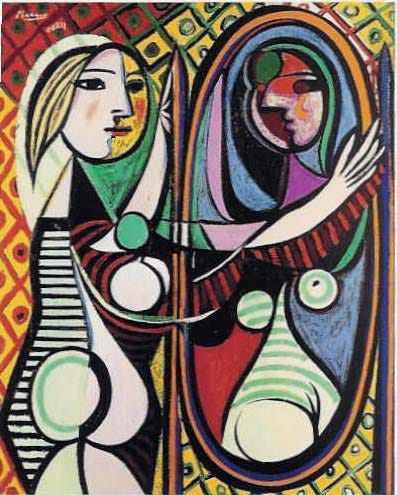
Pablo Picasso, Girl Looking in Mirror.

San Francisco State University had an executive ed program on life coaching back then and the night courses opened up a whole new universe of questions for me. Are you happy? Does happiness matter? Who is in control of your life? What are your core nonnegotiable values? What is your personality type and why is that valuable to understand? Most importantly, what tools are handy to disassemble and reflect on considerations such as these, and to help ferret out some answers?

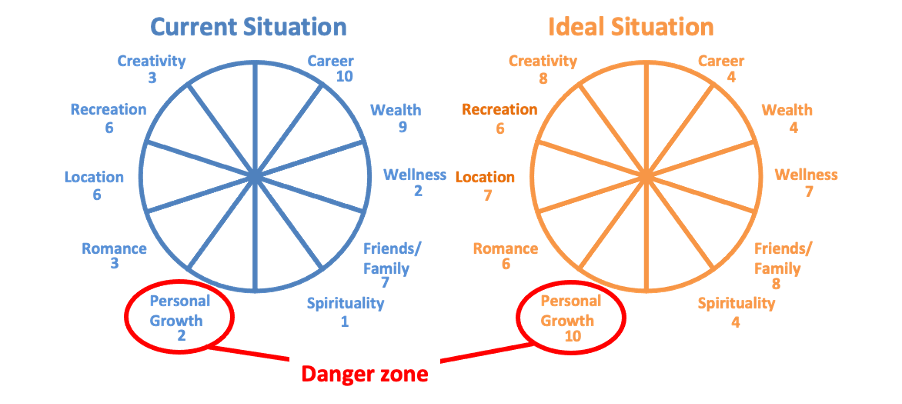
On the first night of the first class we were introduced to the Wheel of Life. It provides a graphical segmentation of how your finite stores of time and energy and attention are being parsed. You can fill one out for your current situation and another to represent the ideal life. Comparing the 2 is particularly insightful in understanding how truly offtrack your life has become (perhaps not at all, but then again…), and where adjustments should be concentrated; that is, assuming you want a life most closely aligned with your core priorities and interests. (You do.) By the end of this first class I was feeling feverish and plotting Life of Bill v2.0 on the MUNI streetcar ride home. Within 12 months I was living in Provence.

The Wheel of Life is a circle segmented into 10 slices that collectively represent how your time and energy is being consumed; at least with the 10 most pressing elements. The following chart is an example, but your elements might be different. Some slices are common to most people: Health and Friends/Family, for example. Other slices may be critical to you, not so much to others. Step 1 to using the wheel involves identifying your 10 most critical life components. Take time to get them right, then run the experiment.

The Wheel of Life Experiment

Step 1: Sketch your ideal life.

  1. On a sheet of paper sketch a Wheel of Life similar to the diagram above: a circle segmented with 10 equal slices.
  2. Create a list of the 10 most defining components of your ideal life; those activities when combined would consume most all of your time, energy, attention, and other resources. It’s critical to get the right components, so take time here to think this through. (Your favorite café or wine bar might be an inspiring workspace for this exercise.) In your ideal life you are in control, but that doesn’t mean you won’t have obligations. Include major commitment that you may not particularly enjoy but that are inescapable (caring for an aging in-law could be an example). It’s also the moment to consider what is and is not truly inescapable. (This can lead you into dangerous territory. Go with it for this experiment.)
  3. For each of the 10 elements, assign a weight as to the attention it would consume in your ideal life on a scale of 1 (very low attention) to 10 (very high attention).
  4. Assign each element to a slice. Write the 1-10 weighting under each element label, and fill in the slice with a crayon or marker reflecting that weighting starting at the center. An allocation of 10 will fill the slice entirely. An allocation of 1 will barely fill it at all.
  5. Look at your chart. Are these the 10 critical components to include? Are they weighted honestly? Come back to the chart later in the day and then again tomorrow, and each time check for honesty and correctness. Don’t consider the ideal wheel finished until you’ve had a chance to review it over a couple of days, at different times of the day, in different moods.

Step 2: Sketch your life now.

  1. On a second sheet of paper sketch a Wheel of Life that reflects your life now.
  2. You must use the same 10 elements as included in your ideal life wheel.
  3. For each of the elements assign a weight to the attention it consumes in your life today, from 1 to 10.
  4. Fill in the wheel to reflect this weighting, as in number 4 above.
  5. Review the chart a few times over a couple of days to be comfortable with its completion.

Step 3: Compare the 2 life wheels.

  1. Place your 2 wheels next to each other and contrast the profiles.
  2. For twin slices within 1 point of difference, bravo, your current and ideal situations are well aligned. Keep it up.
  3. For twin slices between 2-3 points of each other consider what can be done to move your current situation closer to the ideal. Small tweaks may work wonders in lowering the weighting tension. Experiments that we’ll be running in future essays this year should be helpful.
  4. For twin slices that are 4 points or more apart, danger ahead. The tension between your ideal life and current situation may cause serious complications in the future (emotional, physical, relational); they may already be giving you an itch that can’t be scratched. Some things in life are out of our control (I argue that this list is smaller than most believe), but seeing your misalignments visually is valuable should they provoke an effort to ease the friction. (At a minimum, toast yourself for soldiering through the inescapable.)

The following chart could have been my Wheel of Life experiment 15 years ago (with the slices colored in). Some misalignments created alarm, then determination, then action. What will yours incite?
Bill Magill
Aix-en-Provence

Suggested Song: Changes, David Bowie
Suggested Drink: Shapeshifter cocktail: vodka, crème de violette, lemon juice, bitters, egg white.

I had an essay on psychogeology planned to drop this week (yeah, it’s a thing!), but two new biographies of Anthony Bourdain have provoked me to the point of making a last-minute swap. Extracts from the biographies are making the rounds, their authors giving interviews.

Bourdain had a large fan base to which I subscribed.  Kitchen Confidential was an irreverent exposé of restaurant kitchen culture; a raucous reveal behind the twin swing doors. He reveled in shining a light on the soiled underbelly of something carefully manicured and disneyfied. Bourdain was the essence of punk insolence and I was punk rocker at the time. I ate it up.

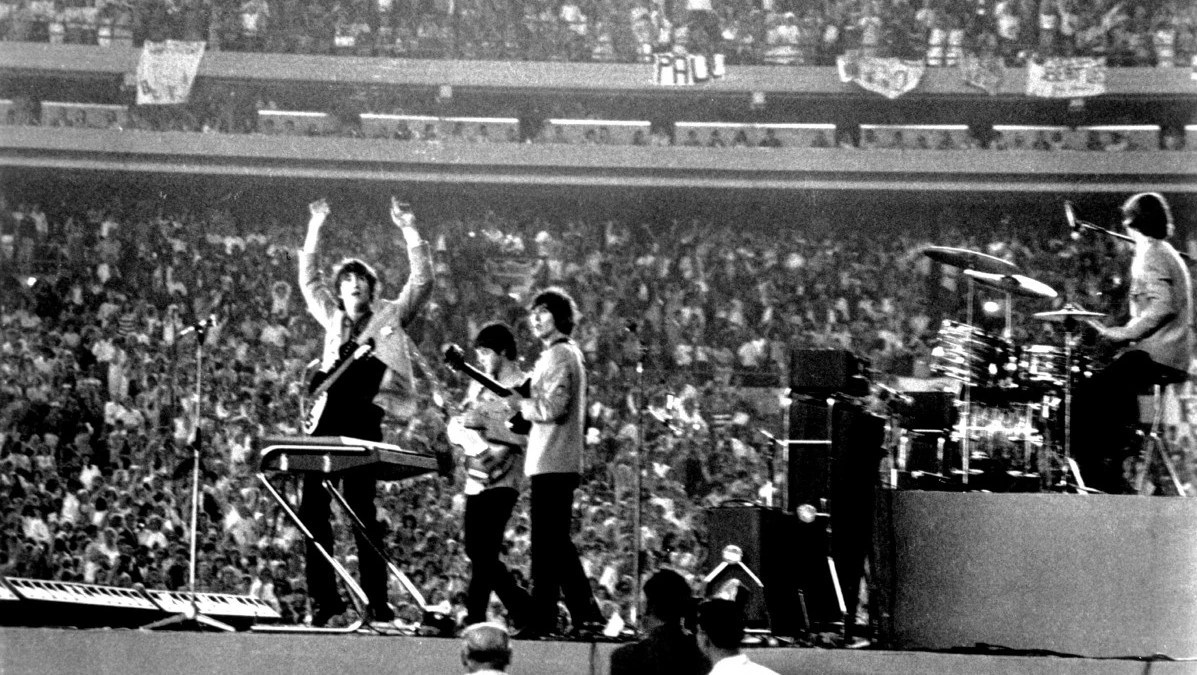
Bourdain’s own brand was manicured as well: culinary rapscallion; acute observer of the absurd; globetrotting seeker of the strange and spicy; unapologetic provocateur; cool older dude with hot younger girlfriend. I can imagine that this fun stamp could be exhausting to maintain. We all evolve, sometimes to our friends’ and fans’ resistance. Schwarzenegger’s bodybuilder begat terminator begat governator. The Beatles graduated from Can’t Buy Me Love to A Day in the Life. Fans were unhappy, but the Fab Four were done with holding hands and love me do. Happiness is a warm gun. Transformation is essential for staying fascinated by ourselves.

Bourdain was reportedly excited about a new project that would be decidedly un-Bourdainian. Even pirates pull down the black flag at some point. One can imagine how liberating it would be, and befitting of his style, to shock the devotees with something unexpected and completely out of character. I spent 20 years cultivating X and now I’m Y. Trust me. Join me!

In an earlier incarnation I had a privileged life in San Francisco. It was the greed-is-good Gecko era and cred was built around possessions and title. My wife kept me grounded but every peacock loves to spread the feathers from time to time.I found my wings when I severed the strings (a lyrical couplet from the 2021 MASSIVE HIT To Say Goodbye) and moved to slow-and-sunny Provence from fast-and-foggy San Francisco. I knew that my professional repute and financial surety were about to become irreparably unwound, and was elated. For I was moving towards a more natural, authentic version of myself; correcting course towards a north star I had always seen brightly to the side and too long denied. At a certain age denial is a very unhealthy choice.

My sense is that Bourdain was a mostly authentic guy but yearning to evolve. He was an undeniable creative and creative types don’t like being boxed in. The slightest tinge of I’m starting to feel fake elicits the hives x10. Maybe he was finding it difficult to shape the shift, given the heavy momentum of his much-loved brand. Certainly his open history of substance issues and depression wouldn’t have helped, and his relationship was reportedly on the rocks. He loved her deeply (according to the new bios) and must have felt it slipping. That can push one into embarrassing behavior. I can relate more than I want to admit, and perhaps is why I felt compelled to pen this rumination.

We all need to be aware of the gravity of our brand and the effort required to escape said pull, if indeed that’s what is needed to grow and thrive. It’s a very healthy thing, mandatory I’d suggest, to question our identity regularly and tweak where needed; destroy when required. If surrounded by people who love you in a place that nurtures you then you’ll be fine. Actually, much better than fine, you’ll be alive.

Ch ch ch changes…..

Bill Magill
Aix-en-Provence
Suggested song: Leap of Faith, Bruce Springsteen
Suggested drink: Paternel Rosé, AOP Côtes de Provence (any pale Provence rosé should do!)

“Make your life a lot more fucking awesome.”

I was reading an essay on Medium this morning, hovered over a bowl of Special K, muesli, and local strawberries. Nitin, a full-time programmer and part-time purveyor of millennial wisdom, was offering his 8 rules on “how to rewrite your life as you want it to be.” It was a slow news day. I was looking for distraction.

Rules 1 through 7 were the trite pulp one tends to find from the newly enlightened: honor yourself, follow a healthy diet, appreciate nature, yada yada. (Fair admission: I’m guilty of dispensing similar banal obviousness on occasion.) But Rule #8 struck a chord, and it wasn’t just the F bomb. Here’s why.

Every single one of us wants an f-ing awesome life. At 50 I was incredibly blessed and more than a little lucky to have had this: money, security, job, home, spouse, kids, grill. It was pretty damn good, but not f-ing awesome.

When my mid-life wobble met my inner narcissist there was little resistance to the axiom your life is not a dress rehearsal (so grab it). I bade my goodbyes to all above (except the kids) and went in search of my Shangri-La, El Dorado, Elysian Fields. I wanted more than money, more than stability, more than bliss. I’d trade all this and more (a great Dead Boys song, Spotify it) for a truly authentic life of deep personal meaning in an enchanting, inspiring locale: now that would be pretty f-ing awesome.

(Note that nowhere in that last sentence do you find the words affluence, comfort, or happiness.)

I found my Shangri-La in Provence, France. Yours will call too should you pursue the quest. Please trust me on this. Beyond the seductive splendor of its lavender fields, turquoise seas, and perched village cafés serving chilled rosé on hot endless days, I found my tribe in Provence. Seekers, most with impressive career and personal credentials, who will tell you that yeah that thing before was pretty damn good, but not f-ing awesome.

Sometimes we take it for granted, those of us who’ve washed up on these shores, but then a jealous friend on holiday or tourist at the next table will ask how one makes it all work. The language and legal and financial and family barriers and considerations.

You just have to figure it out.

A fellow runaway here once answered it quite simply like this: you just have to figure it out. This is what he meant: few of us here are independently wealthy; most of us have kids; all of us have/had aging parents back home; visa issues are rampant; and our language isn’t native. This further complicates already complicated things like tax regulations, wi-fi outages, parent-teacher mediations, and ordering that second rosé bottle (no, it’s not another please, it’s one more of the same!). You just have to figure it out.

My friend Dickie ran a high-stress, high-pay trading desk in Hong Kong for 10 years. These days he gives leisurely walking tours around Aix-en-Provence and fronts a local rock-n-roll band, while helping raise 3 teen daughters. Life? Yeah, pretty awesome, just figure it out.

Tilly was a BBC producer in London traveling across the globe to film nature documentaries. Now she’s at home in her small Aix workshop, turning out beautifully delicate ceramic bowls and creative pieces of jewelry. That’s when she’s not parked by the sea in the vintage family travel trailer, book in hand and watching her daughter paddle board across the placid Mediterranean blue. Life? Yeah, pretty awesome, just figure it out.

I abandoned my profession, divorced my wife (and closest ally, still), and moved to France in 2010. I had no real plan and no backup. A Wallenda moment. A part-time teaching job and a bit of advisory work helped, and I found, finally, the time and energy to develop my real passions: workshops on life change, a book, an album, and a musical.

Don’t expect all confetti and champagne in your pursuit of a life that is pretty f-ing awesome. It’s not the goal. My financial plan was never sustainable and remains tenuous. My creative projects have gone largely unnoticed, some have failed. Face plants can be humiliating. You soldier on. No regrets.

I’ve been scolded for the irresponsibility, most heatedly by myself. I’ve worried about the impact on my kids: a year or 2 with dad in French lycées, then back to mom and San Francisco schools, and then back to dad. But, 12 years later I’m where I belong. And each of my 3 little bumpkins have grown into fascinating, multicultural young adults of amazing potential. Life? Pretty awesome, just figure it out.


Here is the takeaway.

Your life now is indeed not a dress rehearsal. Forget all that stuff about heavens and reincarnations and molecular transmogrifications into other forms of pixie dust existence. It’s all wishful hooey. This is it, your one single shot.

You can do at least one thing better than any other individual on this planet.

So, to do what? Well, you can do at least one thing better than any other individual on this planet. This nonpareil gift is enabled simply by that unique blend of genes, upbringing, education, friends, and experiences that make you you. Finding your Shangri-La – geographically and emotionally – will help release the potential.

If you can pair that unique mastery with your deepest passions, then we all gain in your amazing gift. And you get to live a life that is pretty f-ing awesome. Now go grab it.

Bill Magill
Aix-en-Provence

Suggested Song: I Won’t Miss You – Demo, Bill Magill
Suggested Drink: Continuum cocktail: Gin, Vermouth, Chartreuse, Cynar, Curaçao.

A good friend stopped by the apartment yesterday for a glass of rosé (okay, a bottle) and a bit of catching up. I pulled out my trusted Martin D35 and played a new song – “I Won’t Miss You” – that will make it onto the upcoming EP, and I asked for his thoughts. Through the years I’ve gotten invaluable feedback from this practice; a living room debut with some work-in-progress tune still half baked. Maybe it needs another verse or change in tempo. The suggestion yesterday was about dynamics: perhaps bring it up a bit here, take it back down there. The song is suddenly immeasurably better.

(Note to artists of all stripes: inviting criticism is essential. Know when to accept it; know when to stick to your creative instincts.)

Where does the creative flame come from; Van Gogh’s glowing starscapes, T Monk’s jumpy piano rhythms? A magic well of inventiveness deep inside our grey folds of neurons, peptides, and proteins? Neuroscientists see synapses sparking in the anterior cingulate cortex and left inferior parietal lobule when artists get their grooves on. That reveals the brain regions being aroused, but what does it tell us about the true source of inspiration? Is it chemical, physical, …. some kernel of protein pre-programmed before birth?

The Gods of Song

The Law of Conservation dictates that energy, whether thermal, electrical, mechanical, or other, can neither be created nor destroyed, simply transformed (first postulated by Émilie du Châtelet, a brilliant mathematician and close companion to Voltaire. … ah the French and their love of entangled affairs!). Can creative energy be governed by the same law?

Imagine that the gods of song lord over the reallocation – but not creation or destruction – of all musical creativity. They glean the energy burning off musical dynamism – the teenage frenzy at a Beatles concert; the rapture of baronesses swooning at a Mozart recital – blend it with other tuneful emissions of emotion at any given moment, recycle it, distill it, reshape it, then gaze down from upon high for the best possible artist at that particular moment to reinterpret it.

This process steps through a lot of conversions, as does power from original source to your wall outlet, but the principle of conservation remains inviolate, honoring Madame de Châtelet’s original premise.  No mystical origination deep in the limbic system at debut, no final extinction in the cemetery-of-song at end.

Antennas Up

As a creative you need to keep the receptors up at all times. The gods above are constantly surveying the flock for the perfect agents of delivery: who to best capture these water lilies in Giverny, the stars over Saint Rémy, to take this newly formed bundle of musical melancholy and write something tender about love lived and lost. The energy is floating in the ether. It just needs the right channel for conveyance. And that just might be you, if your creative soul is pure and open to divine inspiration.

A final note that I’m not the first musician to believe in the gods of song. You can find interviews with some of our greatest lyricists, the Dylans and Caves and Cohens, who claim that the process is as mysterious to them as anyone, that when inspired they are just a medium for the message and spill it out. The key? Stay inspired, live deeply, keep the heart open to joy and pain and all emotions in between, and always keep that figurative brush and palette close at hand.

Bill Magill
Aix-en-Provence

Suggested song: The Real Me. The Who.
Suggested drink: Curtain Call cocktail. Rum, champagne, lemon juice, simple syrup, bitters.

Honesty and transparency make you vulnerable. Be honest and transparent anyway.
– Mother Teresa

June is Gay Pride month. The San Francisco parade has been cancelled this year and that’s a shame. I have colorful memories of that brilliant cavalcade: the vibrant floats and flamboyant dance troupes and butch bikers tattooed up in black leather and blue denim. Loud and proud.

I was called into a group-wide meeting one morning while working at Livermore Labs back in the 80s. Our area supervisor announced (paraphrasing) that from this point forward John should be addressed as Joanne and will be dressing accordingly. Expect female attire and makeup. She’ll also be using the ladies’ toilets. Any questions?

This coming out was one of the most startling and bravest things I’d ever seen. The John I had known was a burly guy’s guy and husband with kids. To be considered for reassignment surgery he first needed to live full time for a year as Joanne. I couldn’t imagine the courage it took to share that decision with family, friends, and now coworkers.

We all have our closets. We perform on an open stage and let our hair down with the cast and crew when the curtain falls. A very few good friends get invited back to the dressing room, but then there is the closet. I’m hoping that I’m not the only one with a scary closet.

There are few resentments worse than feeling like a fraud, of being inauthentic. Real honesty requires a precarious journey from closet to stage in full drag, and that can be a tough walk. The good news is that as we get older this gets easier. A certain “let the chips fall where they may” settles in with age. The urgencies that guided our earlier years – career and vows and status – become the lesser priorities to authenticity; leaving this world with a history that reflects our truest selves.

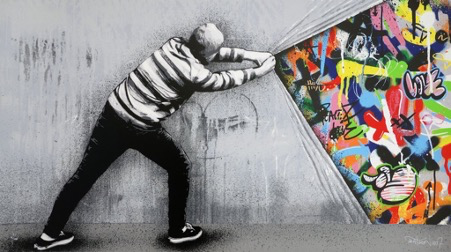
Martin Whatson: Behind the Curtain

Being honest with oneself is of course step one, and often the most difficult of conversations. I lived most of my adult years in San Francisco and didn’t bat an eye (or even a heavily mascaraed lash extension!) at people being true to their sexual and gender orientations. But professional orientation was a different beast altogether. It is convenient to suppress misgivings over career choices when those positions are filling the bank account and feeding the ego. Damn I’m special! I was front and center of that line but in good company, particularly in the investment banking and venture capital industries.

There’s no shame in pursuing pay over passion when young and in one’s prime income-generating years (I’m happy to debate this over a glass of rosé). There’s great dishonor when continuing to shelter in the closet post mid-life, to oneself primarily. What you do, where you live, and whom you love. The legacy you leave. Are you getting these right? Are the what, where, and with whom choices you are making now reflect the most authentic and beautiful you? Will your eulogy be delivered by people whom loved you most, reflecting on things for which you wanted to be celebrated, in a setting that defined your spirit?

That is a lot to consider.

A final note. I founded the Interprize Group in 2013 to help people, mostly at 50 plus, pursue grand life ambitions of deep personal meaning. If I’m being honest, I’ll admit to using these workshops as much for self-discovery as for guiding others. Authenticity and purpose are 2 topics that get a lot of attention in these workshops. For the past 3 years I’ve been focused on a grand ambition of my own and the workshops have been on hold. We are offering a new and completely redesigned Life Leap Workshop this October in Provence. You can find more information here. If you are curious to know more please get in touch and we’ll set up a time to chat. Let’s get you out of the closet.

Suggested Song: Mad, Bill Magill
Suggested Drink: Caribbean cocktail: Bombarra rum, cointreau, fruit juice, grenadine syrup (for my island friends, who’ve just survived a date with Irma)

Madness is close to everybody.
Carol Rama

I decided to take a gap year when I reached 50, to rediscover the world around, to reassess the man within. That year bled into a decade of exploration, an end to a marriage, a change in career ambitions, and a move across the globe. I sought out alternative beliefs and states of being, how to create, how to eat, how to love, how to live. Those first 50 years had brought me security, certainty, and predictability; things that kept me well anchored in a safe harbour. That all changed.

I’ve gotten to know the stranger within much better these past years in Provence. I came looking for an authentic life, a daily quotidian more genuine and rich than I could afford in the tech and investments worlds of Silicon Valley. And by afford I don’t mean with money. You cannot buy genuine. All the treasure of Zuckerberg and Gates and Bezos cannot buy genuine. You find it in the people whom love you, the dreams that seduce you, and the enchanted places that complement your own rhythms and energy.

I’ve learned that Easy Street is not my address of envy. Passion Avenue is where I look to squat. This can be a difficult neighbourhood, noisy at times, unstable, brilliantly sunny then ominously dark, rarely dull. Unpredictable lovers, impossible dreams, and impractical locales are what arouse my emotions. And aren’t emotions fully aroused the essence of a rich life?

I also value a good drink with trusted friends.

Madness

The weekends of my youth were spent with buddies wrenching on our cars, racing at the strip or on the streets. You had this keen and uneasy sense when your hopped-up, bored-out, over-torqued muscle motor was about to blow. It would roar down that last quarter mile run like a wild banshee, pushing your aggressive assemblage of custom painted steel and polished chrome seconds faster than ever before, gear after gear, eerily so. And then, in a scream of twisting rods and scorching valves, all of that mighty horsepower would explode in a crescendo of oil and fuel and flame.

You knew the risk but still pushed it hard. It was a mad drive to that wild edge. And at my point in life, again, … this is where I choose to live.

Time

Time is elemental. Quality time. Time spent with people who forgive (and perhaps even appreciate) your madness, doing things that define it, in places that provoke it. More time is more important than more possessions. Possessions are the enemy, actually. They require investment, maintenance, and energy; have to be placed or stored; and apply a brake on our ability to move quickly, to be fleet and flexible.

Gustav Klimt, The Kiss

Is there someone, something, or some place that you are mad enough about to pay for with time? Two years cropped from the end of your life for one more with them now, doing that, or living there? Four fewer final years for 2 now?  We would all pay for more time if we had the money, because money is a worthless, limitless currency. But time, now that’s a precious exchange in the extreme.

It’s a hypothetical question of course, but worth considering.  For if you have no one or nothing worth sacrificing your precious stores of time for, are you living a passionate life? Is it important to live a life of passion? I’m provoking, yes, but not leading with an answer. If you knew you would die in a year would you want the next 12 months to be mad and full of unpredictable passion, or choose comfort and security? It is very possible that you could die in year, in a month, or in week, so this particular question is not hypothetical. Right?

I want to know what my readers thinks about the merits of a mad life. I love to preach – my Scots-Irish grandfather was a fire and brimstone healer of the unholy, so please excuse the genetics – but I am sure of nothing except my own convictions. And I am immensely curious about your own.

Bill Magill
Aix-en-Provence
Postscript: This essay is dedicated to a close friend who, at 64, has suddenly found himself unmoored and adrift in an unpredictable sea of life possibilities. Where he will be and what he will doing in the next months and years; it’s all green field territory. He is a true pirate and has provoked me to question much about my own priorities and ambitions over these past years. A toast to you, Dada. One of a mad kind.

Suggested drink: Champagne (your favorite, it’s the holidays!)
Suggested song: You Get What You Give, The New Radicals

What is your big gift for the holidays? No, I don’t mean what are you getting, I mean what are you offering? We each have a special gift and an obligation to share it with the world. I believe this, do you?

The self-improvement aisle is lined with books on finding purpose in life. The authors treat its fulfilment as a key to happiness and benefit to you, the seeker. But isn’t it more importantly your obligation? If you’re like me you’ve sucked a hell of a lot more out of this world than you’ve put back: a half-life of durable and consumable stuff, art straw-artand music, food and wine, the love and generosity of others, …everything that nourished your life and gave it definition. Now is the time to reverse the net flow.

It’s an ugly, uncertain time we live in today where ignorance is celebrated and consumerism is king. Bigger, faster, harder, wrapped in a tidy bow of obliviousness. These hallmarks of the moment will end soon enough, one through the will of the many, and one by the hammer of nature. But it won’t be pretty.

More than ever we need enlightenment and beauty to counter the tide, … and this is where your obligation begins. You have an amazing, inimitable gift to offer the world. It’s unique, a result of your one-of-a-kind DNA predisposition plus singular history of upbringing, education, experience, and personal community of friends, family, and colleagues. No one else has the exact same set of resources, skills, and interests. Align that with an ambition of deep personal meaning and you are better prepared and motivated than anyone else on this planet to do at least one incredible thing, to offer at least one amazing gift.

Sunsets are for Sissies

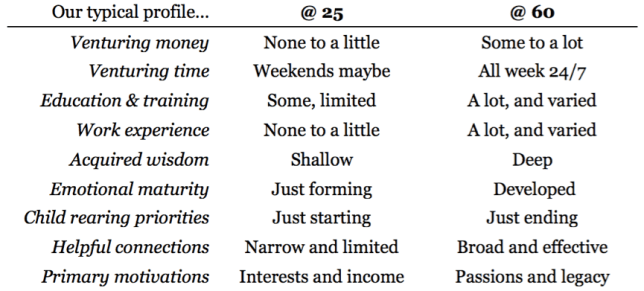
I wrote an essay with that title in 2015 (to read click here) in which I argued we are better prepared at 60 to pursue something truly significant and life defining than at 25. We have more time, more experience, more money, and a lot more maturity, as summed up in the following table.

age-table

If you are at midlife and considering retirement and what next?, now is not the time to downshift into a recliner by the sea, comparing daily golf scores and evening sunsets. You’re better prepared then ever to leave your mark on this world, and that’s not just a pleasant dream to imagine over icy margaritas, that’s your gift and obligation. Allez!

Suggested Song: My My, Hey Hey (Out of the Blue), Neil Young
Suggested Drink: Jackhammer cocktail: Jack Daniels whiskey, Amaretto

“Every act of creation is first an act of destruction.”
– Pablo Picasso

I want to destroy your life. No, actually I want you to destroy your life. I want you to quite your job, leave your spouse, and plan your move, today.

Stick with me for one reckless moment.

We tend to frame major life changes – professional, personal, geographic, and other – from the inertia of our current situation. Like planets in a universe, each of these big things has a distinct and defining rotation, but orbit around a common core called our life. If any one of these big things gets out of orbit our whole universe can wobble out of control. So we focus on keeping things in safe (even if less than stimulating) trajectories. Knocking them out can initiate a chain of unpredictable consequences after all. Reckless.

planets_orbitsConsidering this astro-emotional dynamic, we ponder change through an inventory of impacts to our safe and predictable cosmos. If I left this job/spouse/location how much upheaval would it create in my entire universe of orbiting things? It’s a focus on the negatives and how to manage them. It’s a calculation that most often encourages inaction.

Let’s flip this conversation on its head. Imagine that for some reason – because Bill says so – you are required to leave your job, spouse, or location. Can you defend why you want to stay, why you are ready to defy that expectation? Tell me now, because as I said above, I want to destroy your life. Now the conversation leans toward positives. What do you so love about your job, spouse, location, and other big things? Remind yourself why the compromises are worth it, make a quick list. Is there enough good stuff there to fight for?

Now here’s the reckless part: stop treating this like a silly exercise. Do it, act on it. How’s the list coming along?

“It takes a long time to become young.”
– Pablo Picasso

Picasso was a big fan of child-like liberation, of creating art without the constraints of convention and expectations. Life imitates art with respect to our compliance to an ever-expanding collection of rules and etiquettes as we age. We grow up. We get properly tamed.

Did you ever “run away” when really young? I remember rolling some provisions into a cloth sac tied to the end of a wooden pole, tossing it over my shoulder like Huck Finn and heading out. I was probably 7 or so, and with no hand to hold that small Pennsylvania town felt like a wide-open universe. I didn’t consider my parents’ reaction, didn’t think about how I would buy stuff, wasn’t worried about my safety. I was limitless and unbounded. Untamed.

RunawayThe older we get the more we consider the consequences of our actions. A high priority is paid to risk aversion and fitting in, of not making waves. We gain a sense of responsibility at the surrender of possibilities and our autonomy. It’s also the start of the blame game: jobs, partners, and locations. My job is killing me. My marriage is boring me. This town is stifling me.

I wager that the single deepest source of frustration in our lives is the loss of self-determination; believing that our personal options and identities have become compromised. We sign contracts, make vows, and take on debts (financial and emotional) that we come to regret. But all of these obligations can be cancelled with a little steel in the backbone. Isn’t being honest and authentic more important than some hell-or-high-water cling to desires and ambitions long since faded? Kids are the only obligation that demands honor: you created them, now raise them. But, even kids don’t expect you to honor that until-death-do-we-part stuff if you’re unhappy and being a fraud. Ask them, I did.

We tiptoe around life like cowards. Most all of us. We limp through our second half and ask, why did I spend my best years with someone whom I no longer loved? Why didn’t I leave that crushing, pointless job when I still had the energy and time to pursue something of real interest? Why did I waste my life in city X instead of trying my dream on island Y?

I’ll tell you exactly why: money, security, feelings, and judgment.

Money

A lot of us drive career aspirations off income potential. I know I did. I was a failing physics major who loved the wine industry, and UC Davis had one of the best departments in the world. There was no money in that though, so rather than changing my major to wine and oenology I moved over to economics and had a decent career in finance and business. I was a square peg in a round hole but a couple of the jobs paid well. No regrets.

money worriesMaybe I’d make the same choice again at 25 and would be dishonest to suggest otherwise. I wasn’t living a passionate life, but managed to woo a great wife, buy a comfortable home, raise 3 terrible kids, and establish some savings. At 25 these are strong considerations for most of us, and that’s understandable. Be a good boy now, just a small dose of lithium and off you go to work.

At 50 I become uncooperative. Step 1 was to stop making life choices based on income. You should too. Our fixation on money is the single biggest source of bad decisions we’ll regret at the tail end of life; choices that pad our bank accounts and provide security to the detriment of true happiness and sense of authenticity. It’s a corruptive influence that pushes us to take on certain work, stay with certain people, and live in certain places that leave us feeling drained and compromised.

Doubt me? Just google “top regrets when dying” and compare the many, many various articles. The biggest common laments:

  • not being authentic to oneself (at the top of every list)
  • not pursuing one’s passions and purpose
  • not taking more risks
  • not finding real love and the right partner

Interesting that no one wishes they had worked longer hours and made more money, yet we make most of our big life decisions around their impacts to our finances. How odd.

Want to reclaim yourself? The single toughest but most immediate step is to vow no more decisions based on money, zero. Damn the consequences.

Security

Ever hear this: I’m not really happy with life and would change it tomorrow, but how would I survive, where would I live, what would I do? Maybe it’s a friend confiding over a glass of wine, maybe it’s a pesky voice in your own head.

We get comfortable in our bubbles of habit and security. Maybe life isn’t a soft bed of fragrant roses, but at least it’s not full of anxiety. Change and uncertainty make us anxious.

Consider for one reckless moment that it’s time to be a bit untethered and noncompliant. You can choose to face the unknown as a set of risks or list of possibilities. It can be how would I survive, where would I live, what would I do? Or it can be what new skills can I develop, new people can I meet, new horizons can I discover? Most importantly, you can approach change for what it is: the chance and excuse to reinvent and rediscover.

We are packrats with our bad tendencies; I know that I am. Only a disruptive move or change dislodges them from my routine. There’s no better time than midlife to question what’s important, go grab it, and leave the rest behind, despite the risks. (As for the anxiety that may result from your rash and reckless disregard for security I suggest meditation, sex, and the occasional joint.)

Want to reclaim yourself? A big step #2: no more safe decisions based on security.

Feelings

We stay too long in relationships, personal and professional, out of concerns for peoples’ feelings. It’s honorable to consider others’ happiness but serves no one to dial in a performance that is insincere, apathetic, and prolongs inevitable closure.

I’ve let people down at inopportune times and have been troubled by my betrayal and own egoism. I’ve quite rock bands and startups and corporate positions where my positions were key and the timings of my departures were disruptive. I recently broke up with a woman who loved me deeply. Feelings get hurt, colleagues and lovers feel betrayed, and we feel horrible. But life in all its unpredictable beauty is full of uncertainties and risks. Interests and priorities can change. The greater sin is remaining in expired situations and blaming others for our unhappiness and sense of entrapment. We have to be adults about this.

picasso giftWe also have to acknowledge that our gifts are unique and there is an obligation to share them to the best of our abilities. Each of us has a Picasso-sized gift waiting to be uncovered, developed, and shared. This can require life pivots that cause real damage.

Your inception was a miracle and your genetic inheritance was unimaginably unpredictable. Consider that going back just 10 generations all of the sets of parents in your inception line managed to survive wars, famine, plagues, terminal disease, premature birth, and other unpleasant forms of nasty demise before siring. Somehow each survived long enough to forward their genes, some of which are floating around your corporeal vessel at this very moment. The 10 male forbearers each produced about 250-300 million sperm per day if healthy and each and every one had a unique DNA profile, some elegant piece of genetic code that on some enchanted evening made it upstream through the generational spawning ladders to you. There is no one on this planet with your unique profile of education, experience, and talents and you have a responsibility to offer them up. Right? Should you let the fear of hurt feelings get in the way of this obligation?

Indeed everyone deserves kindness and respect in these situations. But that respect extends to you as well. In fact, you are your first priority.

Want to reclaim yourself? A sometimes painful step #3: no hesitations out of a fear of hurt feelings.

Judgment

No one enjoys being judged poorly. If I quite my job, leave my spouse, or move away what will my parents think, my friends think, my boss or colleagues think, my kids think? We waver over our actions and defer to the comfort of group acceptance, suitably tamed and compliant. What a terrible impulse.

judgedIt is patently unfair to blame others for our own unfilled desires and ambitions. Yet we hear it constantly, particularly in the final years. The what could have beens if I didn’t have this or that commitment to meet. As mentioned above, one of the common regrets in later life is not pursuing our real passions and much of that stems from a fear of judgment. But as also mentioned above, there is only one obligation: raising our kids responsibly, and that doesn’t require staying in dead-end jobs, expired marriages, or same cities. Think about the examples those decisions set for your impressionable brood. My mom sacrificed everything for me, and I’ll be a good mother and sacrifice all for my kids because I want them to be the best that they can be. But wait, based on your example they will feel obliged to sacrifice for their kids, who sacrifice it all for their own, and on and on. Who the hell gets to benefit from this solarium system of martyrdom?

If your actions are self-serving you will surely be judged, but who better to serve than yourself at the most fundamental core? If you live through the lens of others’ expectations, how will you align with the most authentic sense of yourself and be truly understood and appreciated? Who knows and appreciates that identity better than you?

Want to reclaim yourself? A courageous step #4: no hesitations from the fear of judgments (which are surely to come).

“Do not go gentle into that good night,
Old age should burn and rave at close of day;
Rage, rage against the dying of the light.”
– Dylan Thomas

Taking a jackhammer to your secure life foundation sounds horrifying, but here’s the good news. If your list in defense of inaction is long and convincing, the hammer can be safely tucked away (for now). If not, there’s no better time for disruption than midlife. You’re maturity, self-awareness, skill set, and helpful connections have never been stronger. You probably have some financial buffer to see you through a gap, at least more now that at 25. And it’s been shown that we start to lose this constant anxiety over money at midlife and focus more on happiness and self realization.

Grow old gracefully, compliantly? To hell with that.

Bill Magill
Aix-en-Provence

Suggested Song: You Only Live Once, The Strokes
Suggested Drink: Forever Young Cocktail, gin, cranberry juice, club soda

It’s been sobering start to 2016 for the bulletproof believers amongst us. You know, we flag bearers of the centennial club, confident that at 100 we’ll still be kicking on most cylinders and fully engaged, and then softly, painlessly fail to wake up one sunny morning.

David_Bowie-06It’s a comforting fable for Big Idea procrastinators like me. Why do today what we have 40 more years to achieve? Zen, relax. And then we hear that certain ageless celebrities of our youth – David Bowie, Glenn Frey, Dale Griffin, and Alan Rickman, just this month alone – are dying from the frightening unmentionables like cancer, Alzheimer’s, and colitis before the age of 70. It’s a deflating jab to our comfort bubble.

The centennial club thrives on 2 fundamental deceits: when and how we’ll die. In reality we shouldn’t expect to tick past 83, which remains the average lifespan for the much of the western world. And we won’t likely expire peacefully in our sleep. We’ll probably succumb to the kinds of disorders and diseases that snatched the headline names mentioned above. It won’t be pretty and it will rob us of a few final years of fun and frolic. We won’t be supernovas, expanding in unbound potential until a final blinding flash leaves us scattered to the ashes. Damn.

So let’s get real. Let’s assume that our productive years wind down at 80, after which we’ll drool over endless rounds of bridge, shuffleboard, and acceptable wine on decks of the Carnival Cruise Lines. How many months are left then to do something grand, to pursue a legacy ambition that leaves us feeling accomplished and complete, that our unique purpose for being on this beautiful planet at this amazing time has been served? At 50 we can expect 360 more months and at 60 just 240 months. Sounds like a lot, sounds like so little.

Anxiety over our lack of effective runway can also be debilitating. Why try to take on something ambitious if there is insufficient time to implement it? Bowie and Frey were wasting time in rock bands in their teens, a time when we were planning responsible careers. They had decades to experiment, fail, perfect, and establish their genius. What hope is there to start at midlife, regardless of our ambitions, music or otherwise?

dont just standThe fact is we’re never better positioned to pursue quixotic adventures than at midlife. You probably have more disposable income at 50 then 20, are less impulsive and smarter about the world, have established a helpful network of support (even if 1-2 degrees removed), are no longer distracted by childrearing (although child-funding never ends!), and are driven less by considerations that are purely financial (that corrupt your vision), more by self realization (which distills your vision).

For a lot of reasons we can’t expect to launch a stellar career at 50 like Bowie’s, but we can still find success, recognition and respect, and establish a more authentic self, whether it’s as a musician, writer, artist, restaurateur, winemaker, nonprofit director, extreme athlete, teacher, yoga instructor, life coach, or whatever represents that grand ambition of deep personal meaning to you.

The point is this: there is no better time than now to get to it. The real prize is the journey and self-discovery as much as the final creation of our endeavors. In a few years someone will be writing your obit; perhaps the same person who summarized the lives of those above. Give her something to smile about.

Bill Magill
Aix-en-Provence

Suggested Song: When I’m 64, Beatles
Suggested Drink: Accelerator cocktail, cherry brandy, peppermint schnapps, vodka

It is not true that people stop pursuing dreams because they grow old, they grow old because they stop pursuing dreams. – Gabriel Garcí­a Márquez

porchswingsWe humans are a curious species. Half of our lives are spent developing into interesting, capable creatures. We get degrees, build careers, save money, acquire knowledge and experience, hone interests, learn from mistakes, gain compassion and learn to love. From molehill to mountain we slowly, steadily grow our possibilities and potential. And at the peak of our prowess we downshift to the “good life” and atrophy into a retiring sunset.

Wasted potential is everyone’s loss. We harangue the young about squandered time when their hourglass is mostly full, and then become the worst violators when ours is half empty. At a time when creativity in all its forms is most needed and appreciated on this planet, the surrender of our talents to the porch swing and wine cave is a communal loss.

How do we stack up at midlife against our younger selves in the capacity to achieve great things? The following table displays a brief summary.

Screen Shot 2015-08-23 at 11.01.19

Oh to be young again, just starting out and facing adventure, pursuing such promise, the exciting unknown of the roads ahead. Most of us were balancing a host of obligations and still seeking our balance. We were finishing studies and starting careers, probably the first of a series as we pinballed through different ideas and experiences. We were discovering ourselves and uncovering new interests, but generating income was the primary concern and motivator. Time was consumed with work and kids, and the emotional child inside lingered well past the twenties (speaking for myself). Our time and resources for pursuing grand ventures outside conventional careers were limited in all manner of ways: our finances, support networks, bases of knowledge, and emotional maturity.

pool diveThese factors that hobble our passion plans start to dissipate by midlife, leaving us well armed for the pursuit of grand ambitions. Kids graduate from our daily lives at about the time our core careers are winding down, leaving us with more time, fewer distractions, and more disposable income. We have been well educated, trained and retrained through our university and working years, gained knowledge, and as importantly gained perspective and balance. Our rolodexes are full of people who can help, or people who know people who can help. At midlife we have the time and resources, the maturity and experience, and we have interests that are blossoming into real passions. This is when we retire to porch swings and sunsets?

We humans are a curious species, it is true. Our interests shift to the deep end of the pool with age, the lure of the profound not marked firstly by splashy income, but personal achievement, meaning, and the possibility of leaving something big behind. We’re taking better care of physical and emotional selves than did our parents; 60 is the new 40; interpreneurs are the new entrepreneurs. Now is the moment to accelerate into the experience, to dive deep. There will be time for sunsets down the road.

Bill Magill
Aix-en-Provence